For many business leaders, it’s been a year of navigating volatility in uncertain times.
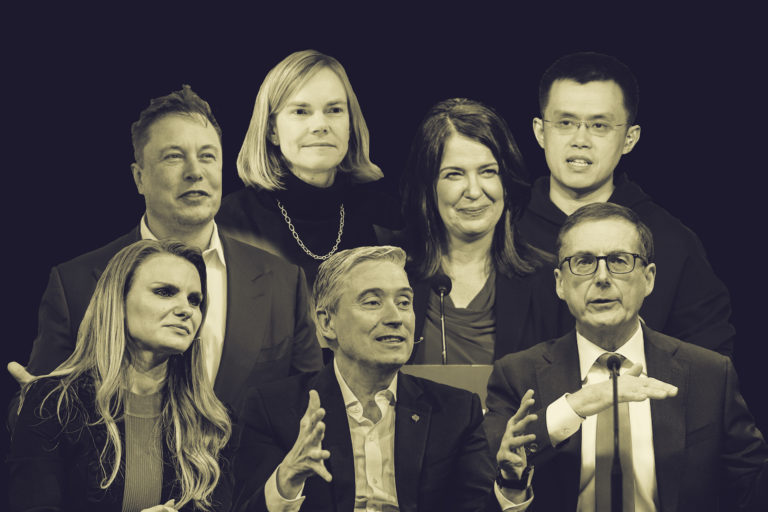
With the close of 2023, here are the newsmakers of the year, as chosen by The Logic’s newsroom:
For many business leaders, it’s been a year of navigating volatility in uncertain times.
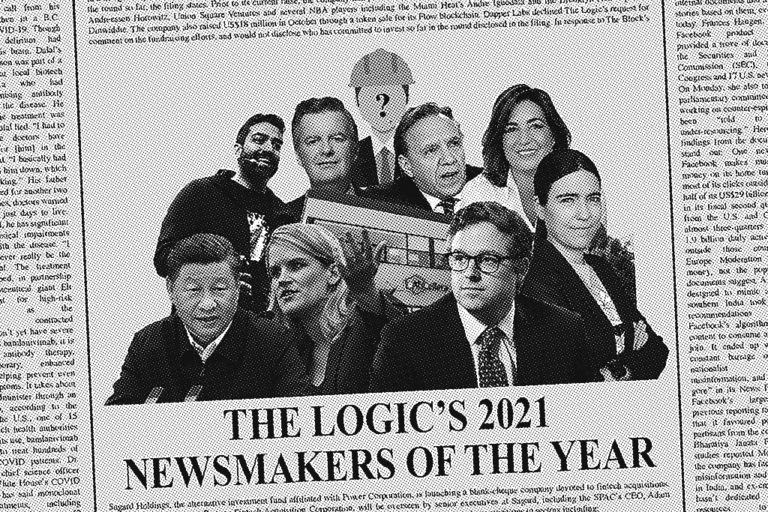
With the close of 2023, here are the newsmakers of the year, as chosen by The Logic’s newsroom:
Tiff Macklem, Indigo’s Heather Reisman and OpenAI’s Ilya Sutskever among the most influential business people this year

For many business leaders, it’s been a year of navigating volatility in uncertain times.
With the close of 2023, here are the newsmakers of the year, as chosen by The Logic’s newsroom:
What he did: Under Becker’s leadership, Santa Clara, Calif.-based Silicon Valley Bank collapsed over a two-day period in March after customers rushed to withdraw their deposits, fearing the bank would become insolvent. Becker resigned from SVB in April. A review published by the Federal Reserve said senior leadership had failed to manage basic interest rate and liquidity risk, calling it a “textbook case of mismanagement by the bank.”
Why it mattered: SVB had a strong footprint in Canada. According to filings with the Office of the Superintendent of Financial Institutions, its Canadian subsidiary had over $864 million in assets by the end of 2022, including $435 million in business loans. And, while Canadian startups couldn’t directly bank with SVB Canada, many opened accounts with SVB south of the border. The stunning collapse raised concerns in Canada’s tech ecosystem that it would become even harder for startups to raise money on favourable terms. Canada’s big banks scrambled to pick up the pieces—RBC, BMO and CIBC immediately began pursuing its Canadian clients. In August, National Bank acquired SVB Canada, including its $1 billion in loan commitments to SVB customers, while other banks, including TD and Scotiabank, scooped up former executives. – Leah
What he did: The scientific director of Montreal-based artificial intelligence institute Mila said AI could become “as destructive as nuclear bombs” if left to the whims of Big Tech. “Government takeover by radical political groups, wars and genocides have been started with much less technological help in the past,” he told The Logic in April. To this end, Bengio was one of many tech luminaries to sign a letter calling for a six-month refrain from feeding data to AI. He is also leading a landmark assessment of advancements in the field, which aims to improve policymakers’ grasp of AI’s development and risks.
Why it mattered: By warning the world about what he sees as the dangers of artificial intelligence, Bengio sounded the alarm over what he helped create. Bengio’s research on deep learning was instrumental to AI’s development, and his word carries a lot of weight in the field. And he wasn’t alone in fretting over AI’s dangers. Pioneer Geoffrey Hinton said he quit his Google gig so he could speak about existential pitfalls of the technology. Yet the likes of Google and Microsoft are fighting not over ethics but market share. Despite Bengio’s warnings, Big Tech’s usurpation of AI continues apace. – Martin
What she did: Became chair of the Canadian Radio-television and Telecommunications Commission in January, setting an ambitious—some say harmful—agenda to boost competition among cellphone providers, cut wholesale prices for small internet resellers, modernize the broadcasting industry under the Online Streaming Act and prepare to regulate new media sectors under the Online News Act.
Why it matters: The CRTC has taken on a much bigger public role as the Liberal government has sought to bring Big Tech and Big Telecom to heel. The commission regulates what Canadians watch and listen to and what we pay for phone and internet service; if its proceedings and decisions sometimes go beyond arcane and into occult, the consequences are in our faces daily. Just appointing Eatrides, a competition lawyer (and not a telecom or broadcasting insider), was a statement. The Online Streaming Act and Online News Act bring the CRTC into fields it’s never really overseen, engaging with huge foreign players like Google, Apple, Netflix and Spotify, with the case of Meta’s decision to block news links in Canada looming over those dealings. No pressure. – David R.
What he did: The leader of the joint venture between Stellantis and LG Energy Solution faced two conflicts this year over the company’s strategy to build a $5-billion electric-vehicle battery plant in Windsor, Ont. In May, the company halted construction on the plant on the grounds that the government should match NextStar’s subsidies to the higher incentives earmarked for rival Volkswagen. This fall, the plant was back in the headlines, with MPs demanding to see the government’s contract with the company amid concerns over whether the plant would provide enough jobs for Canadian workers.
Why it mattered: A lot is riding on getting the plant off the ground smoothly, and Lee’s leadership could set the tone for future projects as the EV sector builds up globally. One of the first big EV-battery investments in Canada, the plant has become an anchor investment that’s spurring further investments in the battery supply chain. The company is also training Canadian workers to make batteries, establishing the foundation of a much-needed skill set in the country. Its R&D centre will be finished in 2024 and the gigafactory is set to start production next year, too. – Anita
What he did: Raised the benchmark interest rate to five per cent, the highest since April 2001. He also endured more vitriol than any Canadian central banker since John Crow, governor from 1987 to 1994, whose policies coincided with double-digit unemployment rates.
Why it matters: Crow’s belief that inflation should be as close to zero as possible made him a polarizing figure. Macklem’s lodestar is two per cent, but he’s as stubborn as his forebearer was about hitting his target. The Bank of Canada stopped raising interest rates in January, then resumed with back-to-back increases in June and July. The premiers of British Columbia, Ontario and Newfoundland and Labrador called on Macklem to stop raising rates this fall, an unusual intervention that raised questions about central bank independence, but also showed the extent to which monetary policy had become a political issue. But we might thank Macklem one day. Most central bankers believe it’s essential to crush inflation before it becomes rooted in our expectations. Inflation is now on a downward track. Higher interest rates were painful, but they probably worked. – Kevin
What she did: Led tens of thousands of Canadians in strikes and collective bargaining that resulted in better pay and labour conditions for workers in sectors including auto, grocery and rail.
Why it mattered: Canada’s 2023 labour picture was a paradox. The rising cost of living and stagnant wages collided with low unemployment rates, giving workers in many sectors the upper hand to negotiate better treatment. In her first full year at the helm of Canada’s largest private-sector union, Payne—a former journalist who later served as president of the Newfoundland and Labrador Federation of Labour—emboldened workers to fight for what they wanted. “Workers have shown time and time again that they are prepared to fight and to strike if necessary to have their demands met,” she said at the start of negotiations with the Detroit Three automakers in Canada this summer. Those talks led to what Unifor called the highest wage increase in auto-bargaining history. “Our union is on fire,” Payne said in a speech at Unifor’s Ontario Regional Council meeting earlier this month. “We are having an organizing moment and we are going to keep having one,” she said. “Let’s effing go.” – Catherine
What she did: The former venture capitalist and her government department are rolling out a portfolio of programs designed to study AI risks; bring production of semiconductors and other critical technologies to the U.S.; and build regional ecosystems that produce the next big thing in fields like quantum computing and biotech. Abroad, she orchestrated 14-country deals via the Indo-Pacific Economic Framework for Prosperity (IPEF) on supply chains, clean economy principles, and tax coordination in the region. And she sought to define the terms of the Washington-Beijing technology rivalry, insisting that U.S. export controls aren’t designed to contain China.
Why it mattered: Industrial policy is back, big time. Other governments are racing to keep up with the Biden administration’s bills, subsidies and regulatory moves on EVs, chips, AI and other tracks. Canada is no exception. Policymakers and startups here are trying to insert this country into the new semiconductor supply chains across the border, and Ottawa is still bidding to join IPEF. U.S.-China technology competition could also impact the former’s allies, who may be leaned on to take similar restrictive actions. Raimondo is behind the wheel for all of it, and will continue to be a driving force next year. – Murad
What she did: Reisman retired this summer as Indigo’s board chair when four other members resigned, with one citing “mistreatment” and “loss of confidence in board leadership.” Weeks later, she returned to the book retailer that she founded as CEO and board director, after Peter Ruis abruptly resigned from the top post in September.
Why it mattered: Indigo has long struggled to stave off online competition with the rise of Amazon and made several attempts to reinvent itself. But 2023 was particularly challenging. A ransomware attack earlier in the year compromised staff information and left the company temporarily unable to sell online. Meanwhile, a string of executives departed: then-CEO Ruis, the four board members, president Andrea Limbardi and COO Gil Dennis. Reisman said she believes she can right the wayward ship in part by refocusing on books rather than general merchandise. Since her return, she’s launched a “4.0 transformation plan,” but was vague on details of how she planned to make “Indigo the best it has ever been.” – Aleksandra
What he did: Siddall managed Alberta’s $158-billion pension fund amid a storm of uncertainty in 2023. The Alberta government threatened to pull out of the Canada Pension Plan and establish an autonomous provincial pension manager. Inflation and market volatility eroded AIMCo’s annual returns. And Ottawa sought to muscle into Canadian pension funds’ investment strategy—a play that Siddall has publicly opposed.
Why it mattered: Alberta Premier Danielle Smith’s pension gambit put Siddall squarely in the middle of the United Conservative Party’s multi-pronged efforts to challenge Ottawa’s constitutional authority. So far, he’s managed to stay mum on Alberta’s proposed secession from the CPP, but public debate around AIMCo and its relevance to Albertans will likely bring more scrutiny to the fund’s performance and operations. At the same time, Deputy Prime Minister Chrystia Freeland’s call for pension funds to work “collaboratively” by investing more in Canada runs against the grain of Siddall’s Asia investment strategy (AIMCo officially opened its new Singapore hub in September). Freeland’s plea isn’t likely to go away any time soon as the federal government becomes desperate for new sources of growth to prop up its increasingly dented fiscal position. – Jesse
What he did: The Canadian former student of AI godfather Geoffrey Hinton led the push to oust Sam Altman as CEO of the ChatGPT-maker on a Friday in November. By Monday, he appeared to have a change of heart, posting on X that he “deeply regret[s]” his actions and joining more than 700 OpenAI employees in signing an open letter calling on the board—which Sutskever sat on at the time—to resign. Two days later, OpenAI announced Altman had been reinstated, saying in a blog post later that month that he had “love and respect” for Sutskever and was working to keep him on at the company.
Why it mattered: The boardroom drama captivated the tech world and beyond. The founders of OpenAI dream of creating artificial general intelligence, which would be as smart as or smarter than human beings, and ensuring it would act in the best interests of humanity. Sutskever was part of a group of staff particularly concerned with its hypothetical existential risks, co-leading a “superalignment” team to ensure the systems they were creating would share human values. It’s still not entirely clear what led to the boardroom drama—theories include safety concerns, tension over Altman’s other ventures and a diminished role for Sutskever at the company. Regardless, the stakes are high. At minimum, the fate of a company that was reportedly on track to be valued at US$86 billion hung in the balance. And if you believe Sutskever and those who think like him, the fate of humanity, too. – Claire
Loading...
You have shared 5 articles this month and reached the maximum amount of shares available.
CloseIf you would like to purchase a sharing license please contact The Logic support at [email protected].
CloseYou have gifted 0 article(s) this month and have 5 remaining.
Recipients will be able to read the full text of the article after submitting their email address. They will not have access to other articles or subscriber benefits.
Photo: Getty Images/The Canadian Press
Great journalism delivered straight to your inbox.
Get up to speed in minutes with insights and analysis on the most important stories of the day, every weekday.
See the bigger picture with reporters and industry experts in subscriber-exclusive events.
Membership provides access to our popular Slack channel, participation in subscriber surveys and invitations to exclusive events with our journalists and special guests.