OTTAWA — The United States’s allied trading partners are digesting President Joe Biden’s executive order restricting American investments in Chinese companies involved in artificial intelligence, quantum computing or semiconductors. Here’s what you need to know:
Skip to content
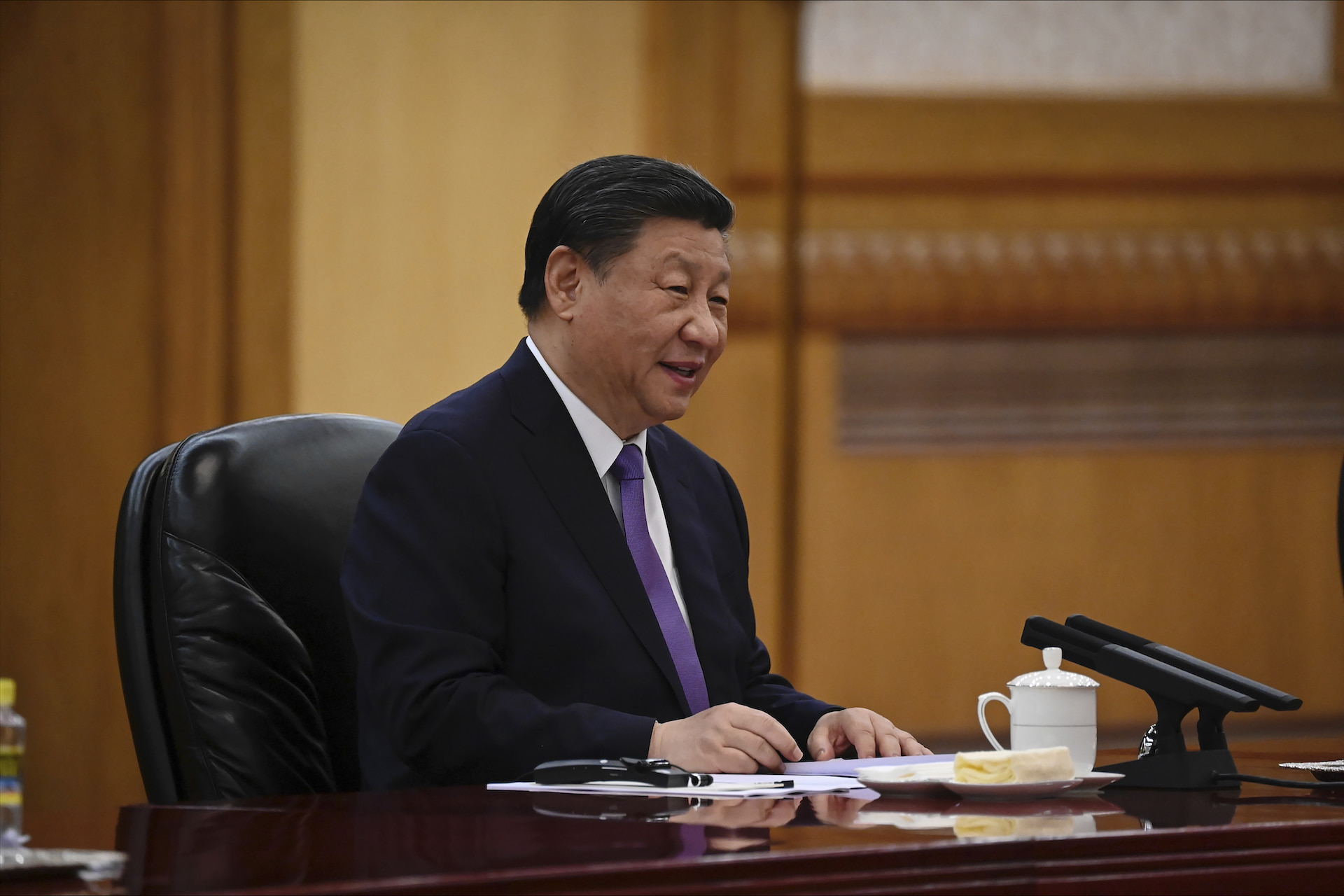 China's President Xi Jinping at the Great Hall of the People in Beijing in June 2023. Photo: The Canadian Press/Jade Gao/Pool Photo via AP

News
Canada ‘monitoring’ effect of Biden’s new bans on China tech investments
Smaller tech and VC sectors make Canada a bystander as U.S. seeks to limit investments
China's President Xi Jinping at the Great Hall of the People in Beijing in June 2023. Photo: The Canadian Press/Jade Gao/Pool Photo via AP
OTTAWA — The United States’s allied trading partners are digesting President Joe Biden’s executive order restricting American investments in Chinese companies involved in artificial intelligence, quantum computing or semiconductors. Here’s what you need to know:
The order: The text of Biden’s order doesn’t specify the investments the U.S. will forbid or limit in the world’s second-largest economy, but it targets key things that venture capitalists and private equity investors try to give their portfolio companies: “enhanced standing and prominence, managerial assistance, investment and talent networks, market access and enhanced access to additional financing.”
The order directs Treasury Secretary Janet Yellen to issue the details of the regulations; her department wants comments from stakeholders within 44 days.
Harder than it looks: Defining a Canadian, Chinese or U.S. company could be a challenge. Privately held AI drug-discovery company Insilico, for example, has offices in Hong Kong, New York, Montreal and Abu Dhabi and has raised hundreds of millions of dollars from venture investors around the world, including from the U.S., China and China-based affiliates of Western firms.
Related Articles

Insilico didn’t reply to a query from The Logic. Some have speculated that China-based firms could hurry to go public, if Yellen’s regulations don’t cover shares traded on open markets.
Ottawa is monitoring: The departments of innovation, finance and global affairs have all been in “close contact with their U.S. counterparts,” according to Audrey Champoux, a spokesperson for Innovation Minister François-Philippe Champagne. “We will continue to monitor any potential impacts for Canadian companies as this situation unfolds.”
Champoux wouldn’t say whether the Liberal government has considered following the U.S. move. The Investment Canada Act that Champagne oversees is in the middle of an overhaul but it’s concerned with foreign investments into Canada, not outbound money.
The U.K. government was similarly non-committal.
What the ban could mean here: Canada should “try to conform to the U.S. rules,” said Mark Warner, principal at MAAW Law, which focuses on international investment and regulation. But he expects Ottawa to play for time as Washington frames the new requirements. Canada could also try to extract concessions from the U.S. on other trade issues, despite the bipartisan consensus on China-tied investment there, Warner said.
Any follow-on actions from Ottawa may not have much effect, said Subrata Bhattacharjee, chair of the foreign investment review group at BLG. “The Canadian government considering imposition of a similar measure vis-a-vis China may be interesting signalling, but could not have the same practical impact as the U.S.”
Canada has a smaller tech sector and lacks the semiconductor, chemical and IT giants that tend to make large overseas investments, he said. There’s also no real Canadian equivalent of Menlo Park, Calif.-based Sequoia Capital, which is cutting its China fund loose.



Loading...
Thanks for sharing!
You have shared 5 articles this month and reached the maximum amount of shares available.
CloseThis account has reached its share limit.
If you would like to purchase a sharing license please contact The Logic support at [email protected].
CloseGift the full article!
You have gifted 0 article(s) this month and have 5 remaining.
Recipients will be able to read the full text of the article after submitting their email address. They will not have access to other articles or subscriber benefits.
Photo: The Canadian Press/Jade Gao/Pool Photo via AP
Most Popular This Week




In-depth, agenda-setting reporting
Great journalism delivered straight to your inbox.
News
Panel decries Canada’s chaotic way of funding world-class science
Briefing
Feds pledge $15M for U.S. satellite navigation company Xona to expand in Montreal
Inovia raises US$200M for new VC fund as it eyes AI’s impact
43% of eligible Albertans voted ahead of Monday’s referendum
Best business newsletter in Canada
Get up to speed in minutes with insights and analysis on the most important stories of the day, every weekday.
Exclusive events
See the bigger picture with reporters and industry experts in subscriber-exclusive events.
Membership in The Logic Council
Membership provides access to our popular Slack channel, participation in subscriber surveys and invitations to exclusive events with our journalists and special guests.







