Listen Now
0:00
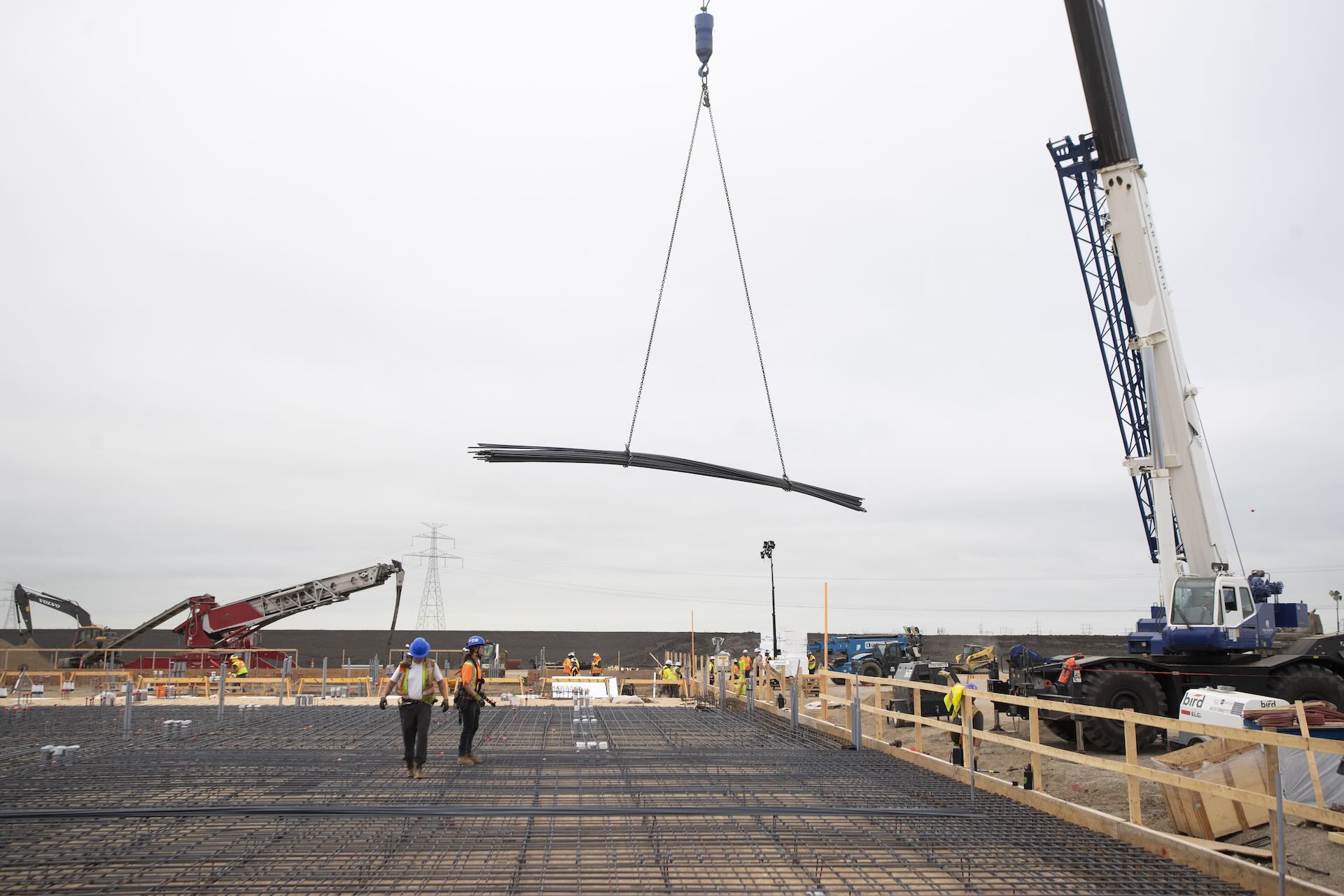
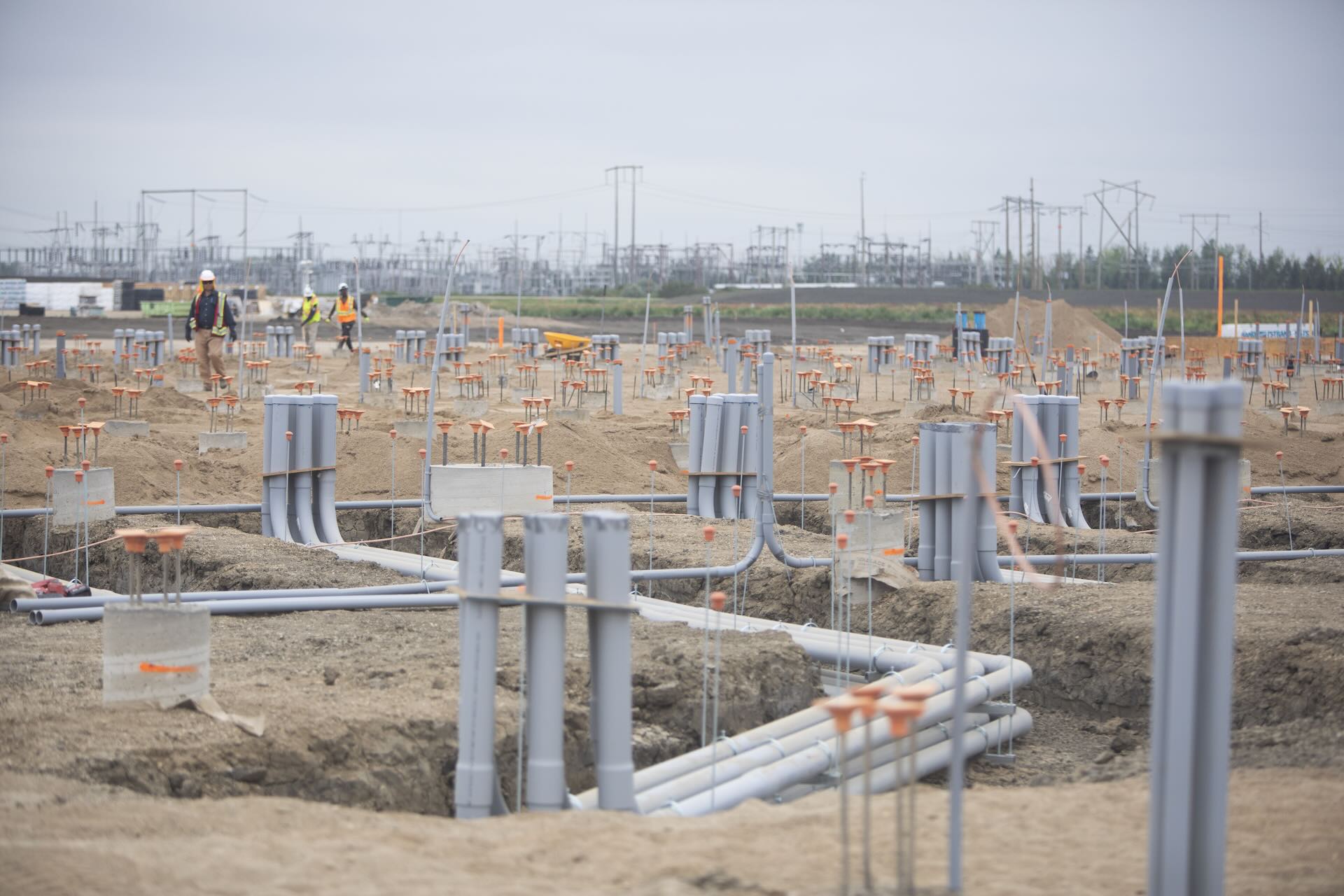
In an empty field on the edge of Regina, construction workers are busy putting in the rebar and pipes for what’s set to be one of Canada’s largest AI data centres.
The facility in Sherwood, a rural municipality that surrounds the provincial capital, is a major piece of Bell’s plan to transform itself with AI, and sell the technology to companies and governments who want to do the same. “This is such high growth and it’s energizing,” says Bell CEO Mirko Bibic.
Talking Points
- Bell is looking to capitalize on Canada’s big AI push by building data centres to run the technology, and lining up services and partners to help governments and businesses adopt it. AI is a key part of CEO Mirko Bibic’s strategy to get the company growing again.
- The firm is trying to minimize the costs and risks of building AI infrastructure by pre-selling the capacity and letting customers bring their own ultra-expensive chips. Bell has also partnered with other Canadian companies for the models and applications.
- Bell and its partners in the Sovereign AI Alliance see big opportunities to sell to Canadian governments and large firms looking for homegrown and -owned technology
Bibic and his business partners insist there’s something bigger at stake here, though. If Canada is to secure its economy and prosperity for the future, they say, it needs AI it can control and own. Bell and its coalition of homegrown firms think they’re the ones to provide it.
Bell itself is making big AI moves as its vast and profitable connectivity business idles in the face of economic and regulatory challenges. It’s hardly the only one looking to capitalize on the AI boom, however.
The Montreal-based firm faces both new and familiar competition as it tries to build the infrastructure and services to make the technology work for more users, with huge sums flooding into both. To realize its AI ambitions, Bell needs power, equipment and talent that are in short supply. It’ll have to overcome growing opposition to data centres, and public skepticism about AI. After years of policy strife, Bell is also hoping for a boost from policymakers increasingly concerned with securing Canada’s digital and economic sovereignty.
Related Articles


Bibic and company believe Bell has hit on an AI business model that maximizes the upside of its infrastructure investments, while minimizing the risk that it will overspend or get outmanoeuvred. Meanwhile, the firm’s IT services and cybersecurity units are starting to take off. Bell has also assembled an alliance of companies to jointly sell sovereignty and technology to the private and public sectors, promising a package of all the hardware and software clients need to get going with AI that’s Canadian in all the right places.
Still, as Bell’s data centre rises on the plains of Saskatchewan, the firm’s big AI play is yet to be fully tested. Its success depends in part on whether Canadian governments and businesses can finally buck their long-standing resistance to trying and buying new technologies—and whether Buy Canadian can be more than just a slogan.
Bell’s data centre on the outskirts of Regina is its largest AI outlay to date.
The firm announced the facility in March, and will spend about $1.7 billion to build and kit it out. Its four data halls, all scheduled to open next year, will be filled with servers that pump out the compute to train and run AI models as well as the ever-growing range of applications they power. The facility will have a capacity of 300 megawatts, about a tenth of the current demand on SaskPower’s grid, from which it will draw its energy.
Bell sees a big opportunity in data centres, which house the stack of technologies atop which AI tools operate. Demand for processing power has never been higher. To meet it, financiers, operators and tech tenants are set to invest US$3 trillion to double global capacity to 200 gigawatts by the end of the decade, per real estate broker JLL.
Bell is looking to grab a Canada-sized piece of the action. “We see this as the next chapter in Bell building infrastructure for the country,” says Michel Richer, president of Bell AI Fabric, the brand name for the firm’s data centre play. Company executives and their business partners tend to describe the AI moment in era-defining terms, comparing it to the laying of railways across Canada or the electrification of the rural United States.
Bell has announced an 800-megawatt target, although Bibic says the firm has ambitions for even more. It’s pre-sold over two-fifths of that capacity to date, mostly to upstart cloud services and AI model makers.
The firm isn’t entirely new to the data centre business. Bell used to run traditional co-location facilities, where clients could bring their servers to store information and connect their cable networks. In June 2020, though, it sold 25 data centres to Equinix for $1.04 billion. Most North American telcos exited the business around that time to focus on building out fibre networks, says Maher Yaghi, a Scotiabank analyst who covers the sector. “It wasn’t a core operation.”
Then along came the AI boom. In May 2025, Bell announced the first phase of Fabric, locking in 500 megawatts of hydroelectric energy in British Columbia for six new data centres. It’s since added a compute facility in Rosser, Man., and the facility near Regina.
This time is different, says Richer. “Those data centres are built for modern AI.” That means the facilities can handle densely packed, power-hungry hardware, and pull away the heat it generates via a series of liquid loops. They’re connected to Bell’s fibre networks, the nation-spanning system on which it has already spent tens of billions of dollars.
As well as being more advanced, AI data centres are also a lot bigger than legacy facilities. They take up more space, draw more power and cost more. A lot more. AI data centres can run up to $33.5 million per megawatt, with nearly two-thirds of that going towards IT equipment according to an analysis by the federal Innovation Department. Specialized semiconductors, in particular, are a huge expense.
One way Bell is keeping its costs down is by not buying chips. The firm puts up the building, connects it to fibre and power, and sets up the cooling. And it sells services and security to clients using the AI that the facilities produce. So far, Bell isn’t buying eye-wateringly expensive servers but rather getting tenants or partners to bring their own. “We’re the more capital-light side of the world,” says Bell CFO Curtis Millen, adding that skipping over semiconductors means the firm’s “returns are actually better, as you don’t have to invest as much.”
Bell’s numbers on the Sherwood project imply a spend of $5.6 million per megawatt, significantly below prevailing industry estimates even without the chips. The firm says it’s hard to compare specific projects to averages, and that it’s found other ways to keep costs down and minimize the risks of the data centre buildout.
For example, Bell has hired Mississauga-based Bird Construction to do the actual building in Saskatchewan, and on future projects. The two firms are standardizing designs and materials and sourcing some parts prefabricated. Bell has also tapped equipment makers Celestica and Hypertec to supply the facilities. That web of partnerships is “a clear advantage that enables us to go faster at launching those projects,” Richer says.
Bell’s narrative around securing Canada’s AI sovereignty could also help with its infrastructure expansion, according to TD Cowen analyst Vince Valentini. That’s because provincial governments and the utilities they oversee may prioritize homegrown players over foreign cloud giants when assigning precious grid capacity. Bell’s success with SaskPower in Sherwood, he says, is one example of this in action. “If you can get access to land and power faster than anybody else, then these days you can easily sell out that capacity.”
Bell isn’t the only one going big on AI infrastructure in Canada. Independent data centre players like Beacon, Crusoe and eStruxture are planning major expansions, while the U.S. hyperscalers are also growing their footprints.
Still, the potential returns of data centres are worth the work, according to Bibic—a view shared by analysts who cover the company’s stock. In October, the firm set a target of $1.5-billion in annual revenue from selling AI-powered solutions by 2028. The Sherwood data centre alone raised that to $2 billion. The project added half a percentage point to Bell’s compound revenue growth rate estimate between 2025 and 2028, and a full point to its earnings. The firm may also take equity stakes or negotiate options to buy shares in tenants and suppliers.
In March, Bell announced that Cerebras, a chipmaker based in Sunnyvale, Calif., would be one of its anchor tenants in Saskatchewan, taking up to 160 megawatts of capacity. In a securities filing tied to its recent initial public offering, Cerebras said it had signed a data centre lease agreement in Canada that same month worth US$2.2 billion over a 10-year term. Bell said it does not comment on specific contract details.
Bell’s AI infrastructure spending could pay back in as few as five years, compared to up to 20 years for fibre buildouts and wireless spectrum purchases, says Valentini. “It’s a higher-margin, better-quality investment, at least for now.”
So far, all of Bell’s announced customers for Fabric are similar to Cerebras—firms looking for sites to generate the processing power they need to sell to clients. Neocloud CoreWeave is taking the rest of the Sherwood data centre’s capacity, while chipmaker Groq is anchoring a seven-megawatt facility in Kamloops, B.C.
Vancouver-based Buzz HPC is renting five megawatts from Bell in Manitoba as well as 6.5 megawatts in Merritt, B.C.; last month the two firms announced a deal to roughly double the B.C. facility’s capacity to provide compute to Toronto-based AI firm Cohere. While parent company Hive already has its own data centres out east, Buzz president Craig Tavares says putting its chips into Bell’s facilities let it offer “coast-to-coast coverage” faster and cheaper.
Bell executives also hope to land major government and corporate clients for Fabric, especially those looking for Canadian-owned and -operated capacity. The firm has more data centres in the works, and is prospecting for further opportunities, Richer says. To greenlight a project, it needs the right location, access to enough power, an anchor tenant, and proximity to its network. The data centres must be “built for the AI of today and the AI of tomorrow,” he says.
Bell’s AI ambitions don’t stop at data centres. The firm also aims to make money by helping clients adopt the technology, and secure their systems from the ever-fiercer cyber attacks it can power. To do so, Bell has gathered together a coalition of Canadian partners.
In May 2025, it launched Ateko, rolling together three tech consulting firms it’s acquired in recent years. The division already does a brisk business installing and customizing software from Silicon Valley firms like ServiceNow, Salesforce, Databricks and Snowflake. Collectively, revenue at Ateko and Bell’s Cyber unit is growing more than 30 per cent year-over-year. Along with Fabric, the two divisions are overseen by Bell Business Markets group president John Watson, a longtime executive who came up through the consumer business.
Ateko applies code and lessons from Bell’s own experience adopting AI in areas such as call centres, says the division’s president Lukas Lhotsky. “We’re helping Bell transform, but also using it as a place to experiment and test ourselves.”
Lhotsky is also the unofficial convener of the Canadian Sovereign AI Alliance, a coalition of Canadian firms headed by Bell that covers key parts of the stack of technology underpinning AI. Together, they aim to ensure “no one can turn Canada off,” he says.

Alliance members also have economic goals. “Our objective is to industrialize,” says Louis Têtu, executive chair of Montreal-based Coveo, which sells AI search tools. Têtu has long worried that Canada lacks the right approach to addressing long-standing national challenges with goosing productivity and creating wealth. AI adoption is the fix, and the alliance is the means to deliver it, according to Têtu.
Between them, alliance members can supply all the technical capabilities needed for “Canada’s industrial policy ambitions around AI,” Lhotsky claims. “We wanted to make sure we could go to Canada’s enterprises [and] governments and say, ‘Don’t look elsewhere.’”
In practice, that might mean Ateko working with a client to install Cohere’s North agent-builder system, plugged into Coveo’s software for producing better answers; with the AI models processing in Buzz’s cloud and pulling data stored in ThinkOn’s cloud; all of that which would run on hardware manufactured domestically by Hypertec and Celestica; inside a Bell AI Fabric data centre. One alliance member could own the relationship with the customer and issue the bills, then share the revenue out among the participating partners.
The group’s ready-made, proven package of technology could help calm clients’ fears about rolling out AI, according to ThinkOn CEO Craig McLellan. “We can show them where we’ve done it before,” he says, since organizations are “always nervous when they’re an early adopter.”
The alliance—so-called because according to Têtu, “consortiums never get anything done”— has yet to land any blockbuster deals. But several members are already working together bilaterally, or in smaller groups. And the firms’ leaders are in regular contact about opportunities and technological developments, according to Lhotsky; there’s an active group chat. “We’re really passionate about wanting to seize what we think is an unbelievable opportunity in Canada,” he says.
Members say working with Bell also brings ongoing commercial and developmental benefits. Both Cohere and Coveo have signed agreements with the telecom firm over the last year to help sell their technology. Bell’s digital telecom infrastructure make it “a huge distribution channel” for AI applications, Têtu says. “What people don’t realize is Canada runs on Bell, whether we like the company or not.”
The telecom giant’s reach was also a selling point for Cohere, says Canada country manager Michael Pelosi. Bell can stand up new AI infrastructure “at a pace that’s keeping up with us,” he says, citing Cohere’s constant need for more compute as its own business grows. Together, Pelosi says, the two firms can offer technologies that “really work across the country” for corporate and government clients, particularly those concerned about sovereignty.
TD Cowen’s Valentini says it’s good that Bell isn’t trying to build every layer in the AI stack itself. Still, he’s skeptical that Ateko’s services bring “any big additive advantage” to Bell’s AI play. While the division is delivering good revenue growth so far, it’s got lots of Canadian competitors in the IT outsourcing market. “I’m not as excited about that business as I am about the data centres,” Valentini says.
Canadian policymakers and corporate leaders are increasingly concerned with ensuring no other nation can control the country’s data or AI. That creates a market into which Bell and its business partners can sell sovereignty by the shovel load.
The federal government has promised to make a start, by buying from domestic developers as it attempts to use AI to make its operations more efficient. Ottawa has also pledged to use its own compute needs to spur the development of and attract private investment to new AI infrastructure. In a solicitation process earlier this year, the federal Innovation Department received 160 data centre proposals seeking federal support that would together add 850 megawatts of capacity by 2030.
Ottawa has so far announced plans to back one new development, a set of three facilities in British Columbia run by Bell’s rival Telus. The choice has elicited some grumbling among competitors and other hopefuls. They note the Vancouver-based telecom giant hasn’t yet secured all the necessary power and that its first AI compute cluster in Rimouski, Que., is quite small. Telus also has its own IT services arm. Late last summer it briefed federal officials on a “sovereign technology platform” it was working on in a consortium with OpenText, PwC Canada—and Bell partner Cohere, according to documents obtained by The Logic via access-to-information request.
Bell also wants to sell to federal and provincial governments, which “will want to modernize their workflows and lean into AI,” Bibic says, though he predicts that those contract opportunities will move at the typical pace of public procurement. That is, slow.
Bell has lobbied federal IT officials on Ottawa’s buying policies, including sovereign AI capacity. And it has registered interest in provincial AI policy and procurement in Alberta, British Columbia, Ontario and Quebec.

Policymakers need to get moving, Coveo’s Têtu says, claiming Ottawa could book major savings and stop keeping callers on hold if the Canada Revenue Agency and other departments used AI to answer questions and deliver services. The alliance can rapidly provide the necessary technology, because it has “the most complete stack that’s been assembled, and it’s practical,” he claims. Têtu also sees sovereign AI opportunities in regulated industries like airports, ports, pipelines and utilities.
The private sector may be an even slower sell. Corporate Canada is historically awful at adopting new digital technologies and automation, a major factor in the country’s productivity slide. Compounding the challenge is that when companies do eventually buy new tools, they often prefer to patronize foreign vendors.
Several alliance members currently do most of their business abroad, where big businesses tend to be more open to letting them prove their worth. Coveo, for example, was already doing business with the Australian and New Zealand tax departments before Ottawa showed interest, while Cohere was in talks with Deutsche Telekom, Verizon and Vodafone months before Bell became a customer.
Even Ateko has pitched some potential domestic clients by telling them about its work with Harvard University and the NFL, “and then we’re good enough to do work for Canadians,” says Lhotskey. The alliance is “about shifting Canadian ambitions a little bit.”
Stock analysts say Bell has the advantage of familiarity when it’s courting big clients in the public and private sector for AI business—it’s long been the phone and internet company for the federal government, and for large corporations.
While it might take time to materialize, Bell and its business partners insist there will be plenty of AI business to go around in Canada, and also that their alliance is best suited to do it. “We do think that we have the most coherent, integrated strategy,” Bibic says, adding that the progress of Bell’s projects to date proves “we are building real things here.”
Customer reticence and competition aren’t the only challenges Bell and its alliance might face as they try to roll AI out across the economy, though. Massive data centre development on both sides of the border has created shortages of critical kit. There’s a lot of demand for chillers, electrical generators and transformers, and even the glass for the fibre optic cables that fill data centres and telecom networks. “The supply chains are tight,” Fabric president Richer acknowledges.
Bell also needs to hire and hold onto people who can execute its AI plans. Bibic credits Watson with developing a strong bench. Richer was an internal pick, while Dan Rink, Fabric’s other president, joined when Bell bought his firm iTel Networks. Lhotsky and Ateko CEO Guillaume Bazinet arrived via the June 2023 acquisition of Montreal-based FX Innovation.
For some of those executives, Bell’s domestic plans were a big part of the draw. “When we went to market, we had 17 offers from U.S. companies and one from a Canadian one,” says Lhotsky, referring to the sale of FX Innovation. “I felt very strongly about creating a Canadian ecosystem.”
Meanwhile, surveys suggest many Canadians don’t trust AI or want data centres in their communities. In Vancouver, the site of one of Telus’s proposed new facilities, hundreds of protesters have repeatedly gathered to express concerns about water and energy use.
In Sherwood, protestors interrupted the council meeting that approved Bell’s new data centre. Some local residents then tried to delay construction by seeking a federal impact assessment, although the agency said it was too late.
Bell is trying to counteract the concerns. Its website for the Saskatchewan data centre lists the many benefits it claims AI will bring to Canada, including “personalized health care,” “enhanced fraud detection” and “advanced material science.” Bell also touts the hundreds of new local jobs the facility will create, while stressing that it will recycle heat and won’t raise electricity rates or use municipal water for ongoing cooling. “We listen to the stakeholders in the communities around us,” Bibic says, citing municipal and provincial government support for the project.
Bell’s AI play is a major part of its new three-year strategy, unveiled last October.
“What’s this company all about?” Bibic says he asked himself as he put it together. It was his first real opportunity to regroup since taking the top job just months before the COVID-19 pandemic struck, which was followed by a series of federal policy moves that hit telecom profits. Bibic says he concluded that Bell had always been in the business of “building the technology and communications infrastructure that matters the most to the country.”
AI fit that description, and satisfied Bell’s goal of investing in areas where there was room to grow and plenty of partnerships to be made. That’s why Bibic has committed significant sums to build AI data centres, embraced the sovereign AI alliance, and talked publicly about what AI can do for Canada and how it should be built. Bell is “putting our own money where our narrative is,” he says.
Still, the firm is making its big AI play at a time when investors, consumers and regulators aren’t particularly thrilled with the telecom sector. Bell’s share price has halved over the last five years, with the new corporate strategy making no discernable difference to the stock. The firm is still posting big profits—$6.5 billion in net earnings on $24.5 billion in operating revenue in 2025—but overall sales growth has been near-flat.
That’s true across telecoms, says Scotiabank’s Yaghi. Canada’s wireless market is saturated, with the population shrinking as the Liberal government tries to stabilize immigration levels. Cable subscribers are still cutting the cord, although Bell’s streaming service Crave is steadily growing.
Most of Bell’s business is “boring and mature and has almost zero growth,” says Valentini. Its push into AI gives the firm new revenue and cash flow, as well as “something for investors to be a bit more excited about.”
The other two of Canada’s big three telecoms are telling their own growth stories. Rogers has sports, including full control of the Toronto Maple Leafs, Raptors, Football Club and Argonauts. It bought Bell out of the Maple Leaf Sports and Entertainment holding company for $4.7 billion in September 2024, money that hockey fanatic Bibic used to acquire U.S. fibre firm Ziply. Telus has its own AI infrastructure plans, plus its health and digital services units.
Bibic claims Bell is in a better position than its competitors because its growth areas—AI, fibre and digital media—are more closely linked to what it already does well. To illustrate, he rhymes off numbers and names: lower churn rates, larger fibre footprints, Heated Rivalry and Shoresy.
Bell’s AI rollout has been similarly methodical. It’s announced data centres once they’re already rented out, built its alliance one partner at a time, and forecast conservatively on when those big government and corporate contracts for full-stack solutions might come.
Still, the AI boom requires at least a little faith that if you build the infrastructure and the sales strategy, the future will come. “We’ll put this together and there’ll be magic that’ll come out of it,” Bibic says. “And we’re not quite sure where it’s going to go.”













