Skip to content

Canada's Business and Tech Newsroom

  • Professional Subscription
  • Partnerships & Advertising
  • Licensing & Syndication
Log In Subscribe
Welcome,
  • My Account
  • Log Out
  • Business
  • Tech
  • National
  • The Big Read
  • Briefings
  • Commentary
Search
Log In Subscribe
Welcome,
  • My Account
  • Log Out
Commentary

Carmichael: The hard work of breaking down internal trade barriers is starting to pay off

Listen Now
0:00
Commentary

Carmichael: The hard work of breaking down internal trade barriers is starting to pay off

Trump stole the headlines this week, but there’s promising economic news at home

By Kevin Carmichael
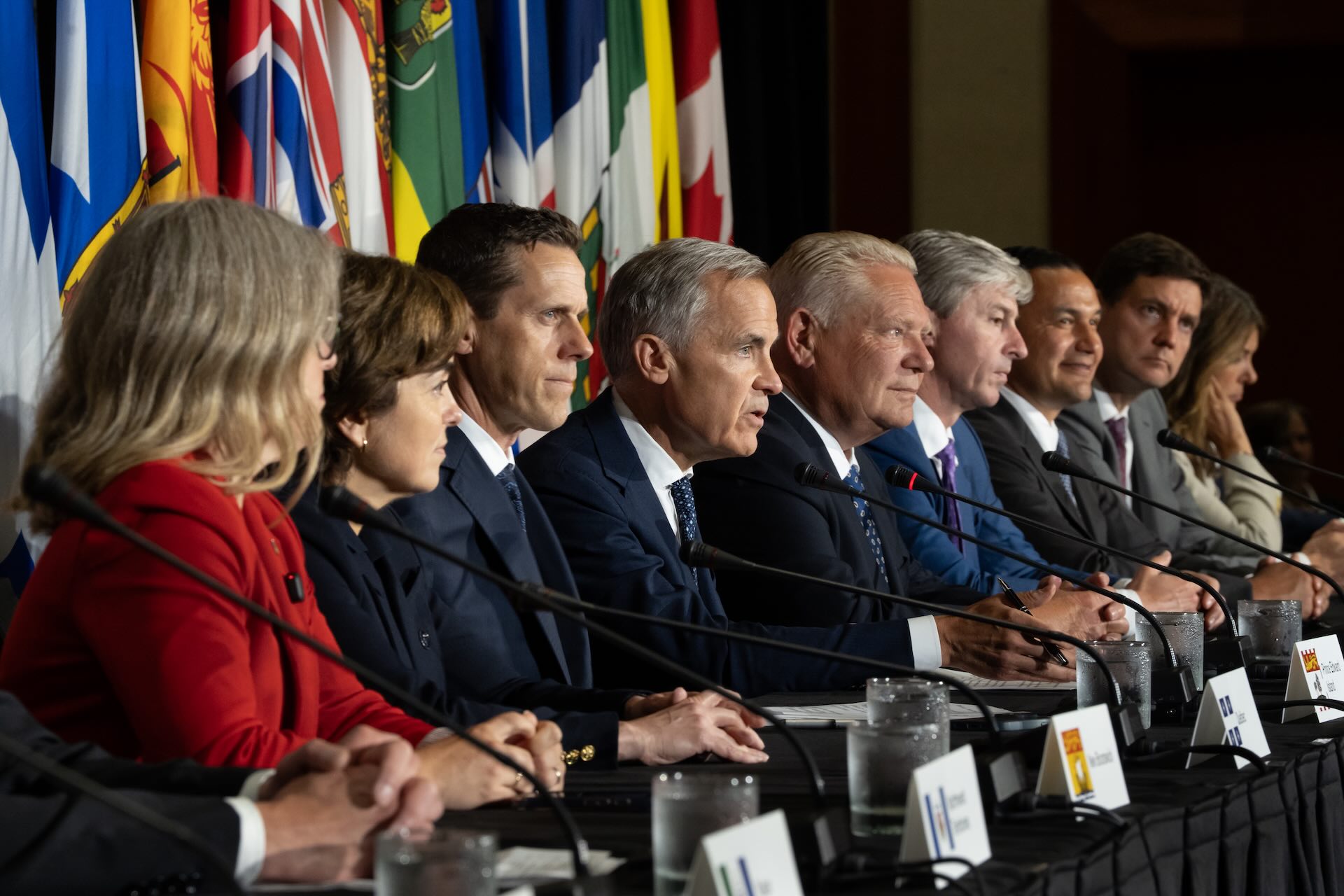
Prime Minister Mark Carney, centre, and Canada’s premiers hold a closing press conference at the First Ministers’ meeting in Charlottetown on Thursday, July 23, 2026. Photo: The Canadian Press/Darren Calabrese
Jul 25, 2026
A A
A Small A Medium A Large
Share

Gift

Share

Listen Now
0:00

It’s a good week to talk about trade. As ever, we could let Donald Trump hijack that conversation. But let’s keep it positive. The real development is that Canada is making real headway in securing a proper free trade deal with the one G7 economy with which it lacks a good agreement: Itself. 

There was much excitement a year ago when Prime Minister Mark Carney made good on his promise to erase the federal rules that were impeding interprovincial trade. But that excitement faded quickly. The federal law was an important gesture, but Ottawa wasn’t the reason British Columbia wineries were effectively barred from shipping their bottles to the rest of Canada.

Related Articles
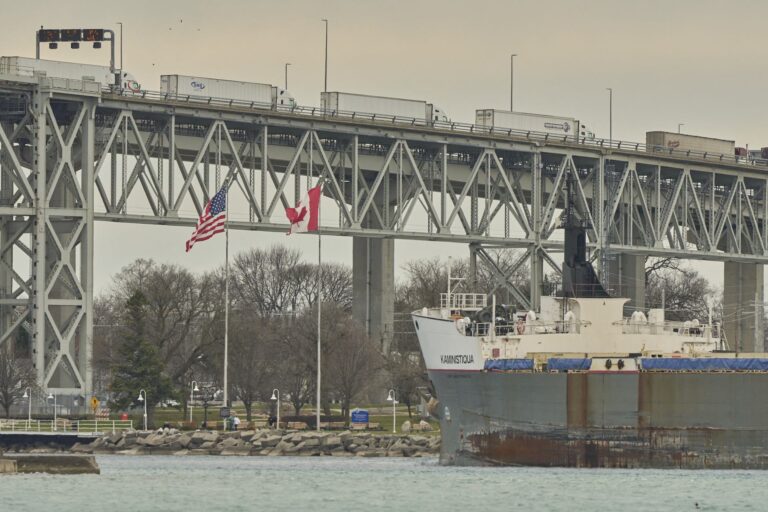
A row of trucks pulling white freight trailers lined up on a bridge. The Canadian and U.S. flags stand on the river shore below the bridge, and the prow of a ship is visible on the right side of the frame.

Trump renews trade attack on Canada, slapping 50% tariffs on a slew of exports

By David Reevely and Laura Osman
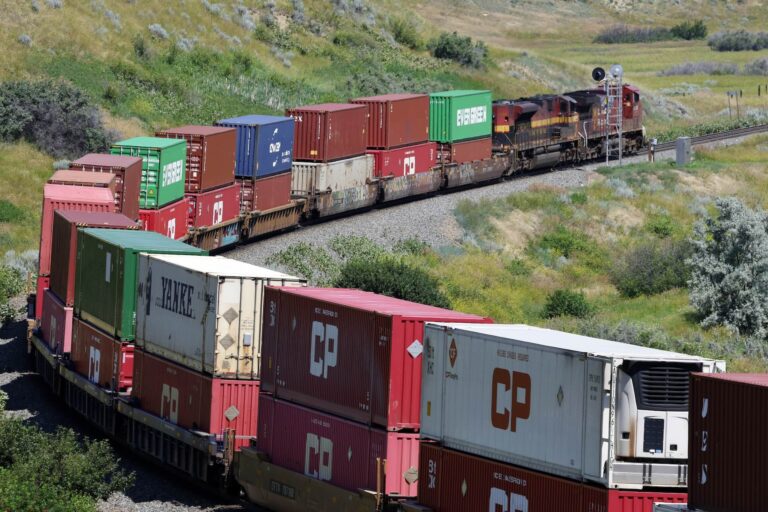
Freight train with colorful shipping containers travels through a grassy, hilly landscape on a clear day.

Inside the great untangling of Canada’s internal trade mess

By Catherine McIntyre and Joanna Smith
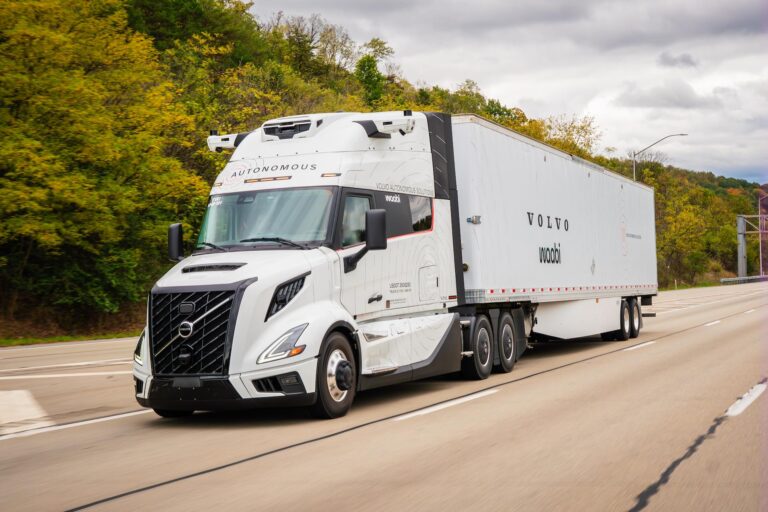
A photo of a white, tandem-axle truck pulling a semi trailer bearing the Volvo and Waabi logos. The truck appears to be on a major highway.

Canada’s internal trade barriers are blocking the road to driverless trucking

By Joanna Smith

By early 2026, the prevailing view in my filter bubble was that the push for freer interprovincial trade was dead or dying. The political class had stopped talking about it. “Discussions on a framework governing direct-to-consumer alcohol sales have stalled, and the Committee on Internal Trade is meeting less frequently at a time when we most need sustained momentum,” the Ontario Chamber said in a report on a confab it co-hosted in May. 

We were too cynical. 

The Ontario Chamber published its report on July 15. One of its recommendations was that the Ontario Securities Commission should join the other provincial and territorial regulators in the Canadian Securities Administrators’ passport system, a mutual-recognition pact that prevents companies from having to fill out paperwork for every jurisdiction in which they’d like to sell securities. That same day, Ontario Finance Minister Peter Bethlenfalvy said the OSC would join the passport system, ending a standoff that had lasted for more than two decades. It was an act of humility. As the home of Canada’s undisputed financial centre, Ontario had a legitimate argument that the rest of the country should be taking its cue from the OSC-led national regulator, not the other way around. Bethlenfalvy relented to advance something bigger. That’s how you’d like to see the federation work. 

“Ontario’s expectations are that at the same time details of [the] passport are being negotiated, other provinces will agree to continue eliminating all provincial barriers to unleash an estimated additional $200 billion to Canada’s GDP,” Bethlenfalvy said in a statement. “This is not something that any province can do alone.” 

Bethlenfalvy’s fellow finance ministers noticed, and maybe they’ll realize that they owe him one. “You had a lot of camps that did not want to see that happen,” Ryan Manucha, a research fellow at the C.D. Howe Institute, said of Bethlenfalvy’s decision to join the passport system. “He had to stand up and say, ‘I’m going to go against the status quo.’ The inertia was strong.” 

I asked to speak to Bethlenfalvy but his office said he was unavailable for an interview this week. So we’ll find out later what it took to overcome that inertia—and what he expects of other provinces and territories in return for his concession. I also want to ask him if he sees himself as the champion that the internal trade push has been lacking. A finance minister whose job includes oversight of roughly 40 per cent of Canada’s gross domestic product might be a good candidate.  

There’s more. Lawyers for Ontario-based bridge builder Julmac Contracting were in a New Brunswick court earlier this month suing that province under the Canadian Free Trade Agreement for allegedly favouring local contractors. The facts and the outcome aren’t really what matters. Manucha said Julmac is the first company to sue for fairness under internal trade rules in a decade, and its decision to do so could reinvigorate the dispute settlement process. “This was big,” said Manucha, the author of an award-winning book on internal trade. “That’s so important for the system, healthy for the system, so hats off to Julmac.”  

A third development: on Tuesday, the premiers of Alberta, Saskatchewan, Manitoba, Ontario, New Brunswick, Nova Scotia, Prince Edward Island, and Newfoundland and Labrador said their residents were free to order alcohol from anywhere in Canada. British Columbia, which allows direct-to-consumer wine sales, said it will have a broader system in place by February. Quebec said it needs more time to get the “necessary infrastructure” in place, but intends to join the agreement “in the near future.” 

If Quebec hurries, it could join a neat natural experiment. The alcohol agreement came the day after Trump threatened to place 50 per cent tariffs on imports of Canadian beer, wine and spirits, retaliation for the various provincial bans on the sale of American booze. Craft breweries, artisanal distillers and smaller wineries now have access to a bigger domestic market. Their order books will be a source of real-time data on the extent to which internal trade can offset lost U.S. sales—or supplement them, if the tariffs are negotiated away.  

What to make of this sudden frenzy? It’s a reminder that trade negotiations, both foreign and domestic, are laborious. Long periods of silence don’t necessarily mean that nothing is happening. We should be aware that our collective addiction to instant dopamine rushes could be affecting our expectations. The internal trade push was never dead. It just wasn’t moving at the pace of TikTok. 

At the same time, we’ve been reminded this week of why we can’t waste any more time creating offsets to U.S. exports. The Ontario Chamber rightly told governments that sustained momentum requires “continued political leadership” and “implementation with time-bound objectives.” Alcohol has become the symbol of interprovincial trade, but its economic impact is small beer. The free movement of labour is what will move the needle. The premiers pledged at their meeting in Charlottetown this week to get to work on that. 

Their promise is missing a deadline, but at least we know they’re on it. Trump’s latest volley should be enough to inspire haste. 

Kevin Carmichael is The Logic’s economics columnist and editor-at-large. He has spent more than two decades covering economics, business and finance for outlets including Bloomberg News, The Globe and Mail and the Financial Post, where he also served as editor-in-chief.


#commentary #economy #trade

Sponsored Content

How to shift your workforce from AI experimentation to adoption

By Jessica Aftimus Rosa

The real-world economic offshoots of sovereign AI

By Deborah Aarts
Illustration of a plane flying above a mailbox

Increasing healthcare access across Canada

By Deborah Aarts
Paid promotional content

Loading...

Thanks for sharing!

You have shared 5 articles this month and reached the maximum amount of shares available.

Close
This account has reached its share limit.

If you would like to purchase a sharing license please contact The Logic support at [email protected].

Close
Want to share this article?

Upgrade to all-access now

Close
Gift the full article!

You have gifted 0 article(s) this month and have 5 remaining.

Copy link and gift
Copy Link
Email to a friend
Send Email
Gift on Social Media

Recipients will be able to read the full text of the article after submitting their email address. They will not have access to other articles or subscriber benefits.

Photo: The Canadian Press/Darren Calabrese

Most Popular This Week

News

What it was like to pitch a project in the hurly-burly of the Canada Investment Summit

By David Reevely
A shot of Mark Carney, who is seated, watching Ursula von der Leyen speaking at a lectern before the European Parliament. Carney is in sharp focus; von der Leyen is out of focus in the foreground.
News

Making Canada an ‘associate member’ of the EU won’t be simple—whatever the label means

By Joanna Smith
Analysis

Carney’s $500B investment claim requires some generous math

By Claire Brownell
Special Report

Canada pitched itself to the world’s biggest investors. Now comes the hard part

By David Reevely, Anita Balakrishnan, Murad Hemmadi, Chaimae Chouiekh, Claire Brownell and Kevin Carmichael

In-depth, agenda-setting reporting

Great journalism delivered straight to your inbox.

A shot of dozens framed video-game covers on a wall, with the label "World renowned games since 1997" inscribed above them. There are two passers-by blurred in the foreground.
News

China and India offer major upside for Canada’s cultural exports, says federal analysis

By Joanna Smith

Briefing

Oilsands major Imperial Oil takes public stance against Alberta separatism

By Meghan Potkins   |   Sep 23, 2026 | 3:40 PM ET

TD Bank puts up $25M to develop AI banking tools with Cohere

By Murad Hemmadi   |   Sep 23, 2026 | 3:36 PM ET

Canadian data-centre job postings jump 68% as AI buildout takes shape

By Chaimae Chouiekh   |   Sep 23, 2026 | 3:33 PM ET

Best business newsletter in Canada

Get up to speed in minutes with insights and analysis on the most important stories of the day, every weekday.

Exclusive events

See the bigger picture with reporters and industry experts in subscriber-exclusive events.

Membership in The Logic Council

Membership provides access to our popular Slack channel, participation in subscriber surveys and invitations to exclusive events with our journalists and special guests.

Recent Popular Stories

News

Trump steps up effort to block Canadian goods from U.S. procurement—but his order leaves a lot untouched

By Joanna Smith   |   Sep 17, 2026
A nighttime shot of Donald Trump holding his hand while speaking. He's wearing a red hat with "USA" emblazoned on the front.
Analysis

The ‘red line’ in U.S. trade talks that sets Canada apart from other countries

By Joanna Smith   |   Sep 14, 2026
Donald Trump holding up a board bearing the names of countries and tariff rates. He's standing behind a lectern bearing the U.S. presidential seal.
Analysis

Carney’s $500B investment claim requires some generous math

By Claire Brownell   |   Sep 16, 2026
Commentary

Carmichael: The Canada Investment Summit did what it needed to do

By Kevin Carmichael   |   Sep 18, 2026
Exclusive

India seeks tariff rate quotas for crops, recognition of its economic heft as trade talks with Canada near finish line

By Joanna Smith   |   Sep 21, 2026
A shot of Dinesh Kumar Patnaik speaking to an interview while seated at an office desk. He's wearing a jacket and open-necked shirt and there is a small Indian flag among the objects on the desk.
News

Making Canada an ‘associate member’ of the EU won’t be simple—whatever the label means

By Joanna Smith   |   Sep 16, 2026
A shot of Mark Carney, who is seated, watching Ursula von der Leyen speaking at a lectern before the European Parliament. Carney is in sharp focus; von der Leyen is out of focus in the foreground.

Canada's most influential executives and policymakers are reading The Logic

  • CPP Investments
  • Sun Life Financial
  • C100
  • Amazon
  • Telus
  • Mastercard
  • bdc
  • Shopify
  • Rogers
  • RBC
  • General Motors
  • MaRS
  • Government of Canada
  • Uber
  • Loblaw Companies Limited
logic-logo

Canada's Business and Tech Newsroom

100% human-crafted journalism

Newsroom

  • News Tips
  • AI Policy
  • Editorial Disclosures
  • Story Pitches

Company

  • About Us
  • Terms of Service
  • Privacy Statement
  • Corporate Information

Contact

  • Contact Us
  • Advertise
  • FAQs
  • Work at The Logic

© 2026 The Logic Inc. All Rights Reserved.

Trusted by leaders

Error

Account creation failed.

Please email us at [email protected].

Create Account

[wppb-register form_name=”cozmo-registration-form-for-modal”]

I do have an account
Login
or

[wppb-login]

I don’t have an account