Listen Now
0:00
For decades, efforts to revitalize Canada’s Indigenous languages through education have met with mixed success. The goal of developing speakers who “carry the soul of the language” remains unfulfilled, said Sara Child, a member of the Kwakiutl Nation and Indigenous education facilitator at North Island College in Courtenay on Vancouver Island. Kwak’wala, the language of her people, is “trapped” in systems of education that still operate on a colonial framework, she added. Recent technological leaps, however, may provide new tools to help endangered languages flourish.
Child attributes Kwak’wala’s struggles to rigid policies and teaching methods that are “out of sync” with Indigenous values. Now, advocates like her are working to revitalize Indigenous languages in ways that would have seemed fanciful less than a decade ago. As AI models evolve at an inhuman pace, and billions in funding pours into mostly U.S. and Chinese AI firms, a coalition of educators, academics, engineers and elders are trying to build tech that can ethically serve as what Child calls a “silver thread” to bring Indigenous languages back from the brink.
Talking Points
- Canada’s Indigenous languages—over 70 of them, spanning 12 language families—are collectively spoken by less than a percent of the population, with many speakers aged 65 or older
- Technologists and academics are turning to AI and other new technologies to create tools for language learning in an attempt to help endangered languages flourish again
The need is acute. Canada’s Indigenous languages—over 70 of them, spanning 12 language families—are collectively spoken by less than a per cent of the population. And that number is precarious at best. All the while, a generational clock has been ticking: a 2022 report on the status of First Nations languages in B.C. found that more than 60 per cent of fluent speakers in the province were 65 or older. The 2021 Canadian census found that the number of conversationally fluent speakers of an Indigenous language declined by 4.3 per cent compared to 2016.
Almost half of Canada’s Indigenous languages are native to British Columbia, where all of them are deemed “critically endangered.” The Kwakwakaʼwakw, which means “those who speak Kwakʼwala,” consists of 18 distinct nations spanning from the G̱usgimukw of Quatsino Sound to the Wiwek’am of Campbell River, with a population totalling around 3,600 according to 2016 census data. Only a few per cent are counted as fluent speakers.
Kwak’wala didn’t develop a written form until after contact with Europeans. Early efforts by Christian missionaries, who attempted to phonetically translate Biblical gospels, failed to capture the language’s outsized range of 42 consonants; the first serious, systemic orthography came via Tlingit-English ethnologist George Hunt and German anthropologist Franz Boas, who between them compiled 30 massive volumes of linguistic and ethnographic notes between 1898 and 1931.
For a century, these tomes resided on the other side of North America. Daisy Rosenblum first encountered them in New York City at Columbia University’s Rare Books and Manuscript Library during her undergraduate research in linguistic anthropology. Now a professor at the University of British Columbia, Rosenblum has worked alongside Child, who is George Hunt’s great-great-granddaughter, on the technical challenges of processing Kwak’wala text.
Rosenblum, who in 2015 completed her PhD on how Kwak’wala describes spatial relationships, was familiar with the challenges of transcribing the language. While recording interviews with Kwak’wala-speaking elders in 2017, she found the lack of effective, automated transcription proved incredibly time-consuming. Back then, one hour of recorded conversation in Kwak’wala could take days to transcribe and translate.
In 2023, Columbia finally allotted funds to digitally scan the manuscripts in New York. “To have training data for a language model that works well with Kwak’wala, you need a lot of text, outside of transcribed audio, to make certain kinds of statistical predictions. So we needed about 7,000 pages of machine-readable text,” Rosenblum said. The Hunt manuscripts clock in around 8,500 pages. “Kwak’wala, in some ways, is unusually well-resourced for an Indigenous language,” she added.
Scanned pages alone, however, did not make those Kwak’wala texts accessible. Once digitized, the pages underwent optical character recognition (OCR) to identify the millions of words and letters spread throughout their handwritten pages.
Rosenblum knew that off-the-shelf tools, like Google Cloud Vision, couldn’t consistently and accurately interpret the Hunt manuscripts, which relied on a complex mix of unique marks and characters that confound standard systems and resulted in high rates of transcription errors. The system might, for example, mistake ε, which Boas used to indicate a consonant sound known as a glottal stop, as a dollar symbol. Even then, Hunt and Boas’s outdated writing system would have to be translated into a more established one, like one developed in the 1970s by the U’mista Cultural Centre, a facility and museum in Alert Bay, B.C., that works to ensure the cultural heritage of the Kwakwa̱ka̱ʼwakw survives.

Without an effective automated process, much of the necessary transcription and proofreading had previously been done manually by those most fluent in the language—that is, elders whose remaining time to contribute their rarefied skills is limited. In both fine-tuning the OCR system and automatically translating the text into modern formats using open source text-to-speech models, Rosenblum hopes to free up the elders’ time for more hands-on teaching.
Even then, attempts to digitize Indigenous languages, and with them Indigenous cultures, are ethically complex. The question remains as to who has the right to claim and disseminate such texts, especially for languages like Kwak’wala, where stories get passed down through family lineages, and people and communities may not consent to turning their cultural heritage into data.
Archivists have long reckoned with the complexities of returning Indigenous data to the communities from which it is collected. In 1998, Canadian First Nations developed OCAP, short for ownership, control, access and possession, a four-part framework for asserting Indigenous rights and self-determination over their data. Affected communities have also been working to reclaim Indigenous data sovereignty.
Child speaks glowingly about models developed for Te Reo Māori in New Zealand. In 2013, when Māori broadcaster Te Hiku Media transitioned from analogue to digital systems, it developed its own in-house content distribution platform, which let it maintain archival control because it doesn’t depend on platforms like Spotify and YouTube to host audio and videos of the language.
By 2016, Te Hiku made another technological leap, moving from manual transcription to an AI model that prioritizes ethics, transparency and accountability. The group crowdsourced thousands of supporter-submitted speech samples under a “Kaitiakitanga License,” which ensured the data would be used solely to benefit the Māori people. In 2021, the company launched Whare Kōrero, “House of Speech,” a platform for dozens of Māori radio stations to upload audio data. Te Hiku’s data also powers an automatic speech recognition transcription service and, earlier this year, Te Hiku released a dictation app designed for New Zealand English and Te Reo Māori.
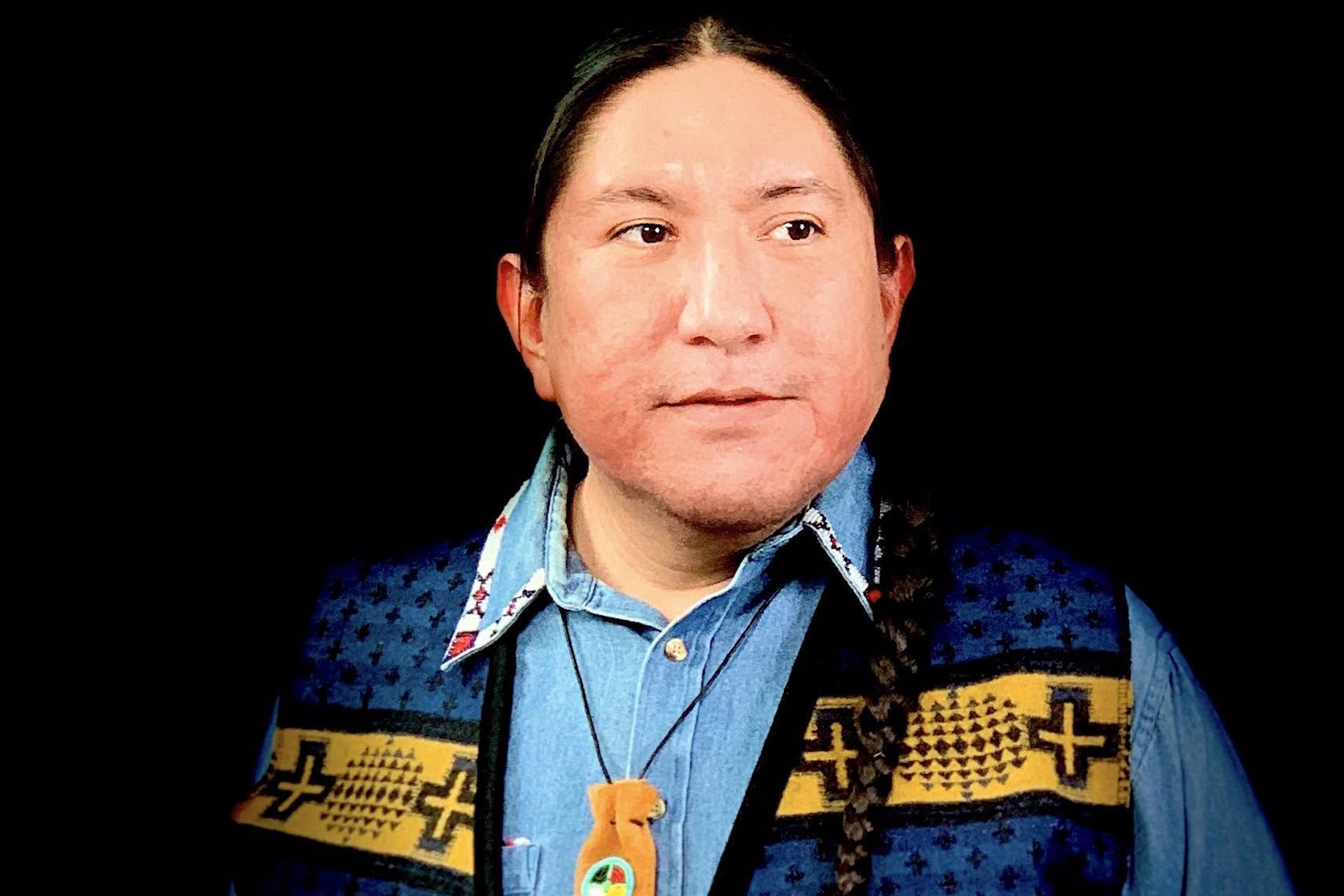
“Until 2019, when we met the Māori, there was no technical roadmap,” said Michael Running Wolf, a computer scientist and software engineer who is a citizen of the Northern Cheyenne Tribe of present-day southeastern Montana. Running Wolf, along with his partner Caroline Running Wolf, co-founded First Languages AI Reality (FLAIR), which works with Mila to develop Indigenous AI technology. Child has also collaborated with the Runnings Wolfs to create a virtual-reality program centred around the kwakwa̱mł, or blue grouse. When complete, people will be able to accompany the grouse on a virtual canoe journey through their territories, engaging in cultural protocols and asking permission to explore such areas.
Such immersive tech may provide students of Kwak’wala valuable lessons about their culture and language, which, given the paucity of fluent speakers and the geographic diaspora of modern Indigenous peoples, is no small feat. Some scholars believe learning languages with the aid of AI could also help students overcome complex feelings of embarrassment and self-consciousness while speaking.
Such knowledge can also have other benefits, Running Wolf believes. “If you speak another language, you live longer,” he said. “This phenomenon is amplified for Indigenous people.” Research has found that Indigenous language use can improve everything from mental health to educational attainment, with speakers more likely to recover from past mental health issues or exhibit lower rates of drug and alcohol use.
Running Wolf’s research currently focuses on four endangered Indigenous languages spoken in British Columbia, the Canadian and Alaskan Arctic, Washington and Brazil: Kwak’wala, Gwich’in, Makah and Yawanawá. These communities sought out FLAIR, not the other way around: “We don’t recruit,” said Running Wolf.
A language like Kwak’wala has particular potential because, like many Indigenous languages, it has high levels of polysynthesis: a form of language structure that can condense huge amounts of information into a single word, including information like personal relationships or, whether the listener is within arm’s reach of the speaker. Running Wolf believes that surmounting the technical challenges of digitizing Kwak’wala could create a roadmap for thousands of other Indigenous languages.
“We’re not creating a bespoke technology for one community,” said Running Wolf. “It’s not sufficient that only one language survives. We’re probably on track for only a handful of Indigenous languages to survive this century, never mind the next 10 years.”
In a world where so much information is digitized, Indigenous cultures rarely get prioritized. Child recounts an experience with iNaturalist, a social network app that helps people identify flora and fauna. In March 2023, iNaturalist contacted Child about obtaining a list of scientific, common and Kwak’wala plant names, like the Nootka Rose (or, in Kwak’wala, g̱a̱lx’ma̱s), that could be incorporated into the platform. After compiling all this information, however, the non-profit informed Child that it could not upload the data.
“These tools can help us, but we’re stuck,” Child said of the mobile app. But, she added, the success of such work depends on somebody, somewhere deciding that it would be worthwhile for their business to support Indigenous languages. “It all comes down to economy, doesn’t it?” she said. “Indigenous language is still getting left behind in this next colonial wave. This rapid colonial technological advancement is picking and choosing what little morsels they’re going to throw at Indigenous people and languages.”
Of the approximately 7,000 languages still spoken worldwide, as many as 40 per cent are considered endangered, and the last native speaker of a language is lost approximately every 14 days. “If we don’t change that, Indigenous inequity will grow at an even more rapid pace than it did in the past,” Child said. “The divide will become an even bigger equity chasm and it will be perpetuated by the tech sector.”
In June, Ottawa announced its new national AI strategy, titled “AI for All.” As part of its second pillar, “Ensuring AI empowers Canadians,” the strategy promises to “support and amplify Indigenous-led AI initiatives,” including that of Running Wolf and Mila’s FLAIR.
Child echoes the words of Murray Sinclair, the chair of Canada’s Truth and Reconciliation Commission, who said, “Seven generations of children went to residential schools. It’s going to take generations to fix things.” But, Child cautions, “we’re never getting out unless Indigenous people are at the helm, are in control and have a meaningful role in the next tidal wave of change.”