Listen Now
0:00
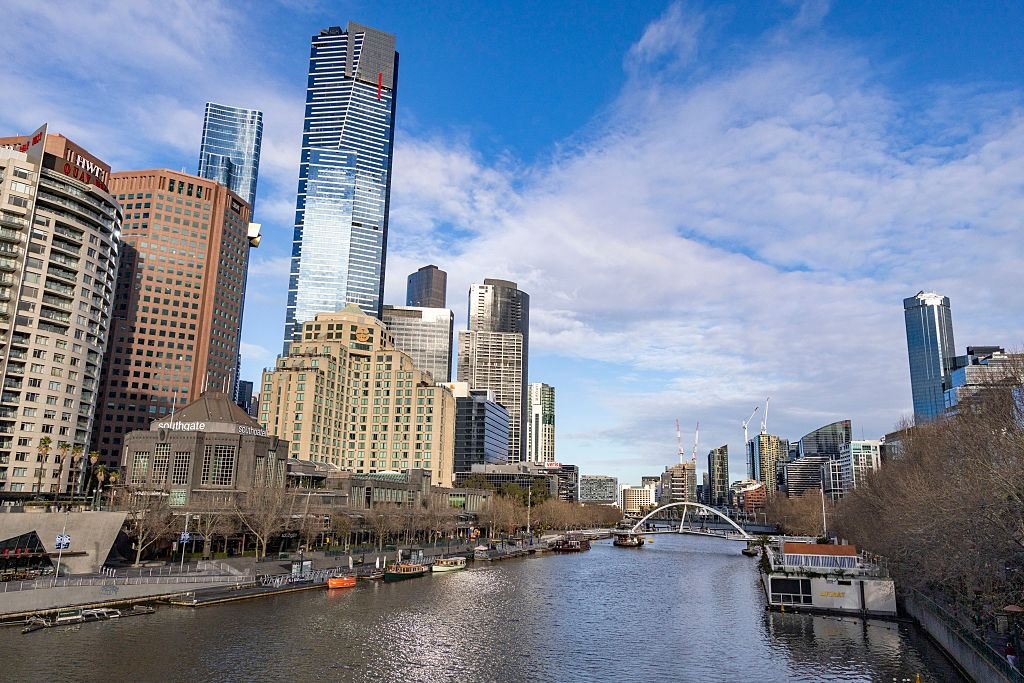
One of Australia’s biggest asset managers is prepared to pour billions more into Canada, but only if the federal government opens publicly-owned assets to pension funds.
IFM Investors, which is owned by a collective of 15 Australian and one U.K. pension fund and manages about US$183 billion in assets for hundreds of institutional investors, has previously said it could invest as much as $10 billion in Canadian infrastructure over the next 10 years. To do that, it needs the right conditions, said Gian-Carlo Peressutti, IFM’s executive director of public affairs. That includes making it easier for private investors to take long-term stakes in government-owned assets, namely, he said, airports.
Talking Points
- Melbourne-based IFM is prepared to invest up to $10 billion in Canada, but says Ottawa must create more opportunities in assets such as airports, roads and ports
- The firm is rallying Canadian pension funds ahead of Prime Minister Mark Carney’s investment summit in September, where it expects the government’s infrastructure ambitions to translate into concrete deals
“We know that Prime Minister Carney has ambition to build a lot of what we call greenfield projects,” Peressutti told The Logic. “A great way to get the money to do that is to unlock the value that exists in a lot of your current public assets.”
The pitch comes as Carney has made building infrastructure a central piece of his national agenda. Carney is positioning Canada as a destination for global investment to attract the capital needed for the massive projects Ottawa intends to build. Within five years, he aims to land $1 trillion in public and private investment.
The strategy has helped move Canada up IFM’s priority list. The firm opened a Toronto office in December, where a small team oversees investments for some 200 Canadian clients IFM already serves. Peressutti expects that office to grow as the firm starts sourcing new deals in the country.
Related Articles


The Melbourne-based investor’s interest in Canada has grown alongside Carney’s infrastructure ambitions, said Peressutti, building on years of partnerships with Canadian pension funds and a belief that Canada could become one of the world’s most attractive infrastructure investment markets.
IFM is now leading an effort by Australia’s investment community to persuade Canadian policymakers, pension leaders and the public to bring more private funding into public infrastructure.
There’s long been debate over whether, and how to get Canada’s big pension funds to invest more domestically. While proponents say it can help boost Canada’s economy, critics have argued it could interfere with their mandates to maximize returns for the retirees they invest on behalf of. Several pension leaders have said they’d invest more at home given the right opportunities, and have called for the government to sell public assets.
Peressutti said the conversations around using pension dollars in public assets have shifted recently. “They have evolved from ‘Is this a good idea?’ to ‘How do we get this done?’,” he said.
This spring, the federal government said it was open to selling or restructuring ownership of public assets, including that of public airports, and using the proceeds to pay for new infrastructure.
Australia has used institutional investor capital to finance infrastructure for over a decade, including toll roads, ports and electricity networks. Governments there have embraced what they call asset recycling: leasing or selling mature public assets and reinvesting the money into new projects. Most leases run for decades, with some lasting nearly a century. The private investors that buy or lease the asset typically operate and maintain it until their contract expires.
Peressutti pointed to the Indiana Toll Road—in which Quebec pension fund La Caisse is an investor—as an example of how the model can work. IFM acquired a long-term lease for the highway out of bankruptcy in 2015 and spent about US$300 million during its first three years to upgrade the road and improve safety. When the firm wanted to increase toll charges in 2018, it had to pay the state US$1 billion as part of its lease agreement.
Peressutti acknowledged the idea of privatizing public assets often faces resistance. Critics worry investors will prioritize quick profits over public needs, like affordability and service quality. He argued that those concerns stem largely from how deals are structured, rather than from the involvement of private capital itself.
Governments can write contracts that impose detailed obligations on investors, which can be as specific as how long the grass along a highway can grow before it must be cut. They can also put public-sector members on an asset’s board to represent citizens’ interests, he said.
Pension funds, he added, are also different owners from traditional private equity investors. Because they typically hold assets for decades, he said, they have an incentive to preserve and improve long-term infrastructure.
IFM is now trying to sell federal and provincial governments on that approach ahead of the Canada Investment Summit in Toronto this September, where it will lead the Australian delegation. In March, the firm signed an agreement with nine Canadian pension funds aimed at identifying opportunities for joint investment.
Peressutti described it as an effort to use the firms’ collective influence to carve out a new market for pension investment in Canadian public infrastructure. “We meet regularly and discuss our activity and our engagement to help unlock these deals,” he said. The group plans to publish a policy blueprint ahead of the summit outlining ways the government can encourage the kinds of investments the pensions are seeking.
While IFM is focused on public assets, Peressutti said those aren’t the only opportunities the firm’s pursuing. It’s also actively looking at potential deals in data centres, pipelines and renewable energy projects. “If there are opportunities that we uncover here, those would be attractive too,” he said.
Peressutti said the summit, meanwhile, will be an important test of whether Ottawa can turn its infrastructure ambitions into investable opportunities. IFM, he said, expects to leave Toronto with deals signed.













