OTTAWA — Mark Carney has made strengthening the Canadian economy the centrepiece of his prime ministership, and hundreds upon hundreds of companies and interest groups have told the government how they think he should do it—mostly by funding them.
Skip to content

 Construction of the Trans Mountain Pipeline expansion near Kamloops, B.C., in September 2020. Photo: The Canadian Press/Jonathan Hayward
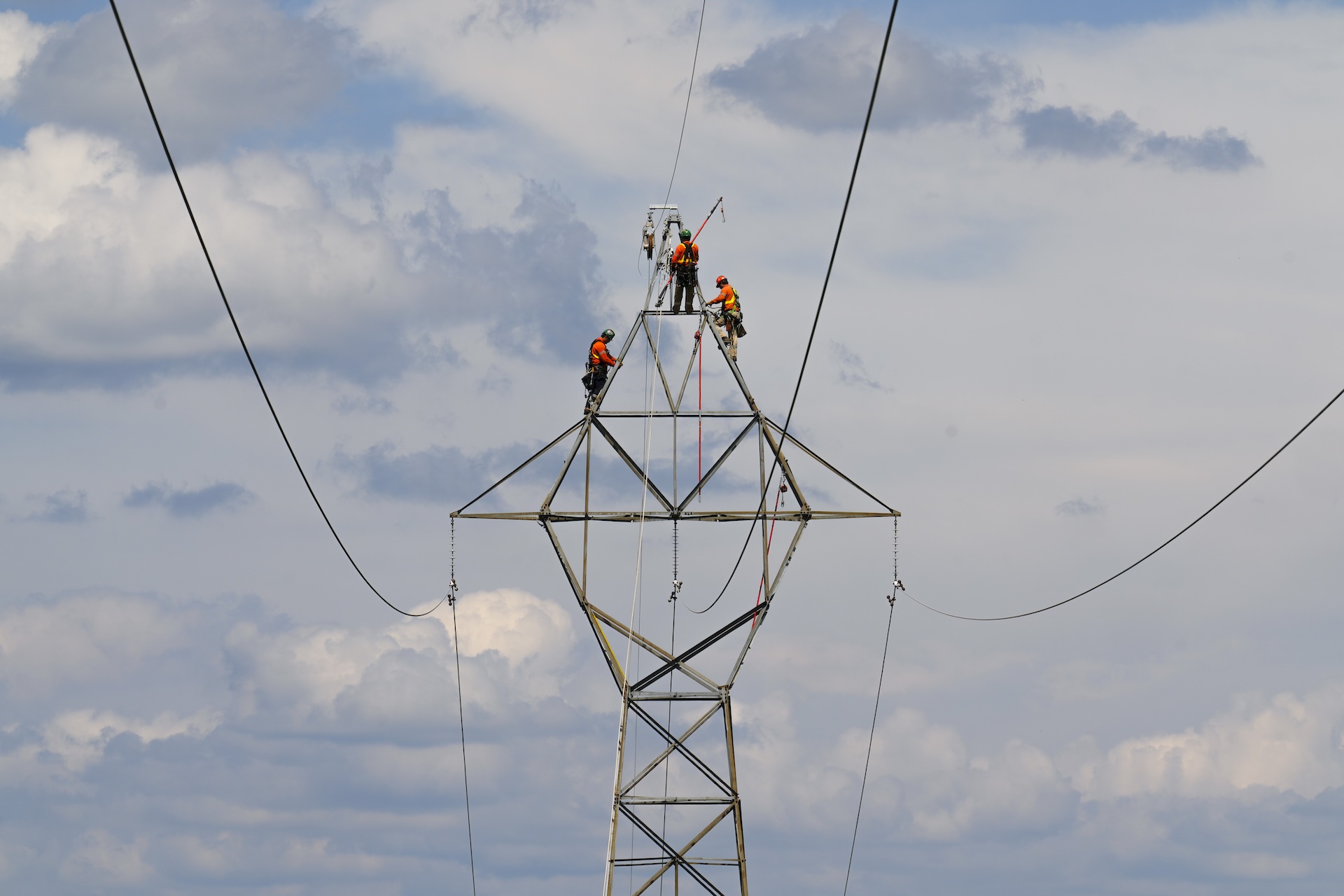 Hydro workers doing maintenance in Renfrew County, Ont. Photo: The Canadian Press/Sean Kilpatrick

Special Report
What business wants from the 2025 federal budget
Money for AI adoption, a Canada-first drug policy and follow-through on open banking are among the asks for the government’s long-awaited fiscal plan
Finance Minister François-Philippe Champagne, left, is set to deliver the first budget of the Liberal government under Prime Minister Mark Carney. Photo: The Canadian Press/Sean Kilpatrick
OTTAWA — Mark Carney has made strengthening the Canadian economy the centrepiece of his prime ministership, and hundreds upon hundreds of companies and interest groups have told the government how they think he should do it—mostly by funding them.
The next federal budget, Carney’s first, is due Nov. 4. Ahead of each budget, the House of Commons finance committee takes proposals from firms, sector groups and the public on what they’d like to see in the final document. The Logic reviewed more than 900 submissions to see what business wants this year.
Talking Points
- This year’s list of asks from companies and organizations reflects the front-of-mind issues confronting Canadians, from defence to artificial intelligence to major projects
- Finance Minister François-Philippe Champagne and his boss, Prime Minister Mark Carney, are under pressure to deliver on their promises to strengthen Canada’s economy and make it less dependent on trade with the United States
While the year’s requests cover the usual broad range, from speeding up drug approvals and open-banking regulations to funding liquified natural gas plans, many of them have a new cast to align with the Liberal government’s stated plans to build physical infrastructure, invest in defence and expand international trade.
Here’s what they’re seeking:
Artificial intelligence
Related Articles



The players
- Access Copyright and the Canadian Copyright Licensing Agency
- Alberta Chambers of Commerce
- AltaLink
- Association des professionnels de l’édition musicale
- Association of Canadian Publishers
- Bell Canada
- Canadian Bankers Association
- Canadian Publishers’ Council
- Canadian Shield Institute
- Council of Canadian Innovators
- Food and Beverage Canada
- Global Relay
- HealthCareCAN
- Literary Press Group of Canada
- Queen’s University
- Sanctuary Cognitive Systems
- SARTEC
- SenseNet
- Technation
- Visa Canada
The Liberal government has put AI near the centre of its economic agenda, and businesses are responding with pages full of program and policy proposals.
Groups like Alberta Chambers of Commerce, Technation, and Food and Beverage Canada want the government to spend to boost the adoption or commercialization of the technology, including via tax credits for companies that use it.
Other petitioners want to shape Canada’s strategy for developing digital sovereignty, either through models and applications, or through infrastructure like data centres.
The Council of Canadian Innovators (CCI), a scale-up lobby group, wants Ottawa to fund homegrown firms building compute capacity and buy its own processing power from them. It’s also calling for rules restricting companies from running Canadian data through AI models outside the country, unless the information has the same legal protections it would here. The Canadian Shield Institute, the council’s think-tank offshoot, wants Ottawa to ensure “domestic ownership of all critical AI IP” as part of its sovereign compute plans.
Bell Canada, meanwhile, is calling for Ottawa to “prioritize a secure, resilient and truly sovereign cloud and AI infrastructure.” The telecom giant recently expanded into the business of running AI data centres and selling AI tools. Vancouver-based Global Relay wants federal departments and agencies to store all their data in one place that’s owned and run by a Canadian firm; it illustrated the recommendation with a picture of its own B.C. data centre. And Queen’s University wants to build a new supercomputer with federal assistance.
Some firms and industry groups are warning Ottawa against regulating AI in their sectors. Visa Canada, for example, is calling for the federal government to avoid rules that would stop it from using data to spot fraudulent transactions or protect its payment system. The Canadian Bankers Association opposes major changes to private-sector privacy law, which the previous Liberal government twice tried and failed to overhaul.
The arts sector, by contrast, wants more proactive regulation of the technology. Several organizations say the federal government must force generative AI developers to respect copyright, and refuse tech industry calls to exempt text and data mining, a process often used in the training of large language models, from regulation. Their ranks include Access Copyright and the Canadian Copyright Licensing Agency; the Association of Canadian Publishers; the Canadian Publishers’ Council; Association des professionnels de l’édition musicale; the Literary Press Group of Canada; and SARTEC, which represents francophone authors and screenwriters.
Some submissions propose programs to roll AI out to specific sectors or places. Sanctuary Cognitive Systems, a Vancouver-based firm developing humanoid robots, would like the federal government to spend more than $1 billion on “physical AI” to develop and manufacture autonomous machines. HealthCareCAN, which represents hospitals, wants Ottawa to put up $500 million over five years for a new organization to test and centralize buying of AI tools for medical facilities. SenseNet, a startup in North Vancouver, B.C., wants $5 million for a pilot project to deploy its AI wildfire detection systems to Indigenous, rural and northern communities. Electric utility AltaNet is also calling for Ottawa to fund the use of AI to track blazes. – Murad
Defence
The players
- 3M
- Aerospace Industries Association of Canada
- Canadian SHIELD Institute
- Canhav Alliance
- Invest Ottawa
- Pearson Canada
Military suppliers don’t need to argue for more defence spending this year, since Carney has already committed to a sharp increase in budgets for the Canadian Forces (and to spend the money in Canada where possible). The Aerospace Industries Association of Canada, for one, wants the government to stick to those plans. But the finance committee heard from companies and groups saying they have other causes that align with the government’s defence goals.
The Canadian SHIELD Institute wants a federal initiative aimed at preserving and promoting Canadian-made intellectual property in the cleantech sector to be broadened to defence innovation. The Canhav Alliance, which represents the fledgling airship industry, seeks a national plan to promote its members’ blimp-like conveyances for long-distance cargo transportation, saying airships can help build new bases and infrastructure in remote parts of Canada.
Invest Ottawa, the capital city’s local economic development agency, made just one recommendation: designate the Ottawa area as a defence innovation centre and seek to build an ecosystem of companies there like the U.S. defence cluster in Virginia or the French aerospace centre in Toulouse.
And education provider Pearson Canada (“a proudly British company”) has a suggestion for a government seeking to expand the military and teach its members new skills: hire Pearson to “offer bespoke training and assessments to ensure that CAF members have the skills necessary to meet this unique moment in global security and mission requirements.” – David R.
Financial services
The players
- Canadian Bankers Association
- Canadian Web3 Council
- Chartered Professional Accountants of Canada
- Electronic Transactions Association
- Financial Data and Technology Association
- Interac
- Option Consommateurs
- Questrade
- Shakepay
- Visa Canada
- Wise
This round of budget submissions reflects ongoing tensions between fintechs and traditional financial service companies when it comes to competition and regulation. On some key files, however, the upstarts and incumbents want similar things.
Among them: open banking and the Real-Time Rail instant payments system, key initiatives that stand to increase competition in the sector but require co-operation between banks, fintechs and the government. The Financial Data and Technology Association, which represents fintechs, noted that Ottawa started the process of delivering open banking, which will require banks to share financial data at a customer’s request to power payments and services, fully seven years ago. “Changes in financial sector policy have historically taken too long to be realized,” the association said in its submission.
Established players sound similarly impatient. Visa Canada asked the government to introduce the remaining changes necessary to launch open banking in the budget implementation legislation. Interac, a bank-owned payments and software network, called for quick implementation of the Real-Time Rail, which it said should be recognized as “a project of national economic significance.” Interac is working with the non-profit Payments Canada to build the Real-Time Rail and its e-Transfer network will settle payments on it.
Visa joined calls from Shakepay, the digital asset lobby group Canadian Web3 Council, the Bank of Canada and the Superintendent of Financial Institutions for federal legislation governing stablecoins, digital assets pegged to the value of the dollar. The U.S. GENIUS Act, passed during the summer, could pave the way for companies from Walmart to big banks to issue their own stablecoins. Visa said Canada needs stablecoin regulation to head off economic uncertainty and even monetary instability stemming from trade in the new assets.
Consumer groups, fintechs and big banks also share concerns about financial crime. The fintech Questrade, fintech lobby group Electronic Transactions Association, Chartered Professional Accountants of Canada and the Canadian Bankers Association all asked Ottawa to improve Canada’s troubled anti-money laundering regime. Consumer group Option Consommateurs said banks should be required to reimburse consumers for fraud, and suggested online platforms be liable for financial losses resulting from fraudulent content. – Claire
Oil and gas
The players
- Air Products
- ATCO
- Cenovus Energy
- Conifer Energy
- Covenant Energy
- Énergir
- Enbridge
- Pembina Pipeline
- Siemens Energy Canada
- TC Energy
- Woodfibre LNG
Fast-tracking major energy projects is central to Carney’s efforts to jolt the Canadian economy. That’s left companies across the energy supply chain—from oil producers to pipeline companies to equipment manufacturers—scrambling to get in line for big-ticket developments that can help the country ramp up capacity and diversify from U.S. buyers.
While the push to build projects is new, the sector’s submissions to department officials were anything but. Companies echoed requests they’ve made in past years, recommending the removal of various regulatory burdens, particularly in project reviews, while bolstering Indigenous participation in development.
Still, some asks were more specific, seeking adjustments to the suite of investment tax credits the previous federal government introduced to spur investment in cleantech, hydrogen and carbon capture.
Air Products, a U.S. company building a hydrogen production facility in Alberta, wants Ottawa to expand tax credits to cover equipment like air separation units or hydrogen-fueled turbines. Siemens Energy Canada recommends expanding the government’s clean technology investment tax credit to include power transmission equipment. Montreal-based gas distribution company Énergir suggested widening the same credit to include the integration of “renewable” natural gas derived from organic waste into the grid.
Pipeline operator Enbridge is urging Ottawa in its submission to simplify regulation and commit to firm project review timelines. Enbridge and rival TC Energy both called for the repeal of the excessive interest and financing expenses limitation, or EIFEL, which lowers the amount of interest regulated companies can deduct from their balance sheets. Electricity companies previously criticized the incoming EIFEL regime after the 2024 budget.
Companies also sought public investment and policy changes to help the liquefied natural gas sector, for which Carney and his ministers have voiced support.
Woodfibre LNG, the consortium building a liquefied gas facility on the B.C. coast, wants a federal “LNG strategy” to encourage foreign investment. Siemens called for an “LNG electrification fund” to connect export facilities to the grid. – Jesse
Infrastructure, transportation and trade
The players
- Armateurs du Saint-Laurent
- Association of Canadian Port Authorities
- Canadian North
- Canadian Trucking Alliance
- Canpotex
- Chamber of Marine Commerce
- Chamber of Shipping
- Fertilizer Canada
- Global Cold Chain Alliance
- Global Container Terminals
- International Longshore and Warehouse Union
- Metro Supply Chain
- NAV Canada
- Picton Terminals
- Prince Rupert Port Authority
- Railway Association of Canada
- Trigon
- UPS
Even among numerous calls to make it easier to move Canadian goods out of the country to export markets, one from Canpotex stands out. The firm itself is a joint venture between Nutrien and Mosaic that transports their potash. Railcars bearing the Canpotex logo are common in Western Canada—and Canpotex would like to see more of them. It sent the finance committee four recommendations, one about expanding rail capacity between Saskatchewan and Vancouver and three about improving access to the Port of Vancouver, all in service of exporting more potash from there.
The Global Cold Chain Alliance, which warehouses and transports perishable food, wants more “export-enabling infrastructure,” especially in Vancouver.
Global Container Terminals (GCT), which operates two terminals in Vancouver, wants federal investments in “port-adjacent trade corridor infrastructure” like highways and separated rail crossings, to get more goods to ports.
It’s also carrying on its longtime campaign against the Vancouver port authority’s plans to build a new container terminal that would add competition for GCT’s, recommending a policy change saying port authorities should have private partners (and ideally Canadian ones) before seeking federal government support for new projects.
Some in the sector want changes to labour laws to make it harder for workers in their industries to strike. Armateurs du Saint-Laurent (representing shipowners and operators in Eastern Canada, especially on the St. Lawrence Seaway) wants shipping treated as an essential service, exempting the sector from a federal prohibition on using replacement workers. Fertilizer Canada wants ships carrying its members’ products to be serviced even if dockworkers are on strike or locked out, the same way freighters taking on grain must be.
Among the Chamber of Shipping’s requests: applying recommendations from an inquiry into the labour situation at West Coast ports following painful disruptions in 2023, which include a more thorough mediation process, during which work stoppages would be banned, and locking in a system where nearly all longshore workers in B.C. bargain with employers together, reducing unions’ ability to cause sporadic stoppages.
The International Longshore and Warehouse Union, whose members were in that labour fight, made a submission of its own with two unrelated recommendations. One calls for infrastructure funding to be tied to job guarantees and not go to automated port facilities; the other for better health and safety monitoring in marine workplaces. – David R.
Auto manufacturing and critical minerals
The players
Association of Equipment Manufacturers
Canadian Automobile Dealers Association
Mining Association of British Columbia
Companies in Canada’s electric vehicle supply chain, from the miners who extract nickel for EV batteries to the environmental groups trying to spur adoption, are keen to see money pour into three core areas: EV chargers, renewed EV purchase incentives and the Critical Mineral Exploration Tax Credit.
The most sensitive issue in the sector, however, doesn’t revolve around funding: it’s the EV sales mandate, which would have seen automakers pay fines if gas cars constituted more than 80 per cent of their new light-vehicle sales starting next year. Under pressure from big automakers, Ottawa paused the requirement, and groups like Propulsion Québec and Electric Mobility Canada want it back. Others, like the Canadian Automobile Dealers’ Association, remain opposed.
The Association of Equipment Manufacturers, which includes companies like Linamar and John Deere, wants funding that hubs like the Port of Vancouver can use to better move imports and exports.
Meanwhile, the U.S. government’s decision to buy stakes in mining companies has Canadian miners urging Ottawa to help them stay competitive. Northern Graphite suggested the government consider an equity investment in its Quebec mine, while the Mining Association of Canada advocated for mineral price floors, similar to one the U.S. government recently set for rare-earths firm MP Materials.
Major miners like Vale and Glencore are touting themselves as potential defence contractors, while Canada Nickel argued that its nickel sulphide mine north of Timmins, Ont., should be deemed a project of national interest, in part because it could support “advanced defence systems.”
As companies mull major projects in Indigenous treaty territories, the Mining Association of Canada also asked that the government extend its Indigenous Loan Guarantee program to infrastructure around mining sites, like camps, airstrips, fuel supplies, power-generation equipment and energy-transmission lines. The Mining Association of British Columbia said the government must help Indigenous Nations build up technical capacity to evaluate potential investments. – Anita
First Nations
The players
- Assembly of First Nations
- Chiefs of Ontario
- Animbiigoo Zaagi’igan Anishinaabek
- Bingwi Neyaashi Anishinaabek
- Lac des Mille Lacs First Nation
- Fort McKay First Nation
- First Nations Tax Commission
- First Nations Procurement Authority
- Assembly of Manitoba Chiefs
- First Nations Finance Authority
- Assembly of First Nations Quebec-Labrador
First Nations groups say they need access to capital and services if they are going to get on board with the government’s plan to build big projects fast. The Assembly of First Nations has called for the creation of a specific branch of the Canada Development Investment Corporation to meet that need, along with an expansion of the Crown corporation’s $10-billion Indigenous Loan Guarantee program.
The First Nations Finance Authority, a not-for-profit that currently provides long-term, low-interest loans to First Nations governments, would also like to be able to lend to Indigenous corporations or limited partnerships that have guaranteed federal or provincial loans in hand. Giving those special purpose vehicles access to the authority’s loans, which come with lower rates than bank lenders offer, would level the financing playing field for First Nations, it said in its submission.
The First Nations Tax Commission said First Nations should have official taxation powers over resource projects instead of having to negotiate compensation with proponents on a case-by-case basis. It’s not immediately clear if the commission proposes to tax project revenue or the resources themselves, but it said the system would reduce the need for talks that drive up costs and create uncertainty. It could also be taken a step further, the submission said, to create a “one tax per project” regime that extends across multiple communities, which would suit energy-corridor projects, in particular.
For all the discussion of major projects, though, submissions from the Assembly of First Nations, the Assembly of Manitoba Chiefs and a group of Northern Ontario First Nations overwhelmingly focused on critical infrastructure gaps in their communities, including ways to provide housing, clean drinking water, emergency services and child care. – Laura
Electricity
The players
- Canadian Nuclear Association
- Capital Power
- Electricity Canada
- Electro Federation Canada
- Emera and Nova Scotia Power
- Energy Alberta
- Hitachi Energy Canada
- Innergex
- JFE Shoji Power Canada
- Marine Renewables Canada
- Nukik
- Schneider Electric
- X-energy Canada
A greener economy will need more clean electricity to replace fossil fuels, and jurisdictions across Canada are grappling with how to meet demand from industry (including power-hungry data centres) and consumers who want to charge things.
Collectively, the sector wants direct funding and tax credits for electricity projects, especially traditional and new small nuclear reactors. But it also wants looser rules on fossil fuel-powered generating stations so they can continue operating for longer.
The Canadian Nuclear Association wants tax credits to support nuclear plant construction and uranium mining, and funding to research microreactors. X-energy Canada wants nuclear projects to be regulated exclusively by the Canadian Nuclear Safety Commission and exempted from the Impact Assessment Agency’s reviews. The company is working on a small modular reactor that uses a type of uranium historically sourced only from Russia and wants government help to find alternatives.
Alberta’s Capital Power is seeking funding for small modular reactors and green-energy tax credits, but also a loosening of federal regulations that would let it keep operating a major natural-gas power plant—and federal backing to build an AI-oriented data centre there.
Electro Federation Canada, representing hundreds of companies in the electrical components industry (makers and installers of products from lights to transformers to cables to control devices), says Canada needs to modernize its electrical grid and prepare for the demands of charging fleets of electric vehicles. The country also should figure out where the materials for an electrified economy will come from and factor demand for copper, cobalt, nickel and other critical minerals into decisions about projects of national importance, the group says.
Hitachi Energy, which makes industrial power transformers near Montreal, wants a national policy favouring Canadian-made industrial power transformers. – David R.
Health, pharmaceuticals and medtech
The players
- AbbVie
- Apotex
- AstraZeneca
- BioteCanada
- Canadian Nuclear Isotope Council
- GSK
- Innovative Medicines Canada
- Medtech Canada
- Merck
- Novo Nordisk
- Obio
- Vertex Pharmaceuticals
Drug companies customarily petition the federal government to fund research and treatment for conditions their products are used for, and 2025 is no exception.
GSK, which makes a range of vaccines and is working hard on a treatment for hepatitis B, wants federal funding for immunization (especially of adults) and treatment of hepatitis B for immigrants to Canada. Merck, which makes vaccines and a number of cancer treatments, wants more funding for vaccinations and cancer care. Vertex Pharmaceuticals, which makes a treatment for sickle cell, wants a national strategy for dealing with the disease.
Besides wanting the government to stop online pharmacies from shipping drugs from Canada to U.S. customers, Wegovy and Ozempic maker Novo Nordisk wants obesity recognized as a chronic disease, “requiring enhanced research, treatment, and prevention efforts.”
Pharma companies invoked the trade battle with the U.S. in their submissions, too.
Generic drugmaker Apotex has just one recommendation: a “Canada first” policy for medications. Canadian manufacturers should get a six-month window of “priority status” when the federal government is buying a newly available drug, the company says, giving Canadian suppliers first dibs on federal business. Canadian companies should also go to the head of the line when Health Canada evaluates applications for new pharma products, Apotex argues.
AstraZeneca, which works in both Canada and the United States, wants Canada to fight any U.S.-imposed tariffs on foreign pharmaceuticals, but definitely not with counter-tariffs on American-made drugs. Merck asks for the same.
Innovative Medicines Canada, an industry association for brand-name drugmakers, invokes the trade war in arguing for extending intellectual-property protections in pharmaceuticals, proposing that giving its members longer periods without competition in Canada would attract pharma investments. – David R.
Quantum
The players
Digital Innovation Minister Evan Solomon has promised the quantum computing sector something big this month to keep its talent and IP in Canada, reflecting Ottawa’s concern that a blockbuster U.S. government program will lure promising firms south.
Toronto-based Xanadu is one of the firms enrolled in that program, which is run by the U.S. Defense Advanced Research Projects Agency. It wants Ottawa to expand the scope of the $15-billion Canada Growth Fund so it can back firms developing quantum and other “strategic” technologies. The program currently backs companies and mega-projects that reduce emissions. Quantum computing firms need similarly large sums of capital, and their technology is important to Canada’s sovereignty, Xanadu argues.
The firm is repeating its call for funding to seed a quantum data centre that would be built and run by a private-public partnership, and filled with Canadian-made hardware. Businesses, researchers and government departments would be able to use the facility to experiment with the breakthrough technology.
D-Wave, founded in Burnaby, B.C., wants Ottawa to spend the money in its $360-million National Quantum Strategy more quickly. And it’s calling for federal programs to be open to “fully inclusive of all quantum technologies.” D-Wave is unique among Canadian firms in pursuing a technique called annealing, which it claims is closer to solving real-world problems than other methods, but which may be useful for fewer applications.
The firm reiterated its longstanding recommendation that Ottawa set up a quantum sandbox, a program under which participating firms would build applications to solve business and public-sector problems. And it wants the federal government to subsidize access to quantum systems for companies, researchers and government departments.
IBM Canada, a traditional tech player that’s bet heavily on the disruptive technologies, also wants Ottawa to pay to set up quantum computing infrastructure, and link the new hardware up to the supercomputers it’s funding for AI research. The U.S. firm also wants the federal government to provide financing to venture capital firms that back startups in the space. – Murad
Higher education
The players
- Canadian Association of Physicists
- Canadore College
- Capilano University
- MacEwan University
- McGill University
- Colleges and Institutes Canada
- Polytechnics Canada
- Queen’s University
- University of Waterloo
- Northeastern University
- York University
- University of Manitoba
- Université de Sherbrooke
- U15 Canada
- University of Guelph
- University of Calgary
- University of British Columbia
- University of Alberta
- Universities Canada
Post-secondary institutions pitch investments in them and their programs as key to Canada’s long-term prosperity.
Universities Canada, representing a whole sector, wants funding for research and lab infrastructure, which is typical. But the group also seeks faster visa processing for students and researchers and more student-oriented housing.
Colleges and Institutes Canada seeks capital funding for training spaces and equipment, and a national workforce strategy that would, among other things, standardize credentials in careers its members train people for.
Echoing that submission, Polytechnics Canada (representing mainly a subset of colleges and technical institutes like Alberta’s northern and southern institutes of technology, Ontario’s Algonquin and Conestoga colleges, and the B.C. Institute of Technology) emphasizes the practicality of its members’ programs and their work in “applied, industry-driven research.” Give them more money and they’d do more, the association says, seeking particular funding for defence work. Its members also need better cyber defences, it says, seeking $50 million over five years.
Individual institutions have their own requests. McGill wants $200 million for a sustainability centre; Queen’s wants backing for its artificial intelligence research; Université de Sherbrooke wants the same for a quantum research site; and so on.
One outlier is Northeastern University, which is based in Boston but has satellite campuses in Toronto and Vancouver. It wants access to Canadian research funding and direct funding for research and development sites in those cities—in keeping with federal promises to build “new international partnerships with like-minded countries” in these unpredictable geopolitical times. – David R.
The innovation economy
The players
- Technation
- Council of Canadian Innovators
- Digital
- The Canadian Food Innovation Network
- Canadian Collaborative for Society, Innovation and Policy
- Obio
- Canadian Science Policy Centre
- U15 Canada
- Actua
- Springboard Atlantic
- Invest Ottawa
- New Ventures BC
- Innovate Calgary
- North Forge
- Communitech
- Main
Innovation sector advocates are calling on Carney to make good on his election promise to reverse the trend of made-in-Canada ideas flowing to the U.S. Their starting point: plans for a “patent box” regime, which appeared in both Carney’s campaign platform and the previous Liberal government’s last fall economic statement. In other countries, patent boxes offer tax concessions on IP income as a way to encourage local R&D.
CCI, Obio and Technation want to see it in Carney’s first budget. They’ve also asked the government to see through plans to modernize its marquee R&D incentive, the Scientific Research and Experimental Development program (SR&ED). The government announced major reforms to SR&ED in the fall economic statement that never made it into law. CCI, meanwhile, has asked Ottawa to go even further and restrict eligibility for SR&ED to Canadian-controlled firms.
U15, an association of 15 Canadian research universities, has asked Ottawa to advance Canada’s technological sovereignty with a $1-billion fund lasting five years to develop and commercialize sensitive research with both military and civilian applications, and in sectors like cleantech, energy security, biotech and health innovation. The association argues Canada can no longer rely on other countries for tech in those fields.
Other submissions urge the government to preserve programs they say are already helping to develop and retain Canadian IP, even as Carney looks for places to cut his budget.
A joint submission by seven innovation hubs tasked with administering the government’s ElevateIP program, including Communitech, Invest Ottawa and Springboard Atlantic, has called for renewed funding. The program to help startups strategically manage their intellectual property is due to sunset in March 2026. The hubs argue that pulling the plug on it would be a waste of the momentum they’ve built.
Technology cluster Digital, set up to address Canada’s difficulty scaling homegrown technologies, has asked the government to renew its funding beyond its 2028 expiry date, and expand the use of its model. The cluster said it has created tens of thousands of jobs and contributed to GDP growth. – Laura



Loading...
Thanks for sharing!
You have shared 5 articles this month and reached the maximum amount of shares available.
CloseThis account has reached its share limit.
If you would like to purchase a sharing license please contact The Logic support at [email protected].
CloseGift the full article!
You have gifted 0 article(s) this month and have 5 remaining.
Recipients will be able to read the full text of the article after submitting their email address. They will not have access to other articles or subscriber benefits.
Photo: The Canadian Press/Sean Kilpatrick
Construction of the Trans Mountain Pipeline expansion near Kamloops, B.C., in September 2020.
Hydro workers doing maintenance in Renfrew County, Ont.
Most Popular This Week




In-depth, agenda-setting reporting
Great journalism delivered straight to your inbox.
The Big Read
Alberta’s referendum is just the start of the turmoil
Briefing
EverWind plans $10B data centre and wind development in Nova Scotia
Canada ready to force Stelco to sell its Canadian operations, Joly says
Feds plan a 60 MW defence-oriented data centre for Ottawa
Best business newsletter in Canada
Get up to speed in minutes with insights and analysis on the most important stories of the day, every weekday.
Exclusive events
See the bigger picture with reporters and industry experts in subscriber-exclusive events.
Membership in The Logic Council
Membership provides access to our popular Slack channel, participation in subscriber surveys and invitations to exclusive events with our journalists and special guests.