While Canada’s fintech industry was bemoaning the country’s slow progress on real-time payments and open banking, Shopify used stablecoins to do an end run.
Skip to content


News
Canada’s banks are about to get hit by a trillion-dollar stablecoin tsunami
The U.S. is ready to take stablecoins mainstream. Canada isn’t. Monetary policy and financial stability are on the line.
Lucas Matheson, Coinbase Canada's CEO, speaks at Consensus 2025 by Coindesk, in Toronto, Thursday, May 15, 2025. Photo: Cole Burston for The Logic
While Canada’s fintech industry was bemoaning the country’s slow progress on real-time payments and open banking, Shopify used stablecoins to do an end run.
Last month, the Ottawa e-commerce giant rolled out a new checkout method that lets merchants who use its software accept payments in USDC, a type of digital asset called a stablecoin that’s pegged to the value of the U.S. dollar.
Shoppers browsing the web stores of the millions of merchants that use Shopify to sell everything from T-shirts to mattresses can now pay for their purchases with the popular crypto token. What’s more, instead of waiting days to clear on traditional financial rails, those payments will settle 24 hours a day, seven days a week on Coinbase’s Base blockchain.
Because crypto is open by default, Shopify’s developers built the feature to work with any crypto wallet compatible with Base—essentially a crypto version of open banking, the long delayed system meant to let users securely share financial data with fintech apps. Shopify’s service uses blockchain technology to hold the funds in escrow until the merchant authorizes the payment, at which point it finalizes automatically, using a programmable feature called a smart contract that’s unique to blockchains.
Talking Points
- A committee of the U.S. Treasury Department forecasts stablecoins are about to explode as a mainstream payment mechanism following legislation passed in the Senate last month that paves the way for banks and other firms to issue them. It predicts the sector will grow eightfold to US$2 trillion by 2028.
- The Department of Finance is in the process of developing federal legislation governing stablecoins, but in the meantime, experts say Canada is at risk of both missing the opportunities they present and being unprepared for their risks, which include financial instability and the erosion of the ability to enact monetary policy.
In an interview, Lucas Matheson, Coinbase’s country director for Canada and a former Shopify executive, acknowledged the use of stablecoins for payments and settlement falls under a regulatory grey area in Canada, but said Canadian merchants will still be able to take advantage of the service. The ability to simply build an innovative financial product, rather than wade through years of regulatory approvals and red tape, is part of the promise of blockchain technology, he said.
“That’s one of the exciting reasons I’m personally in crypto, is to be a part of the innovation that’s coming around financial services,” he said. “Innovation is going to drive us forward.”
Stablecoins, like everything else in crypto, have until now mostly been used to facilitate speculative trading by helping people swap one crypto asset for another on exchanges. But with the advancement of U.S. legislation that could pave the way for everyone from Walmart to big banks to issue their own stablecoins, the U.S. Treasury Borrowing Advisory Committee is predicting the floodgates are about to open into mainstream consumer payments, with the sector growing eightfold to US$2 trillion by 2028.
Related Articles

Proponents say stablecoins will bring competition and innovation to Canada’s notoriously concentrated banking sector. Detractors, however, argue the financial system has tight guardrails for a reason, and keeping the tech sector’s move-fast-and-break-things ethos out of banking is a good thing.
International regulators have been sounding the alarm about stablecoins for years, warning their widespread adoption could threaten economic growth and the ability of central banks to manage crises. Stablecoins are not always as stable as their name suggests—the 2022 collapse of the stablecoin Terra wiped out US$50 billion in value and kicked off contagion that sparked a prolonged crypto winter, while USDC lost its peg to the dollar in 2023 after revealing it held almost eight per cent of its reserves at the failed Silicon Valley Bank.
“Stablecoins as a form of sound money fall short,” the Bank for International Settlements (BIS), the central bank to the world’s central banks, wrote last week, flagging their lack of transparency and the risk of capital flight from emerging economies. “And without regulation [they] pose a risk to financial stability and monetary sovereignty.”
Unbacked crypto assets like bitcoin are notoriously volatile, a problem stablecoins seek to solve by backing the tokens with a reserve of real-world assets. Stablecoins don’t typically pay interest, which means issuers get to keep the returns they earn by investing users’ funds in reserve assets—a business that has proven very profitable.
The GENIUS Act, passed in the U.S. Senate in mid-June, requires issuers to keep their reserves in high-quality, U.S. dollar-denominated assets that can be redeemed easily, such as Treasury bills. It gives stablecoin issuers responsibilities around transparency and regulatory capital, but they’re not as stringent as those faced by banks.
Another key difference between stablecoin payments and ones that use dollars within the traditional financial system is the infrastructure they operate on. In Canada, a new business that wants to offer traditional payment services must jump through several hoops: apply for membership with Payments Canada to move funds to and from bank accounts, register with Interac to use its e-transfer system, or partner with a bank, in order to access the systems it needs to function.
In contrast, blockchains are open by default—anyone who knows how to code can build an app that uses stablecoins for payments without getting anyone’s permission, although they might learn the hard way later that a regulator or law enforcement doesn’t think they should have. That can enable innovation—but it also provides opportunity to criminals and people from sanctioned regimes.
Crypto trading accounts for the vast majority of stablecoin transactions. Stablecoins accounted for US$35 trillion in volume in the past 12 months, according to data from Visa, while a report by blockchain analytics firm Artemis found US$94.2 billion worth of stablecoin payments between businesses, consumers and other real-world economic actors settled between January 2023 and February 2025.
Stablecoin use outside of crypto trading is growing, however. In countries with unstable currencies or untrustworthy banking systems, stablecoins grant easy access to a proxy for the U.S. dollar. They’re especially useful for cross-border payments, avoiding the delays and high fees of wire transfers and other traditional methods.
The inauguration of U.S. President Donald Trump, whose election victory was fuelled by an unprecedented US$119 million in contributions from crypto corporations, was followed by a flurry of stablecoin announcements from major international companies—including Stripe, Visa, Mastercard and Chinese e-commerce giant JD—likely anticipating friendly regulations.
Walmart and Amazon have reportedly explored issuing their own stablecoins, with neither company responding to a request for comment. The GENIUS Act requires public companies in businesses other than financial services to get the unanimous approval of the Secretary of the Treasury, the chair of the Federal Reserve and the chair of the Federal Deposit Insurance Corporation to issue a stablecoin, but tech companies and major retailers could also partner with a regulated issuer, Wall Street broker Bernstein suggests.
The idea of banks, retailers and other private actors issuing stablecoins was unthinkable just a few years ago. When Meta first proposed its Diem stablecoin in 2019—then known as Libra—Democrats on the House Financial Services Committee worried its massive customer base spanning a quarter of the world’s population could lead to the creation of a new “financial system that is too big to fail.” Meta officially scuttled it three years later following global criticism from regulators and lawmakers.
The list of concerns critics have raised about stablecoins is long. The BIS reiterated many of them in its recent report, arguing that stablecoins aren’t a good form of money because they’re not backed by a central bank and can be used in money laundering.
Whether or not stablecoins’ shortcomings outweigh their benefits, the success of credit card rewards programs demonstrates consumer payment habits can be heavily influenced by incentives. Shopify is planning to offer merchants in select countries a rebate of up to 0.50 per cent, or more for American businesses, for payments accepted in USDC.
Katrin Tinn, a finance professor at McGill University who studies digital assets, said stablecoins would also compete with bank deposits if they became widely used for payments. While banks lend out deposits to fund business expansions, mortgages and other economic activity, stablecoin issuers typically stick to government bonds and similar low-risk assets.
At a large enough scale, that shift could affect economic growth. “There will be potentially a lot of assets locked up rather than lent out to the real economy,” she said.
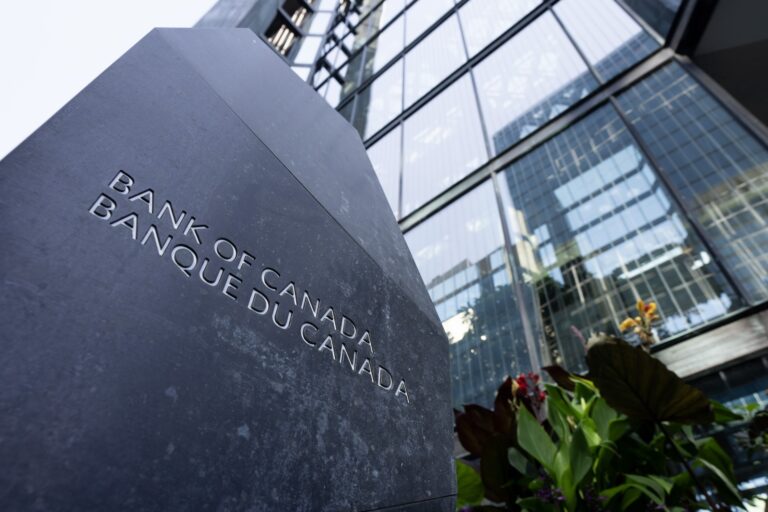
Another paper released by the BIS in May found Treasury bill yields tend to fall as growing stablecoin reserves create rising demand for them, which could eventually affect the U.S. Federal Reserve’s ability to raise and lower interest rates. The Bank of Canada has long said it is keeping an eye on two trends—the decline of cash and the rise in popularity of stablecoins and other crypto assets—that could threaten the country’s monetary sovereignty and financial stability to the point where the central bank would need to issue its own digital currency.
Despite these dire warnings, Canada doesn’t currently have a clear regulatory framework governing stablecoins. In 2023, the Canadian Securities Administrators (CSA), an umbrella organization for provincial securities regulators, issued a notice stating that stablecoins may be securities, which means both their issuers and the platforms that offer them for sale in Canada need to register and follow their rules.
However, it remains unclear whether uses for stablecoins outside crypto-trading platforms—such as payments and settlement—are permitted in Canada, said Matthew Burgoyne, chair of the digital assets and blockchain group at Osler, Hoskin & Harcourt in Calgary. “It’s been extremely frustrating as a legal advisor,” he said, since he’s unable to provide a clear answer when clients ask him what is and isn’t allowed.
Speaking to reporters last week, Peter Routledge, superintendent of financial institutions, said the Department of Finance is working to rectify that. He said Ottawa is in the process of developing legislation governing stablecoins, and that the banking regulator is “quite prepared with the right legislative framework to regulate and supervise that particular innovation.”
Asked what the timeline for this legislation is and whether stablecoin issuers will be regulated as banks, Finance spokesperson Benoit Mayrand said “further details will be released in due course.” CSA spokesperson Ilana Kelemen said securities regulators “continue to have investor protection concerns” with stablecoins and said anyone in the business of trading them should contact their local regulator.
Matheson, Coinbase’s head of Canada, said he’s been lobbying for Ottawa to regulate stablecoins as payment instruments for years. In his view, failing to respond to U.S. legislation with a regulatory framework of our own that would permit Canadian dollar-denominated stablecoins might introduce an additional monetary policy problem. That’s because demand for Canadian government debt to back reserves wouldn’t keep up with the voracious global appetite for U.S. Treasuries.
“If we don’t have a stablecoin in [the] market, I would expect more Canadians to start using U.S.-denominated digital assets in their day-to-day lives,” he said. “That’s not a path we want to be on.”
Andrew Spence, an economist and financial consultant, said he’s not convinced that opening the door to the likes of Walmart and Amazon issuing stablecoins is the best way to solve the lack of competition and innovation in Canada’s financial services sector. However, he said he sees a familiar pattern emerging.
Canada emerged relatively unscathed from the 2008 financial crisis thanks to its strict banking regulations. But despite suffering devastating bank bailouts and other turmoil, the U.S. economy has since leapfrogged its northern neighbour’s.
“The U.S. is going to go racing ahead on this now. They may come to regret it at some point down the line,” Spence said, referring to the recently passed stablecoin legislation. But following the financial crisis, “the U.S. economy is now up and running and doing far better than we are. So what is the value of excessive stability focus?”
With files from Aimée Look



Loading...
Thanks for sharing!
You have shared 5 articles this month and reached the maximum amount of shares available.
CloseThis account has reached its share limit.
If you would like to purchase a sharing license please contact The Logic support at [email protected].
CloseGift the full article!
You have gifted 0 article(s) this month and have 5 remaining.
Recipients will be able to read the full text of the article after submitting their email address. They will not have access to other articles or subscriber benefits.
Photo: Cole Burston for The Logic
Most Popular This Week




In-depth, agenda-setting reporting
Great journalism delivered straight to your inbox.
Commentary
Carmichael: Canadian ignorance about India is a strategic weakness
Briefing
Aritzia shares pop after earnings rise 204%
First Nation in Alberta goes to court over fast-tracked oil pipeline
Chinese EV maker Geely Auto Group to launch in Canadian market in 2027
Best business newsletter in Canada
Get up to speed in minutes with insights and analysis on the most important stories of the day, every weekday.
Exclusive events
See the bigger picture with reporters and industry experts in subscriber-exclusive events.
Membership in The Logic Council
Membership provides access to our popular Slack channel, participation in subscriber surveys and invitations to exclusive events with our journalists and special guests.





