OTTAWA — When the federal Liberals promised $2 billion to buy artificial intelligence computing for Canadian businesses, Quebec’s Economy, Innovation and Energy Minister Pierre Fitzgibbon’s first reaction was, “I want to have all of that in Quebec.”
Skip to content

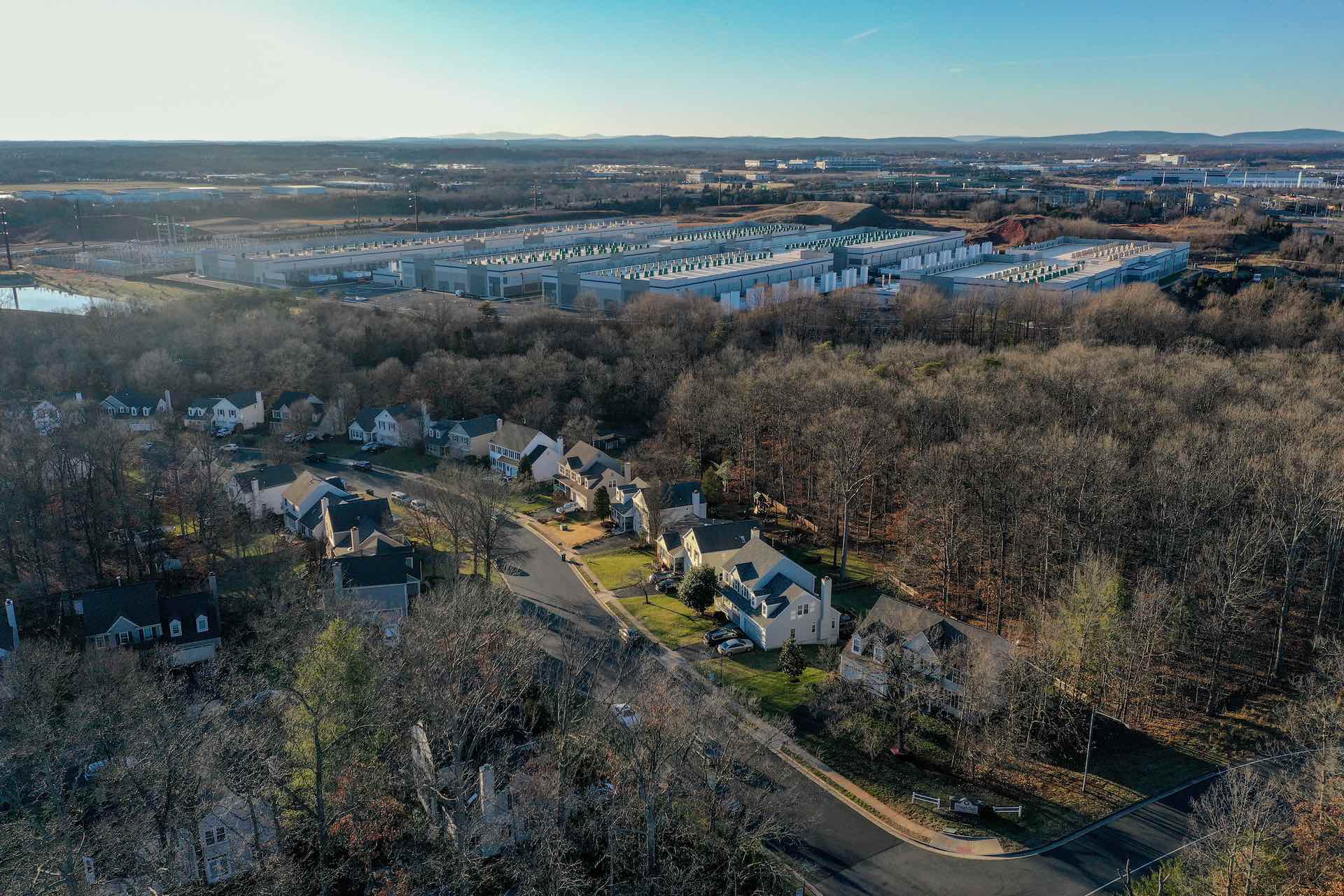 Amazon Web Services data centres in Manassas, Va., in January 2023. Photo: The Washington Post via Getty Images/Jahi Chikwendiu

News
Canada wants AI but doesn’t have the juice to power it
Hunger for electricity as much a problem as shortage of ‘compute’
Hydro-Quebec's Romaine 1 hydroelectric dam in Havre St. Pierre, Que., in October 2018. Even with its current large-scale facilities, the utility will need more generating capacity to serve the energy needs of artificial Photo: AFP via Getty Images/Lars Hagberg
OTTAWA — When the federal Liberals promised $2 billion to buy artificial intelligence computing for Canadian businesses, Quebec’s Economy, Innovation and Energy Minister Pierre Fitzgibbon’s first reaction was, “I want to have all of that in Quebec.”
Then he realized how many thousands of megawatts Quebec would have to supply to power that much processing.
“We don’t have them,” he lamented to a National Assembly committee in April.
Talking Points
- Canada’s supply of renewable energy is vast but data centres running artificial intelligence software will gobble up every watt and then some
- AI providers’ desire for renewable, sustainable energy limits options
The quest for “AI compute” often focuses on the processors that artificial intelligence tools run on—the chips used to train models and put them to work making useful inferences. As important as those precious devices are, they’re not enough by themselves.
They need electricity to operate, often in immense quantities. Canada is already struggling with how to power the electrification of industry and transportation—charging electric vehicles; replacing the steel industry’s blast furnaces with electric ones; replacing oil and gas heating with electric heat pumps—while cutting greenhouse gas emissions. AI’s thirst for the “power” side of “compute power” could throw current forecasts for a loop.
Quebec’s energy—up to about 46,400 megawatts at maximum capacity, according to federal figures from 2019, the vast majority of it from hydroelectric dams—is in such demand that last year it started requiring applications and approvals for industrial projects demanding more than five megawatts.
The provincial government now has 13,000 megawatts’ worth of applications for data centres, Fitzgibbon told that National Assembly committee.
Related Articles


“We’ve decided we’re only going to allow those that will augment AI computing power for businesses on our territory,” he said in French. “A data centre for the cloud, to process online transactions—that’s a no. We don’t have the megawatts. But a data centre with a supercomputer that will provide Quebec companies with access to new technologies—we’d be very much in favour of that.”
After previously trying to recruit data centres, the provincial electricity utility Hydro-Québec has stopped, spokesperson Maxence Huard-Lefevbre told The Logic: “The energy context in Quebec and elsewhere in the world has changed considerably in recent years.”
Several provinces have gone through similar reversals after initially chasing cryptocurrency mining operations in the late 2010s. AI-oriented data centres use practically identical equipment, just for a different purpose.
To meet some of that need, Hydro-Québec is rushing to add up to 9,000 megawatts of generation by 2035, as much as three of its biggest dams produce—together.
British Columbia is touting the 1,100 megawatts of power soon to come online from its Site C hydro dam as a reason for data centre operators to choose it. (For scale, the natural-gas–powered Calgary Energy Centre produces 330 megawatts. The four reactors at Ontario’s Darlington Nuclear Generating Station can generate 3,512 megawatts.) B.C.’s electricity is cheap and green, its climate convenient for cooling racks of computers, its proximity to both the U.S. and Asia attractive—all are part of its pitch.
Still, just a few large data centres could gobble up all of the Site C dam’s energy production and then some. Hydro is also not necessarily the reliable power source it has historically been.
“The energy context in Quebec and elsewhere in the world has changed considerably in recent years”
At power-grid scales, generating capacity is typically measured in megawatts (how much electricity the system can supply at any given moment), while total consumption is measured in terawatt-hours per year (how much electricity users consume annually). Demand has daily and seasonal peaks and troughs, so it’s not this simple in real life, but the quick and dirty math is that it takes about 114 megawatts of generating capacity, running around the clock, to produce one terawatt-hour of electricity a year.
In January, the International Energy Agency (IEA) estimated that the global electricity demand from data centres could double between 2022 and 2026, with AI a major factor in the increase.
Even the agency’s low estimate puts the increase in general data-centre power use at about 140 terawatt-hours, from a starting point of 460 two years ago. AI is a huge part of it.
“By 2026, the AI industry is expected to have grown exponentially to consume at least 10 times its demand in 2023,” the forecast said.
The trajectory of demand is hard to predict, because, according to a different IEA document, artificial intelligence might also help manage energy needs. Machine learning can match variable supply from wind and solar farms to changing demand and plan efficient maintenance, notes the commentary from last November, reducing costs and outages at the same time. AI providers and chipmakers are also striving mightily for efficiencies.
Salesforce, provider of a huge array of cloud-based business services, is one of those consumers, but the demand is across the board, said Megan Lorenzen, Salesforce’s Colorado-based director of climate and energy, in an interview.
“We are seeing for the first time in two decades, load growth—significant load growth,” she said. Salesforce aims to run a carbon-neutral business, and it needs sustainable, reliable, affordable energy to do that. The company runs some of its own data centres, and contracts others from Amazon Web Services (AWS), including in Canada.
Salesforce’s environmental reporting shows the company’s thirst for electricity, which grew from 771,000 megawatt-hours in its 2022 fiscal year to 913,000 megawatt-hours in 2024 (the company is already in its 2025 fiscal year). More than 90 per cent of that consumption is in data centres.
Machine learning has been in Salesforce’s products since 2014, Lorenzen said, with generative AI tools added more recently, and it’s learned some lessons about efficiency. One is to shun needlessly big and complex AI platforms.
“We’re really focusing on the power of the small models, in particular, and we have found that by optimizing the model size and not following this bigger-is-better philosophy, we’re able to customize our models based on their intended application. It reduces the emissions impact,” she said.
To that end, Salesforce has invested in Canada’s Cohere, emphasizing the value of its narrowly focused generative AI tools.
The company also seeks out energy-efficient hardware and tries to do the energy-intensive training of the models it uses at times of lower demand.
In dealing with governments, Lorenzen said, Salesforce talks up the need for faster approvals of low-carbon generating projects and interconnections between power grids.
Those interconnections are about making sure wind farms can power places where the air today is still, and solar farms can power places under clouds.
“By 2026, the AI industry is expected to have grown exponentially to consume at least 10 times its demand in 2023”
AWS, Microsoft Azure and Google Canada all declined requests for interviews on how they’re thinking about matching their need for electricity to current and future supplies. All sent information about how important sustainability and green energy are to them.
AWS bills itself as the biggest corporate buyer of renewable energy in Canada. In a statement relayed through spokesperson Michaela DiMarcantonio, it said it invests heavily in energy efficiency and considers power alongside talent and connectivity when deciding where to set up new operations.
When Amazon announced the creation of a new AWS cloud-computing “region” in Calgary at the end of 2023, it emphasized its low-carbon goals and pointed out that it had arranged its own wind and solar farms in the province. The four projects that make it the biggest corporate buyer of renewables in Canada are all in Alberta; elsewhere, such as in Quebec, Amazon gets power from the grid.
Alberta is actively seeking data centre business; the Calgary Herald reported recently that the province’s grid operator has six data centre applications in its queue, totalling 2,000 megawatts. However, Premier Danielle Smith’s skepticism toward renewables is plain, and Alberta’s electricity relies heavily on natural gas, which is a reliable power source but fits poorly with hyperscalers’ emphasis on sustainability.
Fellow hyperscale cloud-computing provider Microsoft pointed to deals with Brookfield and Ontario Power Generation to buy clean energy. The Brookfield agreement is to lead to 10,500 megawatts of new renewable capacity by 2030, to power Microsoft’s cloud services in the U.S. and Europe.
In Ontario, though, where current energy construction plans already fall short of anticipated need, AI demand hasn’t factored strongly in electricity planning. In a lookahead this spring, the province’s Independent Electricity System Operator (IESO) forecast additional commercial demand of 12 terawatt-hours by 2050, or about 1,400 megawatts of round-the-clock generation.
The forecast accounts for about 300 megawatts’ worth of new data centres, IESO spokesperson Andrew Dow wrote in an email, though he acknowledged others may come up. Indeed, the agency has an application in hand to connect a 342-megawatt data centre in Milton, Ont., west of Toronto, in 2026.
“There have been several businesses exploring potential data centres in Ontario,” Dow wrote, “and we will continue to monitor to determine whether they should be reflected in future forecasts.”



Loading...
Thanks for sharing!
You have shared 5 articles this month and reached the maximum amount of shares available.
CloseThis account has reached its share limit.
If you would like to purchase a sharing license please contact The Logic support at [email protected].
CloseGift the full article!
You have gifted 0 article(s) this month and have 5 remaining.
Recipients will be able to read the full text of the article after submitting their email address. They will not have access to other articles or subscriber benefits.
Photo: AFP via Getty Images/Lars Hagberg
Amazon Web Services data centres in Manassas, Va., in January 2023.
Most Popular This Week




In-depth, agenda-setting reporting
Great journalism delivered straight to your inbox.
Commentary
Carmichael: Canadian ignorance about India is a strategic weakness
Briefing
Aritzia shares pop after earnings rise 204%
First Nation in Alberta goes to court over fast-tracked oil pipeline
Chinese EV maker Geely Auto Group to launch in Canadian market in 2027
Best business newsletter in Canada
Get up to speed in minutes with insights and analysis on the most important stories of the day, every weekday.
Exclusive events
See the bigger picture with reporters and industry experts in subscriber-exclusive events.
Membership in The Logic Council
Membership provides access to our popular Slack channel, participation in subscriber surveys and invitations to exclusive events with our journalists and special guests.





