When MP Materials announced a deal earlier this month to fund a new rare earth magnet factory, two features of the agreement stood out. First, the lion’s share of the cash would come from the U.S. Department of Defense, which will become the largest shareholder in MP—operator of the only rare earths mine in the United States.
Skip to content

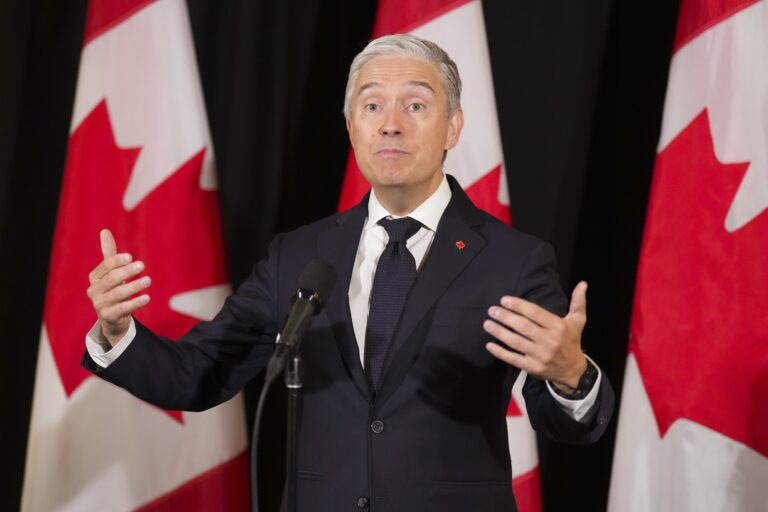
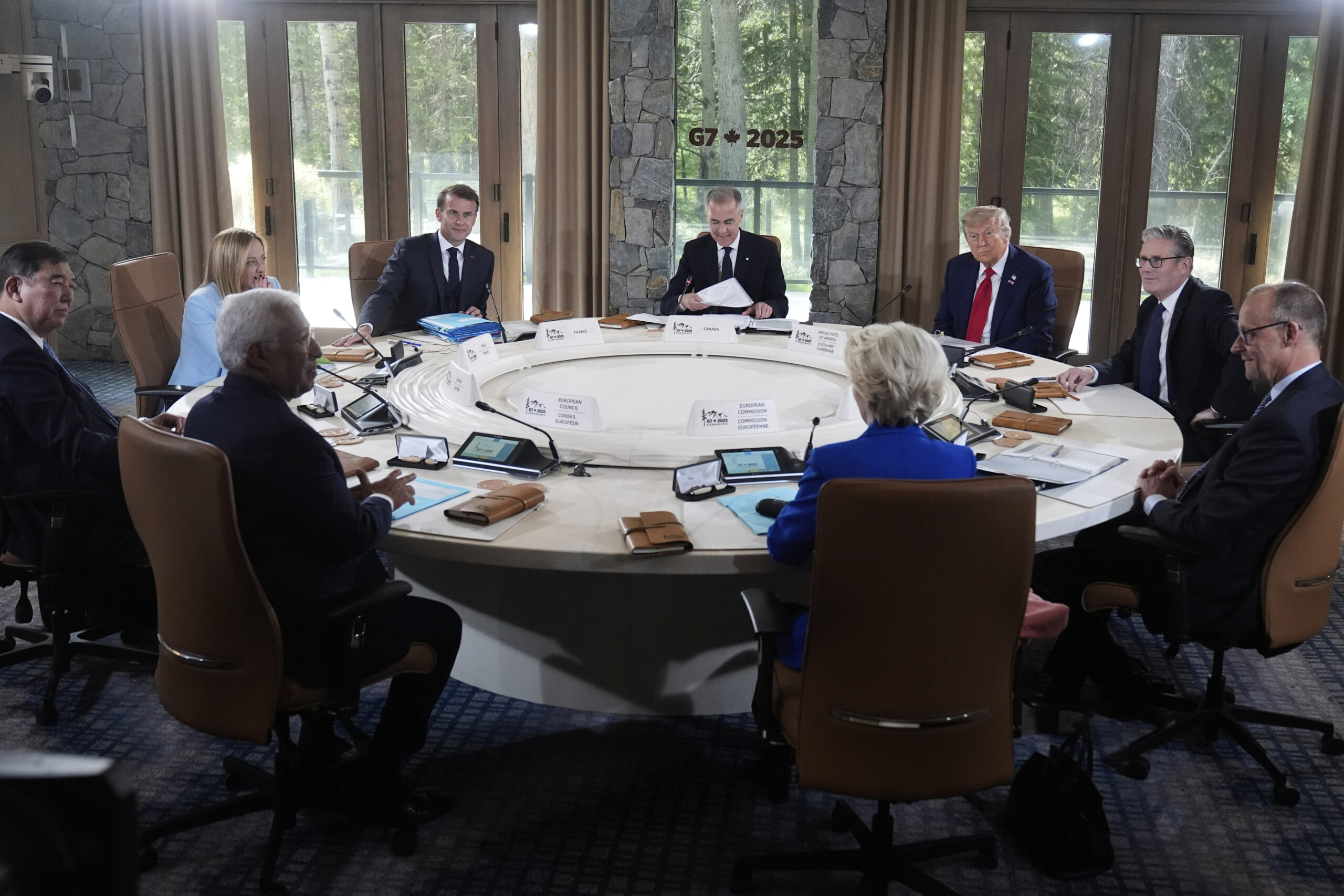 G7 leaders agreed during their summit in Kananaskis, Alta., on the need for a standardized market for critical minerals. Photo: AP Photo/Mark Schiefelbein

Special Report
How G7 countries plan to break China’s stranglehold on critical minerals
At their summit in Alberta, leaders agreed that critical minerals markets are failing. Now governments are stepping in to raise metal prices.
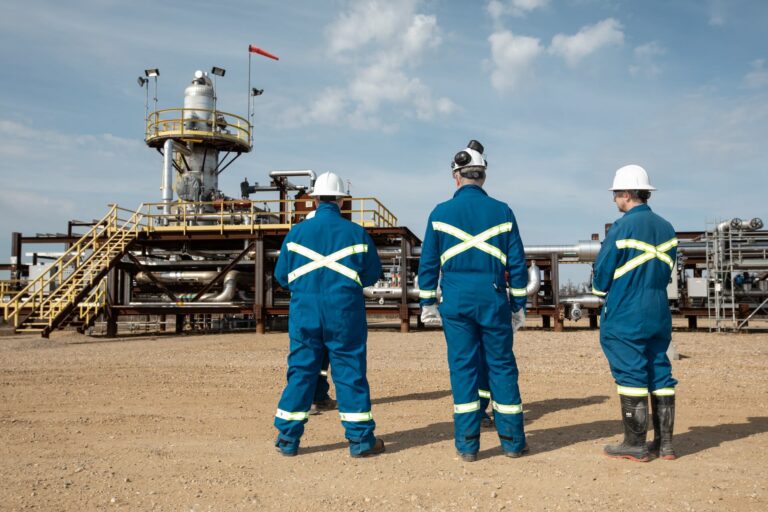
Graphite mined and processed by Northern Graphite in Lac-des-Îles, Que. Photo: AFP via Getty Images/Sebastien St-Jean
When MP Materials announced a deal earlier this month to fund a new rare earth magnet factory, two features of the agreement stood out. First, the lion’s share of the cash would come from the U.S. Department of Defense, which will become the largest shareholder in MP—operator of the only rare earths mine in the United States.
No less striking, though, was a provision in the deal guaranteeing a price floor of US$110 per kilogram for the metals MP produces or recycles. That’s nearly twice the rate set by market leaders in China.
For companies and investors wondering who will break China’s decades-long grip on the global critical minerals market—and how—the agreement may be a hint of things to come. For years, corporate leaders in democratic countries have called on their governments to fix chronic price manipulation by Chinese companies that has pushed competitors out of the market.
In June, at their summit in Alberta, G7 leaders signalled they’re finally ready to take action, resolving to create a “standards-based market” to diversify “responsible production” of minerals like rare earths, nickel and cobalt, used to make everything from car batteries to advanced weapons systems.
Talking Points
- Canada entered the G7 meeting hoping to discuss mineral price floors and ended talks with a detailed critical minerals action plan endorsed by world leaders
- Now, the U.S. government has made a price-floor deal with a Las Vegas company, a sign that financial interventions in the market are gaining support ahead of a G7 critical minerals meeting in September
The Pentagon’s partnership with MP Materials shows one potential route toward those goals. The Defense Department will ensure that 100 per cent of MP’s magnets from the new factory are purchased by defence and commercial customers, ensuring the price floor whether the magnets are stockpiled or sold. Its backing, along with the price floor, safeguards MP against what the G7 statement refers to as “non-market policies and practices.”
Whether companies are willing to pay more to support reliable domestic sources is yet to be seen. But the early signs are positive. Days after the announcement, Apple agreed to buy recycled rare earth magnets from the Las Vegas-based MP as part of a US$500 million partnership.
For Canada’s critical mineral companies, this precedent offers hope—that they’ll be next to nab deals with price floors, or that invitations to stockpile minerals at pre-set rates are coming.
But the journey toward an open global market has just begun. Here’s why leaders of the world’s large economies set us on it, and how they might get there.
Related Articles
When the market makes no sense: While demand for metals like cobalt, lithium and rare earths has skyrocketed during the transition to electric vehicles, prices have paradoxically plummeted. This dynamic has widened the rift between China and its economic rivals. At the G7 summit in Kananaskis, Alta., European Commission President Ursula von der Leyen brandished a rare earth magnet manufactured in Estonia by Canadian-based Neo Performance Materials. She charged that China is using its “quasi-monopoly” on such products to flood global markets and put companies in other countries out of business.
Two days later, the G7 announced its action plan.
There’s more to this than China: CEOs of critical mineral companies told The Logic that the market is rife with other problems. For starters, they said, artificial intelligence has supercharged algorithmic trading, causing wild price swings for smaller mining companies that are a hallmark of Toronto’s stock exchanges.
“The markets can be moved with the trading of 100 shares in the last microsecond of trading for every single day,” said Dan Blondal, CEO of B.C.-based battery materials company Nano One. “They’ve got to fix that, because someone’s making a lot of money off the back of companies that are trying to get things started.”
Meanwhile, metals traders assign the same prices to Ontario nickel and nickel from, say, Indonesia, where producers can avoid responsibility for issues like deforestation and pollution, and the costs that come with it.
Then there’s the composition and quality of the minerals themselves. Unlike markets for conventional metals like gold, there are no global industry regulators setting minimum purity levels for many critical minerals that don’t trade on exchanges. Hugues Jacquemin, CEO of Ottawa-based Northern Graphite, points to “particle size,” a specification that affects the cost of producing graphite, and what it is used for. As things stand, Jacquemin said, market leaders—usually China-based companies—negotiate factors like particle size behind closed doors. That leaves other companies guessing how to best compete.
Price floors: Before the MP Materials funding deal, Canada’s former natural resources minister mooted critical mineral price floors. Advocates have suggested a government fund to pay producers if the commodity’s market price fell below a certain threshold.
For some minerals, though, producers question the premise that Canadian companies can’t compete on cost. Sudbury, Ont.-based Frontier Lithium, for one, says it’s on track to become one of the lowest-cost sources of lithium in North America. The company’s CEO, Trevor Walker, said governments will need to target mineral subsidies toward firms that can be cost-competitive in the longer term to “make sure that dollars are focused on where we can get the best bang for our buck.”
Don’t call it a cartel: In February, business leaders from G7 countries—an assembly known as the B7—suggested a “secretariat” group to “enhance co-ordination among the G7” on critical mineral supply chains. It’s something that Bryan Detchou, senior director of natural resources and sustainability at the Canadian Chamber of Commerce, says is worth more discussion.
The B7 communiqué doesn’t mention managing supplies or setting prices for critical minerals. But many in the industry are wary of resource blocs that look and act like OPEC, the cartel of petroleum-producing countries that can move global oil prices by adjusting production. Already, a handful of South American countries have discussed creating an OPEC-like body to influence global lithium prices, while Indonesia has pursued talks on an OPEC for nickel, cobalt and manganese.
“Geopolitically, people are making camps, which makes the negotiation more difficult,” said Theo Yameogo, who leads EY’s mining group in the Americas.
Stockpiling: South Korea and Australia have already started stockpiling key minerals to use during supply chain disruptions like the curbs China placed on rare earths in April. Critics of stockpiling warn it could prop up companies that aren’t viable. Walker, the CEO of Frontier Lithium, highlights the flipside of that argument: it’s a way of temporarily harnessing purchasing power of the federal government or provinces to get projects off the ground.
Defence procurement: RBC Climate Action Institute analysts suggest that Canada and its allies could use defence procurement to help stockpile critical mineral reserves through long-term purchase commitments—a strategy the U.S. Defense Department seems open to, if the deal with MP Materials is an indication.
Nano One has funding from the U.S. Defence Department, and benefitted from connections to other defence contractors and lasting business relationships. “Much larger procurement programs can really drive the volume of the supply chain,” said Blondal.
The ESG challenge: Gaps between countries’ environmental, social and governance (ESG) standards make it hard to level the playing field in critical minerals—and solutions are hard to come by.
Several commodity-pricing agencies have tried “greeniums,” that is, higher prices for low-carbon versions of metals like nickel and alumina. Critics argue no one will voluntarily pay more for green metals, but Mark Selby, CEO of Canada Nickel, said it doesn’t hurt to educate consumers on where metals come from, and give them the option to pay more.
The “where they come from” part is key. It’s impossible to apply ESG standards if you can’t track a product through its supply chain. To that end, Jacquemin of Northern Graphite suggests restricting market access to companies that can provide ESG credentials, and tracking the metals’ provenance using tools like blockchain ledgers—the technology that ensures the credibility of cryptocurrencies. Teck is already piloting this technology for its germanium mined in Alaska. Several smaller companies are doing similar work in Canada.
Determining a new world order: Merran Smith, who leads New Economy Canada, a think tank whose members include electric-vehicle makers, mining companies and Indigenous-led business groups, hopes Canadian companies that maintain high standards will be rewarded by the global push toward ESG enforcement.
While world leaders have agreed they must enforce higher standards for critical minerals and raise prices, it’s not clear what mechanisms they’ll agree to, or how high they expect ESG standards to be. Representatives of G7 countries are set to discuss those issues in September at a meeting on critical minerals to be held in Chicago.
“Getting the leaders together to make commitments from a capital point of view,” said David Anonychuk of supply chain firm SGS. “That is what is most essential, because we’re losing ground to China.”



Loading...
Thanks for sharing!
You have shared 5 articles this month and reached the maximum amount of shares available.
CloseThis account has reached its share limit.
If you would like to purchase a sharing license please contact The Logic support at [email protected].
CloseGift the full article!
You have gifted 0 article(s) this month and have 5 remaining.
Recipients will be able to read the full text of the article after submitting their email address. They will not have access to other articles or subscriber benefits.
Photo: AFP via Getty Images/Sebastien St-Jean
G7 leaders agreed during their summit in Kananaskis, Alta., on the need for a standardized market for critical minerals.
Most Popular This Week



In-depth, agenda-setting reporting
Great journalism delivered straight to your inbox.
Commentary
Carmichael: Canadian ignorance about India is a strategic weakness
Briefing
Aritzia shares pop after earnings rise 204%
First Nation in Alberta goes to court over fast-tracked oil pipeline
Chinese EV maker Geely Auto Group to launch in Canadian market in 2027
Best business newsletter in Canada
Get up to speed in minutes with insights and analysis on the most important stories of the day, every weekday.
Exclusive events
See the bigger picture with reporters and industry experts in subscriber-exclusive events.
Membership in The Logic Council
Membership provides access to our popular Slack channel, participation in subscriber surveys and invitations to exclusive events with our journalists and special guests.