OTTAWA — The Canadian Forces are offering more signing bonuses as they struggle to fill specialized roles in engineering, technology and the trades, a sign of how hard it could be to deliver on Prime Minister Mark Carney’s multibillion-dollar pledge to expand the military.
Skip to content


News
Signing bonuses haven’t fixed the Canadian military’s skills shortage, documents reveal
The country has multibillion-dollar plans to expand its military, but engineers and tradespeople often make more money as civilians
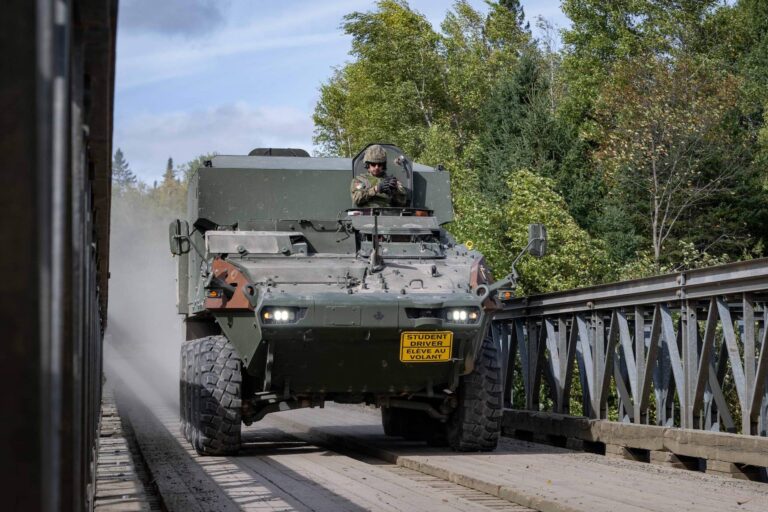
The Canadian Armed Forces are offering more signing bonuses to recruits who want to train for skilled positions in engineering, tech and the trades as they compete with civilian employers for talent. Photo: The Canadian Press/Jeff McIntosh
OTTAWA — The Canadian Forces are offering more signing bonuses as they struggle to fill specialized roles in engineering, technology and the trades, a sign of how hard it could be to deliver on Prime Minister Mark Carney’s multibillion-dollar pledge to expand the military.
The army, navy and air force have 107 career paths. In all, 54 occupations for non-commissioned military members now offer signing bonuses, plus eight for officers, Lt. Kyle McDermid, a spokesperson for the Forces’ military personnel command, told The Logic in an email.
Talking Points
- The Liberal government is spending heavily to expand the Canadian Forces, but the military is already having trouble—and has been for years—attracting people to do skilled work
- Part of the trouble is that tradespeople can often make more money in civilian life, but the talent-acquisition challenge for the Forces is cultural, not just financial
The list of occupations paying signing bonuses to recruits right after basic training grew sharply in 2023. That May, the chief of military personnel, Lt.-Gen. Lise Bourgon, made a pitch to the chief of the defence staff, Gen. Wayne Eyre. Both have since retired.
The Logic obtained a copy of the package Bourgon sent, via an access-to-information request that took two years for the Department of National Defence to answer.
The enticements range from $10,000 for recruits with partial qualifications—diplomas but no work experience, for instance—to $20,000 for those fully qualified for similar civilian jobs. People ready for very high-skilled officer-level occupations, such as engineers, doctors and pharmacists, can get more.
Related Articles
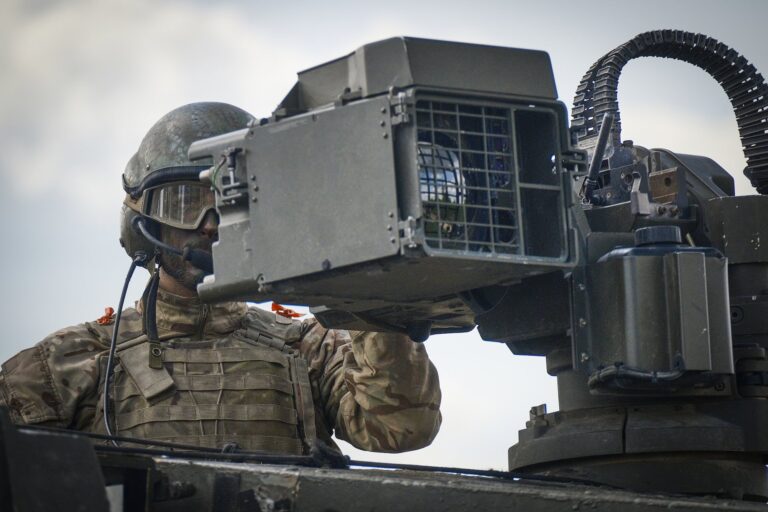
In 2025, McDermid wrote, the Forces are officially short everything from gunners to musicians, cyber operators to plumbing and heating technicians. At the officer level, engineers are in high demand, including specialists in naval combat systems, construction and aerospace.
As Carney pledges a dramatic expansion of Canada’s military budgets, the lack of qualified specialists in numerous fields could make it hard to put the money to work.
Put another way: the Canadian Forces are going to have to throw themselves into a fight for talent.
“If you want to have a ready and capable force, you need to invest a lot more in personnel than in the shiny [weapons] platforms that you want sometimes,” said Charlotte Duval-Lantoine, vice-president of Ottawa operations for the Canadian Global Affairs Institute and a specialist in military culture and personnel policy.
A recent burst in recruitment—the Canadian Forces exceeded their target of 6,496 new members last year, the first time they beat their goal in a decade—has not yet made much difference in the specialist jobs, McDermid wrote.
“Only a small portion of new recruits enter with existing qualifications,” he wrote. Most need to go through basic training and only then start working on their specialties. “So, while exceeding intake targets is a positive development, the impact on addressing shortages within specific occupations will take time to materialize.”
A job has to be 95 per cent staffed or worse, and the pipeline of trainees insufficient to solve the problem within two years, before the Forces will consider paying bonuses.
Some jobs barely qualified for the signing bonuses, such as airborne electronic sensor operators—a function that was 94 per cent staffed in 2023.
You have to learn how to do a rucksack march and fire a weapon and be in a field—even though you want to be a maritime technician for the navy.
Some other occupations were in worse shape, such as electrical and mechanical engineering officers who oversee teams maintaining land-based equipment (85 per cent filled) and line technicians who work on communications systems (80 per cent filled). The real trouble for those jobs was that the Forces’ personnel experts saw no path to reaching full strength, ever, listing them as “unrecoverable.”
Worst off were biomedical electronics technologists who maintain health-care equipment (55 per cent) and plumbing and heating technicians who work on bases and certain heftier deployments (60 per cent).
Several trades and technician jobs were under 70 per cent staffed. For many of those, the Forces lamented, “the CAF is competing with the civilian sector … who are offering higher wages.” New recruitment videos and removing “unnecessary barriers” in the standards for new recruits weren’t cutting it.
The situation has not improved in the last two years. Just one occupation has come off the bonus list, McDermid wrote: naval electronic sensor operator. It had reached 99 per cent of full strength in 2023 and Bourgon recommended removing it then.
Bonuses don’t hurt, said Duval-Lantoine. Carney’s commitment to hike military pay is even better, though the government has been unclear about just how that will work, promising increases of 20 per cent but then waffling on whether that will apply to everyone in the Canadian Forces or be spread more strategically.
“You hear that there’s a salary problem in the military, you hear that the government is committed to giving a 20 per cent pay raise ‘immediately,’ and then it’s not happening. Do you want to join an organization that is not too keen on paying you?” she said.
Defence Minister David McGuinty’s office did not respond to several inquiries about specialized recruitment and how he intends to use the $2.6 billion the government has allocated for recruitment and retention.
Money isn’t the only problem, Duval-Lantoine said.
The navy, for instance, has long had trouble attracting people wanting to maintain ships, she said, and has combined assorted trades into one general-purpose job it calls “marine technician.”
“It’s completely anathema to the culture of the trades, who identify very specifically with a specialty,” Duval-Lantoine said. “An electrician is not a plumber is not someone that does repairs on a wall.”
Merging the specialties might have solved an immediate problem but it made recruitment worse, she said. Despite offering signing bonuses starting in 2018, the documents from 2023 said, the marine technician occupation was only 79 per cent staffed.
The basic training requirement for new recruits is one non-financial obstacle, said Duval-Lantoine. You can make a case that even a cyberwarfare specialist or signals intelligence officer in the army should have to make it through the army’s basic training. Perhaps not an ironclad case, but a case. The thing is, infantry skills are the standard training course for everybody joining the Forces.
“You have to learn how to do a rucksack march and fire a weapon and be in a field—even though you want to be a maritime technician for the navy,” she said. Some look at those requirements and don’t join, or drop out before finishing basic training.
The understaffing in key jobs can become a vicious circle, too.
“Attrition breeds more attrition because people get burnt out and tired,” Duval-Lantoine said.
Despite all this, she said, the government’s new focus on defence does create a rare opportunity, if the Canadian Forces can seize it.
“It’s the word-of-mouth aspect that really drives military recruitment,” she said. “It’s up to the military to really drive that home and take advantage of the momentum that the Carney government is giving them.”



Loading...
Thanks for sharing!
You have shared 5 articles this month and reached the maximum amount of shares available.
CloseThis account has reached its share limit.
If you would like to purchase a sharing license please contact The Logic support at [email protected].
CloseGift the full article!
You have gifted 0 article(s) this month and have 5 remaining.
Recipients will be able to read the full text of the article after submitting their email address. They will not have access to other articles or subscriber benefits.
Photo: The Canadian Press/Jeff McIntosh
Most Popular This Week




In-depth, agenda-setting reporting
Great journalism delivered straight to your inbox.
News
Cohere plans to acquire cyber startup Aisle and set up a new security division
Briefing
Banks should have kill switches, IDs for AI agents, says global finance watchdog
B.C. First Nations decry rushed consultations as Major Projects Office CEO promises to do better
Feds pledge $100M to back Nova Scotia’s plans for offshore wind farms
Best business newsletter in Canada
Get up to speed in minutes with insights and analysis on the most important stories of the day, every weekday.
Exclusive events
See the bigger picture with reporters and industry experts in subscriber-exclusive events.
Membership in The Logic Council
Membership provides access to our popular Slack channel, participation in subscriber surveys and invitations to exclusive events with our journalists and special guests.






