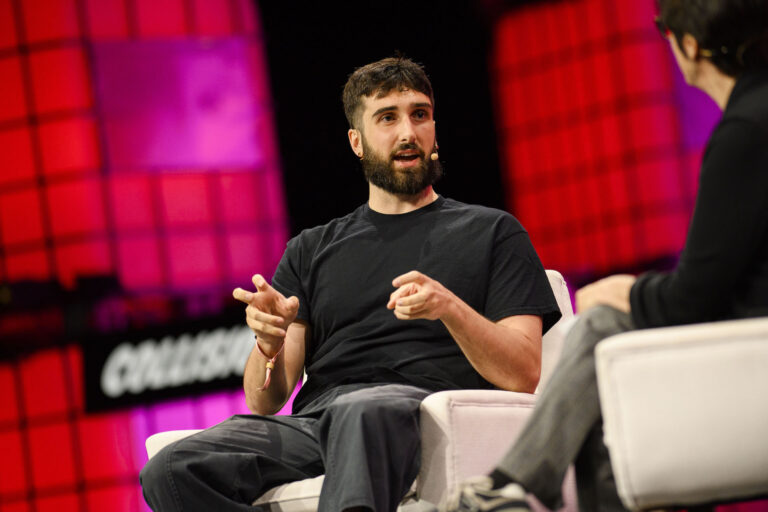
Cohere has a plan to win the AI race—without burning piles of money
TORONTO — Silicon Valley doyens promise that artificial intelligence will cure cancer, solve the climate crisis, make us all rich and, ultimately, answer the biggest questions about our existence.
To make those dreams come true, they’re pouring hundreds of billions of dollars into new data centres and collecting vast quantities of data. More power, more data, more applications, bigger models—all in the pursuit of a world where almost everything depends on AI.
Toronto-based Cohere is happy to let other firms burn through their billions. It just wants to make mundane business tasks less of a drag, and reckons a smaller, smarter approach to AI can make big money.
The Big Read
Cohere has a plan to win the AI race—without burning piles of money
OpenAI, Anthropic and Meta are spending huge sums of cash to build bigger and bigger AI models. Cohere reckons smaller isn’t just better, but a faster money-maker, too.
Cohere and co-founder Nick Frosst are betting smaller, smarter models can compete with the best that tech firms spending billions on compute have to offer. The chess set at the company’s Toronto headquarters is modeled on the Lewis chessmen from around the 13th century. Photo: Cole Burston for The Logic
TORONTO — Silicon Valley doyens promise that artificial intelligence will cure cancer, solve the climate crisis, make us all rich and, ultimately, answer the biggest questions about our existence.
To make those dreams come true, they’re pouring hundreds of billions of dollars into new data centres and collecting vast quantities of data. More power, more data, more applications, bigger models—all in the pursuit of a world where almost everything depends on AI.
Toronto-based Cohere is happy to let other firms burn through their billions. It just wants to make mundane business tasks less of a drag, and reckons a smaller, smarter approach to AI can make big money.
Talking Points
Toronto-based Cohere is focused on selling AI tools one big business at a time, even as competitors spend incredible sums and amass huge troves of data to make ever-bigger models
Tech giants and startups are flooding the market with AI applications, particularly agents that can complete tasks on their own. Cohere is betting customization and sector-specific smarts will help it cut through the noise and make money.
Cohere is one of a small cohort of AI firms making its own large language models (LLMs). But, unlike many of its competitors, it’s only going after business clients rather than trying to wow the public with AI chatbots.“This technology is still in the early days,” says Cohere co-founder Nick Frosst. But one day, he says, it will be “a core function of everybody’s work life.”
Cohere, founded in September 2019, started with the models. But the firm has learned that businesses need to be shown what to do with them. Last month it launched North, a software package that applies its models to clients’ data to answer questions and power AI agents that can take on tasks like research.
The startup is betting that firms of all sorts and sizes will eventually want their own version of Cohere’s AI embedded within their organization. But 400-person Cohere is initially working with a smaller number of big businesses to get North up to speed in different sectors.
The company landed its first big deal with Royal Bank, which is not only the country’s biggest financial services firm, but also its biggest company. Cohere and RBC are co-developing North for Banking, a version of the company’s AI that will meet the strict standards required for institutions that handle money, and which Cohere can later sell to other firms in the sector. Cohere is also working on North for Telecom with the STC Group, an $83-billion conglomerate headquartered in Riyadh, Saudi Arabia.
“High on the list for North are industries where security and privacy are important,” says Frosst. “We think that’s a really difficult problem to tackle.” Next on Cohere’s hit list after banking and telecom are health care and government, as well as major economic sectors like manufacturing and energy.
Firms in these big, complex industries tend to have a lot of data about their customers and operations, and have usually developed good systems to handle all that information to comply with regulations. That makes them good candidates to adopt AI, tech executives have told The Logic.
Cohere’s North platform combines its model with client data to answer questions and take on tasks like research. Photo: Cole Burston for The Logic
Many other generative AI firms are seeking defence contracts, with both OpenAI and Google recently lifting restrictions on military use of their models. In December, TechCrunchreported that Cohere is partnering with Palantir, whose customers include the Pentagon and U.S. intelligence agencies.
Frosst said he is unfamiliar with that work, but that he’s comfortable with any customer employing Cohere’s models as long as they follow its terms of use. That policy, set in September 2022, does not ban specific industries but does prohibit the use of the firm’s products to create or operate weaponry, or otherwise cause death and damage.
As the STC Group deal suggests, Cohere is also looking for customers overseas. North American developers have mostly trained their main models in English, the lingua franca of much of the internet, and they tend to be quite conversant in Germanic and Romance languages.
That’s not the case for dozens of other languages spoken by billions of people, and it’s here that Cohere spies another open market. “There are a lot of places in the world that are under-serviced by large language models right now,” says Frosst. He sees opportunity in countries where a relatively small share of the population speaks English, but which have a lot of large businesses that work with computers.
“Japan was an obvious first choice,” Frosst claims. Cohere has already worked with tech giant Fujitsu to develop Takane, a Japanese-fluent LLM launched last September. Cohere is looking for similar partnerships for other major languages like Arabic, French and Korean, Frosst says.
Cohere has long sold itself as the best model maker for businesses, touting its focus on keeping customer data safe and confidential. “Ordinary AI is good for a lot of things,” claimed a full-page ad the firm recently ran in TheWall Street Journal. “But it’s bad for business.” Cohere also plastered the warning “Don’t trust Ordinary AI” on hoardings and moving billboards near the AI Action Summit in Paris, as well as economic hubs like New York and London.
OpenAI, by comparison, bought a one-minute Super Bowl ad for US$14 million that placed the creation of AI on a continuum that included the invention of ships, the light bulb and the internet.
In the scramble to turn AI hype into big money, every major model maker is now trying to sell generative tools to businesses, and all claim to meet the highest privacy and security standards. The AI agent space has become particularly noisy, with startups and tech giants selling automated assistants that claim to do everything from customer service to HR and even sales.
Cohere investor Salesforce has gone all in, with CEO Marc Benioff joking about renaming the company “Agentforce” after its new collection of digital helpers. The tech giant has an edge because so many businesses already use its software to sell to and manage their customers, said MaryAnn Patel, Salesforce’s senior vice-president of product management, in an interview at the Toronto leg of the Agentforce World Tour in December. “We want to be the company that is helping you build the agentic layer for your business and creating limitless workforces.”
Cohere has raised about US$1 billion in funding, significantly less than rivals like OpenAI and Anthropic. Photo: Cole Burston for The Logic
Frosst insists Cohere isn’t worried about the tools that Salesforce and other tech firms are adding to their software. “I don’t think that’s what we’re building,” he said. “We’re building an augmentation tool for your work across your entire day.”
Take a seemingly simple workplace question: “How long has the person at this company who manages our largest account been here?” Sure, an AI agent might need Salesforce data to identify the largest account and the person who manages it, but to calculate how long that person has been at the company, it would still need to look up when they started in a separate HR system.
It’s in instances like this that Cohere thinks it has an advantage. North’s trick is in taking on assignments that require working across all of a client’s different applications and databases, says Frosst. “That’s much greater than a single tool.”
There’s a lot in the AI world that Frosst isn’t too fussed about. Take the idea that some new models like OpenAI’s o1 can reason, which some researchers claim is a step on the path to human-level AI. Frosst has long suggested that the pursuit of artificial general intelligence (AGI) is more or less a distraction. When I say I’m not going to ask him about AGI, Frosst simply replies, “Oh thank God.”
He’s equally unfazed about reasoning. “Every year there’s a new buzzword that people are really excited about in LLMs,” Frosst says. “Last year was ‘agents,’ this year it’s ‘reasoning.’” Cohere’s model launches may not generate the same headlines as OpenAI’s o1, but Frosst says they’re “really great” at completing complex tasks in business settings.
Cohere CEO Aidan Gomez was on the Google team that invented the transformer, the “T” in ChatGPT, a technique that spawned the LLM era of AI. The technology is now more than just text, however. People have flooded the internet with images generated by tools from OpenAI and Google. And machine-made video is getting better too.
Cohere has expanded beyond text, but has focused on letting customers search within images; it’s never going to build a meme generator. “Most businesses don’t need more pictures of cats,” Frosst says. “They need to have questions answered based on graphs.” Sure, that’s not as cool as cats. But Cohere reckons there’s not much money to be made in cats.
Cohere is working with RBC and STC Group to develop versions of North for banking and telecom, respectively. Photo: Cole Burston for The Logic
Cohere also has different views on how to keep making AI models better. OpenAI’s Sam Altman, Anthropic’s Dario Amodei and Nvidia’s Jensen Huang, among others, argue that the so-called scaling laws—which state, simply speaking, that AI models will keep getting smarter as long as they’re trained with ever more data and processing power—still apply.
That’s not really true, according to Frosst. Cohere has found success by building smaller models, trained using less compute on better data. “It turns out ingenuity [and] focus on data quality is in some ways more impactful than just burning money,” Frosst says. Firms that are still pushing the vision of scaling laws are the ones “warmed by the fire” generated as the AI sector spends huge sums in pursuit of better models.
It’s also true that Cohere has less money to burn than some of its competitors. The startup has raised about US$1 billion to date, according to communications head Josh Gartner. PitchBook data shows investors have put nearly US$15.8 billion into Anthropic, a rival model maker. Canadian researcher Ilya Sutskever’s startup Safe Superintelligence, which aims to build a more trustworthy version of AI in a single shot, is just months old but has already raised US$1 billion, and is reportedly in talks for another mega-round.
OpenAI, the heavyweight of the AI upstarts, has raised US$23.9 billion to date, per PitchBook, and is reportedly in talks for another US$40 billion from Japanese conglomerate SoftBank. To secure all that extra compute to keep scaling, OpenAI has laid out a US$500-billion plan for AI infrastructure in the U.S. Oracle will help build the massive new data centres for the scheme, known as the Stargate Project.
Oracle also happens to be an investor in Cohere and was the first major partner to build the Canadian startup’s technology into its products. Oracle’s involvement with Stargate is no surprise, Frosst says, because it’s good at building data centres. Cohere, he adds, is “thrilled” to continue working with the firm.
While the U.S. has Stargate, Canada has a smaller “multibillion-dollar” data centre in the works. Cohere will be the anchor tenant for the new facility, which New Jersey-based CoreWeave will build this year using Nvidia’s AI chips. The Canadian government is giving Cohere $240 million to help pay for the processing power it plans to buy there, part of a $700-million program designed to build out the country’s sovereign AI infrastructure.
Cohere has over 400 employees around the world, with the largest share based in Canada. Photo: Cole Burston for The Logic
Frosst says Cohere hasn’t previously trained its models in Canada because the compute capacity doesn’t exist in the country, but the new data centre will change that. “We’re really excited to use it,” he says.
But some Canadian tech executives have criticized CoreWeave’s involvement with the project. “It’s profoundly disappointing,” says Geoff Gordon, CEO of Denvr Dataworks, a Calgary-based cloud provider that runs a major cluster of Nvidia AI chips in Canada. The federal funding for Cohere will “flow through to a U.S. company, which is just ridiculous,” Gordon adds.
While Cohere can choose how to spend its own money, he says, the public program should require companies to use a Canadian provider as a condition of receiving the subsidy. Cohere chose CoreWeave through a competitive process to find “the best compute possible,” Frosst says, although he said he hopes to see Canadian players offering comparable infrastructure “one day.”
Cohere could soon find itself on the other side of a different cross-border concern. The U.S. is making it increasingly clear that it intends to lead the world in AI, and control the technology’s development everywhere else. “The Trump administration will ensure that the most powerful AI systems are built in the U.S.,” Vice-President J.D. Vance told an audience of global leaders at the AI Action Summit last week.
That may not leave much room for other countries’ AI ambitions. That includes Canada, which is desperate to trade its traditional role as a machine-learning lab to the world for a place among the leading AI powerhouses. Cohere is meant to be one of the engines of that transformation.
Frosst acknowledges all the talk in the U.S. about building up American AI, but he doesn’t think it will crimp Cohere’s success. Science and technology “exist beyond national borders,” he says, and anyway, Cohere has researchers and clients all over the place, including in the U.S.
For now, Cohere has compute to commission, marquee customers to land, and better models to build. And no better-funded rival or headline-generating AI buzzword or geopolitical competition is going to faze Frosst. “We’re building out tech that we think is the best,” he says. “And we’re going to keep doing that.”
Recipients will be able to read the full text of the article after submitting their email address. They will not have access to other articles or subscriber benefits.
Photo: Cole Burston for The Logic
Cohere’s North platform combines its model with client data to answer questions and take on tasks like research.
Cohere has raised about US$1 billion in funding, significantly less than rivals like OpenAI and Anthropic.
Cohere is working with RBC and STC Group to develop versions of North for banking and telecom, respectively.
Cohere has over 400 employees around the world, with the largest share based in Canada.
Trade remains greatest ‘downside risk’ to Canada’s economic growth: Deloitte
By Joanna Smith |
AMD to acquire Radical Ventures-backed World Labs in US$8.2B deal
By Murad Hemmadi |
Best business newsletter in Canada
Get up to speed in minutes with insights and analysis on the most important stories of the day, every weekday.
Exclusive events
See the bigger picture with reporters and industry experts in subscriber-exclusive events.
Membership in The Logic Council
Membership provides access to our popular Slack channel, participation in subscriber surveys and invitations to exclusive events with our journalists and special guests.