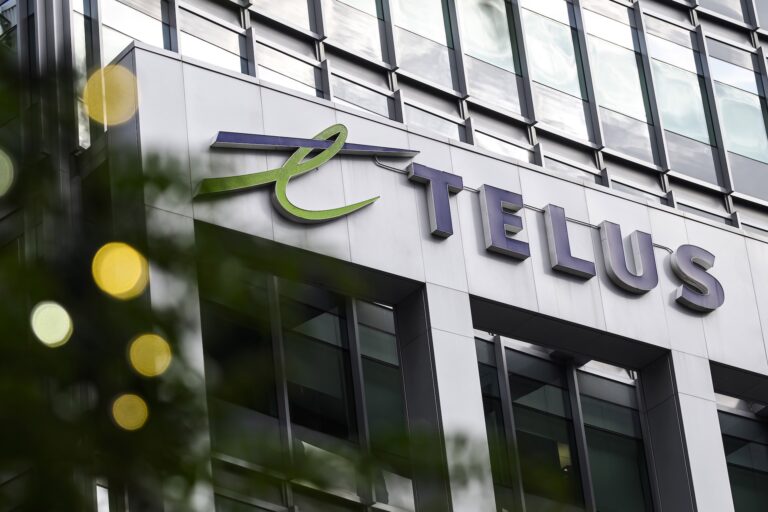
Vancouver-based Telus wants to take Telus Digital off the public markets and bring it back under its full control again, offering US$3.40 a share for the subsidiary it spun out in 2021.
Here’s what you need to know.
Vancouver-based Telus wants to take Telus Digital off the public markets and bring it back under its full control again, offering US$3.40 a share for the subsidiary it spun out in 2021.
Here’s what you need to know.
Four years after spinning out its digital division, the telecom giant is attempting to claw it back to speed up its AI and cloud plans

Vancouver-based Telus wants to take Telus Digital off the public markets and bring it back under its full control again, offering US$3.40 a share for the subsidiary it spun out in 2021.
Here’s what you need to know.
Telus Digital’s tech play: Formerly called Telus International, Telus Digital offers a wide array of consulting and outsourcing services—from contract call centres and Salesforce implementations to datasets to train AI models. As of the end of March, Telus Digital had 78,424 employees.
Telus partly spun the division out in a public offering in 2021, at US$25 a share, bringing in proceeds of US$1.06 billion. It was the biggest ever tech IPO on the Toronto Stock Exchange at the time, giving the newly formed company a market capitalization of $8.5 billion.
Why Telus wants it back: Telus wants to fully reintegrate Telus Digital because “closer operational proximity between Telus and Telus Digital will enable enhanced AI capabilities and [software-as-a-service] transformation across all lines of our business,” Telus chief executive Darren Entwistle said in a statement.
Telus was ahead of competitors such as Bell in getting into technical services besides telecom, but Entwistle’s explanation suggests the company has decided that it erred by treating that work as a set of side hustles rather than core to its business.
Entwistle and other Telus executives reiterated how important its digital arm’s capabilities are to the parent company on its May earnings call. “It’s a huge factor to be able to rely on, call upon [and] leverage what Telus Digital is doing,” Entwistle said then, specifically on the AI front. “It helps us sustainably take costs out of our business, but it’s equally potent in respect of revenue-generating, go-to-market strategies.”
That’s all easier to do within one company instead of two that have separate shareholder obligations.
Buying Telus Digital back could also be a good deal for the parent company, as it would effectively be buying back shares for a fraction of the price it bought it for during the wild market for tech stocks in 2021. Telus’s US$3.40-a-share offer, a roughly 15 per cent premium from Telus Digital’s Wednesday’s closing price, values Telus Digital at US$946.8 million, per Reuters.
Four challenging years: Telus Digital started strong with several high-profile acquisitions — and some lower-profile ones, including the recent purchase of a U.S. Salesforce consultancy. But lately the subsidiary’s performance has been a drag on the parent’s results. In its most recent quarter, Telus Digital posted a US$25-million net loss, a reversal from a US$28-million profit in the same period in 2024. Revenue also rose, but costs increased faster.
Its shares have traded as low as US$2.20 in recent months.
The rest of the Telus family: Telus has other divisions—Telus Health and Telus Agriculture—that Entwistle began hinting in 2021 he wanted to spin out.
In an earnings call in February, he said that those divisions are money-makers, adding that Telus can “look at bringing in key partners to help accelerate the growth and the value of that asset and looking at monetization opportunities.”
Chief financial officer Doug French told a Desjardins conference in March that Telus’s venture-capital arm has racked up an $800-million portfolio that includes “a few hundred million” dollars’ worth of investments that “aren’t going to scale or probably aren’t fitting into our future road map anymore.”
Meanwhile, Telus has long-term debt of nearly $25 billion and is seeking to pay it down over the next two years, while boosting dividends. It’s considering selling a stake in its infrastructure (as Rogers has for $7 billion), selling copper reclaimed from disused wires, and monetizing real estate.
Go-private parade: Telus Digital will likely join a spate of Canadian tech companies that went public in the early 2020s and became buyout targets shortly after. Prominent firms include Nuvei (which set the tech-sector IPO record that Telus Digital soon broke), Softchoice, Magnet Forensics, Copperleaf, Dialogue and CloudMD.
What’s next: Telus Digital said it will form a committee of independent directors—its board includes Entwistle and French—to consider Telus’s offer.
Although those directors and, ultimately, shareholders will get a say, Telus benefits from a dual share structure that, as of Thursday, gives it 86.9 per cent of all Telus Digital’s shareholder voting power.
Nevertheless, Telus Digital’s share price shot up nearly 25 per cent at close Thursday to US$3.67 in New York, significantly above Telus’s offer. If it stays at that level, Telus will likely have to sweeten its US$3.40-a-share bid—or give up on it.
Loading...
You have shared 5 articles this month and reached the maximum amount of shares available.
CloseIf you would like to purchase a sharing license please contact The Logic support at [email protected].
CloseYou have gifted 0 article(s) this month and have 5 remaining.
Recipients will be able to read the full text of the article after submitting their email address. They will not have access to other articles or subscriber benefits.
Photo: The Canadian Press/Darryl Dyck
Great journalism delivered straight to your inbox.

Get up to speed in minutes with insights and analysis on the most important stories of the day, every weekday.
See the bigger picture with reporters and industry experts in subscriber-exclusive events.
Membership provides access to our popular Slack channel, participation in subscriber surveys and invitations to exclusive events with our journalists and special guests.