Listen Now
0:00
OTTAWA — A tech firm that got its start helping businesses in Northern Ireland navigate the morass of post-Brexit trade rules is hoping to sell its chaos-tested platform to Canadians.
Trade Harmonizer is a software-as-a-service company that helps businesses reduce the risk of paying too much—or too little—in customs duties. It sees Canada as the best place to begin in North America, as businesses on both sides of the border are struggling to keep up with fast-changing trade rules since Donald Trump returned to the White House.
Talking Points
- A Northern Ireland-based tech firm that developed an AI-assisted platform to help businesses cut the cost of handling post-Brexit trade complexities is now targeting the Canadian market amid the U.S. trade war
- Northern Ireland hopes to leverage its unique geography and trade status to position itself as a springboard for Canadian firms seeking stronger ties with both the United Kingdom and the European Union
“I think it resonates well with what Canadian importers are seeing now,” said Mark O’Neill, founder and CEO of Trade Harmonizer.
The firm was one of seven Northern Ireland tech companies on a trade mission to Toronto and Ottawa last week, seeking business across the pond as Canada and the United Kingdom loosen digital trade restrictions. The region is positioning itself as a springboard for Canadian firms seeking stronger ties with the U.K., the European Union, or both.
“You want to grow big successful companies here in Canada that are doing cool things, but you will need partners along the way,” said Michael Barton, the Toronto-based regional director for Canada at Invest Northern Ireland, which organized the trade mission.
As part of the U.K., Northern Ireland left the EU alongside the rest of the country. Yet it shares an island with the Republic of Ireland, which is taking its six-month turn as president of the Council of the European Union—a role that rotates between members of the 27-nation bloc.
Related Articles

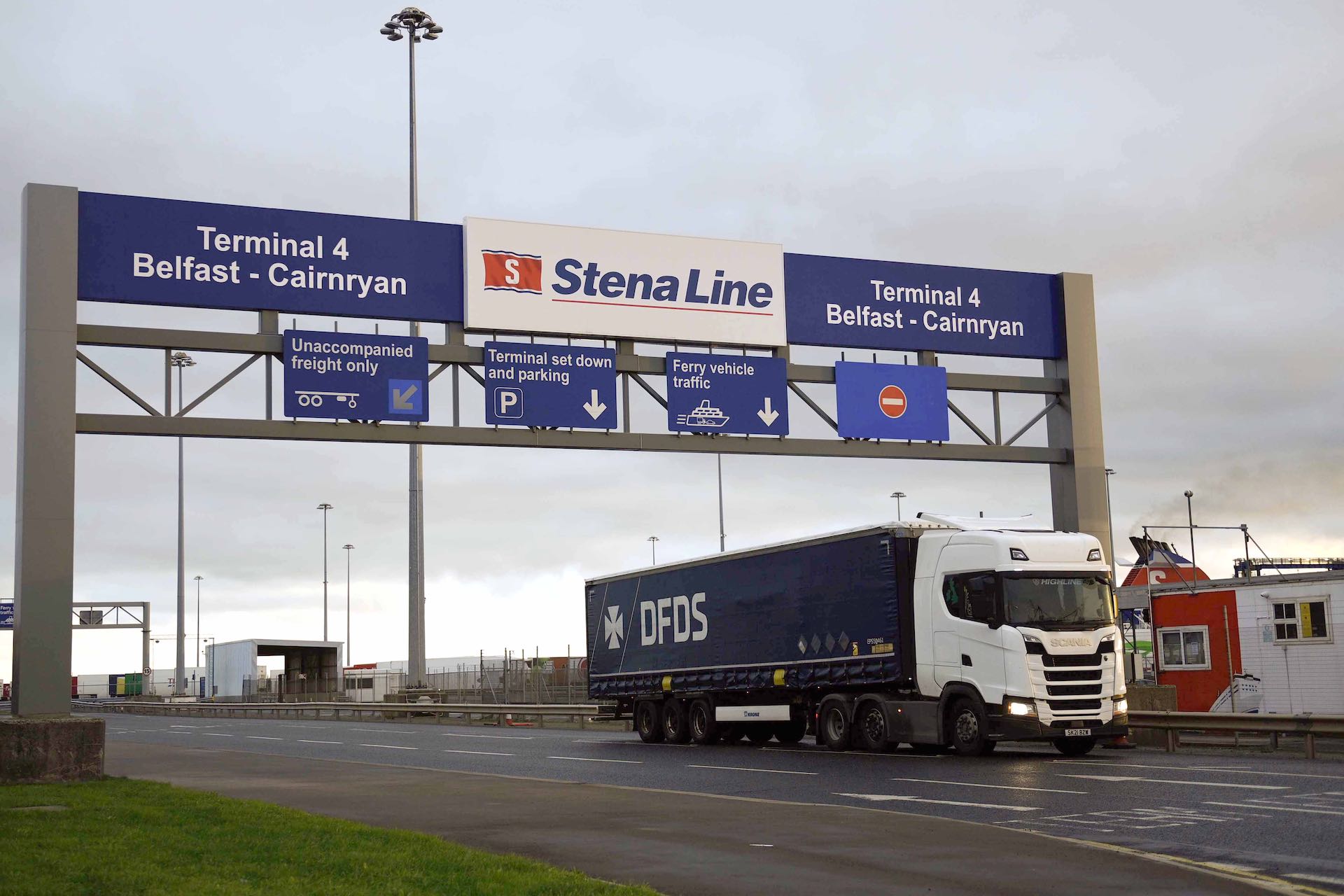
The border between them is virtually invisible beyond the numbers on the speed-limit signs changing from miles in the north to kilometres in the south. British military watchtowers from the Troubles and other checkpoints were dismantled as part of the 1998 Good Friday Agreement, so the U.K. and the EU agreed to keep an open border after Brexit.
As one of only two EU countries where English is one of the official languages (Malta is the other), the Republic of Ireland has been pitching itself as a “gateway to Europe” for Canadian firms, especially in tech. Dublin has become a regional tech hub for the continent, hosting the European headquarters for digital giants such as Google and Meta. The appeal of that pitch would be even stronger if Canada gets special status under the EU’s proposed AI law.
Northern Ireland is part of that ecosystem, argued Barton. The open border helped create a financial services and tech corridor that runs from Dublin up to Belfast, which is the capital in the north. CGI, the Montreal-based tech and business consulting giant, expanded its U.K. presence to Belfast in 2023. Toronto-based Tactable, which builds AI platforms for financial services and capital markets, chose that city as its first permanent location outside Canada. Meanwhile, the U.K.’s accession to the Pacific Rim trade pact, which took effect in Canada last month, lifted restrictions on cross-border data flows.
There are other things that make Northern Ireland unique, which is why Trade Harmonizer hopes its experience will count for something as it makes its pitch in the Canadian market.
To keep the border open, the Brexit withdrawal agreement applied the rules of the European common market to goods from Northern Ireland. Unlike England, Scotland and Wales, Northern Ireland still has tariff-free access to that larger continental market for its goods. In return, its businesses must follow some EU rules that do not apply to goods produced in the rest of the U.K.
Imagine you run a supermarket chain that is based in Northern Ireland, with retail locations in London, Belfast and Dublin. Your prepackaged meat supplier of choice is based in England. You can sell that meat in your London store. You can also sell it in Belfast, but it would need to have a label that says “Not for EU.” You could not sell it in Dublin. There, you need to find a supplier in Northern Ireland, the Republic of Ireland—or another EU country such as Germany or Greece.
To add to the headache, the applicable taxes and duties hinge on whether goods will remain in Northern Ireland or are “at risk” of entering the EU market. “It’s probably the most complex customs jurisdiction in the world,” said O’Neill.
Launched in 2023 as the new post-Brexit trade rules were taking effect, Trade Harmonizer helps businesses cut down on the cost of tariffs—and the risk of penalties—through two AI-assisted products.
The first is an automated audit of import declarations going as far back as three years to see whether a firm overpaid or underpaid duties due to errors such as misclassification of goods. Trade Harmonizer, based in Bangor, which is about 20 kilometres east of Belfast, can then help recover the overpayment—charging a fee only if it succeeds.
The other offering is a software-as-a-service platform designed to prevent those errors on current shipments.
“Companies are regularly overpaying import duties, where they should be paying a little bit less, or in some cases significantly less,” O’Neill said. “On the flip side, there are other clients who underpay, and that’s as dangerous and as problematic because there’s fines, there’s then additional scrutiny.”
O’Neill said he built Trade Harmonizer and its software to be country-agnostic, as he always had his eye on expanding beyond Northern Ireland. “Brexit was our main stress test for the platform, and we built the business in the middle of it,” he said.
Nathan Kelly, the firm’s chief operating officer, said that helped the company prepare for this moment in shifting geopolitics. “There’s a real plus side to our complexity,” he said. “We believe we’re at the cusp of that wave.”