Skip to content

Canada's Business and Tech Newsroom

  • Professional Subscription
  • Partnerships & Advertising
  • Licensing & Syndication
Log In Subscribe
Welcome,
  • My Account
  • Log Out
  • Business
  • Tech
  • National
  • The Big Read
  • Briefings
  • Commentary
Search
Log In Subscribe
Welcome,
  • My Account
  • Log Out
Commentary

Carmichael: What Finland can teach Canada about sleeping next to an elephant

Listen Now
0:00
Commentary

Carmichael: What Finland can teach Canada about sleeping next to an elephant

A small country bordering a superpower can take control of its economic future

By Kevin Carmichael
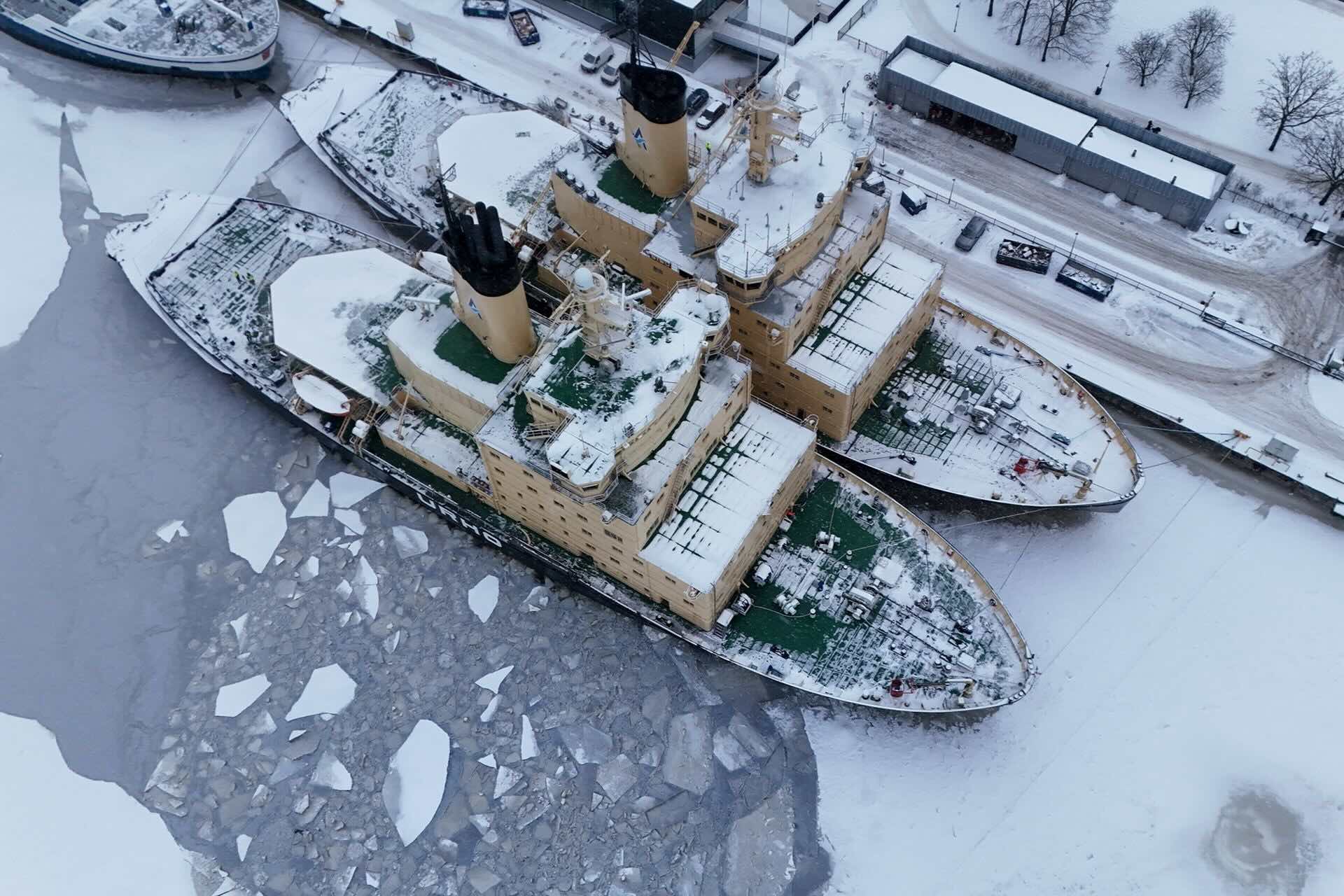
An image of two docked icebreakers covered in snow and ice.
Icebreakers docked in Helsinki, Finland in January 2026. Photo: AFP via Getty Images/Alessandro Rampazzo
Oct 3, 2026 | 7:00 AM ET
A A
A Small A Medium A Large
Share

Gift

Share

Listen Now
0:00

“There’s certainly an opportunity around defence, but it’s more than building ships,” Bank of Canada governor Tiff Macklem told an audience last month in Halifax, a place that still celebrates a time when Nova Scotia was a force in global shipping, but that has done little more than build vessels for the Navy and Coast Guard for as long as any living person can remember. 

Macklem sometimes takes on the unofficial role of Canada’s chief economist. This was one of those times. He seized on shipbuilding, but he could have chosen any number of industries that owe their longevity to habit as much as economic fundamentals. Macklem didn’t say it outright, but he offered a short lesson in path dependency. The forces that cause us to stick with what we know might explain Canada’s economic malaise better than anything else. 

Related Articles
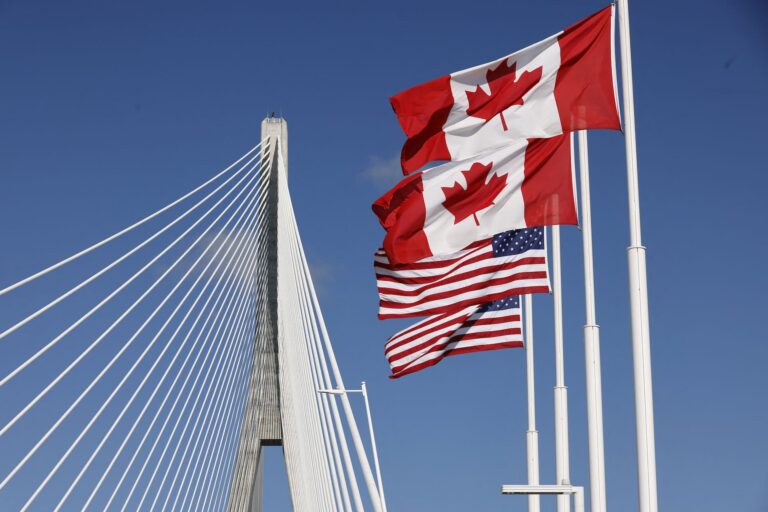
Canadian and U.S. flags wave beside Gordie Howe International Bridge under a clear blue sky.

Carmichael: How free trade with the U.S. made Canadian businesses lazy

By Kevin Carmichael
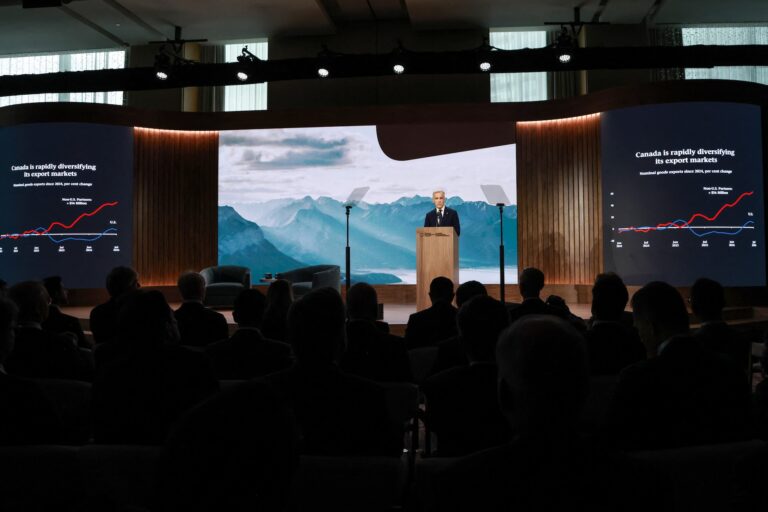
Prime Minister Mark Carney, wearing a dark suit and tie, stands at a wooden podium in a dark room. The silhouettes of audience members are visible in the foreground. In the background, there is a backdrop depicting a cloudy sky and mountains.

Carmichael: The Canada Investment Summit did what it needed to do

By Kevin Carmichael
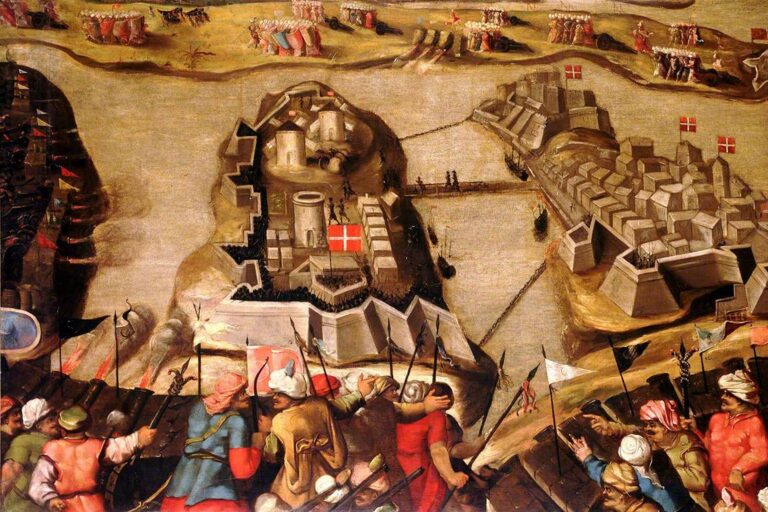
A painting depicting a sandy battlefield. Men wearing turbans stand behind a tall barrier, overlooking enemy camps and soldiers below.

Carmichael: Carney the prime minister still manages risk like a central banker

By Kevin Carmichael

I don’t know enough about the shipbuilding industry to make assertions about why Canada peaked when self-taught naval designer William Roué finished the Bluenose in 1921, but I’ll offer an observation. When the federal government decided to get serious about the Arctic in 2024 and needed help building icebreakers, it turned not to Asia, home of many of the low-cost shipyards that are often blamed for destroying a storied Canadian industry, but to Finland. 

Finland makes the world’s best icebreakers because it once faced an existential crisis. It found itself on the losing side in the Second World War and had to pay reparations to the Soviet Union, including a promise to supply it with ships. Like Canada, Finland had little industrial capacity midway through the 20th century. Instead of submitting, the government stood up a shipbuilding industry overnight. It met the terms of its agreement with the Soviets, and then became an exporter of a high-value good that generated ongoing investment and supported thousands of high-wage jobs. Finland didn’t settle for just supplying the massive market next door. Historical contingencies forced it off path dependence. It decided that it wanted greater control over its fate and devised a plan to make that happen. 

You often hear that Prime Minister Mark Carney’s “build, baby, build” agenda is destined to run into political headwinds because building things takes a long time and therefore he will lack evidence that his program is working. 

I don’t know. I think most people understand that it takes months to negotiate a trade agreement and years to build a pipeline. What they want to see is evidence that their leaders are engaged and ready to fight inertia and drift. In the span of a few weeks, Carney signed a 100-year partnership with Ukraine; hosted a massive gathering of international investors; opened the door to an enhanced partnership with the European Union; let it be known that a trade agreement with India could be concluded by the end of the year; basked under the halo of LNG Canada’s $33-billion expansion plan for its natural gas plant in northern British Columbia; and announced that approvals for Alberta’s newly named Pacific Link pipeline project would be fast-tracked.  

The flywheel is spinning. The challenge now is to get it spinning faster amid the headwinds from U.S. trade belligerence and the tug of nostalgia for the way things were. That’s what Macklem was getting at when he alluded to all the money that will be pouring into defence, energy and other targets of Carney’s industrial strategy. 

Government spending is one of the terms in the equation for gross domestic product, so Canada’s economic growth is about to get a boost. But if we aren’t deliberate about it, we’ll end up with an economy that looks and feels a lot like the one we already had. “It’s [about] developing the technology for dual uses that can be used in military and in civilian,” Macklem said in Halifax. “It’s going to take a determined, sustained effort. This can’t be a few quarters’ burst in investment. This has got to be sustained.” 

My rough categorization of the projects in the Alberta and Saskatchewan deal books suggests “old economy” opportunities outnumber “new economy” opportunities by a ratio of two to one. That looks like a resource trap, but people with deeper knowledge than me insist that you have to start somewhere. The best way to offset the economic gravity of the U.S. is to embrace Asian and European demand for energy, minerals and food. Then, you add layers of advanced manufacturing, technology and services on top of those primary industries. 

We’re often quick to equate our vast supplies of natural resources with economic strength. That’s not wrong, but it’s also the same as thinking you’re ready for a day on a construction site because your gym muscles make you look good in a T-shirt. Canada has a lot of global commodities, but so do others. That’s what makes them global commodities. It’s how we use them that creates economic strength. We can keep shovelling potash out of the ground. We could also develop cutting-edge technology and extraction methods that reduce the environmental impact of that shovelling, or refine high-end potassium sulphate, used for growing fruit, nuts, coffee and tea, instead of settling for producing low-end muriate of potash, used for corn, sugar beets, celery and other vegetables. 

“If you have that refined product and a cleaner footprint, you have an entirely different market of where you [could be] going,” said Alison Nankivell, chief executive of Export Development Canada. “You’re not easily replaced anymore, by anybody.” 

Gift the full article

Laments about Canada’s failure to get out of the ruts created by British colonialism and American empire used to be about opportunity cost. Now, they are about sovereignty. The U.S. administration has put on paper that it intends to dominate the Western Hemisphere, much as the Soviet Union intended to dominate eastern Europe after the Second World War. Finland’s trajectory shows that it’s possible to resist a hegemon, but only if you are deliberate about it. 

Canada doesn’t have much experience with carefully orchestrated industrial policy. Fortunately, it’s never too late to learn. 

Kevin Carmichael is The Logic’s economics columnist and editor-at-large. He has spent more than two decades covering economics, business and finance for outlets including Bloomberg News, The Globe and Mail and the Financial Post, where he also served as editor-in-chief. 

#commentary #economy #industrial policy #Mark Carney #Tiff Macklem #trade

Sponsored Content

How to shift your workforce from AI experimentation to adoption

By Jessica Aftimus Rosa

The real-world economic offshoots of sovereign AI

By Deborah Aarts
Illustration of a plane flying above a mailbox

Increasing healthcare access across Canada

By Deborah Aarts
Paid promotional content

Loading...

Thanks for sharing!

You have shared 5 articles this month and reached the maximum amount of shares available.

Close
This account has reached its share limit.

If you would like to purchase a sharing license please contact The Logic support at [email protected].

Close
Want to share this article?

Upgrade to all-access now

Close
Gift the full article!

You have gifted 0 article(s) this month and have 5 remaining.

Copy link and gift
Copy Link
Email to a friend
Send Email
Gift on Social Media

Recipients will be able to read the full text of the article after submitting their email address. They will not have access to other articles or subscriber benefits.

An image of two docked icebreakers covered in snow and ice.

Photo: AFP via Getty Images/Alessandro Rampazzo

Most Popular This Week

Two individuals stand facing each other inside a lit-up installation inside a bust room. Both people are holding smartphones.
News

The Maple 8’s Canadian pledges may do little for startups and scaleups

By Catherine McIntyre
Close up of Mark Carney in a black suit against a black backdrop, looking over his shoulder with an eyebrow raised.
News

Ottawa tries to deliver on Carney’s promise to build faster

By David Reevely
News

Canada’s landmark ESG case heads to a final decision

By Anita Balakrishnan
Prime Minister Mark Carney, wearing a dark suit and tie, stands at a wooden podium in a dark room. The silhouettes of audience members are visible in the foreground. In the background, there is a backdrop depicting a cloudy sky and mountains.
News

Carney wants $1T to flow into Canada. Small projects are still struggling to get financing

By Chaimae Chouiekh

In-depth, agenda-setting reporting

Great journalism delivered straight to your inbox.

An image of two docked icebreakers covered in snow and ice.
Commentary

Carmichael: What Finland can teach Canada about sleeping next to an elephant

By Kevin Carmichael

Briefing

Financing instability is slowing down Ottawa’s housing agency, CEO says

By Catherine McIntyre   |   Oct 2, 2026 | 3:20 PM ET

Cleveland-Cliffs CEO says federal lawsuit would be a bad business decision for Canada

By Anita Balakrishnan   |   Oct 2, 2026 | 3:10 PM ET

BoC shows off its new forecasting model, Prima

By Kevin Carmichael   |   Oct 2, 2026 | 2:22 PM ET

Best business newsletter in Canada

Get up to speed in minutes with insights and analysis on the most important stories of the day, every weekday.

Exclusive events

See the bigger picture with reporters and industry experts in subscriber-exclusive events.

Membership in The Logic Council

Membership provides access to our popular Slack channel, participation in subscriber surveys and invitations to exclusive events with our journalists and special guests.

Recent Popular Stories

The Big Read

Cameco’s high-stakes bid to be Canada’s next nuclear champion

By Joanna Smith   |   Sep 23, 2026
A shot looking down the length of a tunnel with conduits along its sides and railroad-style tracks on its floor. There are two workers in the distance wearing hardhats and headlights and walking toward the camera.
News

Ottawa tries to deliver on Carney’s promise to build faster

By David Reevely   |   Sep 28, 2026
Close up of Mark Carney in a black suit against a black backdrop, looking over his shoulder with an eyebrow raised.
The Big Read

The professor trying to make Canada a supercomputer superpower

By Murad Hemmadi   |   Sep 30, 2026
A man stands at a chalkboard while looking at the camera. He has apparently written "It's not rocket science; it's quantum chromodynamics."
News

The Maple 8’s Canadian pledges may do little for startups and scaleups

By Catherine McIntyre   |   Sep 29, 2026
Two individuals stand facing each other inside a lit-up installation inside a bust room. Both people are holding smartphones.
News

Canada’s landmark ESG case heads to a final decision

By Anita Balakrishnan   |   Sep 25, 2026
News

Canada dodged the money-laundering ‘grey list’—but banks remain a weak spot

By Claire Brownell   |   Sep 29, 2026
A silhouetted person walks amid a row of buildings.

Canada's most influential executives and policymakers are reading The Logic

  • CPP Investments
  • Sun Life Financial
  • C100
  • Amazon
  • Telus
  • Mastercard
  • bdc
  • Shopify
  • Rogers
  • RBC
  • General Motors
  • MaRS
  • Government of Canada
  • Uber
  • Loblaw Companies Limited
logic-logo

Canada's Business and Tech Newsroom

100% human-crafted journalism

Newsroom

  • News Tips
  • AI Policy
  • Editorial Disclosures
  • Story Pitches

Company

  • About Us
  • Terms of Service
  • Privacy Statement
  • Corporate Information

Contact

  • Contact Us
  • Advertise
  • FAQs
  • Work at The Logic

© 2026 The Logic Inc. All Rights Reserved.

Trusted by leaders

Error

Account creation failed.

Please email us at [email protected].

Create Account

[wppb-register form_name=”cozmo-registration-form-for-modal”]

I do have an account
Login

The username or email you provided does not exist. Please try again.

or

[wppb-login]

I don’t have an account