
Listen Now
0:00
I’ve been talking to TMX Group chief executive John McKenzie on and off for a few years now. Those interviews weren’t always a source of uplift. “Two,” McKenzie said Tuesday morning in Toronto when I asked him how, on a scale of one to five, he would have ranked his mood about Canada’s prospects a year ago.
And now? “I’m a four,” he said. “And four is high for me, because it’s hard to get me to a five on anything.”
That’s the best way I can think of to show that the hype generated by the Canada Investment Summit is real.
McKenzie wasn’t at the Four Seasons Hotel for the event itself, but he’d spent Sunday and Monday in meetings adjacent to the jamboree organized by the Prime Minister’s Office, the Canada Pension Plan Investment Board and the Public Sector Pension Investment Board. “It’s doing what it needs to do in terms of reintroducing Canada to the investing world,” McKenzie said.
Related Articles

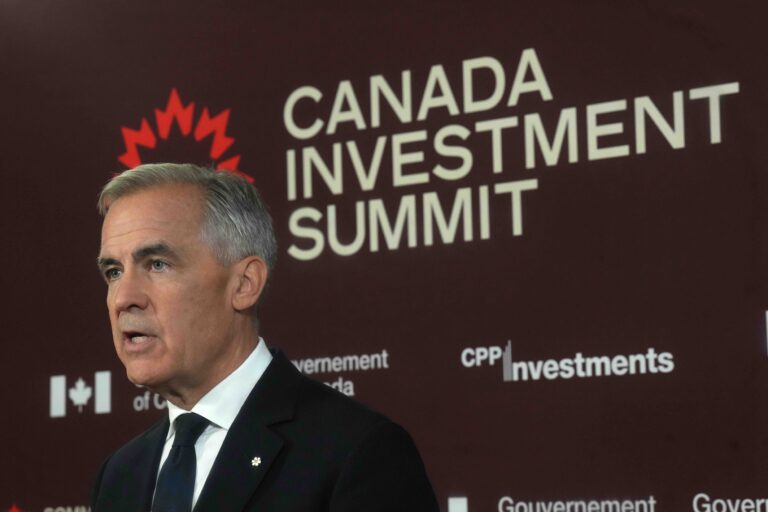
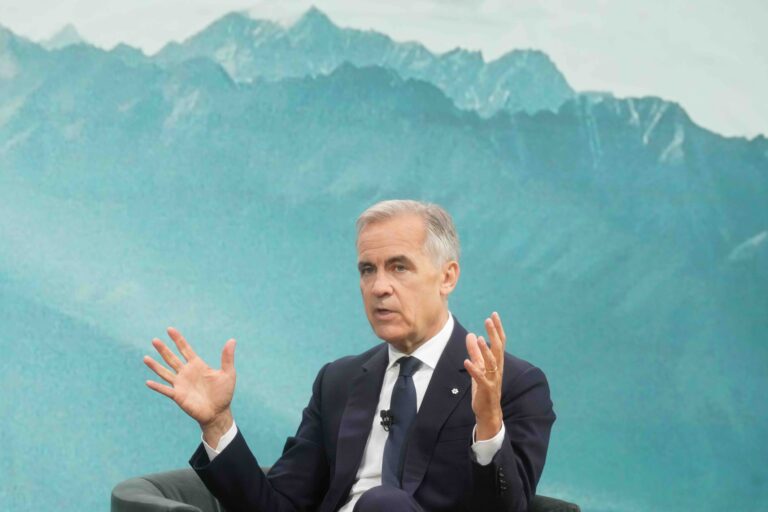
I needed some time to think this through. Canada is a $3.4-trillion economy, home to the vaunted Maple 8 public pension funds and led by a prime minister who’s a bold-faced name in the investing world. Why does Canada need to reintroduce itself to a group of people who are incredibly well-paid to unearth alpha in whatever dark corner it can be found?
We probably overestimate the willingness of investors based in places such as London and Singapore and Dubai to go off-piste. In this moment in the long history of globalization, any country that isn’t America or China needs to hustle. Those two behemoths are irresistible for investors who see the world as a series of eight- and nine-digit transactions. Each is at the technological frontier, where moonshots happen, and each has a massive domestic market that guarantees scale. You can make money elsewhere, but you are far less likely to break your leg if you bet on a hegemon.
“We have some incredible projects. Getting them on the radar of a major investor can be challenging,” New Brunswick Premier Susan Holt told me when I met her on Monday. Her perspective draws on her private-sector career as an information technology executive, which included stops in Australia and India.
“When the federal government brings everybody together in one space, so our team can come up and show them how New Brunswick has what the world wants in minerals, in infrastructure, in energy projects—it makes it more direct, quicker, less expensive for us to do that, and it gets a non-traditional area like ours onto their radar when otherwise they maybe would be focused on flashier opportunities elsewhere.”
Perception matters. All of us humans, even the Masters of the Universe, rely on heuristics to make sense of a complicated world. Heuristics can distort reality as easily as clarify it. During one summit session, Stuart Waugh, a managing partner at Northleaf Capital Partners, a Toronto-based investment firm that manages private assets worth some US$30 billion, urged the audience to drop the notion that investing in Canadian technology companies meant accepting a discount on what you could expect to make on an exit in Boston or Silicon Valley.
“That’s been disproven,” seconded RBC chief executive Dave McKay, who, along with the other big Bay Street banks, used the summit as a stage to pledge billions of dollars to back Prime Minister Mark Carney’s ambition to build pipelines, ports, data centres and energy projects at a pace rarely seen in Canada.
Inviting the good and the great of global finance to Toronto at the same time as the Toronto International Film Festival probably helped tweak any notions that Canada is boring. The city vibrated with the buzz you get when you combine money, celebrity and motorcycles clearing paths for large VIP motorcades travelling at high speeds. “It is such a great innovation that I wish I had thought of it,” quipped former prime minister Stephen Harper and current chair of Alberta Investment Management Corporation, who ended the summit with a keynote speech.
Whatever it takes. The size of the show had to correlate with the degree to which Canada has fallen off the map of investment hotspots.
There are exceptions. Hedge funds love Canadian bonds, and mining companies are having a relatively easy time raising money amid surging gold prices and demand for critical minerals. But generally speaking, international investors have given up on Canada as a place where you can earn a double-digit return. “There are multiple firms that have mentioned that they are underweight in Canada,” McKenzie said.
Starting over will require some humility. Canada no longer is the country of Nortel Networks, Research in Motion and vast expanses of underdeveloped oil deposits. Glitzy investment conferences are common in much of the rest of the world. Inviting investors to spend a couple of days at Toronto’s best hotels might feel like begging, but it’s how the world works. “People were impressed,” said Alison Nankivell, the former MaRS Discovery District chief executive who now runs Export Development Canada. “There was quite a seriousness about it, and a confidence about how it was executed that did give people a little bit of a pause [to say], ‘This time is different.’”
The last time I was invited to the Bank of Canada to interview governor Tiff Macklem, I spotted a copy of Good to Great, one of business guru Jim Collins’s bestsellers. The red book was on a shelf in a meeting room. Its jacket was faded, and the pages were jammed with makeshift bookmarks made of torn paper. Collins studied American publicly traded companies to learn how so-so firms achieve liftoff. It doesn’t happen that often. Collins found only 11 companies that fit his criteria. One thing he observed was that once the leaders of those companies set a new course, they flooded the zone with announcements and updates to convince Wall Street analysts and investors that their plan was working.
Collins published Good to Great in 2001. Carney first joined the Bank of Canada as a deputy governor in 2003. I have no idea if it was the prime minister who marked the pages of that book I spotted at the central bank. But some of what Collins observed about companies explains Carney’s strategy. He is trying to turn a good economy into a great one that can survive without the benevolence of the U.S. president.
“Momentum matters,” said McKenzie. “Interest level matters.”
Kevin Carmichael is The Logic’s economics columnist and editor-at-large. He has spent more than two decades covering economics, business and finance for outlets including Bloomberg News, The Globe and Mail and the Financial Post, where he also served as editor-in-chief.