Listen Now
0:00
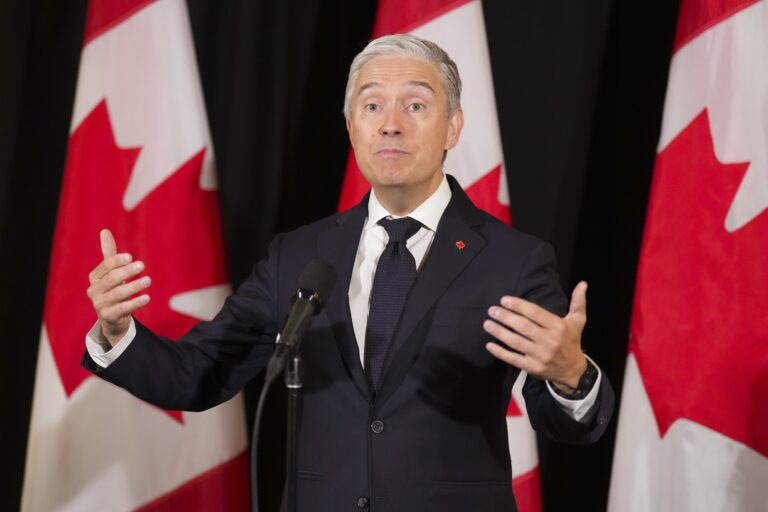
Stephen Harper couldn’t resist giving himself the last word this week on the debate that paralyzed economic policymaking in Canada for the better part of two decades.
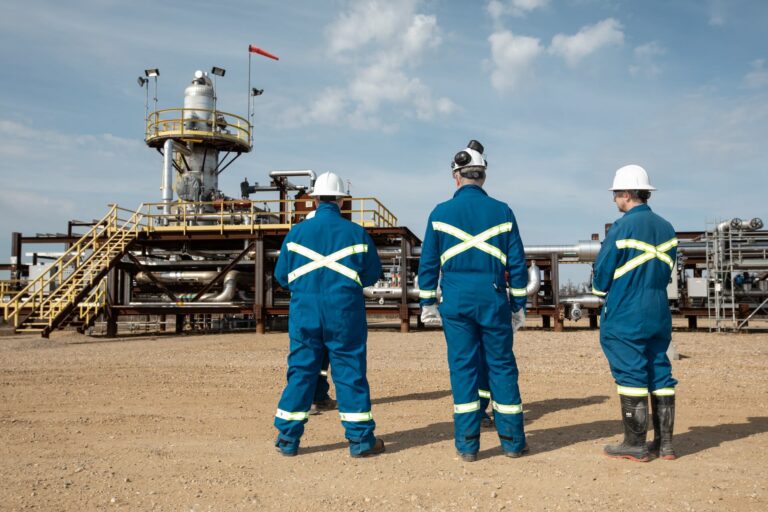
“In 2015, Canada was poised to become [an] energy superpower,” the former prime minister and current chair of the Alberta Investment Management Corporation said in a speech that closed the Canada Investment Summit. “Today we are not, because of deliberate policy choices that followed over the next decade.”
Maybe that’s true. But here are some other deliberate policy choices that contributed to the malaise in which Canada found itself when Donald Trump returned to the White House: Harper’s deliberate decision in 2006 to cut the GST, denying future governments an efficient, non-distorting source of revenue; Harper’s deliberate decision to do little to deflate the housing bubble, which sucked precious investment into assets that do nothing for productivity; Harper’s deliberate decision to stick with austerity even though it was obvious the collapse of oil prices in 2014 would cause a downturn.
Related Articles

Sorry. I’m easily triggered by binary reasoning. The policy decisions that Harper so dislikes were made in the context of Reconciliation, climate change and structural shifts in the oilpatch that created an oligopoly of major producers keener on dividend payments and share buybacks than capital expenditures. Perhaps he would have responded to those contingencies differently if he’d won the 2015 election. But if history has proven him correct, it’s only because the world changed in ways that few could have predicted 20 years ago.
Harper’s revisionism will appeal to those who think that economies operate like machines. That interpretation inspires narratives that characterize economic growth as a matter of pulling levers and adjusting dials. I prefer thinking of economies as gardens, places full of living things that will do what they want unless you learn how to manage them.
Take trade policy, a subject that pertains to all of Canada’s economy, not simply those who produce oil and gas and electricity. Harper and former prime minister Justin Trudeau disagreed on the exploitation of resources, but their approach to diversifying international markets was essentially the same: complete a trade agreement with some willing partner, then mount the text on a website like a hunting trophy. They’d pulled the lever marked “tariff reduction.” It would only be a matter of time before Canada’s economic automatons responded to the price signal.
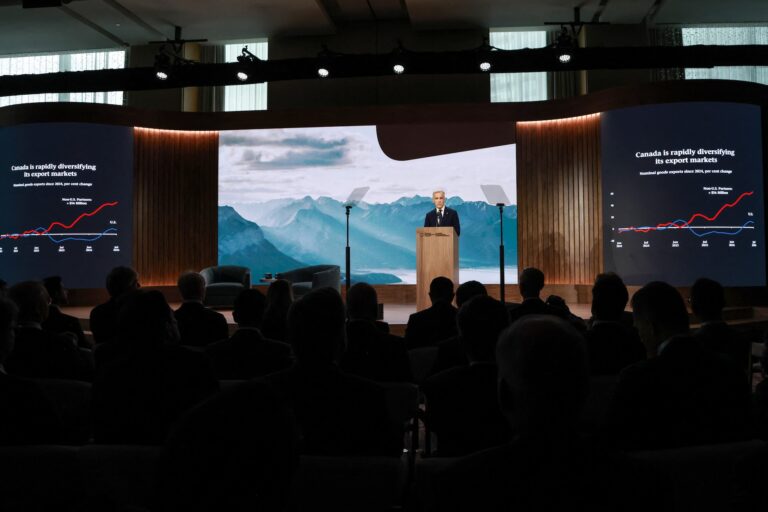
They didn’t. A new Export Development Canada white paper by Prerna Sharma and Malcolm Fisher shows that Canada’s exporters have steadily surrendered ground to their international peers since the original Canada-U.S. free trade agreement was expanded to include Mexico in the 1990s.
Free trade was sold to the public on the promise that it would make stuff cheaper. But policymakers also bet that increased competition and access to bigger markets would stir a wave of Canadian companies to join the big leagues. Easier access to the U.S. might have had the reverse effect.
Sharma and Fisher based their study on something called “economic complexity,” which assesses a country’s economic output by measuring the breadth of products it creates and the uniqueness of those products. A basic economy might revolve around exporting raw materials and simple manufactured goods, while a complex one might feature lots of advanced manufacturing and patent-protected technology. Japan has ranked atop their economic complexity issue since 1995, the benchmark year for the study. South Korea was 21st and now sits third; Germany was fourth in 1995 and sixth in 2024. Canada has plunged to 35th from 17th, suggesting that there’s nothing particularly special about what the Canadian economy has on offer.
What went wrong? Canadian entrepreneurs, executives and shareholders aren’t automatons. Like flowers, traders respond to the brightest source of light. The EDC report lists a number of hypotheses that might explain why Canada’s export sophistication declined even as governments piled up new trade deals.
One of them suggests the nostalgia for the dream of becoming an energy superpower is a slippery slope. Sharma and Fisher write that it’s possible that Canada got caught in a “commodity trap,” where the relative ease of earning decent profits, royalties and tax revenue from strong commodity demand has the effect of dulling the impulse to make bigger bets.
Another hypothesis is one with which we’ve become uncomfortably familiar: the gravitational pull of the U.S. market. The architects of the original Canada-U.S. trade agreement assumed that Canadian exporters would use the U.S. as a staging ground for global domination. Instead, most decided they were content shipping their excess production south of the border. “Being next to the world’s largest and most dynamic economy has proven to be both a boon and a curse,” Sharma and Fisher wrote.
The boon is obvious. Trade, and the wealth that comes with it, surged to the point that Canadian leaders began marketing Canada’s access to the U.S. economy as a natural advantage. The curse is laziness. “The lack of dynamism has meant that Canada has prioritized efficiently extracting commodities at the expense of developing capabilities to refine them and capture more value through more complex products,” Sharma and Fisher wrote.
You get the sense the decision makers are waking up to the reality that trade policy must match the complexity of trade itself. RBC chief executive Dave McKay has led Canada’s biggest company since 2014, but this week he was talking as if it wasn’t until he purchased HSBC’s Canadian unit in 2024 that he came to understand how international commerce really works. “They’ve really shown us how to be a better global bank,” McKay told reporters on Tuesday. “The cross-border services that clients need in Europe, in Asia, in the Middle East. The trade finance capabilities. The cash management capabilities. The connection to their global accounts. How you move money. How you hedge risk, and how you use your [foreign exchange]. We’ve learned a lot from HSBC about running a true global business.”
It says something about Canada that a 157-year-old financial institution is only now getting serious about global trade. If we’re starting from scratch, let’s free ourselves from the mental traps that have limited our imaginations for decades. Sharma and Fisher have suggestions, including designing trade policy based on supply chains in addition to geography.
That’s an important insight. For too long, the stars of Canada’s trade story have been the negotiators. But negotiators don’t trade anything. What we’ve missed is that all those deals are useless if you don’t have anything to sell.
Kevin Carmichael is The Logic’s economics columnist and editor-at-large. He has spent more than two decades covering economics, business and finance for outlets including Bloomberg News, The Globe and Mail and the Financial Post, where he also served as editor-in-chief.