Skip to content

Canada's Business and Tech Newsroom

  • Professional Subscription
  • Partnerships & Advertising
  • Licensing & Syndication
Log In Subscribe
Welcome,
  • My Account
  • Log Out
  • Business
  • Tech
  • National
  • The Big Read
  • Briefings
  • Commentary
Search
Log In Subscribe
Welcome,
  • My Account
  • Log Out
Commentary

Carmichael: Canada’s economy needs a step change. It’s on corporate Canada to step up

Listen Now
0:00
Commentary

Carmichael: Canada’s economy needs a step change. It’s on corporate Canada to step up

The country faces a $1.8T investment gap, RBC’s research suggests. But the biggest thing missing is a sense of urgency.

By Kevin Carmichael
Low-angle view of an RBC logo sign in front of a tall glass-and-concrete office tower, with surrounding skyscrapers visible in the background.
RBC Thought Leadership, the in-house think tank at Canada’s biggest bank, this week estimated that if Canada wants to do more than muddle along, it will need some $1.8 trillion in investment over the next decade. Photo: Toronto Star/Nick Lachance
Apr 18, 2026
A A
A Small A Medium A Large
Share

Gift

Share

Listen Now
0:00

During the Second World War, hundreds of professionals decamped to Ottawa to help C.D. Howe, the munitions and supply minister, create an industrialized economy from a standing start.

Howe saw Canada as the “second front line.” The battle was turning a weak and backward economy into one that could provide for the soldiers at the actual front. Before 1939, “Canadian industry had never made a tank, a combat airplane or a modern, high-calibre, rapid-fire gun,” Fortune magazine observed in 1945. By the end of the war, Canada was the world’s fourth-biggest producer of war supplies behind the U.S., the U.K. and the Soviet Union. “The speed with which industry was organized and production started ranks as an industrial miracle,” Fortune raved.

Related Articles

Carmichael: Here’s how Bay Street can lead a revival of Canadian entrepreneurship

By Kevin Carmichael
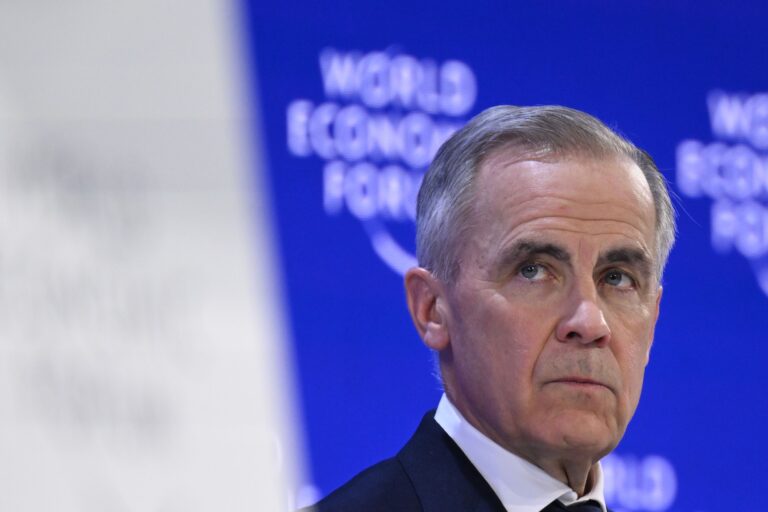
A close-up of Mark Carney wearing a solemn expression, with the World Economic Forum logo on a blue backdrop behind him.

Carmichael: It’s easier to be a back-seat driver, but Carney wants his hands on the wheel

By Kevin Carmichael

Carmichael: Canada’s financial sector is good. It should be great

By Kevin Carmichael

The corporate mercenaries worked for token wages, albeit while collecting their professional salaries. Howe said their willingness to “sacrifice personal gain to serve their country” represented “one of the sources of the inherent strength of Canada as a nation.” Howe’s boss, William Lyon Mackenzie King, thought that was a bit much. Heaping praise on the ringers that Howe drafted “shows a curious lack of proportion,” considering the greater number of public servants who also contributed, King wrote in his diary. 

It’s possible the mandarins would have overhauled the economy on their own, but unlikely, historian Allan Levine concludes in The Dollar a Year Men, his 2025 book on a rare moment when Ottawa and corporate Canada were simpatico. He also doubts that we’ll ever see anything like it again. “Given the widespread mistrust of government today and the self-centred world we live in, it is difficult to imagine a similar collective response if Canada were to face the same kind of danger,” Levine writes. 

There are loud echoes today from Howe’s time. Canada isn’t in danger like it was in 1939, but nor are we safe. Ray Dalio, the founder of Bridgewater Associates, one of the world’s biggest hedge funds, describes the current situation as a “world war” characterized by smaller, interrelated conflicts rather than a clash of great powers. There’s nowhere to hide in such a world. 

As in the 1930s, Canada’s economy isn’t ready for the rigours of a dangerous, unpredictable world. RBC Thought Leadership, the in-house think tank at Canada’s biggest bank, this week estimated that simply muddling along in six strategic areas—oil and gas, electricity, critical minerals, defence, space and food—will require investment of some $1.1 trillion over the next decade. 

Like Howe, Carney intends to deploy the power of the state to accelerate an economic turnaround. Also like Howe, he lacks confidence that the public service can keep up. Carney’s chief of staff, Treasury Board boss and U.S. ambassador were all business heavyweights. He also appointed a former pipeline CEO to lead his new Major Projects Office and a former banker to lead his new defence procurement agency. The November budget said the government had an “immediate-term goal” of recruiting 50 “external leaders in technology, finance, science and other sectors.” 

The authors of the RBC study think Canada should strive to do more than muddle along. They put the cost of a “step change”—two new oil pipelines instead of none, for example—at $1.8 trillion. The problem is that corporate Canada doesn’t really do step change anymore. As the report notes, the non-financial corporate sector is sitting on more than $1 trillion of cash, a pile that Carney once called “dead money.” 

Carney made that jibe in 2012 when he was Bank of Canada governor. The persistence of the hoard shows that the corporate class doesn’t shame easily. It also hints at Levine’s skepticism about our willingness to curb material want to support something bigger than ourselves. The characterization of shelter and food inflation as a national crisis because an otherwise comfortable middle class feels poorer is another example. So is Canadian Natural Resources Limited’s decision to pause its Jackpine expansion, undermining Canada’s pitch as a reliable source of supply for countries who want to diversify away from the Middle East.      

History doesn’t repeat, it teaches. One lesson of the 1940s is that a tight, top-down collaboration between government and business can bring about the sort of step change that thinkers at RBC imagine. But that doesn’t mean a biography of Howe is a template for ending Canada’s economic drift. The federal bureaucracy has since added over eight decades of rules and norms and layers, making it a very different entity than the one Howe forcibly fused with private sector derring-do. 

The spirit of patriotism that inspired so many corporate sacrifices also is missing. Levine told me in an interview that many of the people he wrote about were formed by the First World War, an existential threat of a kind that no native-born Canadian adult has ever faced. “The desperation and the urgency is not there [today].” 

Indeed. The recruitment of 50 skilled outsiders might be an immediate-term goal, but only if your definition of immediate extends beyond five months. A Treasury Board spokesperson said in an email that nothing has happened on that file since it was announced in November. 

The same goes for corporate leaders. More are talking in patriotic terms, but almost always with a lack of commitment. RBC chief executive Dave McKay said last week that Canada is in a “once-in-a-generation moment” and that the bank “intends” to help accelerate economic growth by deploying “up to $1 billion over the coming years” to help companies scale in Canada.

Gift the full article

RBC turned down The Logic’s requests to learn more about McKay’s intentions. So what we know today is that the response of a ridiculously profitable bank to a generational moment is to (maybe) mete out about five per cent of its 2025 net income to promising companies.

That’s not a step change. That’s a bank doing a smidge more banking.  

Kevin Carmichael is The Logic’s economics columnist and editor-at-large. He has spent more than two decades covering economics, business and finance for outlets including Bloomberg News, The Globe and Mail and the Financial Post, where he also served as editor-in-chief.


#commentary #economy #Mark Carney #RBC

Loading...

Thanks for sharing!

You have shared 5 articles this month and reached the maximum amount of shares available.

Close
This account has reached its share limit.

If you would like to purchase a sharing license please contact The Logic support at [email protected].

Close
Want to share this article?

Upgrade to all-access now

Close
Gift the full article!

You have gifted 0 article(s) this month and have 5 remaining.

Copy link and gift
Copy Link
Email to a friend
Send Email
Gift on Social Media

Recipients will be able to read the full text of the article after submitting their email address. They will not have access to other articles or subscriber benefits.

Low-angle view of an RBC logo sign in front of a tall glass-and-concrete office tower, with surrounding skyscrapers visible in the background.

Photo: Toronto Star/Nick Lachance

Most Popular This Week

A diptych showing Mark Carney on the left, and CIBC CEO Harry Culham on the right.
News

Diversifying trade requires banks to take bigger risks, official advised Carney before CIBC meeting

By Joanna Smith
The image shows the inside of Toronto Stadium on a sunny day. The rows of seats are empty; an empty green field is visible.
News

Toronto and Vancouver aren’t getting a World Cup bookings boom

By Chaimae Chouiekh
A yellow ambulance is pictured outside of a hospital in Montreal. A red sign in the foreground reads, “Urgence / Emergency.”
Commentary: Quebec Ink

Quebec just found out what not having digital sovereignty really means

By Martin Patriquin
An image of Mark Carney standing in front of a red podium with the words "AI for All / L'IA pour tous." He is wearing a suit and tie. In the background, people wearing scrubs and white coats are visible.
Special Report

Canada’s new AI strategy sets lofty goals for adoption and growth

By Murad Hemmadi and Laura Osman

In-depth, agenda-setting reporting

Great journalism delivered straight to your inbox.

An image of Tiff Macklem standing in a dimly-lit hallway, wearing a blue suit and glasses. He is clasping his hands in front of him and looking ahead.
Commentary

Carmichael: Tiff Macklem can’t save you

By Kevin Carmichael

Briefing

Canada to publish list of imports at risk of being made with forced labour

By Joanna Smith   |   Jun 12, 2026

TMX Group acquires RAFI Indices for $683M

By Anita Balakrishnan   |   Jun 12, 2026

Ikea invests in Toronto food startup NS/TX Industries’ US$10.5M fundraise

By Catherine McIntyre   |   Jun 12, 2026

Best business newsletter in Canada

Get up to speed in minutes with insights and analysis on the most important stories of the day, every weekday.

Exclusive events

See the bigger picture with reporters and industry experts in subscriber-exclusive events.

Membership in The Logic Council

Membership provides access to our popular Slack channel, participation in subscriber surveys and invitations to exclusive events with our journalists and special guests.

Recent Popular Stories

Commentary: Quebec Ink

Quebec just found out what not having digital sovereignty really means

By Martin Patriquin   |   Jun 8, 2026
A yellow ambulance is pictured outside of a hospital in Montreal. A red sign in the foreground reads, “Urgence / Emergency.”
News

OMERS investment chief departs for Singapore’s Temasek

By Chaimae Chouiekh   |   Jun 10, 2026
The Big Read

We found every data centre in Canada

By Murad Hemmadi, David Reevely, Aleksandra Sagan, Chaimae Chouiekh, Martin Patriquin and Catherine McIntyre   |   Apr 8, 2026
Four vertical slices of aerial view photos. From left, a building in downtown Toronto housing several data centres, a picture of the Albertan wilderness where the proposed Wonder Valley data centre would go, a lit-up QScale data centre in Quebec, and a data centre at a Hydro-Quebec dam.
News

Diversifying trade requires banks to take bigger risks, official advised Carney before CIBC meeting

By Joanna Smith   |   Jun 9, 2026
A diptych showing Mark Carney on the left, and CIBC CEO Harry Culham on the right.
News

Canada’s surprise plan to buy Saab command jets leaves competitors seeking answers

By David Reevely   |   May 29, 2026
A closeup of a scale model of a jet covered in pixellated camouflage, with sensor equipment attached to the top of its fuselage. There are civilians and uniformed military personnel milling in the background.
The Big Read

ApplyBoard faces a reckoning as Canada’s immigration boom turns into a bust

By Claire Brownell and David Reevely   |   May 27, 2026

Canada's most influential executives and policymakers are reading The Logic

  • CPP Investments
  • Sun Life Financial
  • C100
  • Amazon
  • Telus
  • Mastercard
  • bdc
  • Shopify
  • Rogers
  • RBC
  • General Motors
  • MaRS
  • Government of Canada
  • Uber
  • Loblaw Companies Limited
logic-logo

Canada's Business and Tech Newsroom

100% human-crafted journalism

Newsroom

  • News Tips
  • AI Policy
  • Editorial Disclosures
  • Story Pitches

Company

  • About Us
  • Terms of Service
  • Privacy Statement
  • Corporate Information

Contact

  • Contact Us
  • Advertise
  • FAQs
  • Work at The Logic

© 2026 The Logic Inc. All Rights Reserved.

Trusted by leaders

Error

Account creation failed.

Please email us at [email protected].

Create Account

[wppb-register form_name=”cozmo-registration-form-for-modal”]

I do have an account
Login
or

[wppb-login]

I don’t have an account