Listen Now
0:00
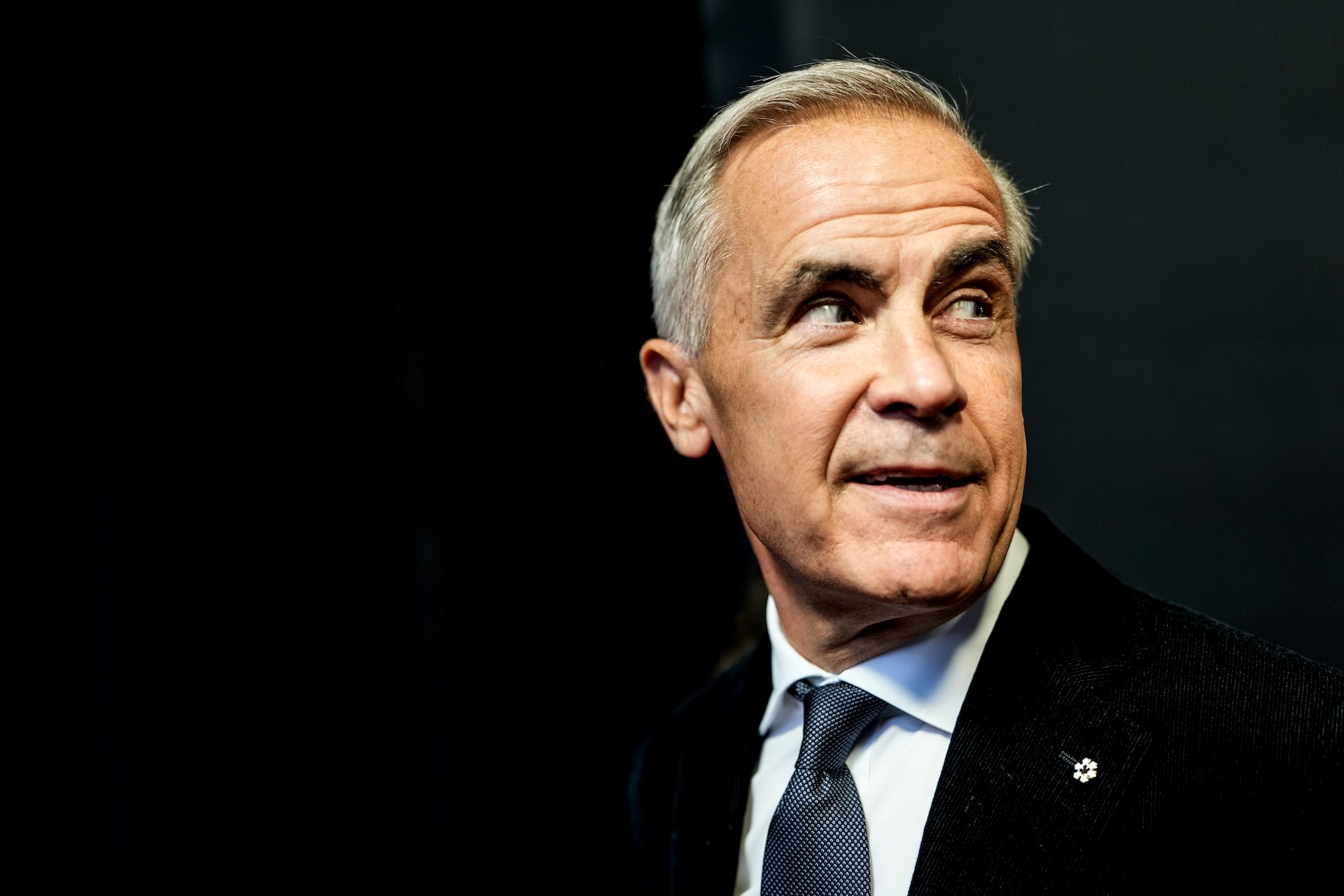
OTTAWA — The federal government is setting out to fulfill Prime Minister Mark Carney’s promise to approve new industrial and infrastructure projects within a year—but it isn’t sure exactly how long it takes to approve them now.
“We don’t have great statistics,” acknowledged Terry Hubbard, the president of the Impact Assessment Agency of Canada (IAAC), in an interview with The Logic.
Talking Points
- The Impact Assessment Agency has been trying to cut duplication and pointless box-ticking in its reviews and it’s shown a lot of progress, its president told The Logic, while acknowledging everyone still has a lot of work to do
- Prime Minister Mark Carney’s front-bench ministers will be accountable for making the Building Canada Strong Act work, said Transport Minister Steven MacKinnon, who’s shepherding the bill through Parliament
The IAAC, a federal body that answers to the environment minister, does big-picture examinations of complex projects under federal jurisdiction, studying their potential effects and setting conditions for carrying them out—sometimes hundreds of those conditions.
Before the Major Projects Office was set up, the IAAC was the most important player in the federal approvals process. Now everybody wants the new office’s attention and help, but the IAAC is still the key regulator doing nuts-and-bolts approval work.
It’s given its approval to 28 projects in the last 15 months, Hubbard said, such as a new port terminal in Sorel-Tracy, Que., and a nickel mine north of Timmins, Ont.
On average, Hubbard said, the 28 projects took 17 months to get through the agency’s hands.
Related Articles

But that’s not the whole story. Part of the IAAC’s job is to lay out what further permits a project needs from departments like Transport Canada and Environment Canada. The agency doesn’t ordinarily track what happens to a project after the IAAC’s part is finished. It has done so only once, Hubbard said, with a palladium mine planned near Marathon, Ont.
First formally proposed in 2010, the mine got the IAAC’s approval in 2022. It needed two additional permits, from Environment Canada and from Fisheries and Oceans, and those took 15 months to secure.
The Marathon mine is a sample of one, but adding its 15-month permitting process to the recent IAAC approval average of 17 months gives you 32 months—a nearly three-year-long wait for approval. Iffy as that assumption might be, it’s the best thing the government can offer as a starting point for the mission laid out in the Building Canada Strong Act, the omnibus Bill C-39 the government introduced this week.
Last year’s related new law (with a confusingly similar name), the Building Canada Act, created the Major Projects Office to handle proposals the federal cabinet considers nationally important. The office’s staff take those projects by the hand to guide them through federal reviews. Carney has sent the office 18 specific projects and another nine “transformative strategies” so far.
Not every proposal can get that treatment, though.
“This is great for nation-building projects, but what about everything else?” Hubbard said.
That’s what the Building Canada Strong Act is for: everything else. If the bill is passed, Hubbard will take on an additional title as “federal review co-ordinator,” assigned to pull the government’s act together.
Some projects would stay with specialist regulators like the Canadian Nuclear Safety Commission, which have particular expertise, but if multiple federal departments get to weigh in, the IAAC is to co-ordinate them.
The Building Canada Strong Act arrived last Monday with a directive from Carney and his cabinet to all the government bodies that can say yes or no to things like new pipelines, mines, rail lines, nuclear stations, interprovincial power links and port terminals: Get this done. Ministers and deputy ministers (the top officials who run departments and agencies day to day) will have to report to Parliament on their progress.
“This puts accountability squarely where it belongs,” said Transport Minister and government House leader Steven MacKinnon, who introduced the bill, in a separate interview.
His department is to stand up a specialist regulator of its own to handle, say, rail spurs and port facilities the way the Canada Energy Regulator handles pipelines.
He said he’ll be accountable for speedier transportation decisions, Natural Resources Minister Tim Hodgson for those related to energy and Environment Minister Julie Dabrusin for everything that lands with the IAAC, which she oversees.
Hubbard emphasized that the agency has been working on all this already. It has agreements with eight provinces (Quebec and Saskatchewan are the exceptions) on how to divvy up the work on projects with both federal and provincial implications. Beyond simplifying things for proponents, he said, that will free up the agency’s own people to get more useful things done.
The IAAC has also shifted to focus on particular risks and unusual features of the proposals it handles.
“We’re asking for information we really need to support decision-making, not just asking for information because ‘it’s what we’ve always done’ and ‘the more we know, the better we feel,’” Hubbard said.
The IAAC paid close attention to the Marathon mine proposal because it was a pilot project, in which the assessment agency co-ordinated the permitting process as well—something of a trial run for the system the Building Canada Strong Act is meant to put in place.
Projects coming forward now will already get through more efficiently, Hubbard said.
Environmentalist groups have assailed the Building Canada Strong Act as a “bulldoze nature bill,” partly because it also would give ministers the power to scrap certain approval conditions and also to allow preliminary work to start (in some cases) before approvals are granted. National Chief Cindy Woodhouse Nepinak of the Assembly of First Nations has warned the government not to rush the bill through Parliament without due respect for Indigenous Peoples’ rights.
Private-sector figures who have called for faster federal approvals are largely pleased by the way the government is seeking to work faster for everyone rather than just giving extra help to select proposals.
“The Major Projects Office helps to navigate through a system that’s imperfect,” said Candace Laing, CEO of the Canadian Chamber of Commerce. Fixing the federal system’s underlying problems is crucial for the economy, she said.
In a report released the day after the Liberals introduced the new bill, the business group highlighted fractured and slow permitting as a shackle on the Canadian economy.
It’s particularly a drag on mining, the report said. Mines need government approvals, but they often also need new infrastructure—such as transportation for workers, equipment and ore; and energy to power the place—that needs its own funding and permits before it can be built, separate from whatever the mining operation requires.
“You can see how much of a barrier it is to make a plan for a mine when you don’t have those channels, those routes to tidewater and an ability to access other markets,” Laing said.
The Building Canada Strong Act would partly deal with this by letting the government designate “regions of national interest” where it anticipates multiple proponents will be seeking federal approvals. The IAAC would examine those areas in advance, so it’s not starting from scratch when a proposal comes in.
The agency has done three assessments like these before, though Hubbard acknowledged they’ve been relatively narrow—for offshore wind developments near Newfoundland and Labrador, for instance. It has three broader ones underway now, including one covering Ontario’s mineral-rich Ring of Fire region.
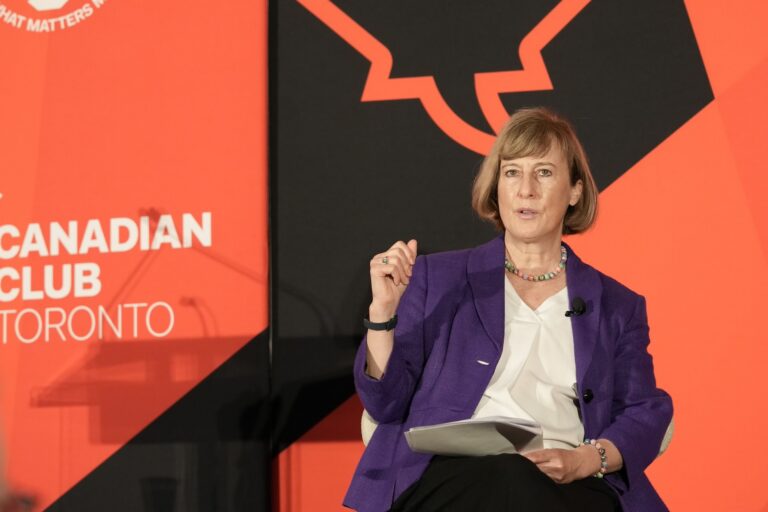
Between setting up a whole new regulator at Transport Canada, writing new regulations in multiple departments and conducting these assessments, the bill “seems mostly to hand the public service a to-do list,” said Lucy Hargreaves, CEO of the tech-minded lobby group Build Canada. “There still seems to be a lot more work to be done before we start seeing that one-year timeline kick in.”
Hargreaves previously worked in the Liberal government under Justin Trudeau, including for then-environment minister Catherine McKenna and middle-class prosperity minister Mona Fortier. She’s seen this type of work up close and estimates it’ll take a bare minimum of a year.
“There’s a lot to be done, and they’ll have to move fast. But it’s a big agenda,” and she firmly approves of the direction, she said.
MacKinnon refused to make an estimate of his own: “As much as I’d love to give you a timeline, I don’t want to commit to things that I’m not in a position to commit. What I can commit is that Transport Canada will move very, very quickly to put these things in place.”
Good, said Laing. “There’s a door in front of us that’s wide open, but it will close,” she said. Canada has resources that are in demand at the exact same time as it’s trying to strengthen its economy and diversify its trade. That means the situation is urgent. “It’s go time.”