Skip to content


Commentary
Carmichael: Trump’s growing belligerence raises the stakes for Canada
The country must decide if it wants to be independent—or an outpost of the new American empire
Nicolás Maduro and his wife, Cilia Flores, are seen in handcuffs after landing at a Manhattan helipad, en route to a federal courthouse in New York City on January 5. Photo: Getty Images/XNY/Star Max/GC Images
Carlos Leitão, the former Quebec finance minister and current member of Parliament for the Laval-area riding of Marc-Aurèle-Fortin, took the stage at a December event to summarize a conversation that had just taken place between the chief economists of RBC and Desjardins and a vice-president from La Caisse.
A former chief economist himself, Leitão could have riffed on just about anything. He used the moment to encourage the lunchtime audience that the Montreal Council on Foreign Relations had assembled to read the new U.S. National Security Strategy. Canada’s longtime benefactor is becoming “much more imperialist,” Leitão said.
Related Articles
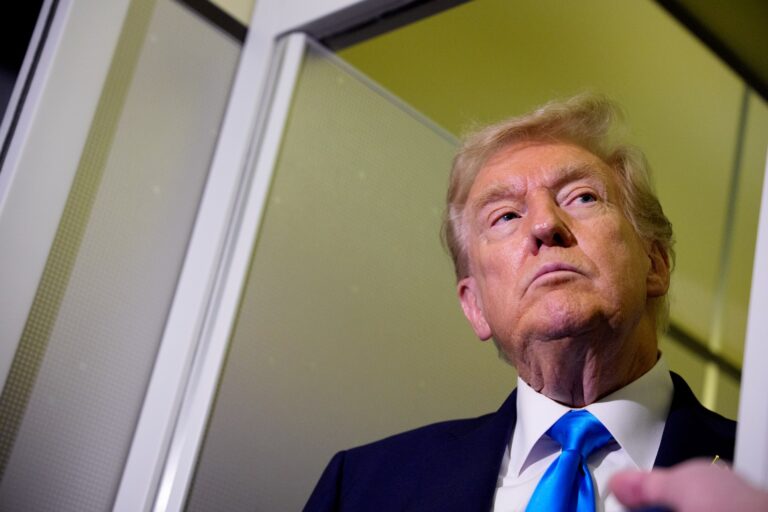
It was good advice. Over the weekend, President Donald Trump said that the U.S. will now be running Venezuela, after an American strike force extracted the country’s autocratic president, Nicolás Maduro, and his wife to face drug trafficking charges in New York. But delivering justice appeared to be a secondary goal. Trump spent more time talking about taking control of Venezuela’s oil industry. At the press conference, he put other countries on notice, and later revived his desire to take Greenland from Denmark.
Nothing new about making Canada the 51st state. Yet.
Sooner or later, smaller countries learn they are alone. Finland was holding out against waves of Soviet troops in 1939 when it became clear that no significant support from Britain or France was coming. The only cover Australia got from British prime minister Winston Churchill at the outset of the Second World War was a buildup of raw recruits some 4,000 kilometres away in Singapore. Japan took Singapore on Feb. 15, 1942, after a week of fighting. Days later, the same aircraft carriers that led the attack on Pearl Harbor became the platform for air raids on Darwin.
Modern Canada’s wake-up call came in 2025. The first clue was when none of our democratic allies showed up to retaliate against President Donald Trump’s tariffs. The final warning was the December publication of the Trump administration’s new security strategy, which, we now know, was more than a few dozen pieces of paper. The document presents domination of the Western Hemisphere as an expression of domestic security. That raises the stakes. The choices we make this year and for the rest of this decade will determine whether Canada maintains a measure of independence or evolves into an outpost of the new American empire.
A national security strategy is a topic of interest for economists because geopolitics is now the primary driver of economic outcomes. The laws of economics still apply, but their power to increase welfare must be accompanied by a willingness to follow them. The U.S. security strategy codifies the return of Great Power politics, where economic efficiency is an afterthought. The Trump administration document declares that the “outsized influence of larger, richer and stronger nations is a timeless truth of international relations.”
This means that Trump and his MAGA movement believe they will have a say in what’s best for America’s allies. “We will no longer tolerate, and can no longer afford, free-riding, trade imbalances, predatory economic practices and other impositions on our nation’s historic goodwill that disadvantage our interests,” the strategy states.
In another passage, it declares that the Trump administration will “oppose elite-driven, anti-democratic restrictions on core liberties in Europe, the Anglosphere and the rest of the democratic world, especially among our allies.” And: “The terms of our agreements, especially with those countries that depend on us most and therefore over which we have the most leverage, must be sole-source contracts for our companies. At the same time, we should make every effort to push out foreign companies that build infrastructure in the region.”
Talking about the U.S.’s swerve toward authoritarianism and the revival of its imperialist tendencies is sensitive. Get a note wrong and the boo-birds will accuse you of alarmism and Trump derangement syndrome. I concede the possibility that the U.S. president and his advisers are simply master trolls. When you read a policy document that declares that the U.S. government is worried about “civilizational erasure” in Europe, it’s difficult to take the thing completely seriously.
But lots of us dismissed Project 2025 as an 887-page fantasy epic written by some right-wing think-tankers. The first year of Trump’s presidency suggests that Project 2025 was, in fact, a blueprint for how he would conduct a second term. It’s time to retire the platitude that Trump should be taken seriously, not literally. It’s both. He means enough of what he says that you have to assume all of it is true.
Maybe the security strategy landed at the right time. The Finns called their adjustment period after the Second World War the “years of danger.” Canada is now living a version of that, but every time I see a poll that says our biggest concern is the cost of living, I wonder if the gravity of the situation has sunk in. The economy has proved to be more resilient than many of us thought it would be. It’s tempting to conclude that things might not be so bad. The stock markets suggest that things might instead be pretty good. Maduro was an oppressive brute who stole the most recent election. That will obscure the menace that lurks behind what Trump did.
The Canadian Museum of History’s permanent exhibition includes a political cartoon from 1870, three years after Confederation. The subject is a toddler called “Canada,” holding a musket into the air. On one side, with outstretched arms, is “Mother Britannia.” On the other, with waiting arms, is Uncle Sam.
“See!” declares Mother Britannia. “The dear child can stand alone!”
“Of course he can!” agrees Uncle Sam. “Let go of him Granny; if he falls I’ll catch him!”
Canada’s anxiety over the U.S. has deep roots. The difference today is that Granny no longer is in the picture. Canada was able to resist the U.S. in its infancy because it was part of the British Empire. The Empire faded, but so did America’s desire to brutally dominate its surroundings. The point is that a benevolent superpower has always had our back.
America’s unabashed embrace of Great Power politics means that for the first time since Confederation, Canada is on its own. For the U.S., we’re now a buffer between the 48 contiguous states and whatever threats might emerge via the Arctic, and a source of critical minerals. Nothing more.
Kevin Carmichael is The Logic’s economics columnist and editor-at-large. He has spent more than two decades covering economics, business and finance for outlets including Bloomberg News, The Globe and Mail and the Financial Post, where he also served as editor-in-chief.



Loading...
Thanks for sharing!
You have shared 5 articles this month and reached the maximum amount of shares available.
CloseThis account has reached its share limit.
If you would like to purchase a sharing license please contact The Logic support at [email protected].
CloseGift the full article!
You have gifted 0 article(s) this month and have 5 remaining.
Recipients will be able to read the full text of the article after submitting their email address. They will not have access to other articles or subscriber benefits.
Photo: Getty Images/XNY/Star Max/GC Images
Most Popular This Week




In-depth, agenda-setting reporting
Great journalism delivered straight to your inbox.
Commentary
Carmichael: Canadian ignorance about India is a strategic weakness
Briefing
Aritzia shares pop after earnings rise 204%
First Nation in Alberta goes to court over fast-tracked oil pipeline
Chinese EV maker Geely Auto Group to launch in Canadian market in 2027
Best business newsletter in Canada
Get up to speed in minutes with insights and analysis on the most important stories of the day, every weekday.
Exclusive events
See the bigger picture with reporters and industry experts in subscriber-exclusive events.
Membership in The Logic Council
Membership provides access to our popular Slack channel, participation in subscriber surveys and invitations to exclusive events with our journalists and special guests.





