Listen Now
0:00
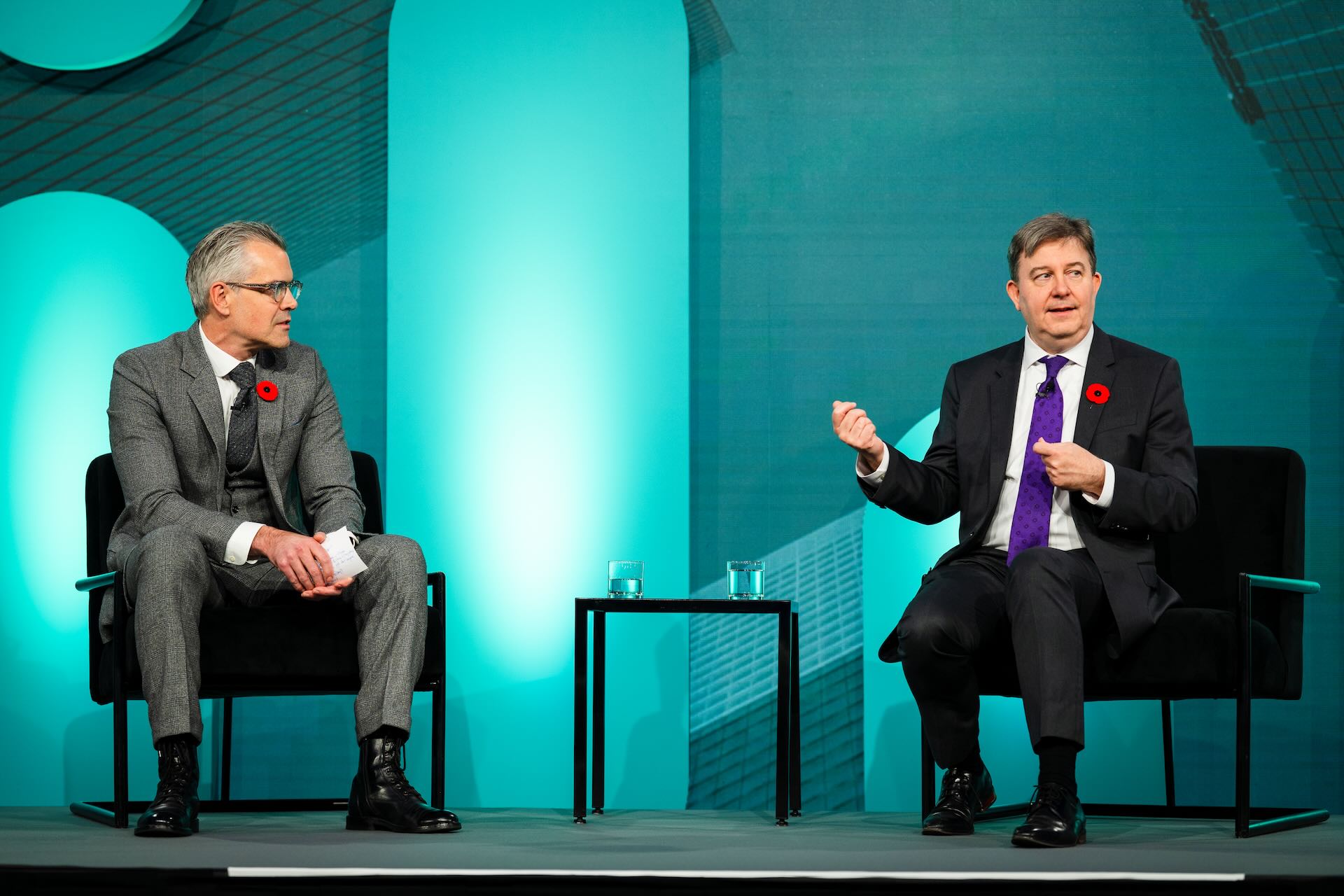
Top business leaders and policymakers spoke with our reporters onstage at Toronto’s Arcadian Court on Monday. Here are the highlights from The Logic’s flagship journalism event.
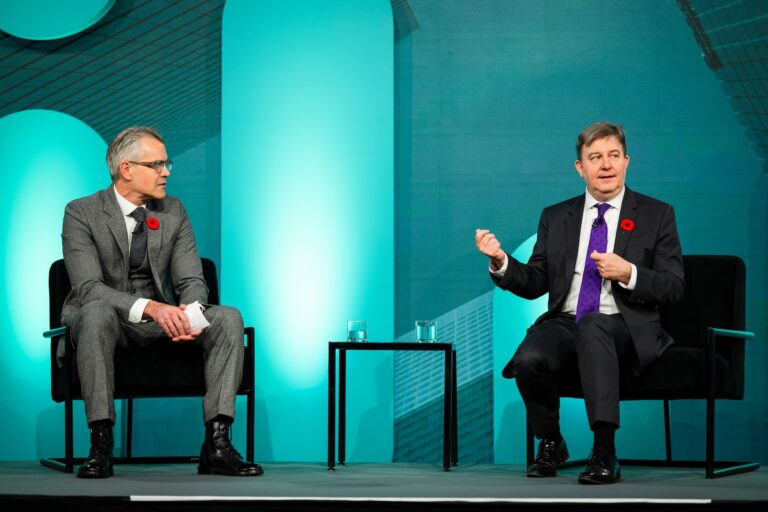
Risky business: Superintendent of Financial Institutions Peter Routledge said the bank regulator may have gone too far in protecting Canada’s financial sector against shocks, potentially stifling innovation in the process. OSFI is now upping its risk tolerance in a bid to encourage more growth and “creative destruction,” Routledge said. Years of focusing on financial buffers has made the system “tough enough to take a punch,” he said, referring to individual bank failures, “provided they’re rare and inexpansive.”
Routledge has been reconsidering whether Canada’s approach to preventing financial failures unnecessarily constrains economic growth and competition. In a September speech, he said the regulator would look at easing capital requirements for smaller lenders and making it easier for new players to enter the market, while keeping financial stability its priority. When it comes to AI, though, he said to expect more regulation.
Ontario Securities Commission CEO Grant Vingoe said the provincial regulator is also taking a cautious approach to AI. Existing securities rules already require human supervision and other risk management measures. While the regulator is open to more requirements if those protections prove insufficient, he said “we don’t want to intervene too early,” he said.
Read more from The Logic Summit 2026


The AI bottom line: Four years into the generative AI boom, business leaders say the technology is creating value, but they can’t always point to the payoff. Mahshid Yassaei, co-founder and CEO of Tali AI, which builds AI note-taking tools for clinicians, said the benefits can show up as more free time for doctors, more time with individual patients or a higher patient volume. Those gains are hard to quantify, she said. “Nobody can put their finger [on it] and say this is actually worth $20 or $2,000.”
Damien Steel, chief technology, data and AI officer at HOOPP, argued that businesses should use AI to fundamentally rethink how they operate. Smaller organizations may have an edge in that respect, said Steve Woods, chief technology officer at Inovia Capital. “If you’re starting a company from scratch, this is an enormous advantage to you,” he said. “If you’re bigger, maybe it’s less so.”
Power to the young people: Canada’s push to activate young entrepreneurs calls for greater attention to small and medium-sized businesses (SMEs), said Ilse Treurnicht, a venture investor and former CEO of the MaRS Discovery District. The country is evolving into an “SME economy,” Treurnicht said, and that’s the tier where startups live or die.
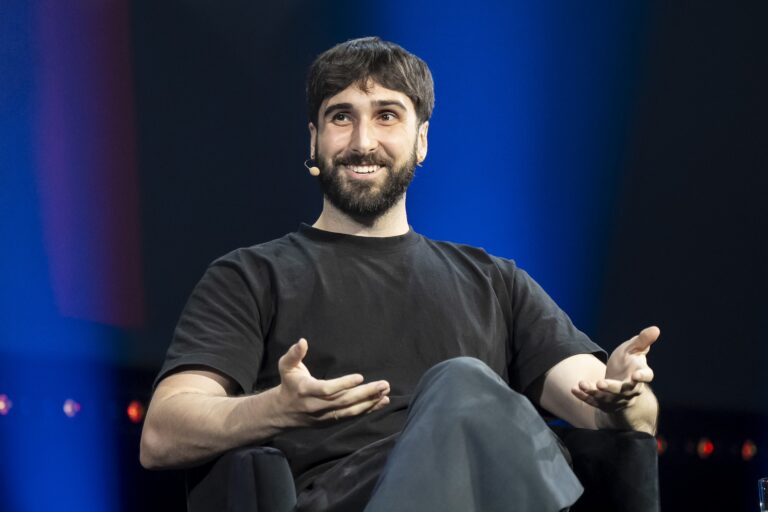
Yasmine Ben Arous, the 18-year-old founder of Calmos, an AI-driven application that helps students deal with anxiety disorders, urged adults in the venture ecosystem to consider the unique circumstances of her generation—one raised in an environment of limitless information. “Knowing that everything is possible just makes you not know what you want to do,” she said.
The Canadian conundrum: Summit attendees had a range of views on the benefits and barriers to building Canadian. Coveo CFO Karine Hamel said Canadian firms sometimes get a better reception abroad than at home. “Coveo is powering the Australian taxation office’s website, but not the Canadian Revenue Agency’s,” Hamel said. “It’s frustrating. When it comes to procurement, there’s a real dichotomy between what we’re hearing and what we’re seeing.”
In the defence sector, however, Callie Lissinna, co-founder of Edmonton satellite imagery scaleup Wyvern, said being Canadian can be a competitive advantage. “Canada’s a reliable partner,” she said, adding that “you need intelligence coming from somewhere other than an American satellite in some cases.”
Margaret Wu, a partner at the Toronto venture capital firm Georgian, said investors are keen to back Canadian firms, but don’t want to do it alone. “It feels like I’m one of many penguins who are at the edge saying, ‘I really want to invest in Canada. I see there could be an opportunity, but there’s only an opportunity if we all hold hands and jump together,’” she said. Part of the hesitation, she said, is that investors are worried the political will to encourage defence investment may not last.
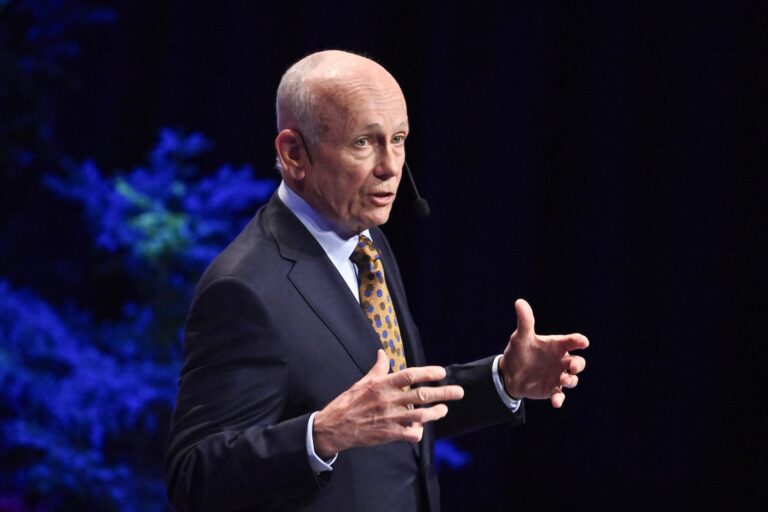
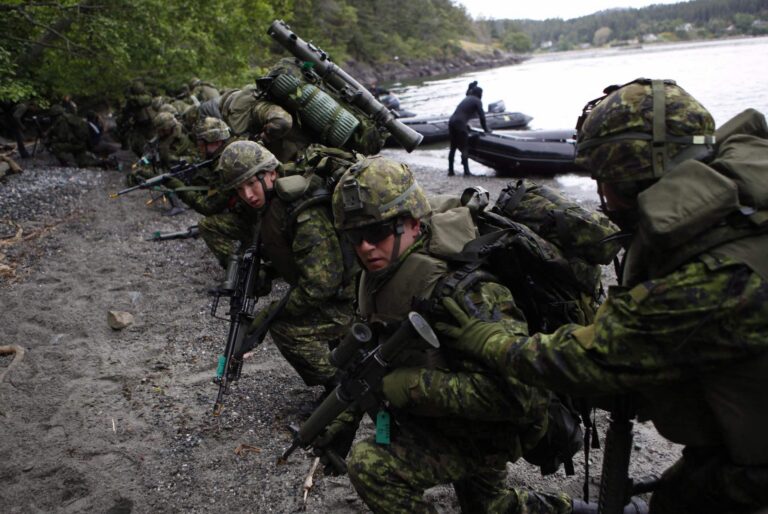
Cleaning up procurement: “We did a bit of a ‘sludge audit’ within our own department’s decision-making structure,” said Christiane Fox, deputy minister of national defence. “There were 34 steps to a procurement decision, and when we looked through the steps, we found that 17 of them had no bearing on the final decision.” The department needs to “clean that up” and be nimbler, Fox said.
Canada is not uniquely bad at defence procurement, however, said Doug Guzman, chief executive of the government’s Defence Investment Agency. “One of the discoveries I made in the year I’ve been here is: I thought Canada was a couple standard deviations off the left-hand side of the normal curve, and we’re not,” he said. “Every NATO country is struggling with some version of this.”
Top up the tank: Trans Mountain CEO Mark Maki, meanwhile, said the company expects to start moving another 90,000 barrels per day through its pipeline from the Alberta oilsands to Burnaby, B.C., by the end of this year—as soon as the federal regulator approves its plan to use chemical additives to speed up the flow.
Maki said shippers are eager for the higher volume, telling him: “Without question… the sooner Trans Mountain can get it in place, the better.”
Read more from The Logic Summit 2026 here.