Listen Now
0:00
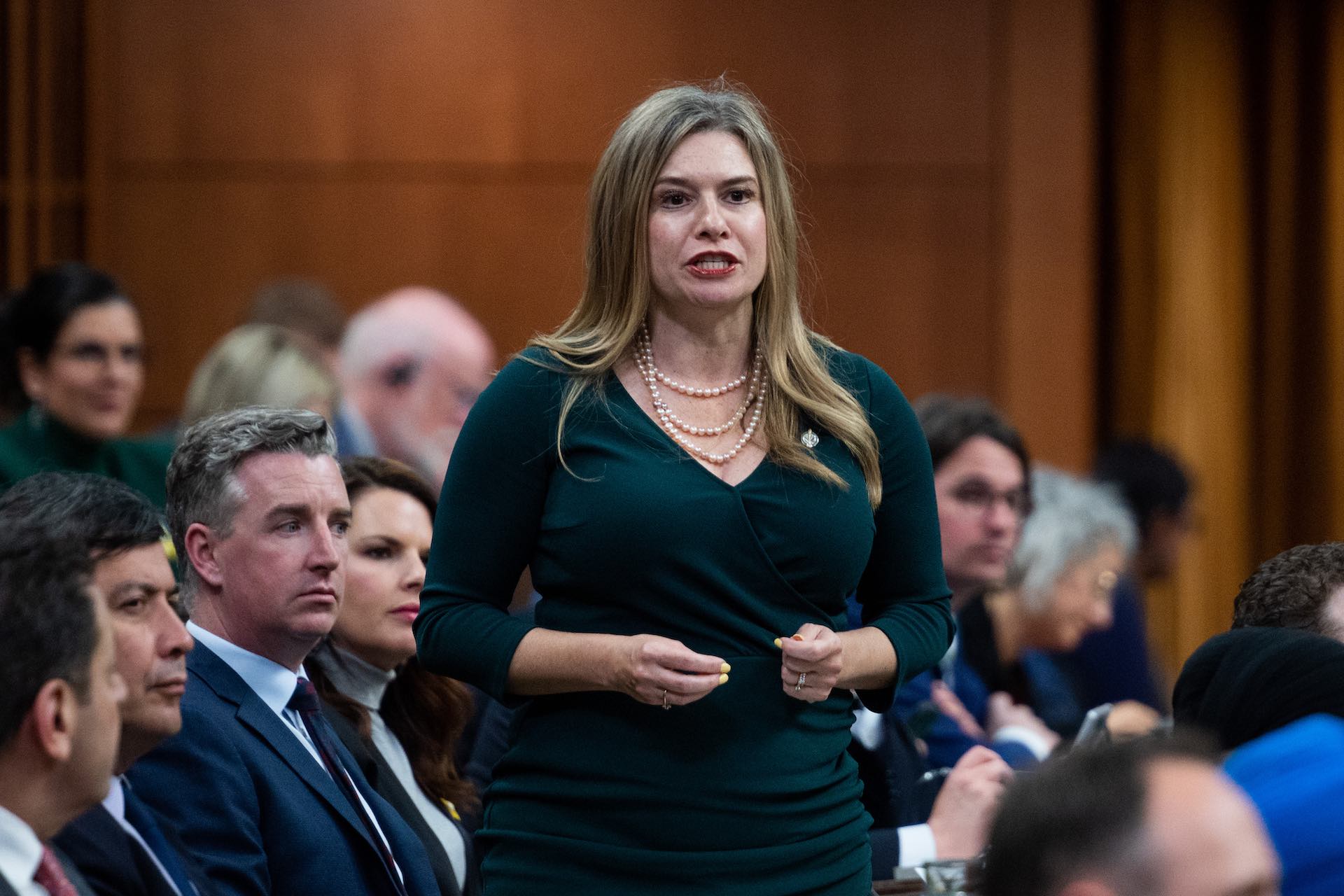
OTTAWA — The Liberals should insist on full ratification of Canada’s existing trade agreement with the European Union before strengthening ties in other areas, including state-backed investment in critical minerals, said Conservative trade critic Stephanie Kusie.
“It just to me seems incomplete and inconclusive that it is not completely ratified before we move on to the significant next step of associate membership,” Kusie told The Logic in an interview on how the Conservatives would prefer to handle the transatlantic partnership.
Talking Points
- Conservative trade critic Stephanie Kusie says the Liberal government should insist on full ratification of the Canada-EU Comprehensive Economic and Trade Agreement before seeking “associate membership” in the 27-nation bloc
- She is concerned that staving off the EU’s carbon-border tariffs will further entrench Canada’s industrial carbon price, which the Conservatives have pledged to repeal
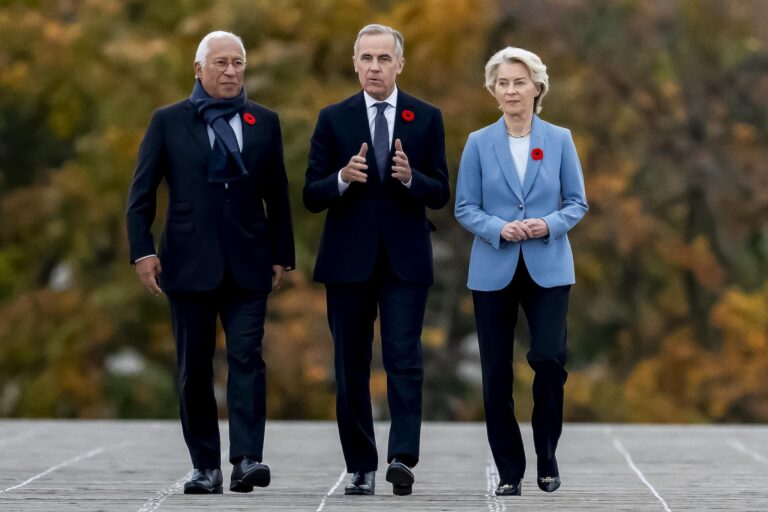
In Montreal last month, Prime Minister Mark Carney and European Union leaders announced the broad strokes of an “ever-closer association of Canada to the EU, short of full membership itself.” They pledged to hash out the details by June, when Carney has been invited to join meetings of the European Council in Brussels.
At the time, the Conservatives characterized Canada-EU summit as “more Liberal theatrics” that would not help Canadians pay their bills.
Kusie, who is nearly five months into her role as Opposition trade critic, sat down earlier this week in her office on Parliament Hill to discuss the Canada-EU “Alliance for the Future,” including where she thinks it falls short and where it could benefit Canadians.
Related Articles

First things first: The Canada-EU Comprehensive Economic and Trade Agreement (CETA) has been provisionally in place since 2017. It has eliminated about 98 per cent of bilateral tariffs, but investor protections that are part of the deal require ratification by all 27 EU members. Belgium, Bulgaria, Cyprus, France, Greece, Hungary, Ireland, Italy and Poland have yet to ratify the deal at the national level.
In the House of Commons, Kusie has linked ratification to securing access to the European market for Canadian beef and pork. In reality, Canada has had phased-in access to duty-free quotas for beef and pork through CETA since 2017. They reached their full potential in 2022. The main barriers to agricultural goods are the EU’s ban on hormone-treated beef and other long-standing disputes over food safety rules that were left untouched by the trade deal.
While Kusie acknowledged the federal government cannot force other countries to ratify CETA, she said it should not abandon the effort. The Calgary MP compared it to how she persuades her child to eat his vegetables by giving him healthy options, rather than just telling him over and over again to do it. “I would say, ‘Would you like celery or would you like a carrot?’” If that does not work, she said it might be worth re-evaluating parts of the deal, though she did not go into detail about how that might be done.
Carbon pricing concerns: About seven per cent of Canada’s exports to the EU face the threat of new duties through the bloc’s Carbon Border Adjustment Mechanism—primarily aluminum, iron and steel already hit with U.S. tariffs. Carney hinted at the Montreal summit that the two sides are near a solution, without giving details.
Kusie fears the Liberals will seek an exemption that recognizes Canada’s industrial carbon price—further entrenching a policy the Conservatives think should disappear. She acknowledged that Carney’s first move on the file after he replaced Justin Trudeau as prime minister came at a political cost to the Tories. “He essentially neutered us by eliminating the consumer carbon tax,” she said. But Conservative Leader Pierre Poilievre then made the federal carbon price on industrial emissions the new target of his “axe the tax” campaign.
Now, there is a risk the Liberals will increase the industrial carbon price as part of negotiations with Europe beyond the planned $170 per tonne by 2030, Kusie said. “There’s no doubt in my mind and he would not hesitate to do it to get the associate membership,” she said. “We have to ensure that the deals we do bring benefits to Canadians—that it’s not for the sake of checking a box or fulfilling a false moral obligation,” she said, specifying she was talking about “unrealistic climate targets.”
Sofia Ouslis, a spokesperson for Carney, said in a statement that Ottawa is working toward EU recognition of carbon payments in Canada. “All details will be communicated in due course.”
‘No doubt’ over LNG: At the Canada-EU summit, Ottawa and Brussels announced a joint long-term feasibility study on how to transport liquefied natural gas from Canada to Europe. “I’m glad that we have a prime minister who is open to this prospect,” Kusie said of Carney. (Trudeau had been lukewarm to the idea of exporting LNG to Europe from the East Coast; Kusie said Canada has a lot of catching up to do.)
“That’s something where there is a net benefit to Canadians in my mind,” she said. “There’s no doubt.” She is less certain that co-operation in other areas won’t come with trade-offs, such as more stringent Canadian regulations in exchange for greater access to the EU market.
More study needed: The European Investment Bank (EIB), whose €600-billion balance sheet makes it one of the largest multilateral financial institutions in the world, reached an agreement with the federal government that will let the state investor back projects in Canada, starting with critical minerals.
Kusie pointed to Canada’s experience with the China-led Asian Infrastructure Investment Bank as reason for caution. Ottawa suspended its involvement with the bank in 2023 to review allegations of Chinese Communist Party interference, which the multilateral institution denied. Noting that Carney has spoken about trade diversification as one way to shore up Canada’s sovereignty, she is hesitant about moves that could cede control to other countries.
Letting the EU’s long-term investment arm operate in Canada, however, does not mean joining the institution as Ottawa did with the Asian development bank. Asked whether the Conservatives would be open to EIB investment, Kusie said: “We need to evaluate what we want out of it before we go into it… and then we can see if they can meet us in doing that.”