
Listen Now
0:00
A hack on some of Canada’s biggest law firms is continuing to roil Bay Street, as workers in high-stress professions like law, finance and tech become targets of social engineering schemes.
Law firm McCarthy Tétrault began notifying affected clients on Oct. 25 that files and accounts had been breached on Oct. 22 by a “social engineering” campaign mimicking their internal IT teams, with Bennett Jones, Borden Ladner Gervais and Davies soon reporting their own breaches.
Talking Points
- More people on Bay Street are learning their information was revealed in a hack on Canada’s Big Law firms, exposing vulnerabilities in industries where workers tend to be stretched thin
- Cyber experts warn that scammers are increasingly using “multi-channel” attacks to penetrate companies, combining AI with targeted, in-person overtures toward overworked humans
Some lawyers are still dealing with the fallout.
One independent lawyer, who owns a small firm, said they were contacted on Nov. 3 by a Big Law firm they hadn’t worked with in years, and informed that their address and banking information had been exposed in the hack. The Logic has agreed not to name the person to avoid bad actors seeking out their leaked information.
Closing a business account and opening a new one to protect it from potential hackers is a massive undertaking, potentially impacting payroll, clients and vendors, the person said. But, as a former Big Law lawyer, they understand how the hack could have unfolded: Law firms are hiring fewer staff, leaving lawyers in “survival mode” under heavy workloads. On top of it all, an IT person calls with a familiar request for one of your ever-growing tech accounts.
Related Articles

It’s a vulnerability that cyber criminals are targeting.
The Federal Bureau of Investigation warned last year that Silent Ransom Group, which has been impersonating IT personnel to steal data since 2023, had targeted U.S. law firms, increasingly drawn to the “highly sensitive nature of legal industry data.” The FBI says the hackers fly under the radar of antivirus software by accessing legitimate remote-access tools, and even use in-person actors to carry out the attacks. Cybersecurity firm CrowdStrike estimates legal industry hacks have doubled since 2023.
Behind the scenes, there has been a scramble to get ahead of it.
“We’re always constantly trying to get in front of people to remind them… you are a target,” said Ray Leclair, vice-president of public affairs at LawPro, which insures Ontario lawyers against professional liability claims like cyber incidents. “We do it anywhere that they will give us a mic.”
Law firms have always been targets because they control trust accounts. But Leclair said fraudsters now are often armed with knowledge of the way money is transferred and displayed in Canadian online banking systems. Fake documentation used to be easier for experienced law firm staffers to spot, but has gotten more realistic, he said. Scammers use fake names shared with public figures to bury public warnings about their schemes.
AI is certainly part of the problem. The Canadian Centre for Cyber Security would not comment on what specific actors might be responsible for the recent law firm hacks. But it said “AI can make social engineering more effective by increasing the realism, personalization and scale.”
IBM Canada’s Adnan Seddighi said vishing—the type of attack proliferating in Canada’s legal and financial firms—is on the rise. Vishers use fake phone numbers and voice-altering software to get people to share sensitive information on calls, or in this case, on fraudulent sign-in pages related to Microsoft Cloud environments. There has been a 56 per cent jump in AI-driven attacks over the past year, IBM says. Nearly half involved deepfakes or other impersonations.
Still, a human had to instruct AI agents on how to identify targets, said Maz Araghrez, who co-leads the legal cybersecurity group, The Sentinel Project. Both OpenAI and Nvidia are investigating allegations of spies attempting to gain access to corporate information with good old-fashioned, human-led social engineering.
Seddighi said IBM generally advises companies to re-train workers against “multi-channel” attacks.
“Humans, much like rivers, tend to follow the path of least resistance. If I’m a lawyer and I’ve got 10, 20 matters… deadlines, I’m redlining things, I’m looking for information, I’m speaking to opposing counsel,” Araghrez said.
“I can only focus on one thing at a time, and I can only focus on being a lawyer, and so I let my guard down, particularly in an environment where I feel safe. And when I’m at work on my laptop… those are supposed to be secure areas.”
Araghrez worries law firms aren’t ready. Nearly all are smaller and have fewer resources than the firms that were targeted last month. The partnership structure means lawyers often serve in executive positions, preventing technologists like chief information-security officers from reaching the top ranks and making decisions that protect the firms from attacks.
“We’re behind as law firms,” he said. “Bad actors are just one step ahead. They’re quicker. They’re more agile. They take more risks.”
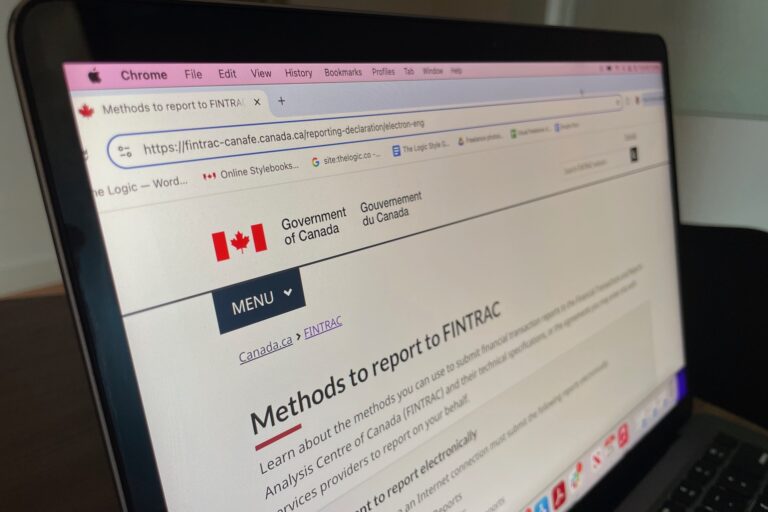
Araghrez hopes the recent hacks will motivate law firms to consider more co-ordinated information sharing and appoint leaders in charge of disaster response. The stakes extend beyond individual firms as state actors target national security information held by law firms. Hackers in China have already been running attacks on law firms, and Fintrac has warned that financial firms face AI-powered organized crime threats. The Canadian Centre for Cyber Security linked the recent vishing attacks in Canada to a “financially motivated” actor.
The affected firms say they are co-operating with law enforcement and taking steps to contain the threat. But with competition already fierce for white-shoe firms, the reputational damage may already have been done.
“There’s probably 12 or 15 law firms in the country that target those big, big clients,” said the person whose information was leaked in the attack. “Will they see clients moving to other firms that are viewed as having better security for their files?”