Listen Now
0:00
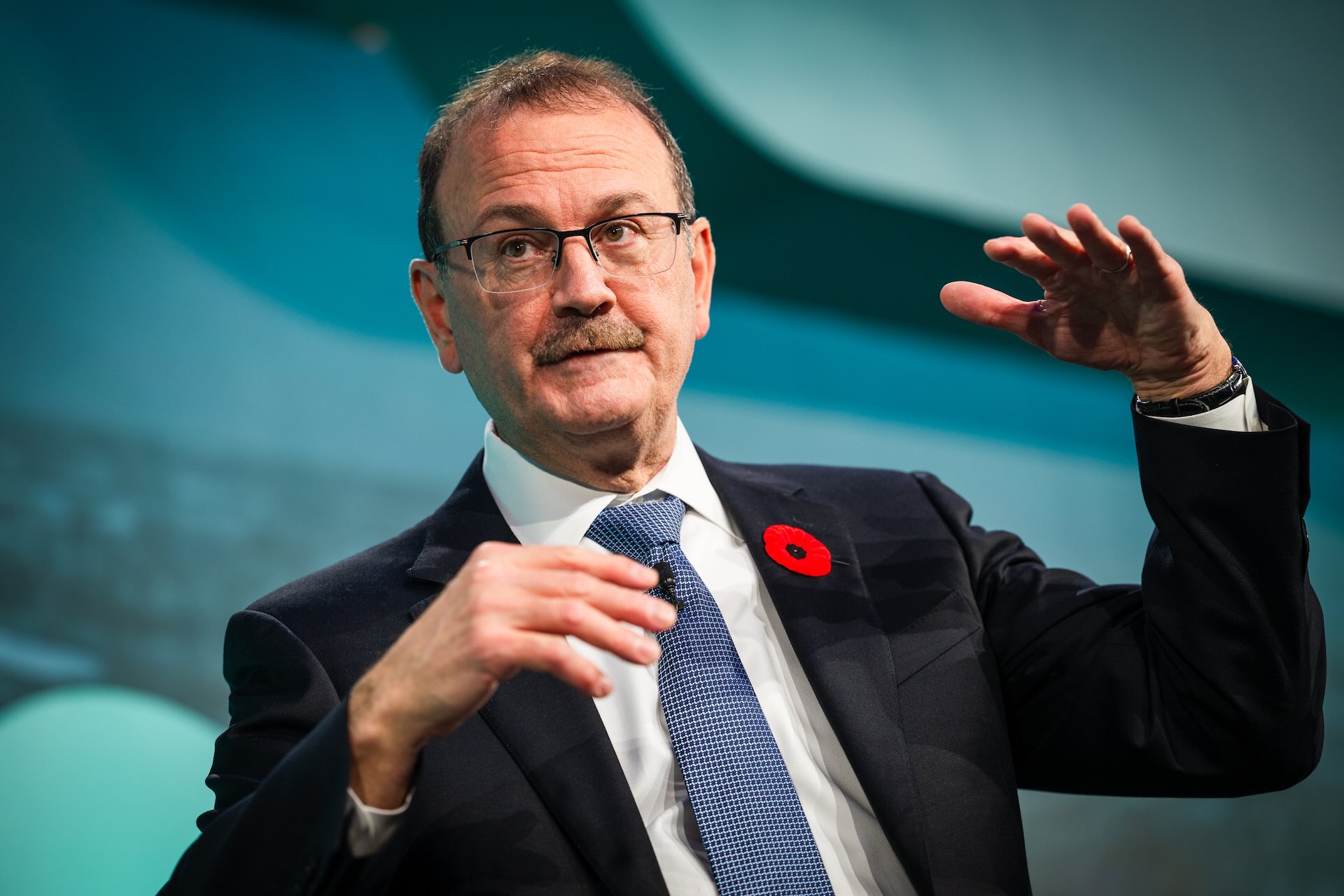
Trans Mountain expects to start moving another 90,000 barrels per day through its pipeline from the Alberta oilsands to Burnaby, B.C., by the end of this year, CEO Mark Maki said Monday—as soon as the federal regulator approves its plan to use chemical additives to speed up the flow.
“When it comes in, we’re good,” Maki said at The Logic Summit when asked for an update on the plan to expand capacity on the pipeline.
Maki said shippers are eager for the higher volume, telling him: “Without question… the sooner Trans Mountain can get it in place, the better.” Another project by Trans Mountain, a federal Crown corporation, to add 210,000 barrels per day is on track to come online in 2028. Together, these would increase the capacity of the pipeline from 890,000 to nearly 1.2 million barrels per day.
The Trans Mountain pipeline expansion began operations in May 2024, after years of delays and cost overruns. The federal government bought the pipeline for $4.5 billion in 2018 after its private-sector owner, Kinder Morgan, warned it was ready to back out due to regulatory uncertainty. By the time it opened, the cost had risen to about $34 billion.
Read More


The newly twinned pipeline has played an important role in Prime Minister Mark Carney’s efforts to diversify exports amid the U.S. trade war. Trans Mountain also ramped up exports of crude to Asian markets after the U.S.-Israeli war on Iran virtually shut down the Strait of Hormuz.
Ottawa said its ownership would be temporary, yet the pipeline remains a federal asset.
It could soon be joined by another one.
In July, Alberta Premier Danielle Smith announced that Trans Mountain would become a partner in Alberta’s proposed bitumen pipeline to the West Coast, now called Pacific Link. The federal government has since designated Pacific Link a project of national interest, which means it will face a single, streamlined regulatory review that Ottawa expects to complete by Sept. 1, 2027.
Trans Mountain and the provincially owned Alberta Petroleum Marketing Commission will equally divide the majority of equity for the project, which is expected to cost up to $43.7 billion. Calgary-based Pembina Pipeline will hold a 10 per cent interest through construction, with the option to acquire another 10 per cent once it begins running. Indigenous investors will be offered a stake worth at least 10 per cent in the joint federal-provincial venture.
The proposed pipeline would mostly follow the existing Trans Mountain corridor, but turn south in B.C.’s Fraser Valley toward a new marine export terminal in the southwest reaches of the Lower Mainland. The Liberals have argued this route means the pipeline can operate while keeping the federal ban on oil tankers along B.C.’s north coast.
Maki said Ottawa has been clear that it wants to leave the tanker ban in place, but suggested things would be different if the First Nations along the north coast of B.C. were on board. “I think the nations have to get there,” he said. “If they come and say we’re prepared to lift, here’s our conditions, then I think perhaps we could lift it.”
Read more from The Logic Summit 2026 here.