Listen Now
0:00
Canada’s top bank regulator said the agency he heads might have gone too far in the past to protect Canada’s financial sector against shocks, potentially stifling innovation in the process.
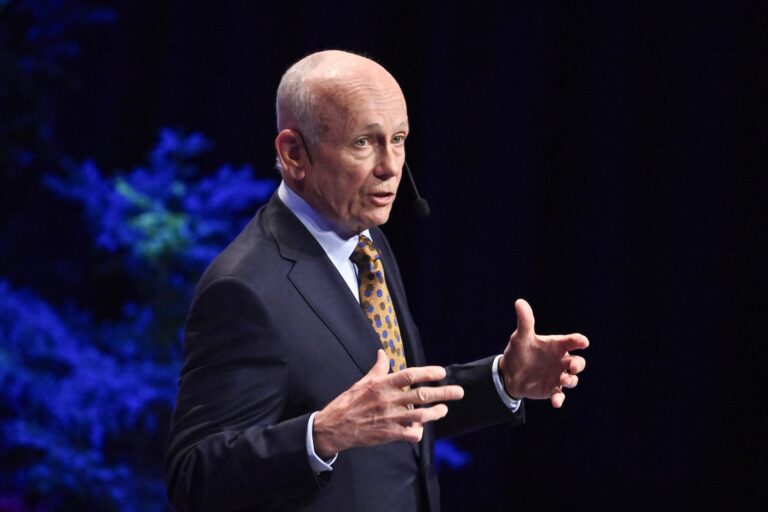
Superintendent of Financial Institutions Peter Routledge told The Logic’s Kevin Carmichael onstage at Toronto’s Arcadia Court Monday that the regulator is upping its risk tolerance to encourage what he described as “creative destruction,” ending a long period at the regulator of strictly prioritizing financial resilience.
“The system is tough enough to take a punch,” said Routledge, adding that Canada’s financial sector can handle bank failures if they arise, “provided they’re rare and inexpansive.”
Read more from The Logic Summit 2026


Routledge has been reconsidering whether Canada’s approach to preventing financial failures unnecessarily constrains economic growth and competition. In a September speech, he said the regulator would look at easing capital requirements for smaller lenders and making it easier for new players to enter the market, while keeping financial stability its priority.
Routledge’s agency, the Office of the Superintendent of Financial Institutions, or OSFI, has already eased one capital requirement for Canada’s largest banks. In June, it lowered the domestic stability buffer—a capital cushion measured against banks’ risk-weighted assets—to three per cent from 3.5 per cent. The regulator said the change would give banks more room to support lending and investment.
Routledge said the mindset shift began after seeing how shielded Canada’s financial system was from the bank failures that roiled the U.S. in 2023. While Routledge was clear that the regulator ideally wants to avoid bank failures, he said that made the regulator wonder whether it had baked in too much buffer against risk, stifling growth and competition in the process.
Focusing regulation entirely on financial stability “will draw our guardrails higher,” he said, “and the industry itself will stop innovating.”
Routledge added, “Market capitalism works because it facilitates creative destruction. Innovators come in, challenge incumbents. There are winners and losers. Some people survive. Some institutions don’t survive.”
While OSFI may be lowering its guardrails, Routledge said it is still very concerned about cybersecurity and risks related to artificial intelligence.The international Financial Stability Board has recommended that banks authenticate AI agents, limit their access to systems and test tools that can pause or revoke that access. OSFI endorsed the global watchdog’s responsible-AI practices on Oct. 15. “AI is an area where we’re going to have to do more work in terms of regulation over the next few years,” Routledge said.
As OSFI embraces more risk, Routledge said Canada’s financial system is in good shape. “We have a lot of buffer capital that we haven’t had ever in the system’s history.” That, he said, will help absorb the shocks of what he calls an inevitable bank failure.
“At some point in the future, there may be a financial failure,” he said. “Take a breath. We’ll be OK. We have resilience.”
Read more from The Logic Summit 2026 here.