Listen Now
0:00
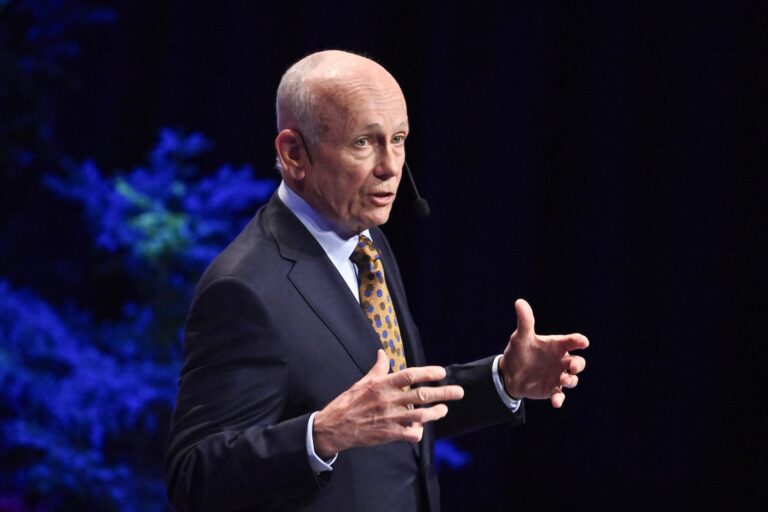
TORONTO — Remaking Canada’s defence procurement system has meant accepting a complete change in Canada’s place in the world, Doug Guzman, chief executive of the Defence Investment Agency, said at The Logic Summit on Monday.
“The old system was built for the old world. We were a free trading country. We trusted our allies. We committed to not favour Canadian businesses,” Guzman said. The procurement system was also designed to squeeze out as much risk as possible.
“So what’s changed?” he asked. “Pretty much everything.”
Now, Canada cares about its own companies, securing its own technological capabilities and data sovereignty, and building strategic capabilities “so that five or 10 years from now we have something that’s a chokehold that we can trade with our allies.”
Furthermore, said fellow panellist Christiane Fox, deputy minister of national defence, Canada needs the capabilities that the government’s billions of planned spending are meant to buy.
“We need to talk more about why we’re making these investments,” Fox said, then gave her explanation: “Because our geography, in light of cyber and electronic warfare, will not protect us.”
Read more from The Logic Summit 2026



How to get the growing Canadian military the equipment it needs has been a challenge for the Liberal government. Much of the heaviest gear the Canadian Armed Forces use—air force planes, navy ships—has aged.
It took years of study and false starts before the government settled on new F-35 fighter jets to replace the air force’s CF-18s. That decision is now “under review,” and has been for well over a year, amid the U.S. trade war against Canada—because the planes come from U.S. defence giant Lockheed Martin.
The war in Ukraine has catapulted weapons technology forward, rendering archaic not just some kinds of equipment, but whole modes of warfare: infantry tactics are fundamentally different in the age of cheap flying kamikaze drones.
Guzman pointed to the Defence Drone Initiative as a Canadian success. It pre-qualified suppliers of drones and related technology last summer, to make it easier for the Forces to buy from the vendors quickly.
“We qualified 350 or 400 drone suppliers in a few weeks,” Guzman said. It was a radical change, he said,
The drone initiative has a problem, though: it was really hard. Lt.-Gen. Darcy Molstad, who handled the military’s end of the drone project, talks publicly about that.
Pushing the drone project through took near-daily co-ordination with the most senior brass and civilian officials, he said on a panel at an industry expo in Ottawa in September, and that’s not sustainable.
“How do we set up a system that delegates the spending authorities to the level of discomfort,” he asked then—so that military officers can buy what they know their own units need.
They’re working on it, Fox said Monday.
“We did a bit of a ‘sludge audit’ within our own department’s decision-making structure,” she said. “There were 34 steps to a procurement decision—the same whether we’re buying something for a base or submarines.”
Seventeen of those had no bearing on the final decision, she said. “We’ve got to clean that up, and then we have to be more nimble because that’s what the prime minister has asked us to do.”
Read more from The Logic Summit 2026 here.