GING̱OLX, B.C. — From the docks of Ging̱olx, a remote B.C. fishing village, the proposed site of a $10 billion liquified natural gas project is almost visible through the gloom.
Skip to content
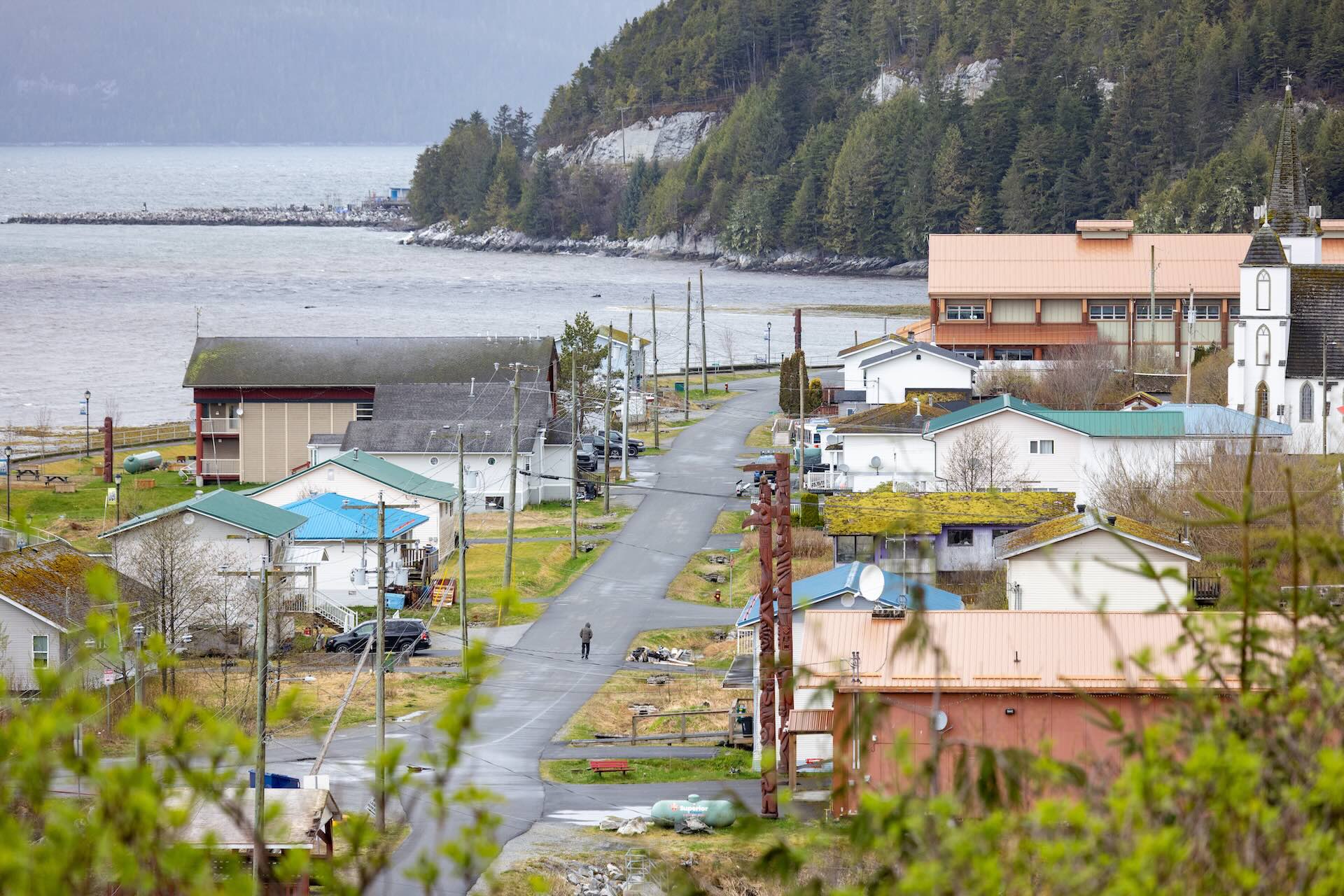
 Ging̱olx, a village of just 500 people, was only properly connected to the outside world in 2002 when it was connected to a local highway. Photo: Aaron Whitfield for The Logic
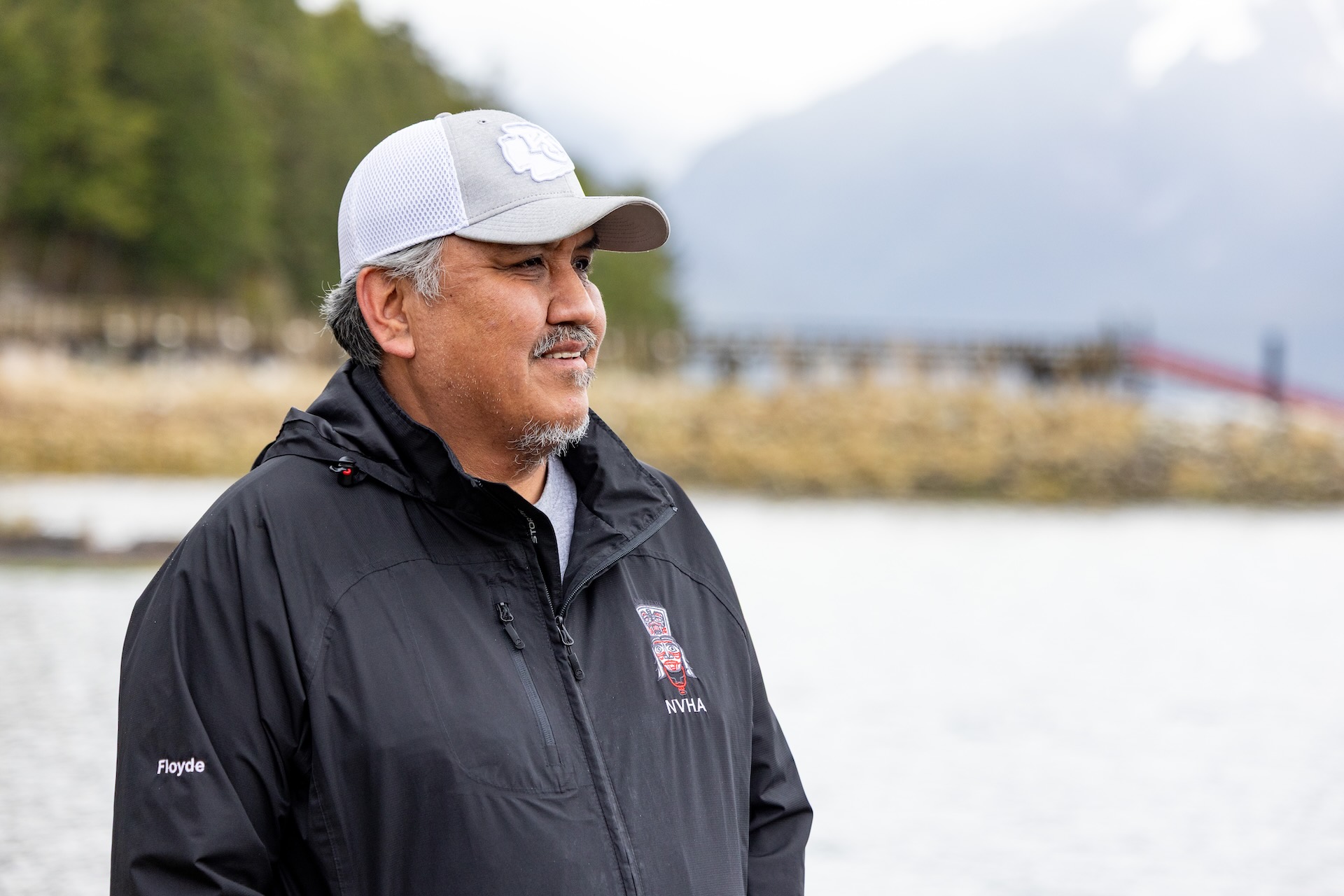 Floyde Stevens, a Nisga’a hereditary chief, believes the LNG development could provide jobs for his grandchildren. Photo: Aaron Whitfield for The Logic
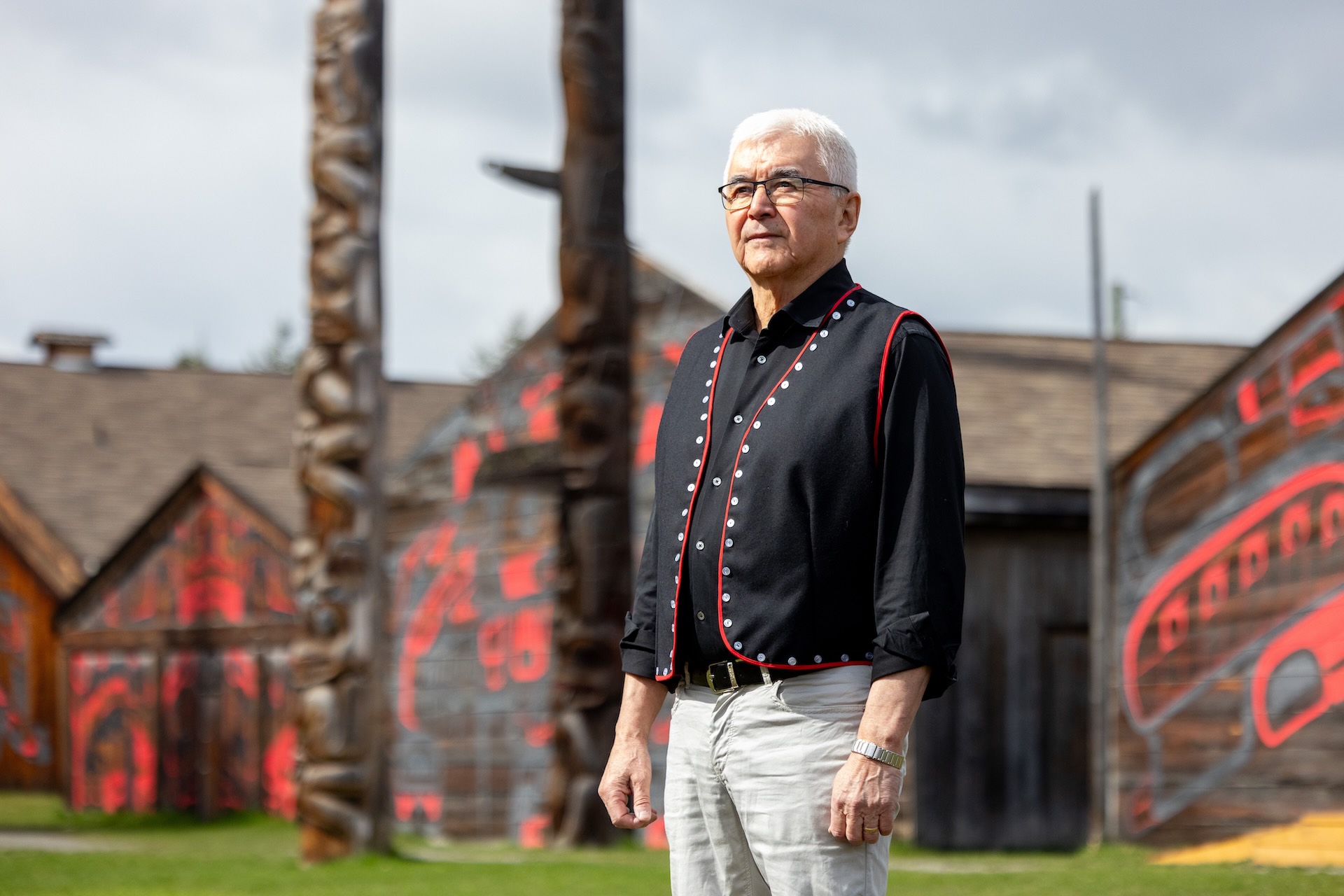
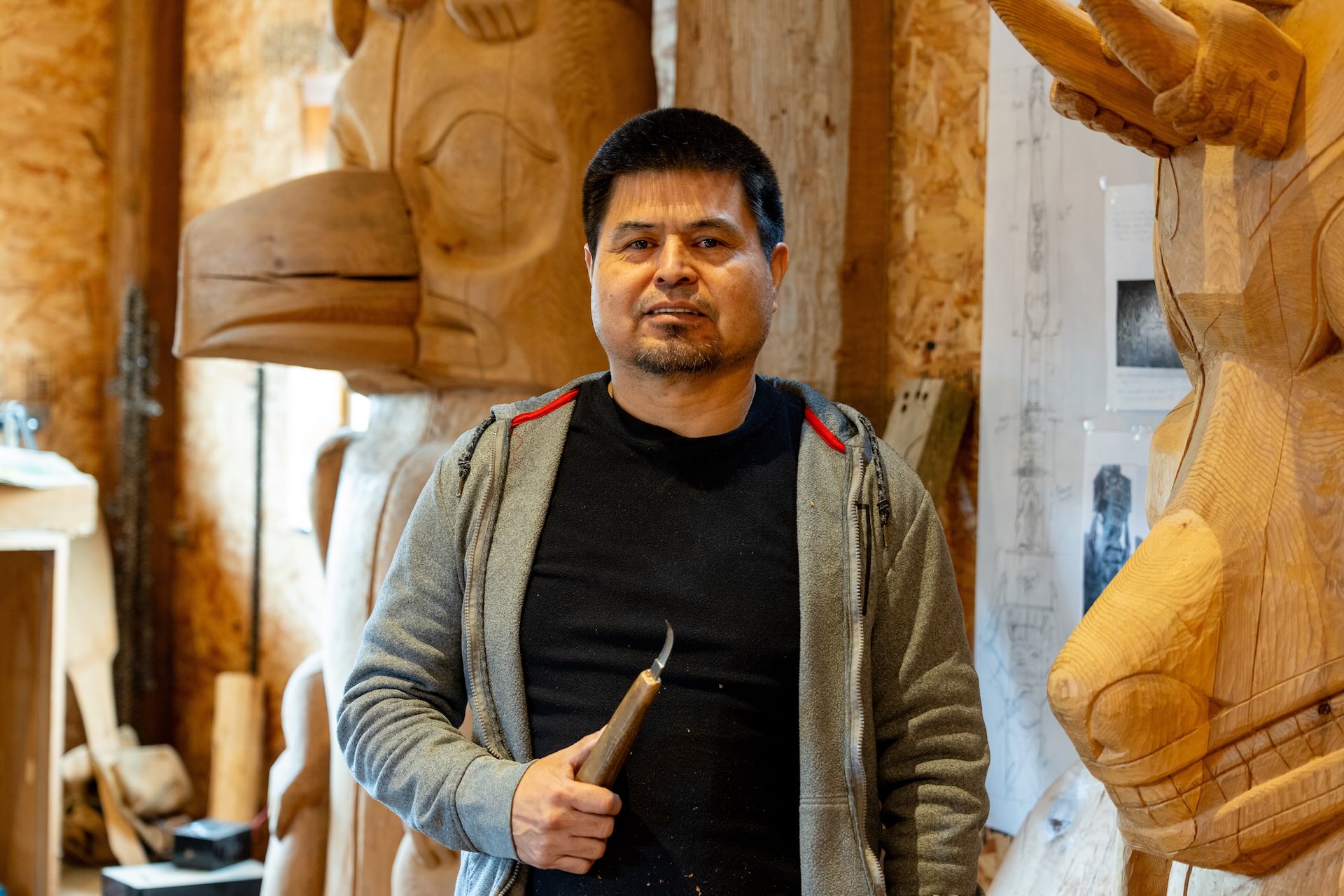 Calvin McNeil, a Nisga’a chief and totem pole carver, sees LNG development as a necessary “evolution” on his peoples’ traditional lands. Photo: Aaron Whitfield for The Logic
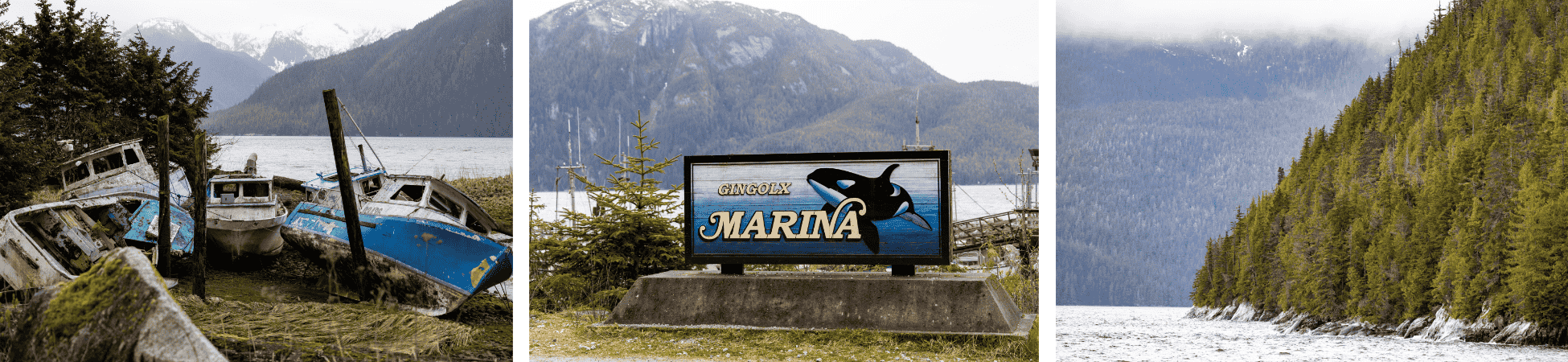 Photo: Aaron Whitfield for The Logic
 Gordon Sebastian, a Gitxsan hereditary chief. Photo: Aaron Whitfield for The Logic
The Big Read
In a remote B.C. First Nation, Canada’s next energy megaproject is taking shape
On the rain-soaked shores of B.C., the $10-billion Ksi Lisims LNG project could transform the Nisga’a Nation—and Western Canada’s energy sector
The remote village of Ging̱olx is the staging ground for a $10-billion effort to get Canadian natural gas to overseas markets Photo: Aaron Whitfield for The Logic
The remote village of Ging̱olx is the staging ground for a $10-billion effort to get Canadian natural gas to overseas markets Photo: Aaron Whitfield for The Logic
GING̱OLX, B.C. — From the docks of Ging̱olx, a remote B.C. fishing village, the proposed site of a $10 billion liquified natural gas project is almost visible through the gloom.
Talking Points
- The proposed Ksi Lisims LNG project is the latest multibillion-dollar effort to get Western Canadian gas to overseas markets
- For the Nisga’a people, which will own a major equity stake in the pipeline feeding Ksi Lisims, the project could be an economic boon
- The Nisga’a partnership is part of an increasing effort on the part of the energy sector to offer Indigenous people meaningful financial stakes in projects to ensure their development
With its moss-covered rooftops, single lane streets and doorways stacked with firewood, Ging̱olx doesn’t exactly feel like the staging ground for the energy sector’s next big hope. Yet Ksi Lisims, an Indigenous-backed joint venture expected to come online around 2030, is one of a few developments that could help transform Canada’s natural gas sector from a North American industry into a global one.
If built, it could bring major change to this village of just 500 people, an outpost that remained all but cut off from the world until 2002, when the winding highway into town was completed.
Such an investment could also be a boon for Canadian gas producers. Ksi Lisims would finally connect the industry to critical Asian markets at a time when liquid natural gas, or LNG, demand is once again on the upswing.
On the Trail
The Logic’s reporters have spread out across the country during this election campaign to visit parts of Canada that are on the front lines of economic transformation, and to cover the issues people there tell us the next government must address. Read all of our campaign trail stories here.
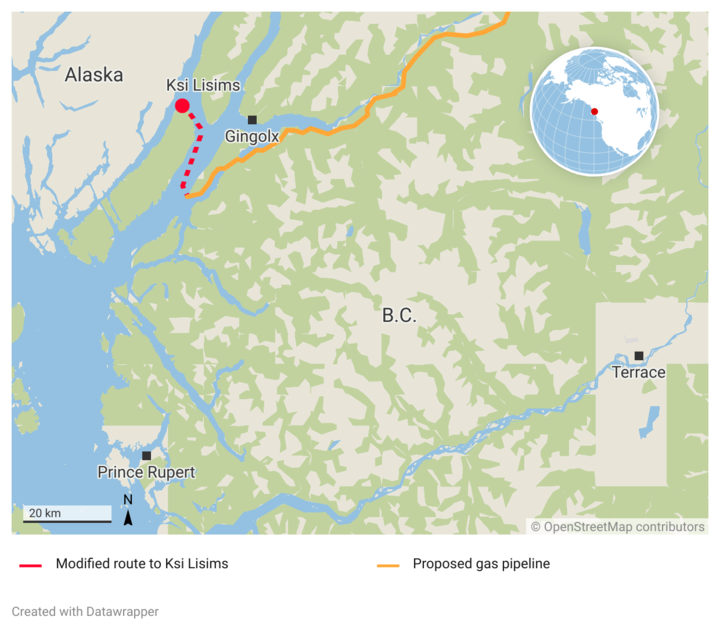
Pending final regulatory approval later this year, the project could also be an economic lifeline for the local Nisga’a Nation, a people who have resided on their lands for more than 1,000 years. The Nisga’a will hold a direct stake in the project through a 50-50 joint venture on the Prince Rupert Gas Transmission pipeline, a proposed 800-kilometre conduit linking Ksi Lisims to gasfields in the northeast of B.C.
The partnership comes as natural resource firms increasingly seek equity partnerships with First Nations as a way to ensure project support. Such arrangements avoid the missteps of previous natural resource developments that often left First Nations on the outside looking in, said Andrew Robinson, CEO of the Nisga’a Lisims Government.
“What better way for Canada to really see reconciliation come to life than to support an Indigenous-led project with Indigenous peoples that secures our energy corridors,” he said.
Western LNG, a company led by former Cheniere Energy executive Davis Thames, will own the other half of the pipeline, as well as the Ksi Lisims export facility. The Houston-based firm, made up of around 30 staff, is the project’s main proponent. Rockies LNG, a consortium of 12 Canadian natural gas producers including giants like Calgary-based Tourmaline Oil and Canadian Natural Resources, is the other proponent backing Ksi Lisims.
Once completed, the export facility will have capacity to ship up to 12 million tonnes of LNG per year to overseas markets. Gas giant Shell has already signed on as a buyer of Ksi Lisims’ LNG as part of a 20-year contract.
Western LNG expects the BC Environmental Assessment Office to release its final decision on the project later this year, which would clear the way for a final investment decision.
Related Articles


Robinson declined to specify the details of the Nisga’a partnership in the project, including how the First Nation might raise the necessary capital to invest in the pipeline.
Rebecca Scott, a representative with Western LNG, confirmed the Nisga’a have an equal share in the pipeline. Charlotte Raggett, president of Rockies LNG, declined to comment on the Canadian consortium’s role in the project, and did not specify whether the group would acquire a direct stake in it.
People living on Nisga’a lands who spoke to The Logic largely supported Ksi Lisims, but often with mixed feelings toward the multibillion-dollar project. “I’ve heard the pros and cons of Ksi Lisims, and I’m leaning towards development,” said Floyde Stevens, a Nisga’a hereditary chief.
Stevens works with First Nations youth out of Ging̱olx, and helps them get re-acquainted with traditional outdoor pursuits like fishing. Tanker traffic in and out of the proposed Ksi Lisims site wouldn’t likely hinder his ability to catch salmon, halibut, shrimp and other species, he said.
He and other Nisga’a people said they support Ksi Lisims for the jobs it will provide their children and grandchildren. But such sentiments often come with the caveat that colonial expansion has effectively forced their hand, leaving them with no choice but to adopt Western lifestyles and seek modern forms of employment.
British explorer George Vancouver first sailed up the Nass River, near Ging̱olx, in 1793. In the early 1800s, the Hudson’s Bay Company established a fur trading post on the Nass, and a later gold rush brought numerous prospectors to the Nass Valley, permanently altering the way of life in the region.
Calvin McNeil, a totem pole carver, said the proposed gas pipeline will follow a path that comes within a mile of his home in Lax̱g̱alts’ap, one of four Nisga’a villages. Using hand tools to carve a 30-foot length of cedar into a totem pole, McNeil describes how he came around to support the LNG proposal in light of the long-term economic benefits it could provide the Nisga’a. “There has to be an evolution, and our lands are no exception,” he said. “We’re learning to make compromises, and it’s for the betterment of our children.”
In 2000, the Nisga’a entered a landmark treaty with the federal government that entitled the First Nation to govern themselves outside of the confines of the Indian Act. The agreement laid the groundwork for a partnership on Ksi Lisims, giving the Nisga’a more control over how natural resources are developed in the region.
Ksi Lisims could likewise help Canadian gas companies tap lucrative corners of the LNG market that have long proven elusive.
When a period of rapid industrialization fed an LNG bonanza in countries like China, Indonesia and Japan starting in the early 2010s, Canada failed to jump aboard as environmental concerns and First Nations land claims stalled major proposed export projects. While the U.S. built eight LNG export terminals in the last nine years, just two projects have reached a final investment decision in Canada. That’s left natural gas producers in Canada strictly dependent on North American buyers, forcing them to accept lower prices for their gas and curb production during periods of lower demand.
Today, the Russia-Ukraine war, a growing focus on electrification and U.S. trade threats have caused a renewed emphasis on energy security. That, according to some producers and buyers, has opened a new window of opportunity for LNG in Europe and Asia.
Rockies CEO Raggett said that access to Asian markets would provide Canadian gas producers with a wider variety of buyers, but she emphasized that North American gas demand remains strong. The rush to build AI data centres in particular has caused projections for gas demand to surge both in Canada and the U.S.
“It’s always good to have a diversification of different markets, whether it’s within Canada, within North America or globally,” she said.
Ksi Lisims isn’t without its detractors. Last year, Gitanyow Hereditary Chiefs, whose contested lands lie to the east of the Nisga’a, submitted an application for judicial review against the project in B.C.’s Supreme Court.
Read more from the campaign trail


Their concerns, according to court filings, include an alleged lack of consultation on Ksi Lisims by the proponents, and fears that the project could interfere with salmon habitats in the Nass River. The Gitanyow have a long history of land disputes with the Nisga’a, and claim that the latter has encroached on their traditional territories.
The Logic requested interviews with Gitanyow chiefs, but was unable to meet directly due to scheduling conflicts.
Meanwhile the Gitxsan Nation, whose lands also nudge up against the eastern border of the Nisga’a, have backed the gas pipeline that would pass through their territory on the way to Ksi Lisims. The First Nation has supported various industrial developments in the region, and has established environmental and safety services firms to take part in major projects.
“We’re shovel ready,” said Gordon Sebastian, a Gitxsan hereditary chief. The Prince Rupert Gas Transmission pipeline will pass through the territory of 10 families, known as wilps, within the Gitxsan Nation.
Sebastian said there are concerns among some in the Gitxsan community over the pipeline crossing the Skeena river, a major salmon spawning ground. He personally supports the pipeline, however, given that it will carry natural gas and therefore wouldn’t spill into the river as oil would.
The pipeline was first approved in 2014, but was shelved after Pacific NorthWest LNG, the project it was initially going to feed, was canned. Western LNG and the Nisga’a took over the project in June 2024, with a plan to reroute the pipeline to Ksi Lisims.
Support for Ksi Lisims among the Nisga’a is widespread, but conditional. Jacki Tait, a resident of the Nisga’a village New Aiyansh, said she isn’t necessarily opposed to Ksi Lisims, but wants assurance that Nisga’a people will be properly trained and employed by the project once it comes online.
At the smokehouse that Tait runs, students are learning traditional cooking methods, preparing dishes like smoked sea lion and kelp covered with herring eggs. Smoked eulachon, a small fish, is a local delicacy.
The eulachon’s annual journey up the Nass River has long been a signal of spring for the Nisga’a people. A few years from now, a pipeline could run along the banks of the Nass where they spawn, carrying gas in the opposite direction, out to the Pacific.
This reporting is made possible by the generous support of the Covering Canada: Election 2025 Fund, a non-partisan granting initiative by the Public Policy Forum, the Rideau Hall Foundation and the Michener Awards Foundation. Its goal is to help journalists cover election stories that would otherwise go untold.



Loading...
Thanks for sharing!
You have shared 5 articles this month and reached the maximum amount of shares available.
CloseThis account has reached its share limit.
If you would like to purchase a sharing license please contact The Logic support at [email protected].
CloseGift the full article!
You have gifted 0 article(s) this month and have 5 remaining.
Recipients will be able to read the full text of the article after submitting their email address. They will not have access to other articles or subscriber benefits.
Photo: Aaron Whitfield for The Logic
Ging̱olx, a village of just 500 people, was only properly connected to the outside world in 2002 when it was connected to a local highway.
Floyde Stevens, a Nisga’a hereditary chief, believes the LNG development could provide jobs for his grandchildren.
Calvin McNeil, a Nisga’a chief and totem pole carver, sees LNG development as a necessary “evolution” on his peoples’ traditional lands.
Gordon Sebastian, a Gitxsan hereditary chief.
Most Popular This Week




In-depth, agenda-setting reporting
Great journalism delivered straight to your inbox.
News
National Bank CEO warns AI alone won’t give banks a lasting edge
Briefing
Canada and Ontario commit over $5B to support tariff-hit steel sector
Hackers will see cars as major targets in next 3 years, 83% of car-tech workers say
EA shutting down Edmonton studio BioWare
Best business newsletter in Canada
Get up to speed in minutes with insights and analysis on the most important stories of the day, every weekday.
Exclusive events
See the bigger picture with reporters and industry experts in subscriber-exclusive events.
Membership in The Logic Council
Membership provides access to our popular Slack channel, participation in subscriber surveys and invitations to exclusive events with our journalists and special guests.





