SAINT-GEORGES, Que. — “Good year, bad year, Americans will always buy our stuff,” Vincent Boutin says with an air of nonchalance. He’s one of a legion of maple syrup farmers in Quebec who export more than 100 million pounds of the stuff to the U.S. each year—and the tariffs don’t bother him one bit.
Skip to content
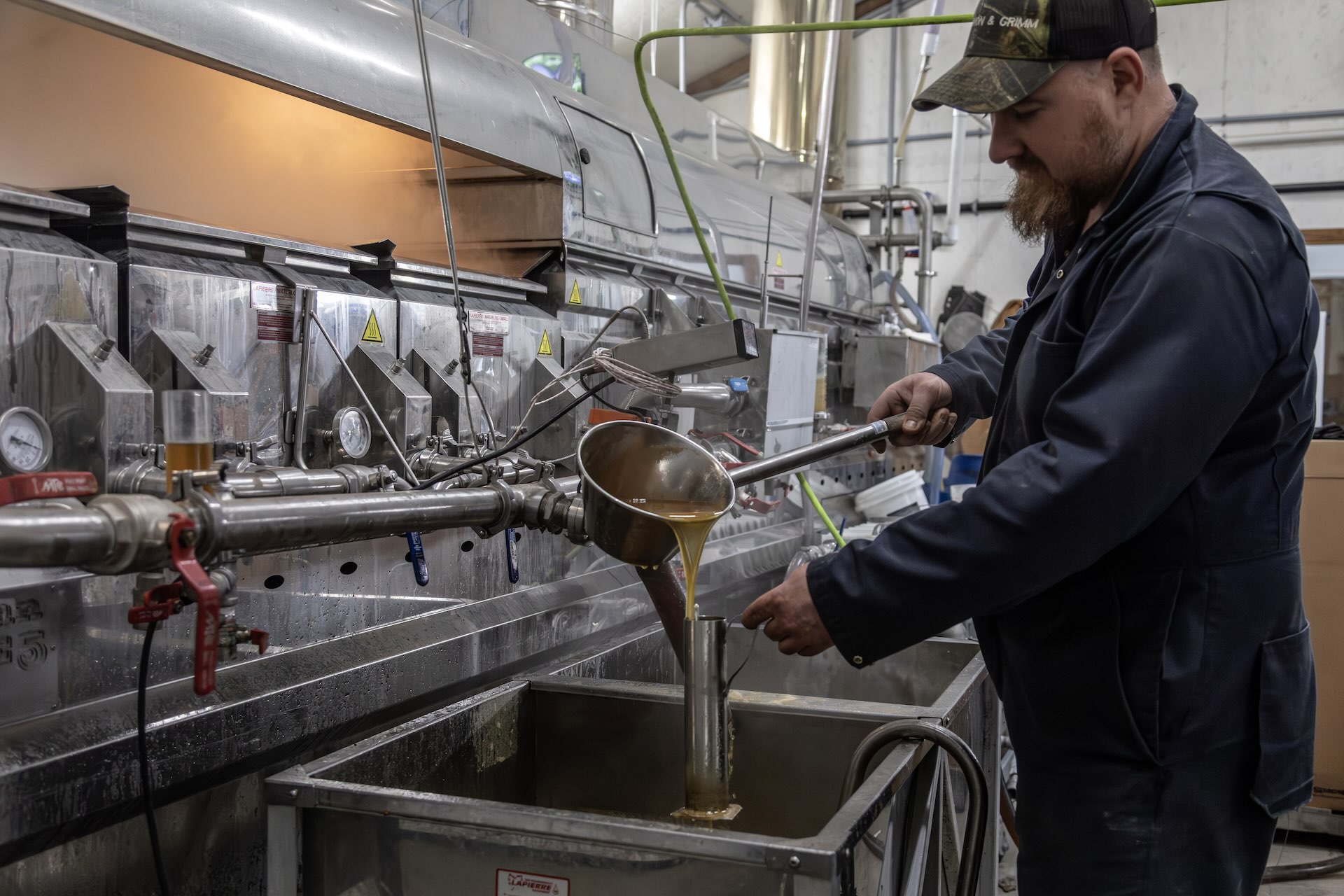 Vincent Boutin makes maple syrup for his family-owned company Erablière V. Boutin in Frampton Que. Quebec exports 100 million pounds of syrup to the U.S each year. Photo: Roger Lemoyne for The Logic
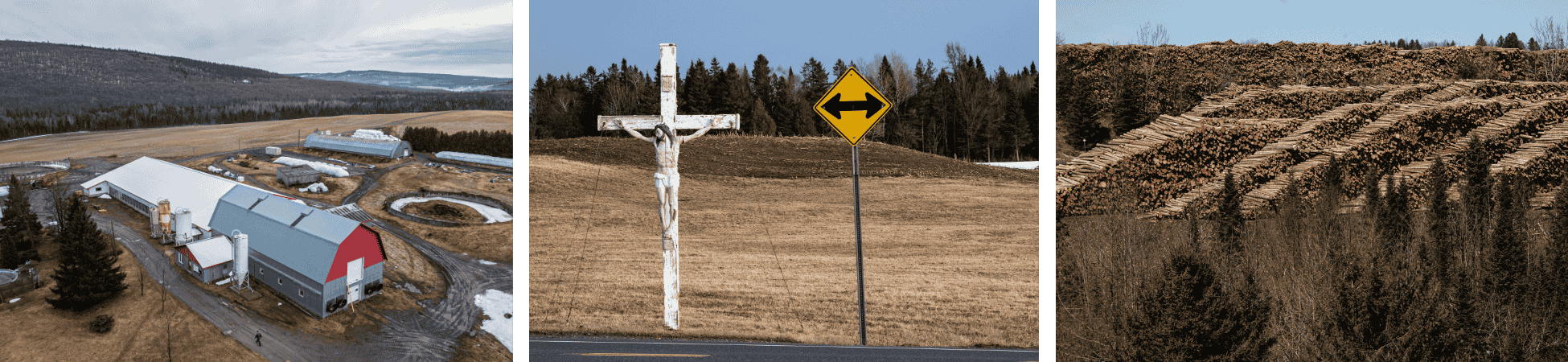 Smaller firms dominate La Beauce, which has a low unemployment rate and a growing population. The region is also hugely dependent on trade with the U.S. Photo: Roger Lemoyne for The Logic
 Mélanie Roy (right) is the owner of Boutique Vickie, a women's clothing and apparel shop in St-Georges, Que. She uses Facebook Live to promote her business. Photo: Roger Lemoyne for The Logic
 Saint-Georges-based Boccam makes wood door and window frames. Georges-Henri Junior Boutin, the company’s president, is as worried about counter-tariffs launched by Canada as he is about tariffs imposed by the U.S. Photo: Roger Lemoyne for The Logic

The Big Read
Quebec’s Beaucerons ain’t afraid of no trade war
La Beauce bucks a number of Quebec clichés—conservative, federalist and pro-America. Faced with a trade war, its business owners are coming out fighting.
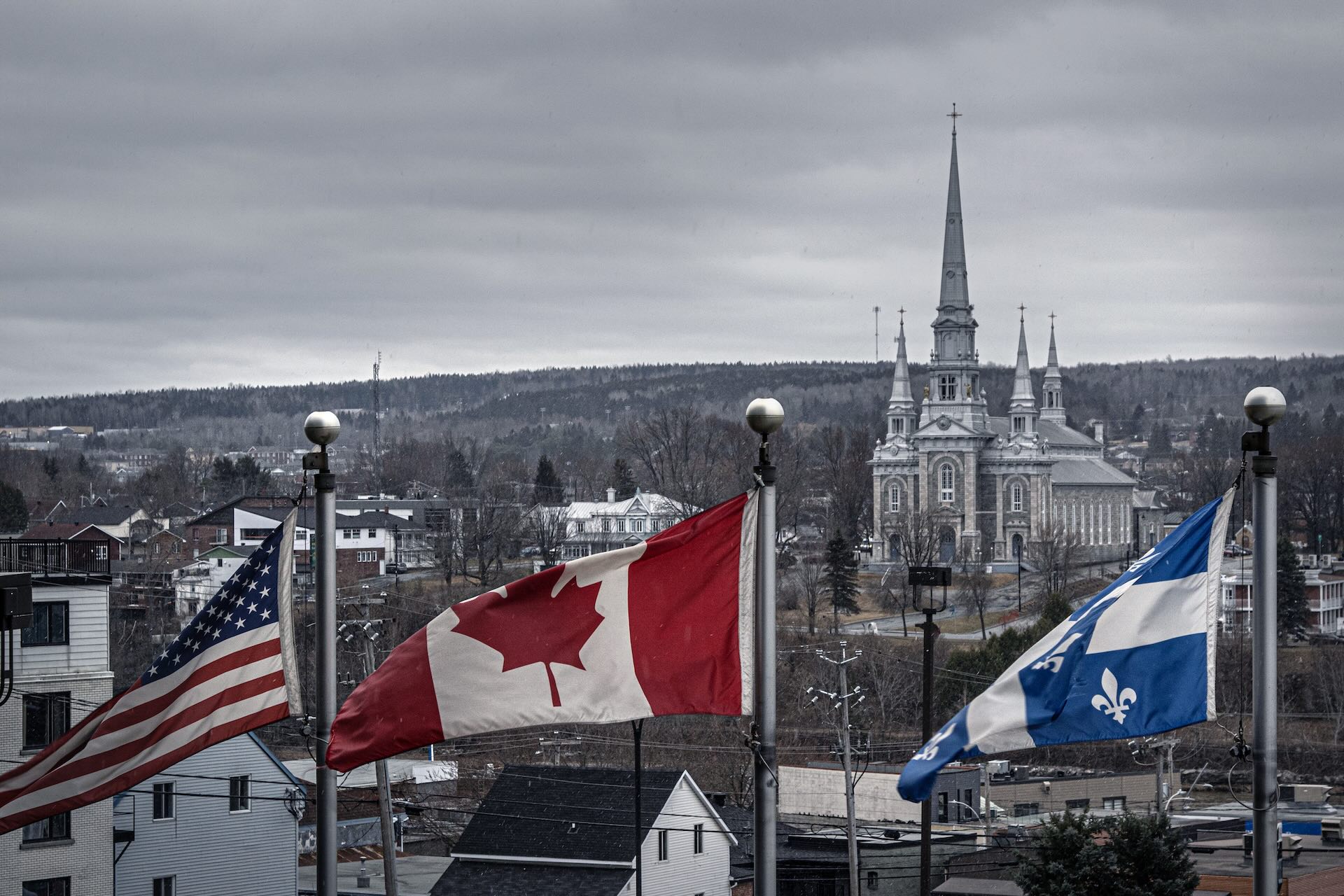
The church of Saint-Georges sits in the centre of the town in Saint-Georges, Que. The town is the biggest in the province’s Beauce region and its population of more than 30,000 people is growing fast. Photo: Roger Lemoyne for The Logic
SAINT-GEORGES, Que. — “Good year, bad year, Americans will always buy our stuff,” Vincent Boutin says with an air of nonchalance. He’s one of a legion of maple syrup farmers in Quebec who export more than 100 million pounds of the stuff to the U.S. each year—and the tariffs don’t bother him one bit.
Talking Points
- With more than 65 per cent of its exports going to the United States, La Beauce is uniquely affected by the Trump administration tariffs
- Despite this, many in the region see the tariffs as a temporary calamity much like the 2008 financial crisis and COVID-19
His confidence stems in part from the caramel-coloured liquid gushing from his wood-fired boiler. It’s hot and sweet, with all the complexities of a good sherry, and you can hardly get it anywhere other than Quebec, home to 66 per cent of the world’s maple syrup production in 2024. Sixteen per cent of Quebec’s maple syrup companies are in La Beauce, a region which pushes right up against the U.S. border.
Boutin is also a Beauceron, and like many from La Beauce, his identity of entrepreneurship and self-reliance is shaped by the vast and lucrative market on its southern border. Boutin believes U.S. President Donald Trump’s tariffs are akin to 9/11, the 2008 financial crisis and COVID-19: a temporary calamity from which La Beauce will emerge stronger. “We’ll roll up our sleeves, work harder, and we will survive. That’s what Beaucerons are. It sounds strange to say, but we always get through every crisis,” Boutin said.
On the Trail
The Logic’s reporters have spread out across the country during this election campaign to visit parts of Canada that are on the front lines of economic transformation, and to cover the issues people there tell us the next government must address.
Read all of our campaign trail stories here.
It’s a familiar sentiment in La Beauce, a pie wedge-shaped chunk of land measuring roughly 4,100 square kilometres between Quebec City’s south shore and a roughly 65-kilometre expanse of the province’s border with Maine. Formally part of the province’s Chaudière-Appalaches region, La Beauce appears to be a typically scenic piece of Quebec hinterland, with rolling hills, twisting rivers and villages named after saints.
Yet many of its roughly 111,000 inhabitants buck a number of well-worn Quebec clichés. Generally conservative and fiercely federalist, La Beauce has long repelled Quebec’s separatist movement. Its proximity to the U.S., meanwhile, has meant an enduring trade relationship with America—as well as a pro-American bent you won’t generally find elsewhere in the province. “There’s a social, cultural and economic attachment to the U.S. here,” said MNA Samuel Poulin, 34, who represents the provincial constituency of Beauce-Sud. “The American dream is at our doorstep.”
That dream is everywhere in La Beauce. Saint-Georges, the region’s largest town, has a population of over 30,000 and is growing fast, with new housing developments sprouting up around the main highway. There is rush hour traffic, during which pickup trucks—many new, often jacked up—jockey for position alongside BMWs and the occasional Cybertruck.
Related Articles

There are Beauce-based big companies, like steel products manufacturer Canam and Pomerleau, a construction firm. But it’s smaller firms that dominate. “We’re the kingdom of small- and medium-sized businesses,” said Hélène Latulippe, director of the Conseil économique de Beauce.
People tend to talk quickly here, as though everything is a means to an end. They are certainly busy: at 2.4 per cent, the unemployment rate of Chaudière-Appalaches is less than half the provincial average. La Beauce’s biggest problem, apart from the tariff threat, is a chronic labour shortage in its 430 registered businesses.
Among those businesses is Boutique Vickie, a womenswear shop located in a former Nissan dealership in Saint-Georges. Though it’s been in business for 27 years, Boutique Vickie has startup vibes, with members of the all-female executive team doubling as models for the store’s online catalogue and busy Instagram page.
On a recent Tuesday, owner Mélanie Roy was dashing around the store, showing off necklaces, handbags and camisoles as manager Delphine Bergeron filmed her on Facebook Live. Roy, 49, developed her online presence when COVID-19 shut her bricks and mortar operation down. Today, Roy says her Facebook Live videos regularly garner thousands of views, and her online sales represent 65 per cent of revenue from customers across Quebec, Ontario and New Brunswick.
Though she doesn’t export to the U.S., Roy said she was worried about the trickle down effects of tariffs as consumers cut back on spending. “There’s a sense of panic that’s still there, like during the pandemic. But for me, the pandemic years were the best economically for my business, and I plan to do the same thing.”
Read more from the campaign trail


Part of her plan is to do five Facebook Live hits a week instead of three. “Sure, it’s a lot of work, but we’re managing to get by,” Roy said.
La Beauce’s affinity for Americans goes as far back as 1775, when Beaucerons hosted and helped American soldiers under the command of Benedict Arnold, who was leading a raid against the British in Quebec City in the American Revolutionary War. The Americans lost, and Arnold famously defected to the British about five years later. Nevertheless, the relationship endured. When La Beauce began industrializing in the mid-1960s, it looked to the wealthy market to the south. “It was less time consuming to go to Boston than Sept-Îles,” Poulin said, referring to the far-flung town on the St. Lawrence River’s north shore.
The Trump administration tariffs have spurred some attempts to wean La Beauce off the American market. Poulin, who was first elected in 2018, said several Beauce-area executives have found themselves “calling Toronto for the first time in their lives” to establish contacts in English Canada. Quebec’s maple syrup industry, meanwhile, is making a concerted marketing push in Australia, Germany, Japan and the U.K., in large part to reduce its reliance on the American palette, according to industry sources.
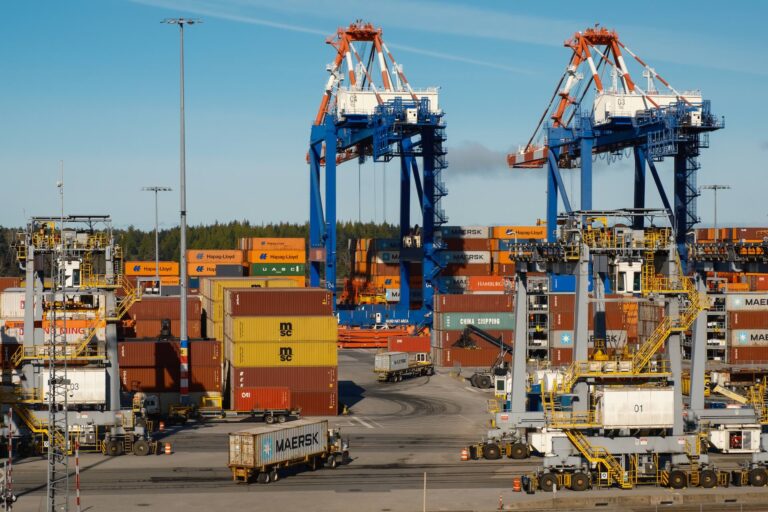
Still, La Beauce’s close relationship with the U.S. has made its economy uniquely vulnerable to the whims of the Trump administration. More than 65 per cent of La Beauce’s businesses export directly to the U.S., chief among them softwood lumber, construction materials, machinery, steel and finished metal products. All are ripe targets for U.S. tariffs—or, for some Beaucerons, Canadian counter-tariffs.
Georges-Henri Junior Boutin is president of Boccam, a Saint-Georges-based door producer. The U.S. tariffs don’t affect him, as his products fall under the United States-Mexico-Canada Agreement (USMCA) exemption enacted earlier this month. Yet Boutin, no relation to Vincent, relies on white oak, red pine and other U.S.-sourced wood, all of which has been subject to 25 per cent counter-tariffs since March.
The cruel kicker: 90 per cent of the 150,000 doors he manufactures every year are for the domestic market. “What I find absurd is that I can export to the U.S., but because I import primary materials from the U.S., the Canadian government is effectively penalizing me for being Canadian,” Boutin, 59, said.
It’s a similar sentiment at duBreton, a Beauce-based organic pork producer. Tariffs and Canadian counter-tariffs are the subject of boardroom talk and water cooler chatter in the company headquarters, located in the town of Saint-Bernard, if only because more than half its products are exported to the U.S. DuBreton counts Wholefoods, Chipotle Mexican Grill and Ikea among its clients.
It’s not that CEO Vincent Breton can’t sell his company’s pork through a trade war. As one of the first Canadian producers to be certified under California’s strict animal welfare laws, duBreton’s wares have a maple syrup-like unavoidability on the U.S. market. “Someone who wants organic pork in any sort of quantity to meet demand doesn’t have a choice but to come to duBreton,” he said.
The problem with tariffs is geographic and mathematical, Breton said. La Beauce, much like the country at large, is on the doorstep of one of the largest, wealthiest markets in the world, and it’s better to sell than fight. It’s why he says whoever wins the next federal election needs to get on a plane to Washington and sign a deal with Trump, post haste. Only then can La Beauce get back to work.
This reporting is made possible by the generous support of the Covering Canada: Election 2025 Fund, a non-partisan granting initiative by the Public Policy Forum, the Rideau Hall Foundation and the Michener Awards Foundation. Its goal is to help journalists cover election stories that would otherwise go untold.



Loading...
Thanks for sharing!
You have shared 5 articles this month and reached the maximum amount of shares available.
CloseThis account has reached its share limit.
If you would like to purchase a sharing license please contact The Logic support at [email protected].
CloseGift the full article!
You have gifted 0 article(s) this month and have 5 remaining.
Recipients will be able to read the full text of the article after submitting their email address. They will not have access to other articles or subscriber benefits.
Photo: Roger Lemoyne for The Logic
Vincent Boutin makes maple syrup for his family-owned company Erablière V. Boutin in Frampton Que. Quebec exports 100 million pounds of syrup to the U.S each year.
Smaller firms dominate La Beauce, which has a low unemployment rate and a growing population. The region is also hugely dependent on trade with the U.S.
Mélanie Roy (right) is the owner of Boutique Vickie, a women's clothing and apparel shop in St-Georges, Que. She uses Facebook Live to promote her business.
Saint-Georges-based Boccam makes wood door and window frames. Georges-Henri Junior Boutin, the company’s president, is as worried about counter-tariffs launched by Canada as he is about tariffs imposed by the U.S.
Most Popular This Week



In-depth, agenda-setting reporting
Great journalism delivered straight to your inbox.
The Big Read
Beacon is building an AI empire by fixing Main Street’s software
Briefing
Inflation edges higher ahead of next BoC rate decision
EverWind plans $10B data centre and wind development in Nova Scotia
Canada ready to force Stelco to sell its Canadian operations, Joly says
Best business newsletter in Canada
Get up to speed in minutes with insights and analysis on the most important stories of the day, every weekday.
Exclusive events
See the bigger picture with reporters and industry experts in subscriber-exclusive events.
Membership in The Logic Council
Membership provides access to our popular Slack channel, participation in subscriber surveys and invitations to exclusive events with our journalists and special guests.