ST. JOHN’S, N.L. — In the spring of 2019, an investor in Silicon Valley offered Adam Keating a million dollars to move his two-year-old startup CoLab from St. John’s, N.L. to California. Keating—who was participating in the prestigious Silicon Valley startup accelerator Y Combinator—declined the offer. He told the investor he wanted to grow his company, which lets engineers collaborate on files in real time, in his local tech sector that he believed was poised to take off.
Skip to content

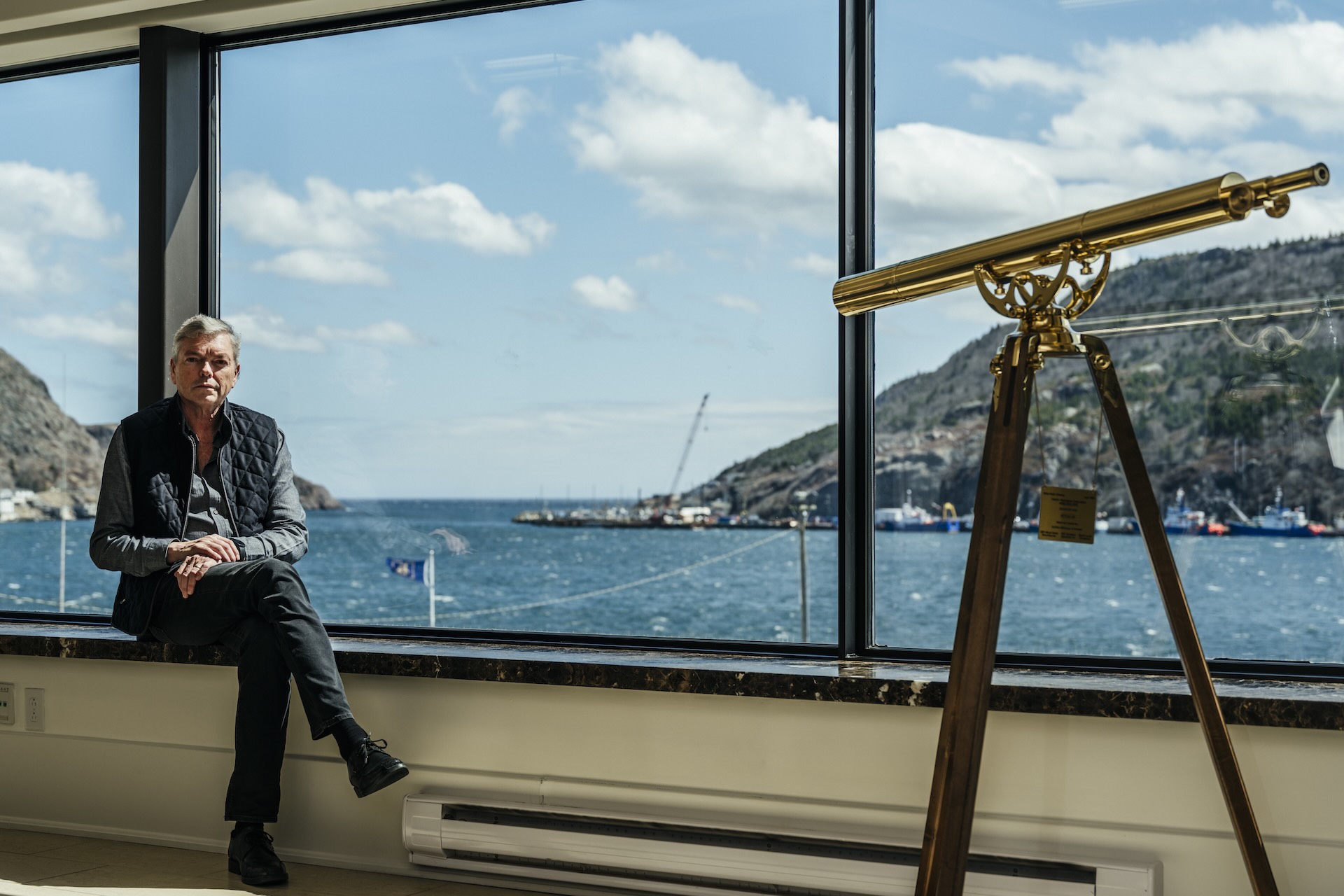 Mark Dobbin, president at Killick Capital. Dobbin says that St. John’s location on the eastern edge of Canada can present challenges, but for a tech community it is more of an asset than a liability. Photo: Johnny C.Y. Lam for The Logic
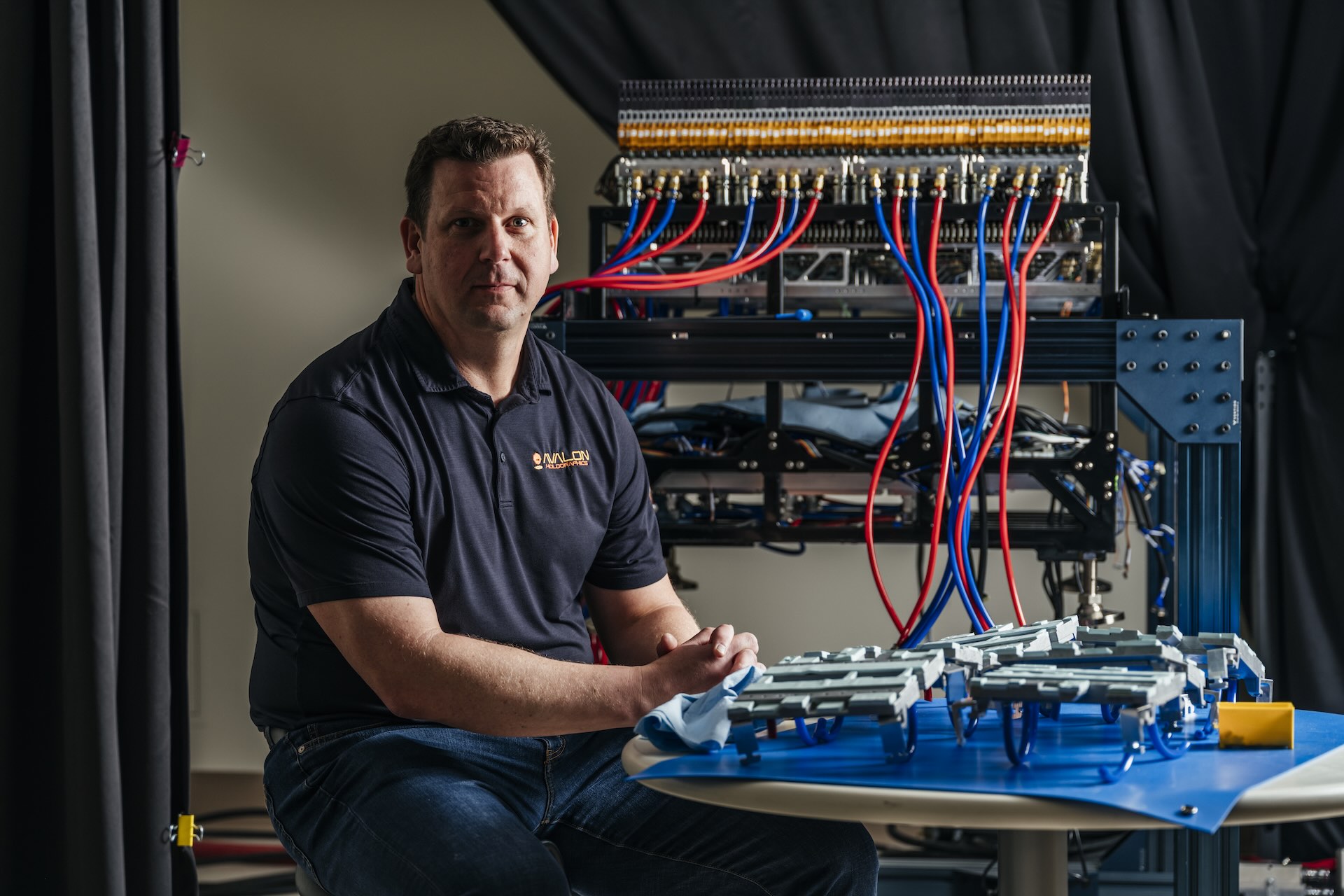 Wally Haas, president of Avalon Holographics. The 100-person company is trying to fundraise US$50 million, after having raised $20 million just last round. Photo: Johnny C.Y. Lam for The Logic
 Neil Chaulk, CEO of Solace Power. He says access to top engineering talent is one of many challenges the tech scene in Newfoundland and Labrador faces. Photo: Johnny C.Y. Lam for The Logic
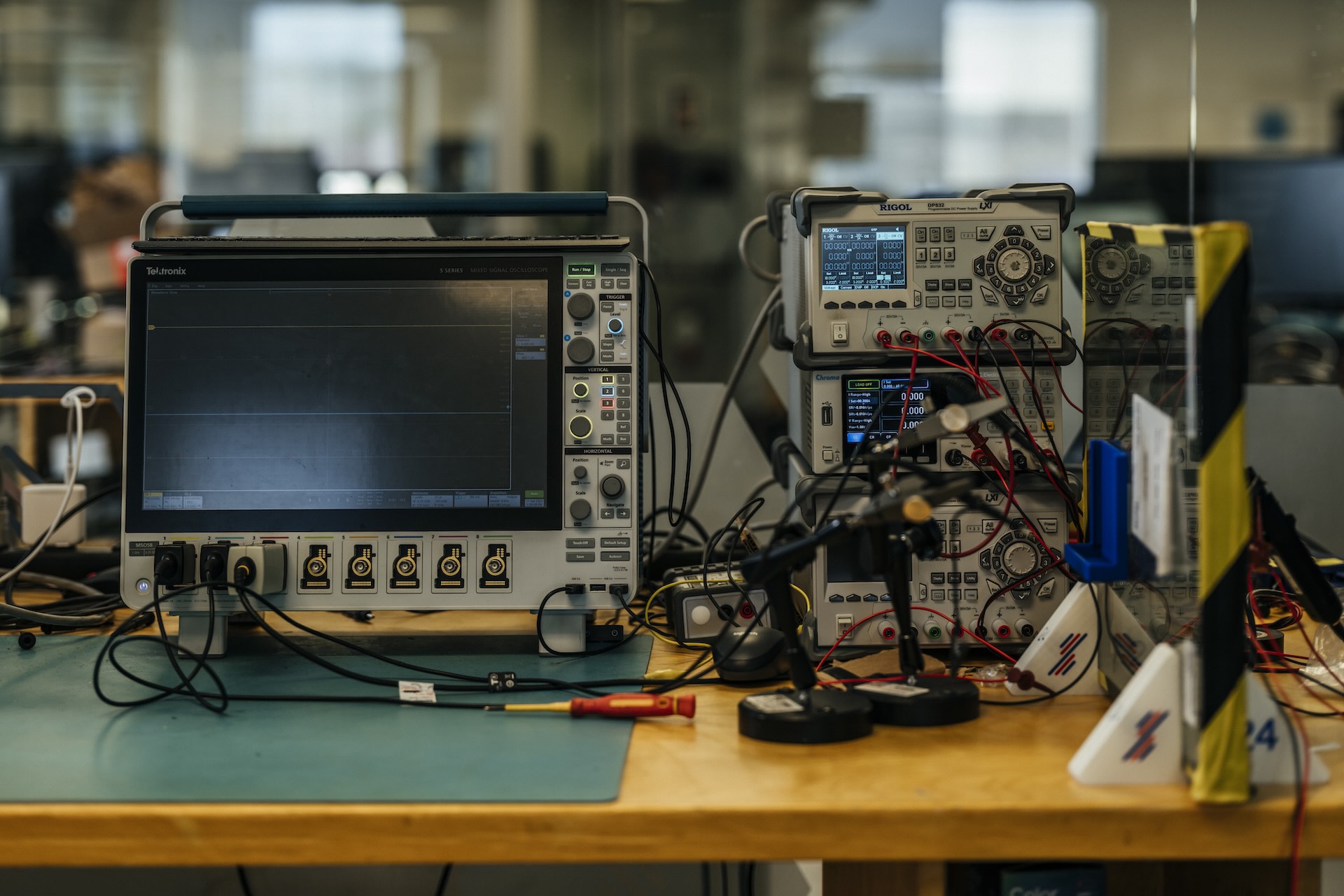 A new wireless power technology being developed by Solace Power. St. John’s has an outsized number of hardware companies solving big problems that tend to require more time, capital and specialized talent. Photo: Johnny C.Y. Lam for The Logic
 The Fort Amherst Lighthouse on Signal Hill in St. John’s. The province’s GDP is projected to grow 4.4 per cent in 2025, with much of that being driven by a surge in oil and gas and mineral production. Photo: Johnny C.Y. Lam for The Logic

The Big Read
The world could learn a thing or two from Newfoundland’s tech scene
Silicon Valley taught entrepreneurs to fail fast and often. On the edge of North America, Newfoundland’s innovators are determined to keep tackling tough problems until they’re solved.
A view of St John's Harbour from Signal Hill. Newfoundland and Labrador’s tech scene, the vast majority of which is based in the city, contributed $1.8 billion to the provincial economy’s $39-billion GDP in 2023 Photo: Johnny C.Y. Lam for The Logic
ST. JOHN’S, N.L. — In the spring of 2019, an investor in Silicon Valley offered Adam Keating a million dollars to move his two-year-old startup CoLab from St. John’s, N.L. to California. Keating—who was participating in the prestigious Silicon Valley startup accelerator Y Combinator—declined the offer. He told the investor he wanted to grow his company, which lets engineers collaborate on files in real time, in his local tech sector that he believed was poised to take off.
Talking Points
- An emerging tech scene in St. John’s has become a bright spot in Newfoundland and Labrador’s economy, which has long faced challenges due to its geographic isolation
- Leading up to a high-stakes federal election dominated by concerns of a trade war with the U.S., tech leaders in St. John’s say the industrious spirit that permeates the province is exactly what Canada needs writ large
“I told that guy, ‘There’s a billion-dollar company down the street from me that nobody knows about,’” says Keating, recounting the exchange with the investor, in which the CoLab founder boasted about the St. John’s startup scene and its hometown darling, a financial fraud detection firm called Verafin. “He laughed at me and didn’t take it seriously.” The next year, U.S. corporate giant Nasdaq bought Verafin for $3.6 billion.
The California investor in Keating’s story could be forgiven for overlooking St. John’s as a tech hot spot. While the port city—better known for cod fishing, whale watching and its colourful historic homes—had a fledgling startup scene at the time, it was Verafin’s 2020 acquisition that gave the region’s innovation economy a shot in the arm.
“Prior to that, with a couple other exceptions, everyone here with any capital made their money in brick and mortar businesses—real estate, fisheries, manufacturing, retail,” says Craig Rowe, CEO and co-founder of web-based risk management firm ClearRisk, who made his money in the insurance business. “Nobody knew tech,” he says.
On the Trail
The Logic’s reporters have spread out across the country during this election campaign to visit parts of Canada that are on the front lines of economic transformation, and to cover the issues people there tell us the next government must address. Read all of our campaign trail stories here.
Today, St. John’s startup sector is punching above its weight. Technology companies in Newfoundland and Labrador—nearly all of which are based in St. John’s—contributed $1.8 billion to the provincial economy’s $39-billion GDP in 2023, up 24 per cent from 2016. Last year, the province’s startups raised $81 million in venture capital, according to the Canadian Venture Capital and Private Equity Association, more than any province outside Ontario, Quebec and B.C., despite being Canada’s second least-populated province.
Tech companies have become a bright spot in Newfoundland and Labrador’s economy, which has long faced challenges by virtue of being resource-based and geographically isolated. “We’ve always had trouble with our location, but I think for the tech community, it’s more of an asset than a liability,” says Mark Dobbin, founder and president of Killick Capital, a local investment firm that’s seeded many of the province’s most promising startups.
“There’s a long history of innovation in this province, in terms of adaptability and having to adjust to being at the very end of the supply chain,” says Dobbin, who named his firm after a jury-rigged anchor Newfoundlanders made from driftwood and beach rocks when they couldn’t access manufactured ones made of iron. “We’ve had to make parts that you couldn’t import,” he says. “We’ve had to adapt.”
Related Articles



The sector’s location also sets it apart from other Canadian tech hubs culturally. While regions like Toronto, Waterloo and Vancouver have focused overwhelmingly on software, for example, St. John’s has an outsized number of hardware companies solving big problems that tend to require more time, capital and specialized talent. Such challenges, combined with Newfoundland’s relative remoteness, can deter investors keen on quick returns. Successes like Verafin’s, local entrepreneurs argue, are a testament that hard work and patience can pay off.
Leading up to a high-stakes federal election dominated by concerns of a trade war with the U.S., tech leaders in St. John’s say the industrious spirit that permeates the province is exactly what the country needs writ large. Many of the major themes of this election—economic independence, energy sovereignty, fierce local support—are familiar concepts to people in Newfoundland and Labrador.
To follow through on these big ideas, says Dobbin, the next government needs Canadian companies at the centre of a new industrial policy. Startups and scale-ups in St. John’s are building technology he and others say can enable key sectors to thrive—from defence to health care to professional services. Doing that work anywhere, let alone in Newfoundland, isn’t easy.
Just as there are advantages to building a tech company in Newfoundland, challenges remain, “We’re not a competitive environment,” says Rowe, noting that capital and customers can be especially hard to come by on the Rock. Tech-sector leaders say they aren’t looking for more handouts to fill the gaps. Rather, they want government to remove barriers that can stunt a company’s growth. “All their money and all their policies should be around that,” says Rowe. “That’s what’s going to grow GDP and our labour productivity and our global competitiveness generally.”
Inside a dark room at Avalon Holographics headquarters, a large table at the centre of a small stage displays a 3D hologram of a purple spaceship flying between asteroids, dodging and shooting at rocks with an orange laser. The demo, which was made by Avalon founder and president Wally Haas and his team earlier that week, has a distinctly 1980s vibe. It’s mostly for fun, but is also a good way to show how it feels to navigate a holographic digital space.
Avalon’s technology, called the NOVAC, will ultimately be used in much higher stakes scenarios—like in military operations to show a drone operator a holographic representation of what its camera perceives, or in hospitals to digitally display 3D layers of bone, tissue and veins, helping a surgeon navigate an operating site in real time.
Other companies have tried to build functioning holograms like the one Avalon is developing, but none have been widely successful. Haas is determined to be the first, which he recognizes is no easy feat. The 100-person company is trying to fundraise US$50 million, after having raised $20 million in its last round to help bring down the cost of its technology. If all goes as planned, Haas says Avalon’s tech will be on the market by early 2029. By then, the company will be nearly 15 years old.
Read more from the campaign trail

“What we do is unbelievably hard,” says Haas. He explains he’s had to deal with pressure to move Avalon to the U.S. to be closer to investors and prospective customers reluctant to travel to St. John’s to see and test the NOVAC. “Forget it,” he says, insisting the culture and talent in Newfoundland makes St. John’s the best place in the world to grow Avalon. “When you think of what makes a great company, it’s hard-working, friendly people who are mission driven.” Those are the same characteristics of a Newfoundlander, says Haas, an Albertan who moved to the Atlantic province in 2004 and is intent on staying.
Haas isn’t the only one sure that his hard work will eventually pay off. Dobbin, an investor in the company, swears “under fear of death” that the technology is the world’s most sophisticated holographic display. Retired Verafin co-founder Jamie King sits on Avalon’s board and has become somewhat of a mentor to Haas.
While Silicon Valley culture may teach entrepreneurs to fail fast and often, St. John’s has bred a class of innovators that Haas says are willing to keep tackling tough problems until they’re solved.
Neil Chaulk, CEO of Solace Power, initially thought it would take about two years to build a product that could transmit power, completely wirelessly, from one device to another through space or a solid medium. When the research and development phase stretched on five, six, eight years with no viable product, Chaulk and his team kept at it. Now, more than 10 years later, dozens of patents and a handful of PhD theses later, the company, founded in 2007, is getting traction with customers.
Chaulk, a Verafin alumnus, says early interest from large companies like Boeing, Ford Motors and Lockheed Martin—many of which paid the company for its proof-of-concept technology—gave the Solace team not just the revenue to keep going, but confidence that they were solving a real problem that bedevilled a range of industries.
The company is now hitting its stride. In January, Boeing announced a $10.3 million investment in Solace, which plans to use the money to double its workforce to about 120 people in the coming months and build an electronics manufacturing facility in Newfoundland.
But Chaulk says he still copes with the challenges that come with building a tech company in one of North America’s most remote tech hubs. Access to talent is one of them. Newfoundland and Labrador produced 225 engineering graduates in 2022, according to Engineers Canada’s most recent date, but the competition to hire them is fierce. While Chaulk says Solace is starting to recruit more from universities outside the province, like University of British Columbia and University of Toronto, it’s hard to keep companies like Tesla and Google from poaching the top engineers. Solace founder Kris McNeil left the company in 2019, pursuing different ventures before landing at Meta this year.
Keating, the CoLab CEO, says competition for workers between local companies is also heating up, as a growing number of tech startups in the region vie for a relatively small talent pool. Dobbin says companies like Verafin have developed senior talent in-house because hiring them wasn’t always an option. In Verafin’s case, he says that may have delayed the company’s growth. The upside, however, was it reinforced its culture. “That was a very important reason why they were a successful company,” says Dobbin.
Local founders and investors say raising capital for companies as they scale is another challenge. Exits like Verafin’s—as well as a handful of other smaller sales—created a small network of angel investors in the region, like Dobbin of Killick Capital and Verafin’s King. But many of those backers focus on early-stage deals, leaving a funding gap for larger companies often on the cusp of market success. “Scaling capital is harder to come by,” says Chaulk. Solace has gotten some money from federal government programs, like the Atlantic Canada Opportunities Agency and the Industrial Research Assistance Program (IRAP), but those, too, prioritize earlier-stage companies, says Chaulk.
In many ways, St. John’s tech companies have similar needs as those in other Canadian cities. Access to talent, capital and customers are concerns among CEOs country wide. But that scarcity is more acute and potentially lethal for a budding startup in Newfoundland. Proposed increases to the capital gains tax scheme, for example—which both the Liberal and Conservative parties said they wouldn’t introduce if elected—would have hit investors and companies in the province especially hard, says Rowe. Dobbin says the change would have been another reason for entrepreneurs and investors to take their business somewhere it’s easier to make money.
Rowe, the founder of ClearRisk, says some of the federal government’s attempts to help the local tech ecosystem have fallen short. He questions the effectiveness of Ottawa’s Ocean Supercluster, for example, saying the money—up to $278 million in public funding—could have gone to companies through existing government agencies, like IRAP, or to venture capital firms he says are better suited to invest in the private sector.
Dobbin also expressed concerns about Ottawa’s Strategic Innovation Fund, which distributes hundreds of millions annually to spur innovation across Canada. Much of the funding, however, has gone to Canadian branches of foreign giants, like tech firm IBM, drugmaker Delpharm and hydrogen supplier HTEC. “Ultimately, the benefit of any discoveries will flow out of the country,” says Dobbin. “I’m very irritated by those who criticize Canadian businesses for falling behind on productivity when our industrial policy encourages that falling behind. We need to say, where do we want to get and then how do we get there?”
Newfoundland and Labrador has a long history of boom and bust cycles, with periods of hardship often leading to necessary innovation and eventually back to a boom. In recent years, the province’s economy—tethered to resource sectors like fishing, mining and oil extration—has struggled, with the 2014 drop in oil prices accelerating a down cycle that brought the province to the brink of a debt crisis.
But there are signs of a sea change. The province expects real GDP to grow 4.4 per cent in 2025, “one of the strongest years for growth in over a decade and the first multi-year streak of expansion since 2017,” RBC analyst Rachel Battaglia wrote in a recent report. An anticipated surge in oil and gas and mineral production will drive the gains, according to the province’s latest budget—resources viewed as exceedingly precious in a Canadian economy trying to reduce its dependence on the U.S. in the wake of President Donald Trump’s trade war.
“There’s other jurisdictions that would kill for what we have,” says the provincial Industry, Energy and Technology Minister Andrew Parsons. “We got oil, ridiculous amounts of hydro electricity that we’re about to develop. Our mining sector is producing all the critical minerals that everybody in the world wants. We got a pretty good thing here.”
Steven Taylor, co-owner executive vice-president of Keyin College says that should the oil and mining industries go through another boom, they’ll need more tech skills in their workforces to meet the moment. The college, which has seven locations in the province, offers a broad range of programs, but part of its focus is teaching workers in any industry digital skills through courses ranging from 40 hours to 14 months.
The college—founded in 1980 to teach workers how to use computers when the technology was entering workplaces—is itself a case study for how businesses in the provinces can reinvent themselves for the digital age. It has an R&D team that builds much of its tech in-house, which Taylor says leads to a better learning experience for students. “We buy and partner when we can, but we find a lot of times the innovative ways in which you want to do things aren’t fully captured in third party platforms,” he says. The approach also gives Keyin the option down the road to sell the products it builds outside the province.
As Canada reimagines its economic strategy in the face of seismic shifts in its relationship with the U.S., tech leaders in St. John’s say Ottawa should look for homegrown innovations —including those developed outside the country’s biggest cities. “We need to get back to being competitive in a global context,” says Taylor. “We think there’s no better place, frankly, than Newfoundland and Labrador right now to really push the boundaries.”
This reporting is made possible by the generous support of the Covering Canada: Election 2025 Fund, a non-partisan granting initiative by the Public Policy Forum, the Rideau Hall Foundation and the Michener Awards Foundation. Its goal is to help journalists cover election stories that would otherwise go untold.



Loading...
Thanks for sharing!
You have shared 5 articles this month and reached the maximum amount of shares available.
CloseThis account has reached its share limit.
If you would like to purchase a sharing license please contact The Logic support at [email protected].
CloseGift the full article!
You have gifted 0 article(s) this month and have 5 remaining.
Recipients will be able to read the full text of the article after submitting their email address. They will not have access to other articles or subscriber benefits.
Photo: Johnny C.Y. Lam for The Logic
Mark Dobbin, president at Killick Capital. Dobbin says that St. John’s location on the eastern edge of Canada can present challenges, but for a tech community it is more of an asset than a liability.
Wally Haas, president of Avalon Holographics. The 100-person company is trying to fundraise US$50 million, after having raised $20 million just last round.
Neil Chaulk, CEO of Solace Power. He says access to top engineering talent is one of many challenges the tech scene in Newfoundland and Labrador faces.
A new wireless power technology being developed by Solace Power. St. John’s has an outsized number of hardware companies solving big problems that tend to require more time, capital and specialized talent.
The Fort Amherst Lighthouse on Signal Hill in St. John’s. The province’s GDP is projected to grow 4.4 per cent in 2025, with much of that being driven by a surge in oil and gas and mineral production.
Most Popular This Week




In-depth, agenda-setting reporting
Great journalism delivered straight to your inbox.
News
Panel decries Canada’s chaotic way of funding world-class science
Briefing
Feds pledge $15M for U.S. satellite navigation company Xona to expand in Montreal
Inovia raises US$200M for new VC fund as it eyes AI’s impact
43% of eligible Albertans voted ahead of Monday’s referendum
Best business newsletter in Canada
Get up to speed in minutes with insights and analysis on the most important stories of the day, every weekday.
Exclusive events
See the bigger picture with reporters and industry experts in subscriber-exclusive events.
Membership in The Logic Council
Membership provides access to our popular Slack channel, participation in subscriber surveys and invitations to exclusive events with our journalists and special guests.