OTTAWA — The next deadline President Donald Trump set for applying tariffs to U.S. imports from Canada and Mexico comes at 12:01 a.m. EST Tuesday, a month after Trump postponed them on the grounds that the countries were all making progress on border security.
The United States’ continental trading partners should expect them to go ahead, Trump says. Here’s what you need to know.
Will he or won’t he?
The way Trump’s orders are written, the suspensions of the Canada and Mexico tariffs simply expire, so the border taxes will kick in if the president just does nothing.
On Monday, Trump re-asserted that the 25 per cent tariffs on most goods from Canada and Mexico will go into effect as scheduled—but then an unidentified U.S. official told Bloomberg that in fact, no decision had been made yet on a further extension. So … maybe.
Canada’s efforts
Canadian delegations have not succeeded in getting clarity on what, if anything, Trump is specifically after.
Formally, Trump’s executive orders setting the tariffs cite fentanyl and migrants entering the United States illegally from north and south. But his complaints have also included the fact the U.S. imports more goods from Canada than it exports here; the continental trade deal he agreed to last time he was in office; U.S. banks’ access to the Canadian market; and Canada’s existence as an independent country.
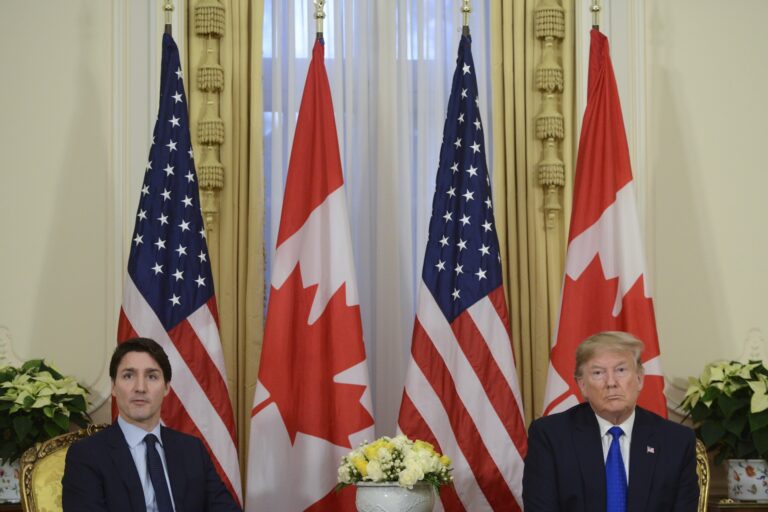
Prime Minister Justin Trudeau spoke with the president last weekend and updated him on border issues, including Canada’s meeting U.S. demands by naming a fentanyl czar and listing drug cartels as terrorist groups. Public Safety Minister David McGuinty has told The Logic that averting the tariffs is his overriding preoccupation.
Provincial and territorial premiers tried their own diplomacy. All of them went to Washington two weeks ago, where they scored a meeting with two White House officials, and a public slapdown afterward.
Ontario’s Doug Ford and Nova Scotia’s Tim Houston returned this past weekend to work the rooms at a meeting of U.S. governors. Oklahoma’s Republican Gov. Kevin Stitt wondered of Ford: “Is that the premier that has the oil?” (A little. But no, not really.)
Green Party Co-Leader Elizabeth May went to the U.S. national prayer breakfast.
Business opposition
The U.S. Chamber of Commerce flatly opposes the tariffs. The CEO of Ford has warned they would “blow a hole in the U.S. industry” and help automakers that ship cars to the U.S. from overseas. Prices could soar and domestic production grind to a halt.
The U.S. aluminum industry, which relies heavily on imports from Canada, has advised Trump the sector needs more continental integration, not less.
The National Retail Federation called tariffs “a sales tax wearing a mediocre disguise” last September. After Trump’s inauguration, the group said tariffs should be used only after a wide review of America’s trade relationships, and only with clear policy goals. Everyday consumer goods should be exempt, it said.
In a similar vein, the American petroleum industry wants to avert tariffs on Canadian crude oil that American refineries rely on—the imports that account for the U.S. trade deficit with Canada.
On Monday night, Trump declared publicly that the U.S. should restart work on the aborted Keystone XL pipeline. It would carry more Alberta oil into Nebraska, adding to the imbalance he decries.
Political resistance
Open opposition from Republican lawmakers has been negligible, though the two senators from deep-red Kentucky are exceptions. One is former Senate majority leader Mitch McConnell, who has broken with Trump in the twilight of his career. The other, libertarian Rand Paul, opposes tariffs on the principle that they’re just taxes.
Prominent right-wing commentator Ben Shapiro has professed himself baffled by the decision to target Canada, while being OK with tariffs generally.
In contrast, there’s Oklahoma’s Stitt, who backed Trump’s tariffs at the end of that governors’ meeting. Canada attracted a new factory that Oklahoma wanted, he said, and that’s a problem: “Having American jobs is really, really important for this administration. It’s important to Oklahomans. I think it’s important to most Americans, and I understand there’s some unintended consequences that might affect the Canadian citizens.”
Do Americans care?
Legislators and regular citizens have a lot on their minds with the Trump administration, so the issue has not dominated the public agenda, despite estimates that the president’s tariff policies could cost a typical U.S. household US$1,200 a year.
Polling on Trump’s trade policies has been sparse, but back in January, a Harvard-Harris poll found 60 per cent of respondents opposed tariffs on Canada and Mexico, making the idea slightly less popular than a voluntary union with Canada.
Three per cent thought tariffs should be a top priority (including only two per cent of Republicans), putting them ahead only of renaming the Gulf of Mexico to the Gulf of America. Respondents saw quitting NATO, retaking the Panama Canal and forming a strategic bitcoin reserve as more urgent.
Americans have booed O Canada at hockey games, however, in retaliation to Canadians’ booing of The Star-Spangled Banner, so some of Canadians’ displeasure is breaking through.
With files from Joanna Smith in Washington, D.C.