Skip to content

Canada's Business and Tech Newsroom

  • Professional Subscription
  • Partnerships & Advertising
  • Licensing & Syndication
Log In Subscribe
Welcome,
  • My Account
  • Log Out
  • Business
  • Tech
  • National
  • The Big Read
  • Briefings
  • Commentary
Search
Log In Subscribe
Welcome,
  • My Account
  • Log Out
News

Trump’s ban on foreign robots has Canada’s tech leaders worried

Listen Now
0:00
News

Trump’s ban on foreign robots has Canada’s tech leaders worried

The U.S. ban mostly affects China, but it could hurt growth in Canada—and push companies south of the border

By Joanna Smith
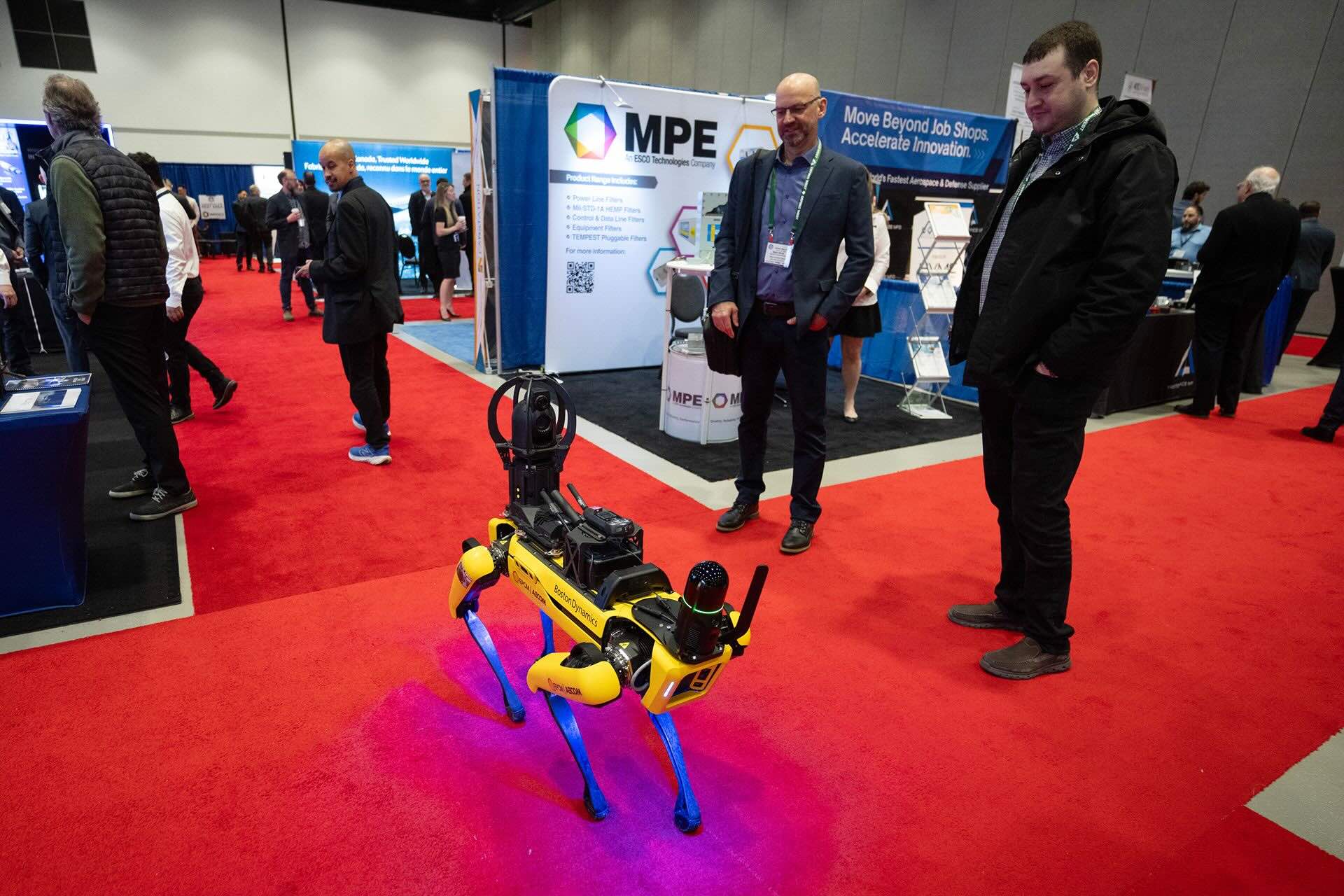
A robot from Remote Robotic walks the showroom floor during the Defence Security and Aerospace conference in Calgary on March 25, 2026. Photo: The Canadian Press/Todd Korol
Aug 6, 2026 | 2:09 PM ET
A A
A Small A Medium A Large
Share

Gift

Share

Listen Now
0:00

OTTAWA — Canadian companies that want to be spared from the Trump administration’s new ban on foreign-made robots must justify why they do not already manufacture them in the United States—and must pledge to start doing so soon.

Industry leaders worry the policy may hamstring innovation and growth—and potentially push more of Canada’s tech companies to move operations south of the border.

“This is critical for the future of Canada,” said Ryan Gariepy, chair of the Canadian Robotics Council, a non-profit organization based in Toronto. “This will make it harder for a company in Canada to scale—unless there is a higher adoption of robotics in Canada.”

Talking Points

  • The U.S. Federal Communications Commission’s new ban on foreign-made advanced robotic devices, including humanoid and dog-style robots, applies to all countries
  • Firms seeking an exception will need to justify why they do not already make the robots in the U.S. and submit a detailed plan to set up manufacturing there

Last Tuesday, the U.S. Federal Communications Commission (FCC) banned the import, sale and marketing of foreign advanced robotic devices, such as humanoid and quadruped dog-style robots. Devices it previously approved are exempt from the ban. 

The FCC framed the decision as a way to safeguard U.S. economic and national security, citing supply chain resiliency and risks to the cybersecurity of critical infrastructure.

The move was widely viewed as targeting China, which holds about 85 per cent of the market share for humanoid robots. Beijing appeared to see it that way too, saying last week that escalating restrictions on Chinese imports threatens the stability of U.S.-China relations.

Yet the FCC made clear that the rules apply to all countries equally.

Related Articles
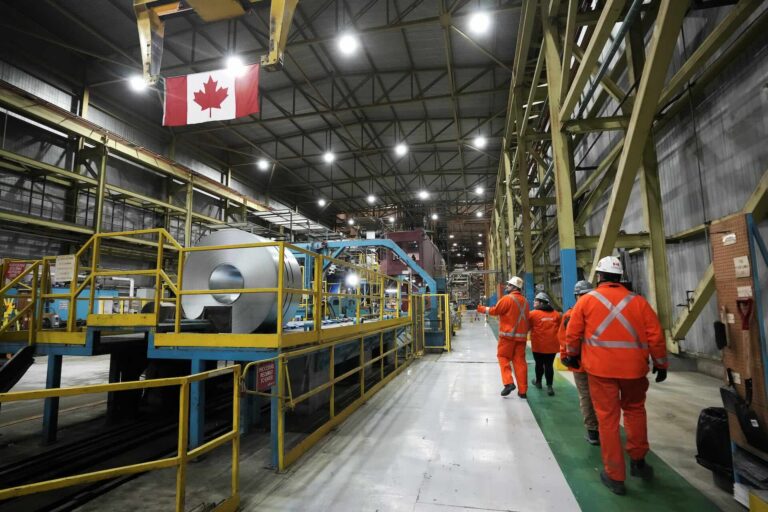
Workers in bright orange safety gear walk through a spacious industrial warehouse with machinery surrounded by yellow railings and a Canadian flag overhead.

These Canadian firms reckon that physical AI is where the money is at

By Joanna Smith
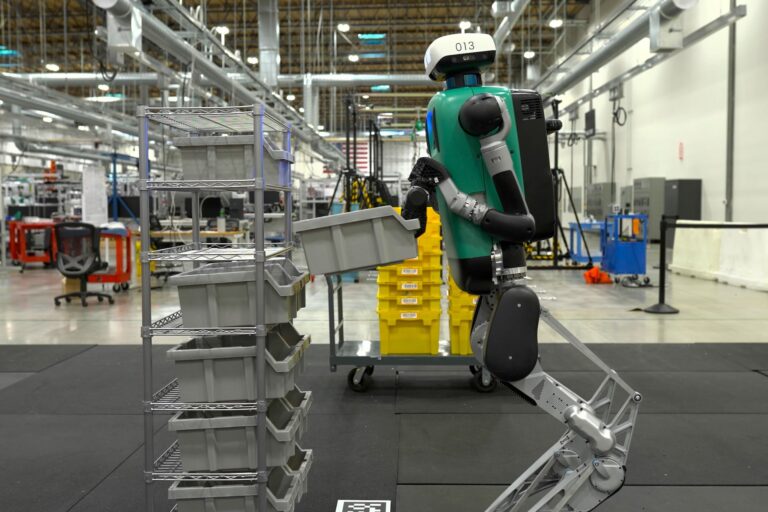
A bipedal robot with a teal and black design is organizing grey bins on a shelf in a factory.

Toyota is bringing Agility’s humanoid robots to a Canadian factory floor

By Murad Hemmadi

A company may request a conditional approval for a new foreign-produced device to get past the ban. The FCC would grant authorization if and when an assessment by the U.S. Department of Defense, now known as the Department of War, concludes the device does not “pose unacceptable risks to the national security of the United States or to the safety and security of U.S. persons.” 

There is a catch. The firm must justify why it doesn’t make the robots in the U.S. already. It must also submit “a detailed, time-bound plan” to establish or expand U.S. manufacturing for the robot in question. That plan must specify whether the firm currently produces or assembles any part of the robotic device in the U.S., including the percentage of U.S. content it contains and the number of facilities and jobs involved. The firm’s promise to expand U.S. operations must include planned capital expenditures, financing and investments over the next one to five years, plus the additional number of employees it expects to hire. The firm has to update the government on its progress every quarter.

A man sits in a chair on stage and talks to panelists on stage with him.
Ryan Gariepy, chair of the non-profit Canadian Robotics Council, speaks at the All In AI Conference in Montreal in September 2025. Photo: Handout

The FCC did not respond to The Logic’s questions about whether it would be possible for a company to get conditional approval without moving operations to the U.S.

“It’s really worrying,” said Jayson Myers, executive director of Next Generation Manufacturing Canada (NGen), the industry-led supercluster for the advanced manufacturing sector. “The most innovative companies in Canada see the U.S. as their major market and that’s where they are basing their growth plans … so it really is an issue of concern.”

It is an issue that Hadley Fox, co-founder and chief technology officer at TP7 AI Robotics, is trying to figure out how to navigate. The startup, which grew out of research backed by Nvidia and SFU VentureLabs in Vancouver, has a lab in Boston. It does not make its AI-powered multitasking mobile robots there, but is just starting to introduce them to U.S. factories through pilot programs. In an interview, Fox said the products do not yet have FCC approval, so would be banned.

Fox, who lives in Montreal, said he did anticipate the administration of U.S. President Donald Trump would eventually extend its protectionist approach to robotics. TP7, which was incorporated in 2024, sources much of its hardware from overseas, including China. Fox is exploring ways to switch up its supply chain, but it would be costly. “A lot of these companies moved from [electric vehicle] manufacturing to robotic manufacturing, so they’re really fast, and they’re cheap too,” he said of Chinese suppliers. “We don’t have the capability to match their price at the moment, but it is what it is.”

The ban covers nearly all kinds of autonomous ground mobile robots that weigh at least two kilograms, including docking stations. It would not apply to autonomous cars or trucks, aircraft, submarines or vehicles used on railways. Robotics used in medicine would also get a pass. A new robotic vacuum cleaner, however, could be affected if it were heavy enough.

Matthew Lowe, CEO of Calgary-based ZeroKey, which has sold its AI-powered robotics tech to major manufacturers, including automakers, said he thinks the ban will backfire on the U.S.

Gift the full article

“If you want to onshore manufacturing, but then hamstring your manufacturers and make them less competitive by making it harder to get access to the best tools and the best equipment, you’re kind of undermining your own goals,” Lowe told The Logic.

Gariepy of the Canadian Robotics Council suggested that Canada use this as an opportunity to encourage more adoption of robotics—and compete with the U.S. in not just developing, but using, the most advanced technology on the market, no matter its origin. We will be able “to access the best robots in the world, from everybody,” he said, “and we’ll also have the ability to compete and to benchmark against the best in the world when it comes to building our own robotics and robotic technology.”


#manufacturing #National #robotics #trade

Sponsored Content

The real-world economic offshoots of sovereign AI

By Deborah Aarts
Illustration of a plane flying above a mailbox

Increasing healthcare access across Canada

By Deborah Aarts

What it takes to lead a frontier firm

By Deborah Aarts
Paid promotional content

Loading...

Thanks for sharing!

You have shared 5 articles this month and reached the maximum amount of shares available.

Close
This account has reached its share limit.

If you would like to purchase a sharing license please contact The Logic support at [email protected].

Close
Want to share this article?

Upgrade to all-access now

Close
Gift the full article!

You have gifted 0 article(s) this month and have 5 remaining.

Copy link and gift
Copy Link
Email to a friend
Send Email
Gift on Social Media

Recipients will be able to read the full text of the article after submitting their email address. They will not have access to other articles or subscriber benefits.

Photo: The Canadian Press/Todd Korol

A man sits in a chair on stage and talks to panelists on stage with him.

Ryan Gariepy, chair of the non-profit Canadian Robotics Council, speaks at the All In AI Conference in Montreal in September 2025.

Most Popular This Week

Shivam Mahajan and Zaaheda Islam pose in front of their company offices.
Analysis

These AI startups are making millions with tiny teams

By Catherine McIntyre
A screen displays a TSXV and Emerge banner in front of several skyscrapers in Toronto’s downtown financial district.
News

Nasdaq’s crackdown tests Canada’s bet on small public companies

By Catherine McIntyre and Anita Balakrishnan
News

Bigger deals boost Canadian VC investment in bumper start to the year

By Catherine McIntyre
The Big Read

The $20B risk at the heart of Carney and Smith’s grand pipeline bargain

By Meghan Potkins

In-depth, agenda-setting reporting

Great journalism delivered straight to your inbox.

News

Toronto’s Taalas sells to AMD as AI inference market heats up

By Murad Hemmadi

Briefing

Manulife expects Hong Kong to be a strength despite China’s tax crackdown

By Anita Balakrishnan   |   Aug 6, 2026 | 3:43 PM ET

Canadian hacker pleads guilty in Snowflake extortion scheme

By Catherine McIntyre   |   Aug 6, 2026 | 3:08 PM ET

Bell’s profits slip as core Canadian telecom business erodes

By David Reevely   |   Aug 6, 2026 | 1:48 PM ET

Best business newsletter in Canada

Get up to speed in minutes with insights and analysis on the most important stories of the day, every weekday.

Exclusive events

See the bigger picture with reporters and industry experts in subscriber-exclusive events.

Membership in The Logic Council

Membership provides access to our popular Slack channel, participation in subscriber surveys and invitations to exclusive events with our journalists and special guests.

Recent Popular Stories

The Big Read

The $20B risk at the heart of Carney and Smith’s grand pipeline bargain

By Meghan Potkins   |   Jul 30, 2026
Commentary

Carmichael: Canada’s culture of risk aversion has created an economic doom loop

By Kevin Carmichael   |   Aug 1, 2026
Analysis

These AI startups are making millions with tiny teams

By Catherine McIntyre   |   Aug 5, 2026
Shivam Mahajan and Zaaheda Islam pose in front of their company offices.
Special Report

Meet Canada’s leading innovators from the Class of 2026

By Sara Harowitz   |   Jul 29, 2026
A multimedia illustration showing images of six smiling individuals, on a dark background with blue shapes.
Exclusive

What the Maple 8’s first chief AI officer is up to

By Murad Hemmadi   |   Jul 28, 2026
An image of a man wearing a white collared shirt. He is standing against a brown background with the word HOOPP written on it. He is slightly smiling and looking directly at the camera.
News

Nasdaq’s crackdown tests Canada’s bet on small public companies

By Catherine McIntyre and Anita Balakrishnan   |   Aug 4, 2026
A screen displays a TSXV and Emerge banner in front of several skyscrapers in Toronto’s downtown financial district.

Canada's most influential executives and policymakers are reading The Logic

  • CPP Investments
  • Sun Life Financial
  • C100
  • Amazon
  • Telus
  • Mastercard
  • bdc
  • Shopify
  • Rogers
  • RBC
  • General Motors
  • MaRS
  • Government of Canada
  • Uber
  • Loblaw Companies Limited
logic-logo

Canada's Business and Tech Newsroom

100% human-crafted journalism

Newsroom

  • News Tips
  • AI Policy
  • Editorial Disclosures
  • Story Pitches

Company

  • About Us
  • Terms of Service
  • Privacy Statement
  • Corporate Information

Contact

  • Contact Us
  • Advertise
  • FAQs
  • Work at The Logic

© 2026 The Logic Inc. All Rights Reserved.

Trusted by leaders

Error

Account creation failed.

Please email us at [email protected].

Create Account

[wppb-register form_name=”cozmo-registration-form-for-modal”]

I do have an account
Login
or

[wppb-login]

I don’t have an account