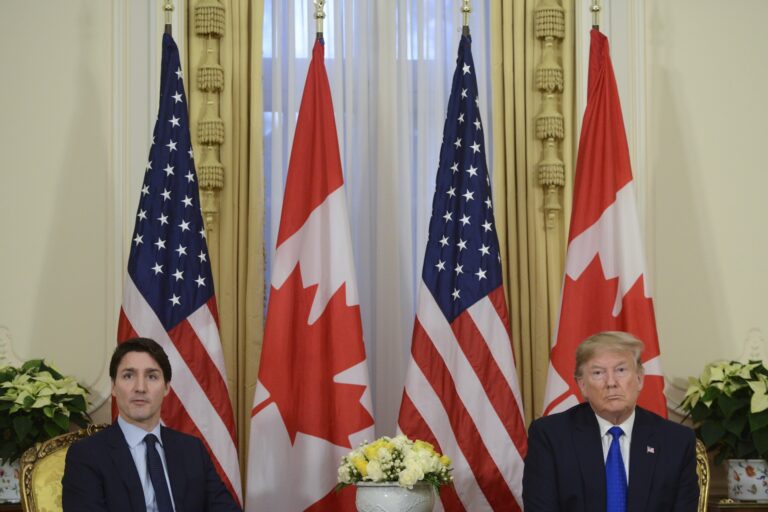
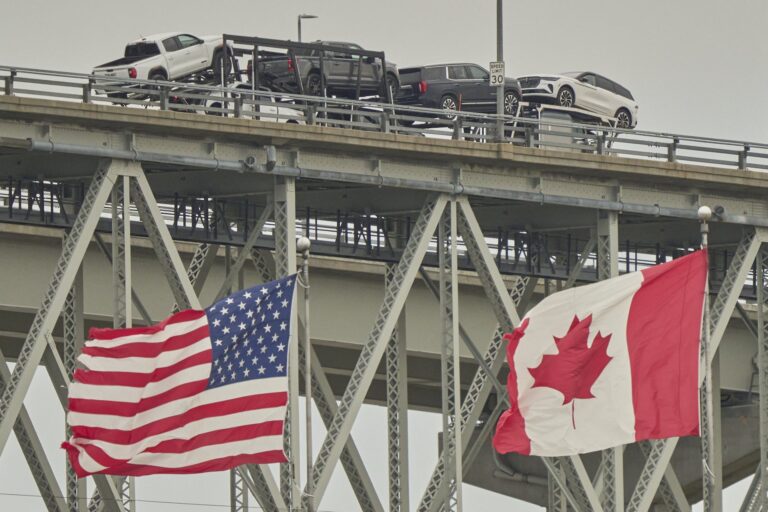
OTTAWA — U.S. President Donald Trump’s decision to impose 25 per cent tariffs on steel and aluminum will hurt Canada more than any other country.
Here’s what you need to know.
OTTAWA — U.S. President Donald Trump’s decision to impose 25 per cent tariffs on steel and aluminum will hurt Canada more than any other country.
Here’s what you need to know.
President hits U.S.’s biggest outside supplier of key metals with 25% levies

OTTAWA — U.S. President Donald Trump’s decision to impose 25 per cent tariffs on steel and aluminum will hurt Canada more than any other country.
Here’s what you need to know.
Trump famously signed an executive order putting 25 per cent tariffs on all Canadian (and Mexican) exports to the United States, then delayed applying it until March.
On Monday evening, though, he ordered a different tariff, putting import taxes on steel and aluminum from everywhere that go into effect March 12. Canada is the U.S.’s biggest outside supplier of both metals.
Very different metals markets
The United States makes a lot of steel and little aluminum.
It produced 81 million tonnes of steel in 2023, the last full year for which the American Iron and Steel Institute (AISI) has published figures. It imported about 24.6 million tonnes over the past 12 months, nearly 5.5 million tonnes of that from Canada.
Whereas it makes less than a million tonnes a year of “primary” aluminum, and has effectively outsourced that work to other countries, such as Canada. Making aluminum is energy intensive and that’s why production has migrated to places where power is cheap, such as Quebec, said a congressional report in 2022. Canadian aluminum goes into everything from food packaging to fighter jets to MacBooks.
So the U.S. imported about 3.2 million tonnes of Canadian aluminum last year, more than half its foreign supply. More than 75 per cent of Canada’s aluminum production went south in 2021, according to that report, while about half of U.S. “downstream” aluminum products came north.
What it’s about
The American metals industry, especially steel production, was once a pillar of the national economy, and Trump has vowed for years to bring it back to glory.
The U.S. steel industry argues that the United States is the victim of Chinese dumping by proxy. China exports little steel directly to the U.S., but it does export to America’s trading partners, which turn around and export their domestic steel to the States, AISI said in a January paper.
It named Mexico as a problem, not Canada. Indeed, the Biden administration raised tariffs last year on Chinese steel and aluminum to 25 per cent, and Canada followed in October. (Canada has invested hundreds of millions of public dollars in private steel companies to help them switch to electric furnaces, greening their production. Plenty of cheaper, high-emissions steel is still on the global market, however, including from China.)
In general, AISI is very much in favour of Trump’s “America First” trade policy.
By contrast, the two countries’ aluminum production is so tightly integrated that the U.S. Aluminum Association considers it effectively one industry. In a paper prepared for Trump last fall titled “Aluminum for America,” the association said the great menace it faces is Chinese aluminum.
A top priority for fighting that threat: “Reinforce the partnerships and supply chains that ensure America’s aluminum manufacturing dominance, starting with vital partners like Canada.”
Canada has seen aluminum as a strategic lever with the United States.
In November 2024, after Trump first mooted the idea of tariffs on Canada, Industry Minister François-Philippe Champagne told a meeting of the Canadian Manufacturers and Exporters about talking with the governor of South Carolina about trade and bringing up the local BMW plant.
“I said, ‘By the way, your plant depends on the aluminum I produce in Saguenay, which is about an hour from where I live. You and I should be best friends.’ Within two seconds, he said, ‘Can I get your cellphone number?’”
Ontario and Quebec will bear the brunt
Defining what steel is “Canadian” is harder than it looks, as many people who have tried to shift their consumer spending to Canadian goods have found. The metal might come from Canada but the businesses that produce it don’t.
The mere threat of tariffs was already harming the steel heartland of Hamilton, Ont., where major players are subsidiaries of foreign corporations: Stelco is a subsidiary of Cleveland-Cliffs, which is American; the former Dofasco belongs to ArcelorMittal, which is headquartered in Luxembourg. Algoma Steel is a publicly traded company based in Sault Ste. Marie, Ont., that has passed in and out of private hands.
Other players include U.K.-based Evraz, which has a plant in Regina. Steel producers directly employ 23,000 people, their association says.
Canadian aluminum production is mostly in Quebec, with one plant in British Columbia, and it’s almost all in foreign hands. Five of the country’s nine aluminum processors are run by Rio Tinto (British-Australian) and three by Alcoa (American).
The ninth, a major producer in Sept-Îles, Que., is a standalone run by Alouette Aluminum—a consortium that includes Rio Tinto, plus companies from Austria, Norway and Japan. Investissement Québec owns 6.7 per cent.
The aluminum industry employs about 9,500 people directly, its association says.
We’ve been through this before
Trump applied global tariffs on steel and aluminum last time he was in the White House, in 2018. Canada retaliated selectively, targeting American metals plus products—including ketchup, orange juice and mattresses—intended to get the attention of Trump’s political allies because of where in the U.S. those goods are produced.
It took more than a year, but Trump eventually dropped the tariffs on Canadian metals. Trudeau has used that experience as the model for Canada’s response to Trump’s newer threats.
“We saw massive disruptions and harm on both sides of the border, hurting both America and Canada,” said Catherine Cobden, CEO of the Canadian Steel Producers Association, in a statement while the group awaited specifics from the White House. If Trump follows through, she said, Canada must retaliate immediately.
Update: This story was updated after the White House confirmed the tariffs, and after it published the order
Loading...
You have shared 5 articles this month and reached the maximum amount of shares available.
CloseIf you would like to purchase a sharing license please contact The Logic support at [email protected].
CloseYou have gifted 0 article(s) this month and have 5 remaining.
Recipients will be able to read the full text of the article after submitting their email address. They will not have access to other articles or subscriber benefits.
Photo: The Canadian Press/Nathan Denette
Great journalism delivered straight to your inbox.

Get up to speed in minutes with insights and analysis on the most important stories of the day, every weekday.
See the bigger picture with reporters and industry experts in subscriber-exclusive events.
Membership provides access to our popular Slack channel, participation in subscriber surveys and invitations to exclusive events with our journalists and special guests.