OTTAWA — The U.S. Court of International Trade ruled unanimously against many of President Donald Trump’s tariffs—including those he slapped on Canada linked to concerns about fentanyl. It marks a blow to his efforts to reshape global trade, but the fight is not over.
Skip to content

News
A U.S. court dealt a blow to Trump’s tariffs. Here’s what it means for Canada
Trump did not have authority to bring in many of his tariffs, the court found, but the administration says it will fight back against ‘activist’ judges
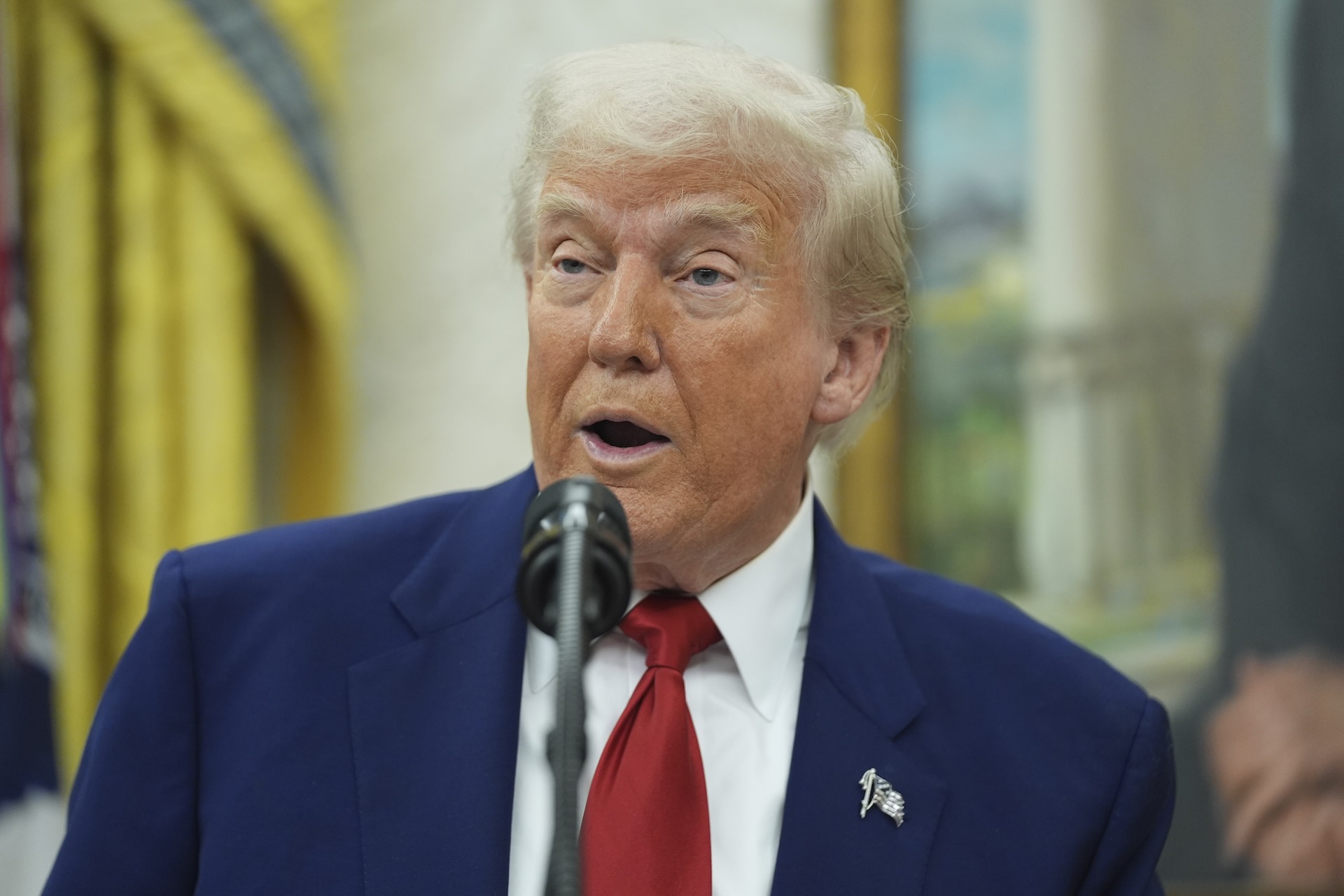
President Donald Trump speaks during a swearing in ceremony for interim U.S. Attorney General for the District of Columbia Jeanine Pirro, Wednesday, May 28, 2025, in the Oval Office of the White House in Washington. Photo: AP Photo/Evan Vucci
OTTAWA — The U.S. Court of International Trade ruled unanimously against many of President Donald Trump’s tariffs—including those he slapped on Canada linked to concerns about fentanyl. It marks a blow to his efforts to reshape global trade, but the fight is not over.
Here’s what you need to know.
What it means for Canada: The three-judge panel ruled on Wednesday that the International Emergency Economic Powers Act, which Trump invoked to bring in many of his tariffs, does not give the president authority to use it as “leverage” to get other countries to do what he wants.
Related Articles
That includes pressuring them to crack down on fentanyl, which is the reason Trump gave for imposing his initial broad-based tariffs on Canada, Mexico and China. The 10 per cent baseline and steeper so-called reciprocal tariffs on most of the world he announced on April 2 were also struck down. While Canada and Mexico were spared that day, the White House did say a 12 per cent reciprocal tariff would eventually replace the one linked to fentanyl.
What’s not changing: The court did not rule against Trump’s decision to restore tariffs on all steel and aluminum, or his tariffs on autos. Those still affect Canada. Both came through a different authority than the one addressed by the court: Section 232 of the Trade Expansion Act of 1962. Trump has also threatened tariffs on pharmaceuticals, copper, semiconductors, lumber and other sectors.
Canada’s response: The ruling matches Canada’s view that the fentanyl-related tariffs “were unlawful as well as unjustified,” Prime Minister Mark Carney said Thursday in the House of Commons. Canada’s trading relationship with the U.S. remains “profoundly and adversely threatened” by the other tariffs, which he called “similarly unjustified.” Establishing a new relationship with the U.S. and diversifying trade remains a “top priority” for his new government.
How investors reacted: U.S. stock markets were up at the sign of a crack in the global trade war that has been fueling fears of a recession. At closing time, the Dow Jones Industrial Average was up by 0.28 per cent, the S&P 500 was up by 0.4 per cent and Nasdaq was up by 0.39 per cent. The S&P/TSX Composite Index was down by 0.28 per cent and the Canadian dollar was up by 0.31 per cent—$0.72 compared to the U.S. dollar.
What comes next: The Trump administration is fighting back. “The injunction threatens to unwind months of foreign-policy decision-making and sensitive diplomatic negotiations, at the expense of the nation’s economic well-being and national security,” the Justice Department argued in a Thursday court filing to the U.S. Court of Appeals for the Federal Circuit. It also threatened to ask the Supreme Court to intervene as early as Friday. The appeals court ordered a stay while it considers motions from both sides, but did not give any reasons. “These activist judges are trying to slow down something right in the middle of really important negotiations,” Kevin Hassett, director of Trump’s National Economic Council, said Thursday in an interview with Fox Business.



Loading...
Thanks for sharing!
You have shared 5 articles this month and reached the maximum amount of shares available.
CloseThis account has reached its share limit.
If you would like to purchase a sharing license please contact The Logic support at [email protected].
CloseGift the full article!
You have gifted 0 article(s) this month and have 5 remaining.
Recipients will be able to read the full text of the article after submitting their email address. They will not have access to other articles or subscriber benefits.
Photo: AP Photo/Evan Vucci
Most Popular This Week




In-depth, agenda-setting reporting
Great journalism delivered straight to your inbox.
News
Panel decries Canada’s chaotic way of funding world-class science
Briefing
Feds pledge $15M for U.S. satellite navigation company Xona to expand in Montreal
Inovia raises US$200M for new VC fund as it eyes AI’s impact
43% of eligible Albertans voted ahead of Monday’s referendum
Best business newsletter in Canada
Get up to speed in minutes with insights and analysis on the most important stories of the day, every weekday.
Exclusive events
See the bigger picture with reporters and industry experts in subscriber-exclusive events.
Membership in The Logic Council
Membership provides access to our popular Slack channel, participation in subscriber surveys and invitations to exclusive events with our journalists and special guests.





