
Listen Now
0:00
The vast majority of respondents to The Logic’s latest subscriber survey think artificial intelligence will change their job, but most do not think the technology will replace what they do for a living.
AI is entering workplaces across the country, and Prime Minister Mark Carney’s national AI strategy says adoption of the technology will create $200 billion in economic growth and 250,000 AI-related jobs over the next five years.
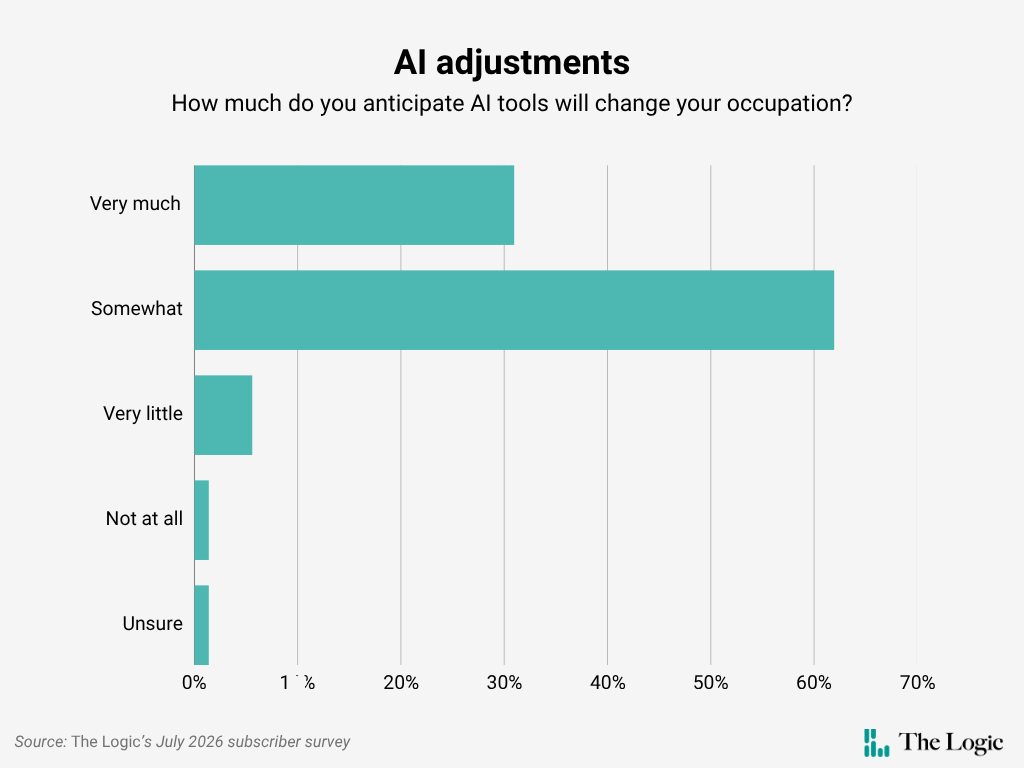
As corporations rush to recruit heads of AI and create new AI-oriented white-collar jobs, 93 per cent of readers anticipate their occupations will change—62 per cent “somewhat” and 31 per cent “very much.”
Related Articles


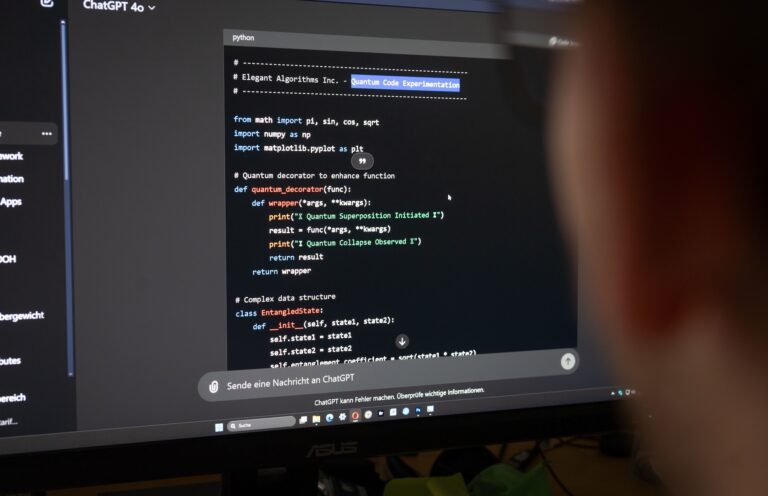
One reader in venture capital said AI is “game-changing both in terms of what we invest in, but also how we do it.” Another in health care said the technology has “revolutionized” documentation and note-taking in the sector.
A respondent in consulting said the industry is “wrestling with AI,” but added their specific sector (the arts) should be resistant to the tech since it’s “led by felt experience and cultural knowledge that cannot be captured.”
Not everyone believed the change was positive; one subscriber said they think they will be expected to do “more with less.”
“I think that AI tools will change my occupation whether or not they work or increase productivity,” said another reader. “There’s a clear commitment to using them.”
Over three-quarters of respondents said they have been asked to adopt artificial intelligence at work, and several readers said they expected AI to change entry-level jobs by automating the lower end of organizations, with one suggesting it would increase “the value of more seasoned people.”
“The obsession with efficiency will negatively impact those early in their career as the ability to learn and grow will be hampered,” said one respondent.
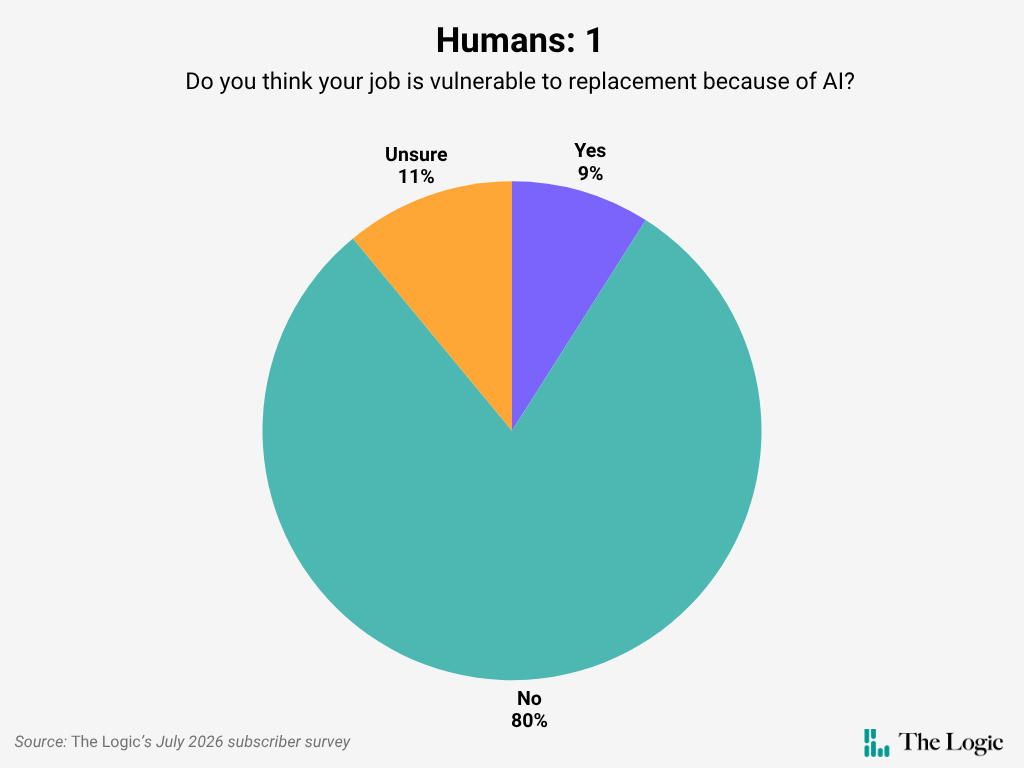
While layoffs linked to the tech have made headlines, 80 per cent of respondents said their job isn’t vulnerable to AI-related replacement at the moment.
“My job involves strategic advice, critical thinking and judgement,” one reader said. “AI can assist me in my work, but cannot replace me.”
Many cited the continued need for human oversight of AI, even in professions thought to be vulnerable. One senior software engineer said although it is assumed their profession is “the first thing on the chopping block,” the “cost of errors” in their work is still too high to trust AI at its current level.
“For business use, AI needs significant front-loading as well as human review (and correction) of outputs,” said one reader. “However, I can see someone asking why we need as many people to produce AI-led output.”
Another respondent said their unionized workplace meant they were less concerned with AI directly taking their job, but still worried their skills are “more and more undervalued as leadership and folks in other positions ‘just use Copilot’… Then of course I have to spend time reviewing and correcting the output.”
“The fabrications outweigh the productivity,” said another reader. “I spend more time amending than doing.”
Still, the vast majority—92 per cent of respondents—said that AI improved their productivity at work to some degree, citing things like language translation help or streamlined analysis. One reader, a product manager, said they doubled the work their team could do with AI without increasing headcount.
“I can’t imagine going through a day without it anymore,” said another.
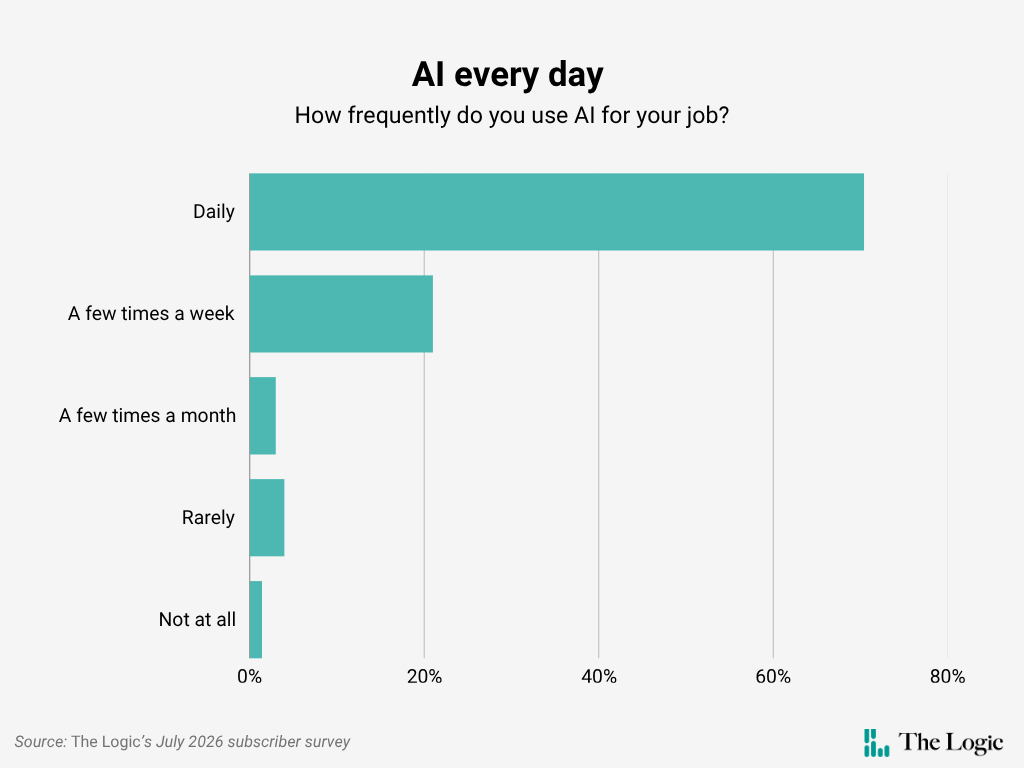
Seventy per cent of respondents said they use AI every day, for everything from coding to “replacing Google searches,” and as a “guided thought partner” for first drafts. One reader said they submit “dozens of prompts” daily, while another said they use built-in machine learning frequently but don’t trust large language models like ChatGPT.
One subscriber said they use AI like an assistant they can talk to at all hours. “It’s not always right, nor does it always offer good ideas or analysis, but that’s like any other assistant.”
Readers had different ideas of how AI would affect Canadian workplaces, but didn’t doubt there would be change.
“I expect firms that adopt AI and thus drop costs per-unit to customers will outcompete those that don’t, and will counter-intuitively increase employment because they will have more to work on,” one subscriber said.
Several said AI will primarily impact knowledge work, with one reader saying materials, energy and physical labour will “have more leverage” in coming years. Another respondent said as AI costs rise, the “judicious use of tokens”—units to measure AI usage—will scale back AI’s current flashy moment.
“The return on investment on AI is still some ways away,” said one reader. “I think some roles will be eliminated. Many roles will be impacted. But I think we are far away from humans being replaced entirely.”













