Commentary
Letter from the editor: What Canada can learn from El Salvador’s deals with the U.S. and China
President Nayib Bukele’s regime has committed widespread human rights violations. It’s also persuaded two sparring global superpowers to pour money into the country.

China's President Xi Jinping and El Salvador's President Nayib Bukele stand before at a welcoming ceremony in Beijing on Dec. 3, 2019. Photo: Noel Celis/AFP via GettyImages
Along the Pan-American Highway through San Salvador, there is a symbol of El Salvador’s growing might rising from the dust.
To the left, commuter traffic crawls past the shiny glass tower housing call centres for Canada’s Telus Digital; to the right, heavy machinery swarms the site of a former military academy. Here, workers are laying the foundations for a new National Stadium—a 50,000-seat cathedral of sport that will be the largest modern arena in Central America. It is a massive, concrete declaration of arrival for a country long dismissed as a cautionary tale. But the most important thing about this stadium is that El Salvador isn’t paying for it. China is, as part of a US$500 million development package.
Related Articles
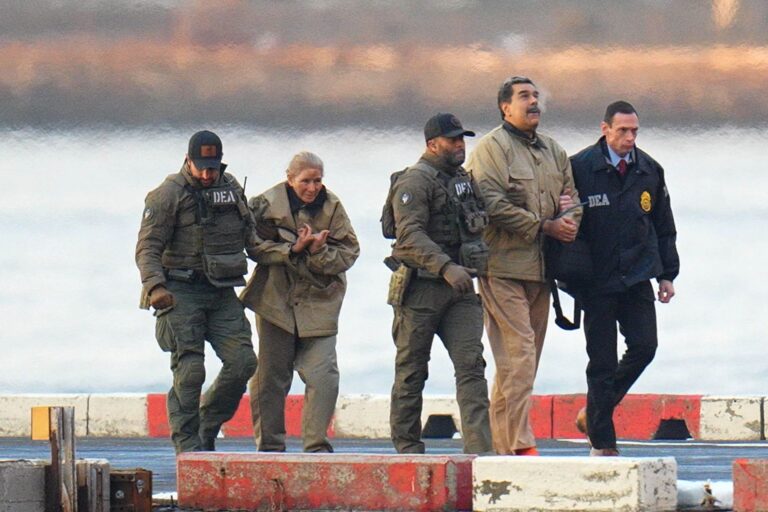

When most Canadians think of El Salvador, they likely think of gang warfare and its notorious prisons, which are now being rented out to the U.S. government to detain Venezuelan deportees. Or they think of its charismatic leader, President Nayib Bukele, with his penchant for bitcoin, who once called himself the world’s “coolest dictator.”
But as Canada navigates the beginnings of a trade deal with China and the next phase of CUSMA negotiations, we may have something to learn from this small Central American country, which has managed to grow its GDP by more than 30 per cent over the past six years by securing both Chinese investment and American support.
The soccer stadium is one of several large infrastructure investments that China is bankrolling in El Salvador. Others include a US$54-million gift for a new national library (open 24-7 and fully staffed), a water treatment plant, and the Surf City amusement complex that sits atop the tourist pier in La Libertad, rivalling the boardwalks of Santa Monica in California.
These investments haven’t turned the country into a pariah in Donald Trump’s new global order; in fact, they’ve done the opposite. American investment in the country is also booming.
El Salvador has effectively split its development strategy in two: it takes hardware (stadiums, libraries, parks) from China, and software (cloud computing, energy, finance) from the United States.
The U.S. firm Invenergy made a US$1-billion liquefied natural gas (LNG) plant at the Port of Acajutla—the largest private investment in the nation’s history, according to Invenergy. Google has signed a US$500-million strategic partnership to digitize the state’s health-care and education systems, establishing a full legal entity and regional cloud office in San Salvador.
Meanwhile, investors have rewarded Bukele’s pivot, with JPMorgan facilitating a US$1 billion loan to help El Salvador protect the country’s wetlands, and the International Monetary Fund awarding a US$1.4-billion loan last year.
American tourists are also flocking to the region, including to watch world-class surfing contests along its Pacific Coast. A “Surf City” marketing campaign has rewired the economy. Tourism accounted for roughly 14 per cent of GDP in 2024, almost double what it was just five years before. Last year alone, 4.1 million visitors poured into the country, generating US$3.6 billion in revenue.
To keep up with the sheer volume of tourists, the government estimates it needs to build 10,000 new hotel rooms by 2030, a figure that has set off a private-sector construction frenzy, with resort chains like JW Marriott entering the fray.
There have been real and serious trade-offs. According to Human Rights Watch, El Salvador has arrested over 86,000 people, including more than 3,000 children, and the president has rewritten the constitution to remove term limits. But there is also free primary and secondary education, and fewer homicides than in Canada, making locals feel safe enough to believe in their future prospects.
The situation is more complicated than reflexive Bukele critics make it out to be. As a mother, whose son was arrested at church a year ago for unknown reasons and hasn’t been heard from since, told The New York Times, “He’s done a good job… but at the same time, behind the good things he’s doing, there’s a lot of evil.”
When Prime Minister Mark Carney was asked Friday about China’s human rights record after signing the new trade deal, he told reporters in Beijing, “We take the world as it is, not as we wish it to be.”
The same could be said here. When I visited the country nine years ago, armed guards met me at the gate of my hotel and we wouldn’t dare venture out at night. When I visited last month, I found breweries and fine-dining restaurants lining the coast.
El Salvador has managed to navigate two hegemonic powers that seem hell bent on breaking apart global alliances.
As Canadians assess what seems like a binary choice between the U.S. and China, we would do well to study how El Salvador has leveraged both countries against each other.
The era of branch plant foreign policy is over. Welcome to the era of the bidding war.



Loading...
Thanks for sharing!
You have shared 5 articles this month and reached the maximum amount of shares available.
CloseThis account has reached its share limit.
If you would like to purchase a sharing license please contact The Logic support at [email protected].
CloseGift the full article!
You have gifted 0 article(s) this month and have 5 remaining.
Recipients will be able to read the full text of the article after submitting their email address. They will not have access to other articles or subscriber benefits.