Listen Now
0:00
My colleague Joanna Smith got a lot out of India’s high commissioner when she talked to him in Ottawa last month. I can’t get one of Dinesh K. Patnaik’s comments out of my head. It says everything about how the world has changed since former prime ministers Stephen Harper and Manmohan Singh agreed to begin trade talks in 2010.
The Indian government, said Patnaik, wants Canada to recognize the “mismatch in the size of the economies.”
I hear a diplomat putting the other side of a negotiation in its proper place. There’s some hope that India’s trade agreement with the European Union could herald a similar pact with Canada. It might, but I think it would be a mistake to assume Canada will come away with equally favourable terms. We lack both the economic weight and the cachet to expect otherwise.
Related Articles

Status influences just about every human interaction. It’s easy to imagine that 16 years ago, Canadian negotiators started talks with India feeling like they had the upper hand. Their bosses were venturing out into the world with some swagger. The oilpatch was booming and Bay Street had survived the 2008-2009 financial crisis intact. Harper, who had been in power for nearly five years, decided it was time to make his debut at the World Economic Forum’s annual retreat at Davos, Switzerland. “My purpose was to get out the story of Canada’s successful economic management to an international audience,” he wrote in his book Right Here, Right Now.
For a long time, Canada offset its relative lack of economic weight with the prestige of having emerged as one of the economic winners from the Second World War and being a member of all of the right clubs. That might have worked when India’s economy was only around three times larger than ours, as it was in 2010, when measured in terms of purchasing power parity.
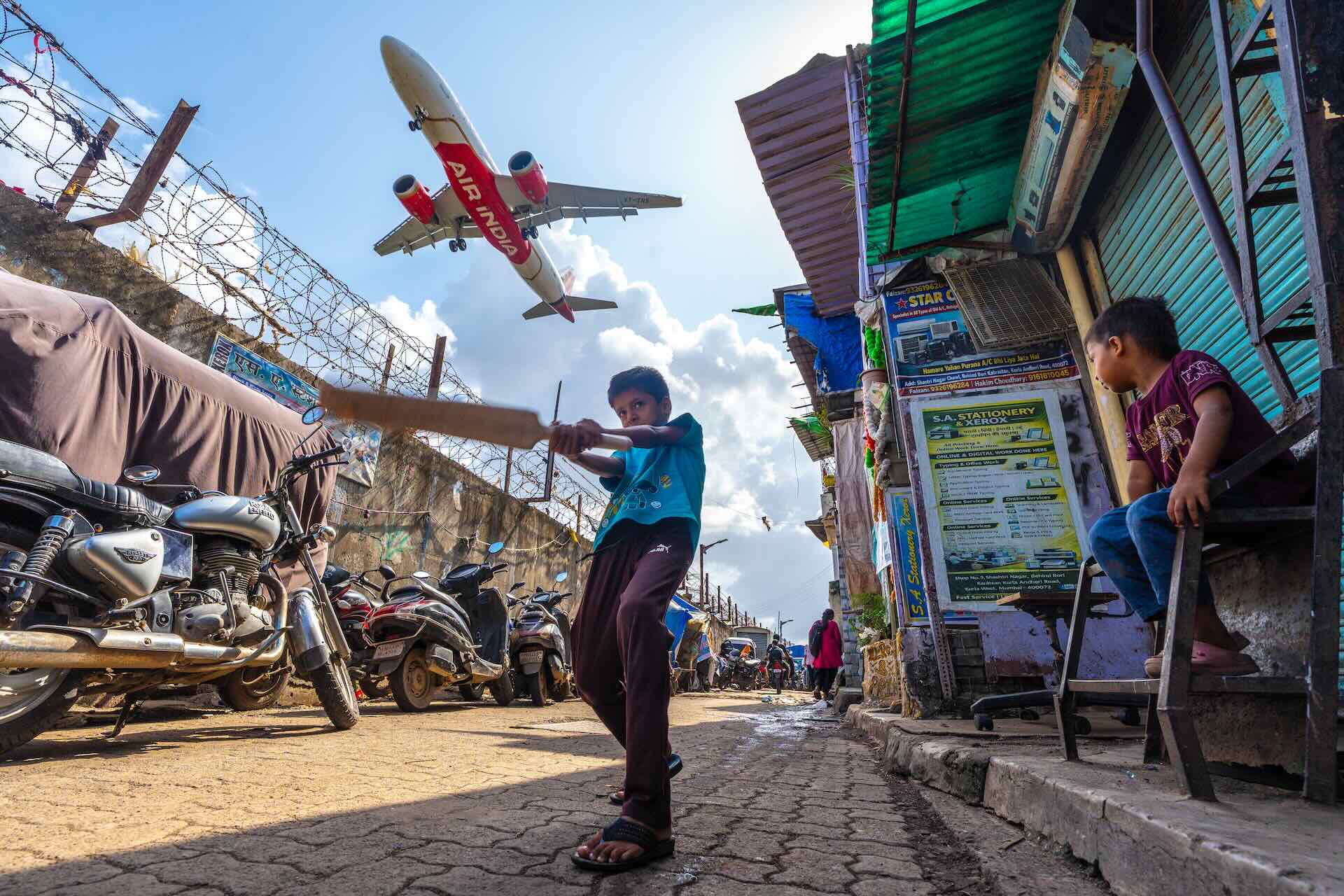
India’s economy is now almost seven times larger than ours. If it required Canada’s help two decades ago, it doesn’t now. Disembarking at Mumbai’s Chhatrapati Shivaji Maharaj airport after a half-day flight from any Canadian departure point is like travelling to the future. The chaos outside is a quick reminder that India has some work to do, but it is no longer a country that will be cowed by a mid-sized economy with an enviable level of GDP per capita.
Canadians can be naive about our standing in the world. We were ruined by British preferential tariffs and privileged access to America. Financial and transportation links formed to facilitate those trade flows at the expense of creating channels to other places. We became incurious about the rest of the world. When I moved to Mumbai in September 2014, I was encouraged to find myself interviewing various Canadians within weeks of my arrival. Then I learned that everyone tries to get to Mumbai in October or November for official business because the weather is glorious. I don’t recall meeting many Canadians during the June to September monsoon, nor the summer months of March, April and May, when the heat and humidity make it difficult to be outside.
A poll by the Angus Reid Institute last year found that almost 70 per cent of Canadians admitted to knowing little or nothing about India, even though South Asians represent the country’s largest racialized group. “That is a strategic weakness at a moment when India is becoming more consequential to Canadian interests,” Vina Nadjibulla, co-founder and CEO of the Centre for Strategic Statecraft, wrote in an essay earlier this year.
I’ve learned that ignorance about India makes you susceptible to generalizations that can lead to disenchantment when they come up against reality. One heuristic that gets Canadians in trouble is the notion that because India is big and fast-growing, it must be full of opportunity for a country such as Canada. That depends on a Canadian entrepreneur’s willingness to visit India during monsoon and other inconvenient times of year. It’s a place that values relationships. The executives who travel there with International Trade Minister Maninder Sidhu this week shouldn’t expect to go home with a contract. Gary Comerford, the executive who led Sun Life’s expansion to India, boasts that he’s visited the country more than 90 times since the mid-1990s.
Rapid economic growth only matters if you can supply the Indian market with what it wants. The Canadian Chamber of Commerce’s Business Data Lab on Monday unveiled a new web tool that makes real-time estimates for where Canadian merchandise exports have the most potential to grow. Andrew DiCapua, the lab’s principal economist, said he was surprised that slow-growing Europe came out ahead of Asia. That discovery tracks Export Development Canada research. EDC used a trade gravity model to estimate where Canadian exports underperform. For goods, India was only 12th. “It hasn’t always been a predictable market,” said Craig Johnston, chief economist at Farm Credit Canada.
I called Johnston because of another trope. Canadian trade with India has come to be defined by bulk shipments of lentils and peas. Johnston said any trade agreement should create incentives for Canadian industry to turn those raw materials into food ingredients, which capture more value and make Canada less vulnerable to Indian politicians’ tendency to protect farmers from import competition.
An enlightened approach to India might also move beyond the short-term interest of Canadian pulse growers. EDC’s gravity model isn’t ecstatic about the potential of India for goods exports, but when it comes to services, only the U.S. ranks higher.
That means Sun Life might have more to teach us about trade with India than Saskatchewan’s cash croppers. Surprised me too.
Kevin Carmichael is The Logic’s economics columnist and editor-at-large. He has spent more than two decades covering economics, business and finance for outlets including Bloomberg News, The Globe and Mail and the Financial Post, where he also served as editor-in-chief.