Skip to content

 Wiseman left Teachers’ in 2005 for the Canada Pension Plan Investment Board, where he later became CEO. Photo: Alamy/Kristoffer Tripplaar
 The Canadian embassy in Washington, where Wiseman may benefit from skills and contacts he made in the global investment world. Photo: FIFA via Getty Images/Tasos Katopodis
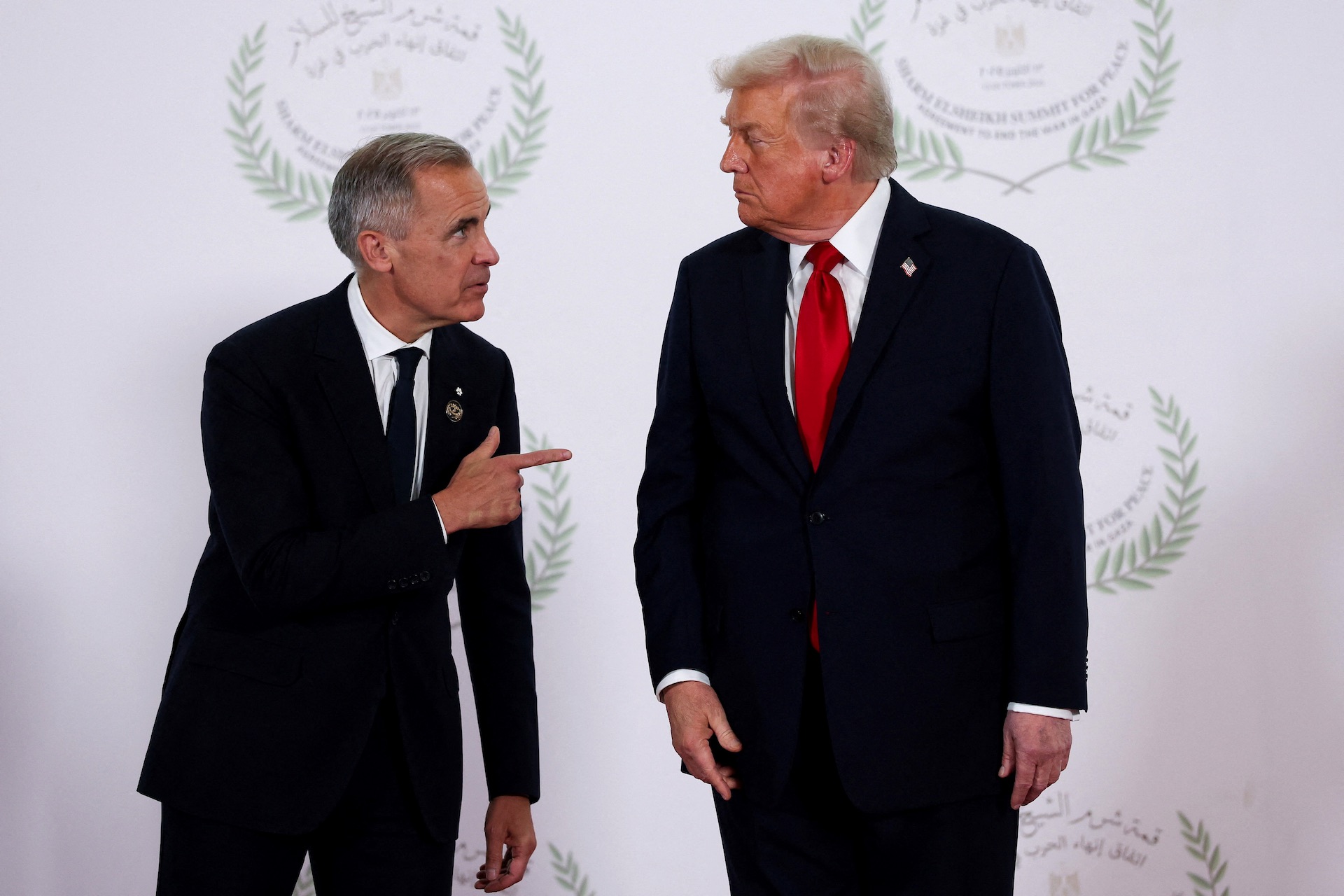 Prime Minister Mark Carney and U.S. President Donald Trump at a peace conference in October in Sharm El-Sheikh, Egypt. Photo: Getty Images/Suzanne Plunkett

The Big Read
Mark Wiseman is out to land the biggest deal of his life
Wiseman spent decades forging relationships with the world’s top financial players. As Canada’s new U.S. ambassador, he’ll need all of that experience and more.
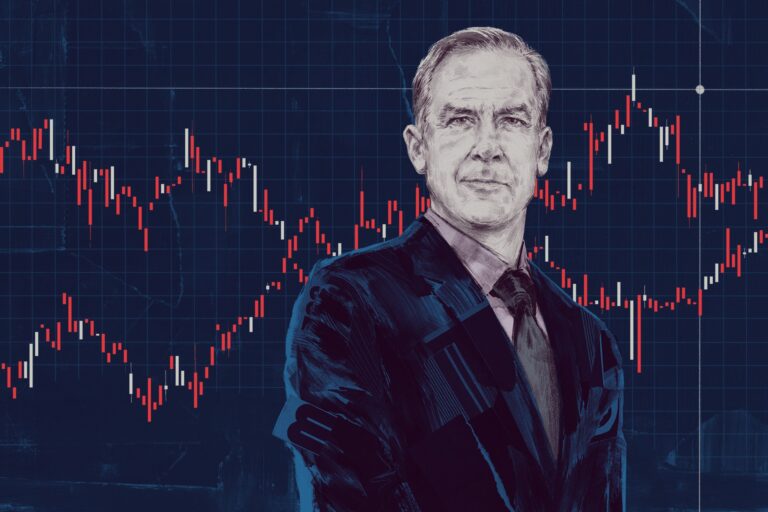
Photo: Photo illustration by Paul Kim for The Logic; Photo: Eurasia Group/CC
Around Christmas time in 2004, Mark Wiseman’s phone rang. It was a deal maker in Asia who was leaving the local office of U.S. private equity firm Carlyle Group to start his own buyout firm in Seoul. The caller had the local knowledge and contacts, but needed capital. Wiseman, who led the private equity fund at the Ontario Teachers’ Pension Plan, didn’t hesitate. Within 48 hours, the pension plan was in on the deal.
From the outside, the agreement looked alarmingly fast. A federal rule restricting how much pensions could invest abroad had kept most funds firmly focused on Canada, and backing a breakaway team in Seoul was a move few of Teachers’ peers would have considered.
Talking Points
- Canada’s next ambassador to the U.S. is a “smart deal maker” with a history of thinking deeply about how investors and governments can tackle long-term challenges, according to friends and former colleagues
- While critics have raised concern about his views on immigration and supply management, those who know him say Wiseman is a team player who will focus on getting the best deal for Canada
Wiseman, though, had put in considerable legwork seeking an entry point to South Korea and other emerging markets, recalled Jim Leech, who hired the lawyer-turned-investor in 2001 to help build the pension’s private equity business. That upstart firm Wiseman backed, MBK Partners, was just a beginning. In 2005, Ottawa raised the foreign investment limit, and today, Teachers’ private equity division makes up more than 20 per cent of the pension’s $270-billion portfolio.
Wiseman’s manoeuvring in South Korea wasn’t a one-off, Leech told The Logic in an interview after Prime Minister Mark Carney named Wiseman Canada’s next ambassador to the United States. “He came up with some very innovative solutions that just hadn’t been done before.”
Related Articles

That out-of-the-box thinking may be one reason Carney is turning to his longtime friend to fill the most important diplomatic posting of the Liberal government’s young mandate. Wiseman, 55, takes on the role Feb. 15 as the world faces an unruly U.S. president who scorns free trade and openly questions the sovereignty of allies, including Canada. His moves over the past year have left Wiseman with a daunting agenda: unresolved tariff disputes, mounting industrial policy tensions and a high-stakes review of the United States-Canada-Mexico Agreement (USMCA). Critics, meanwhile, have questioned Wiseman’s suitability, pointing to his lack of diplomatic experience and views he has shared on immigration and supply management that, in the political context, have aged as well as lukewarm milk.
Yet colleagues who have sat at negotiating tables next to and across from Wiseman say his corporate connections and composure during heated discussions outweigh any shortcomings. (Wiseman himself declined to be interviewed for this story.) They describe someone comfortable with skeptical counterparties, pressing his case and knowing when to walk away. With President Donald Trump, what matters most is the ability to operate without a playbook.
“He’s a very, very smart deal maker,” said his friend Dominic Barton, the chair of mining giant Rio Tinto who served as Canada’s ambassador to China. “He just makes things happen in many different domains.”
“I could practically hear them snickering as we left, saying, ‘Oh, aren’t those nice little Canadians?’”
Wiseman has the type of sterling resume you might expect in a captain of finance and future top-rung diplomat: law degree and MBA from the University of Toronto, a Fulbright Scholar at Yale, clerk for then-Supreme Court justice Beverley McLachlin and experience practising M&A law at Sullivan & Cromwell in New York and Paris before moving to Toronto-based investment firm Harrowston. To Leech, who was keen to snap up the emerging financier after TD Bank acquired Harrowston in 2001, it was all the more impressive that Wiseman had done so much without a trust fund or family business connections. He grew up in Burlington, Ont., the son of a plumber father and a physiotherapist mother.
At Teachers’, Wiseman would have to prove both himself and the pension fund to Wall Street titans. Leech’s private equity strategy hinged on gaining a foothold in new markets by partnering with global investors to seed new funds and invest in individual companies. At the time, U.S. investors largely dismissed the fund as “dumb money,” said Leech. “I could practically hear them snickering as we left, saying, ‘Oh, aren’t those nice little Canadians?’”
When Wiseman left Teachers’ in 2005 for a senior vice-president job at the Canada Pension Plan Investment Board (CPPIB), Leech got to see his protegé’s instincts at work from the other side of the table, including when the two funds competed to acquire Bell Canada’s parent, BCE, through a leveraged buyout. Teachers’ outbid CPPIB in a deal that ultimately collapsed, a casualty of the 2008 financial crisis. Leech remembers Wiseman as disciplined—and aware of where to draw the line. “At the end of the day, we won,” he said, “but winning means you paid more than the next guy.”
Other colleagues have described Wiseman to The Logic as strong in his views but willing to admit he is wrong. Part of what makes him an effective negotiator, they said, is the effort he makes to understand the people around him. Lisa Baiton, an executive at the CPPIB when Wiseman became CEO, said he stressed the value of long-term professional relationships. Baiton, who now leads the Canadian Association of Petroleum Producers, said that includes “knowing that whatever is in front of you, right here and now, might not be worth it if you have to sacrifice the longer-term relationship.”
Baiton called Wiseman “the best boss ever,” but said CPPIB had to get used to the way he flattened the chain of command—calling up whomever might have what he needed instead of sticking to the organizational chart. He was comfortable with everyone from “the average Joe” to India’s Prime Minister Narendra Modi, Baiton said.
Brent Belzberg, who hired Wiseman as a summer student at Harrowston, said he is an intellect always looking beyond what is right in front of him. In interviews, Wiseman speaks deliberately, listens intently while blinking behind his glasses, and does not shy from challenging a premise. Though “he’s not very patient,” Belzberg said, he’s comfortable sharing his weaknesses. “He has an element of vulnerability and that makes him charming.”
Barton said Wiseman, who has long hosted an annual dinner with an eclectic guest list on the sidelines of the World Economic Forum in Davos, Switzerland, has spent years convening people from around the world to discuss ideas and put them into action. His network includes Carney, who counted Wiseman among his earliest donors to his successful bid for the Liberal leadership, and American heavy hitters Stephen Schwarzman, the CEO of Blackstone, and Henry Kravis, co-executive chairman of KKR. “He’s been in that milieu for years,” Barton said.
“He has an element of vulnerability and that makes him charming.”
While at CPPIB, Wiseman became active in big-picture debates challenging conventions of how capital markets operate. In 2013, the pension fund manager and McKinsey, the consulting firm where Barton was then managing global partner, co-founded Focusing Capital on the Long Term. It later evolved, with involvement from Dow, BlackRock and Tata Sons, into FCLTGlobal, a Boston-based not-for-profit that pushes companies and investors to take longer views instead of focusing on quarterly results. Its members include corporate and financial giants such as Bank of America, Goldman Sachs, BP, Mastercard and Walmart.
Sarah Keohane Williamson, CEO of FCLTGlobal, was struck by the way Wiseman made things happen—in sometimes surprising ways. As she was being recruited for the role, Wiseman introduced her to someone by saying: “‘She doesn’t really know it yet, but she’s definitely gonna be the next CEO of FCLT,’” she said. “He knows what he’s trying to get done and he does it in a gentle way, or joking way,” Williamson added, “but it’s pretty clear what the goal is.”
In 2016, Wiseman left the CPPIB to become senior managing director and global head of active equities at investment giant BlackRock, where he was seen as a protegé to CEO Larry Fink. Marcia Moffat, then his longtime partner, was already there as head of its Canadian operations. At BlackRock, Wiseman oversaw investments across markets influenced by U.S.-China tensions and industry policy shifts. The work put him at the intersection of global capital and geopolitics, bringing him into closer contact with players in New York, London, Beijing and Washington, and sharpening tools he may need as ambassador.
Wiseman was widely viewed as Fink’s successor. But by December 2019, he was out, having violated company policy by failing to disclose a romantic relationship with a colleague. “I regret my mistake and I accept responsibility for my actions,” he wrote in an internal memo.
Wiseman then took on a string of advisory and board roles. He became chair of the Alberta Investment Management Corporation (AIMCo), the provincial pension fund manager, and served as senior adviser to Lazard, Boston Consulting Group and Hillhouse Capital. During this period, he increased his focus on government policy, weighing in on hot-button issues that would land him in the political crosshairs when his name was in the mix to replace Kirsten Hillman as Ottawa’s envoy to Washington.
Wiseman made media appearances around the time of the 2024 federal budget to share his thoughts on what business and government leaders should do to fix Canada’s productivity crisis. Deep in a nearly 1,200-word op-ed published in The Globe and Mail, he described Canada’s supply management system for poultry, eggs and dairy—a sector that is a target of the Trump administration in the coming review of the USMCA—as a “sacred cow.” After mentioning Ottawa had pledged billions to farmers who had lost market share (due to concessions made in trade deals, notably, including the USMCA), Wiseman wrote: “Any government that’s financially beholden to the interests of legacy actors will be incapable of embracing the large-scale reform we need to encourage competition and drive meaningful consumer choice and productivity growth.”
It wasn’t the only one of Wiseman’s ideas that would draw backlash. In 2009, he and Barton co-founded what became the Century Initiative to search for an ambitious, nation-building idea to strengthen the economy. The lobby group later started calling for Canada’s population to reach 100 million by 2100—mainly through higher levels of immigration. The position has become a lightning rod amid concern that accelerated immigration was exacerbating affordability issues, including in housing. In May 2023, the Globe‘s Andrew Coyne wrote a column discussing the Century Initiative’s policies, which carried the headline: “100 million Canadians by 2100 may not be federal policy, but it should be—even if it makes Quebec howl.” Wiseman shared the column with its original headline on social media, and it circulated widely.
After Carney announced Wiseman as ambassador, Bloc Québécois Leader Yves-François Blanchet attacked the appointment, saying Wiseman was “openly indifferent or even hostile to Quebec’s values and interests.” Earlier that month, Conservative Leader Pierre Poilievre said in the House of Commons: “This is someone who proposed a policy that inflates the cost of living, takes away jobs and puts pressure on our health-care system.”
Barton, who has not been involved with the Century Initiative for several years, said the group always understood that finding ways to absorb population growth—including with housing—was foundational. “It became a good political axe,” he added, “and I think that’s very unfortunate.”
Regardless, Barton said, Wiseman knows he will be representing Canada in this new role—not himself. “What’s the best outcome for Canada is where he’s going to be.”
David MacNaughton, who served as Canada’s envoy to Washington during most of the first Trump administration, said Wiseman will learn quickly that the negotiation of a trade pact, or agreements on defence and security, is a different beast from doing a business deal.
MacNaughton remembers coming out of a 2016 state dinner between then-president Barack Obama and the newly elected prime minister Justin Trudeau thinking his new job would be easy. The leaders’ obvious chemistry was described as a “bromance,” and the two governments’ values were more closely aligned than they had been in recent memory. But politics in the U.S. can complicate the art of the deal, and so can politics at home—especially when Canadians are facing layoffs. The job was anything but easy.
“Mark’s smart enough to get that, but it’s a change from what people in business have been used to,” said MacNaughton, who recently joined CIBC as a strategic adviser. (He was president of Palantir Technologies Canada until late 2024.) MacNaughton, who has dinner with Wiseman a few times a year, said the new envoy and the rest of Canada’s team will need to figure out what they can put on the table that is “less bad for Canada,” but still lets Trump claim victory when the deal is done. “He has to be seen to have won,” MacNaughton said of Trump, but also: “He wants you to be seen to have lost.”



Loading...
Thanks for sharing!
You have shared 5 articles this month and reached the maximum amount of shares available.
CloseThis account has reached its share limit.
If you would like to purchase a sharing license please contact The Logic support at [email protected].
CloseGift the full article!
You have gifted 0 article(s) this month and have 5 remaining.
Recipients will be able to read the full text of the article after submitting their email address. They will not have access to other articles or subscriber benefits.
Photo: Photo illustration by Paul Kim for The Logic; Photo: Eurasia Group/CC
Wiseman left Teachers’ in 2005 for the Canada Pension Plan Investment Board, where he later became CEO.
The Canadian embassy in Washington, where Wiseman may benefit from skills and contacts he made in the global investment world.
Prime Minister Mark Carney and U.S. President Donald Trump at a peace conference in October in Sharm El-Sheikh, Egypt.
Most Popular This Week




In-depth, agenda-setting reporting
Great journalism delivered straight to your inbox.
The Big Read
Alberta’s referendum is just the start of the turmoil
Briefing
EverWind plans $10B data centre and wind development in Nova Scotia
Canada ready to force Stelco to sell its Canadian operations, Joly says
Feds plan a 60 MW defence-oriented data centre for Ottawa
Best business newsletter in Canada
Get up to speed in minutes with insights and analysis on the most important stories of the day, every weekday.
Exclusive events
See the bigger picture with reporters and industry experts in subscriber-exclusive events.
Membership in The Logic Council
Membership provides access to our popular Slack channel, participation in subscriber surveys and invitations to exclusive events with our journalists and special guests.






