Listen Now
0:00
CALGARY — Gufran Syed remembers when Alberta was actually trying to court workers like him. The 34-year-old IT employee was living in Toronto in 2023, having immigrated from India four years earlier, when the province’s “Alberta is Calling” campaign was encouraging workers in other parts of Canada to move west. Syed came to Calgary, where he now works with one of the big banks.
These days, he sees a starkly different message in ballot proposals to restrict access to education and public health care based on immigration status, or impose fees or premiums on non-permanent residents and their families.
Talking Points
- Alberta’s vote on separation may not settle the political and economic uncertainty unleashed by the referendum. A new Abacus Data poll suggests 73 per cent of Albertans expect the independence question to return even if voters choose to remain in Canada.
- The referendum is already weighing on business confidence and raising concerns about Alberta’s ability to attract workers. Proposed immigration policy changes have left some newcomers questioning their futures in the province.
- Separatists are preparing for a fight even if independence is rejected, with activists mobilizing to challenge Premier Danielle Smith’s leadership
“Three years back you were inviting people to come to this province, inviting them because you needed people,” Syed said. “And now, I don’t know for what reason… They want to project a hostile environment for the newcomers or people moving in from other countries.”
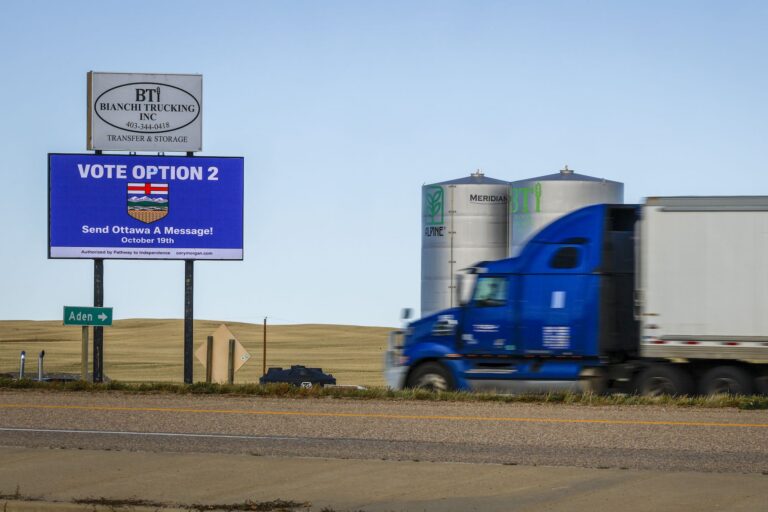
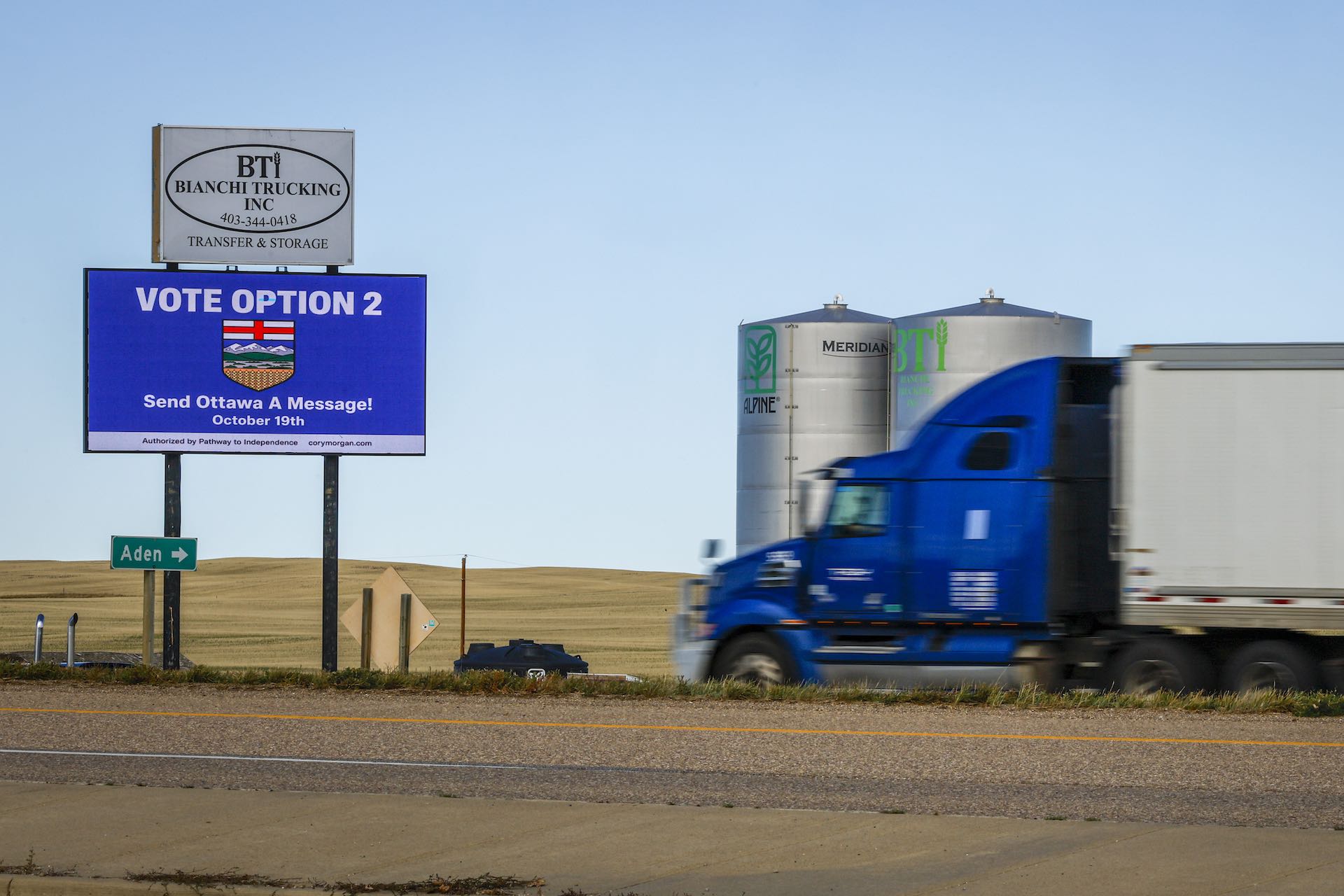
As Alberta’s long referendum campaign enters its final days, some are looking beyond Oct. 19, hoping that, if the polls are right, a decisive rejection of separation will allow political debate in the province to revert to something resembling past norms. Premier Danielle Smith is one of them. When asked in a recent CBC interview whether there would be a second vote on separation even if Albertans chose to remain, she replied: “Not as long as I’m premier.”
Syed’s unease, however, reflects a growing sense in the province that the political forces the campaign has set in motion will linger even if voters decisively reject separation—and that the fallout could carry economic consequences that affect Albertans for years to come.
Related Articles

An Abacus Data poll released Friday revealed profound pessimism about the prospects for political closure, even if a majority votes on Monday to remain: 73 per cent of Alberta voters surveyed said they expect the independence question to return in one form or another, and only 14 per cent reckoned the question will be settled for a generation or longer. (The survey of 1,021 eligible voters was conducted Oct. 7-13.)
More than a test of Albertans’ desire for independence, the referendum will see them vote on issues as fundamental as whether to abolish the Senate, and which level of government should have the power to appoint judges.
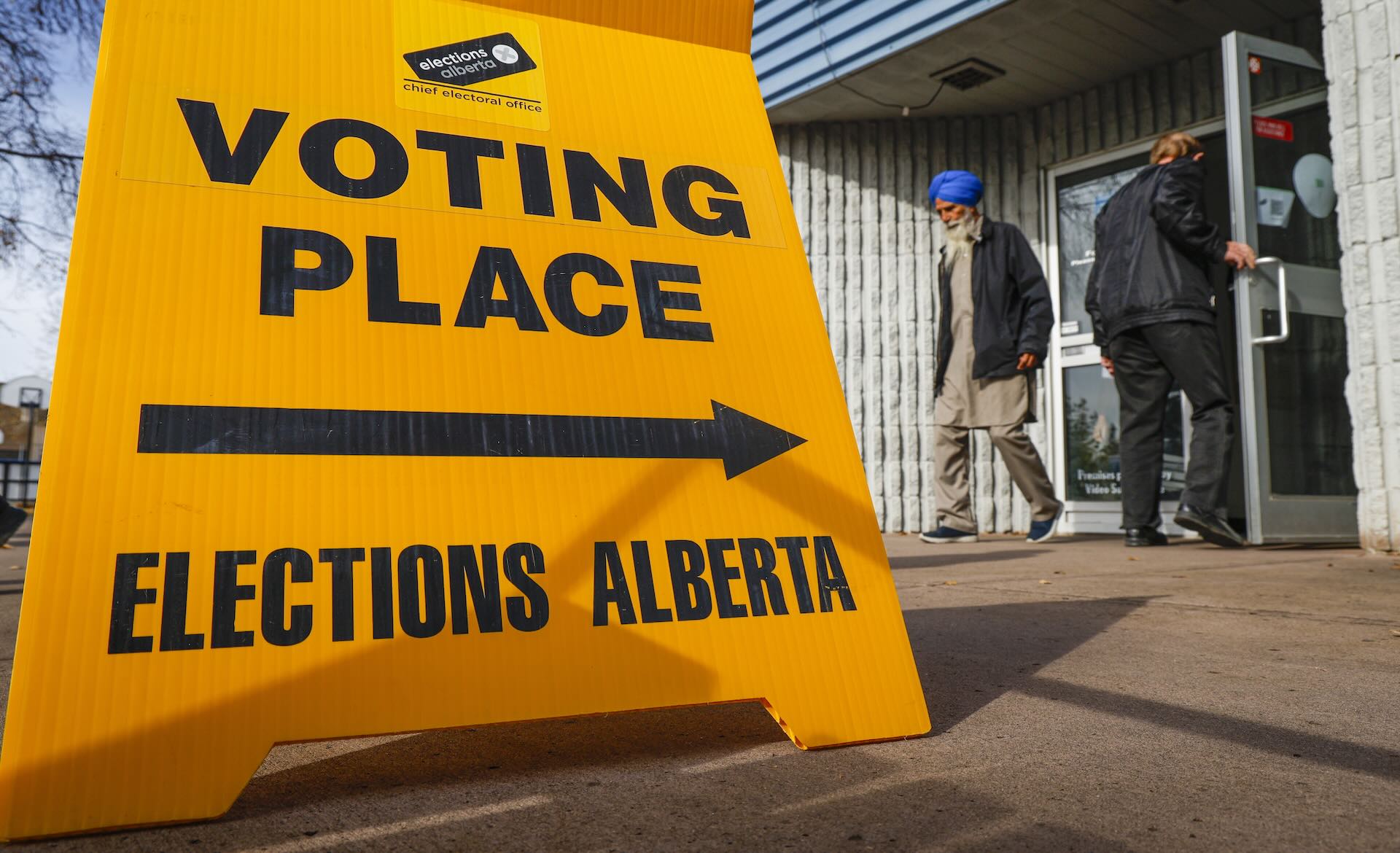
Concern ran especially high among newcomers who spoke this week to The Logic, saying those nine additional ballot questions—specifically, the five dealing directly with immigration—have already changed how they see the province and their place in it.
On a windy Tuesday in Calgary, as advance polls opened across the province, new immigrants attended free English language classes in a downtown mid-rise office block, or picked up their children from the daycare on the building’s main floor operated by the same non-profit settlement society.
While some said they weren’t up to speed on the vote, others admitted it’s been weighing on their minds. Two non-permanent residents who voiced concern to The Logic asked not to be identified out of fear that speaking publicly about immigration policy could jeopardize their work permits or residency applications. Neonor, a temporary foreign worker from the Philippines who declined to give her last name, said she came to Alberta last year to work as a health-care aide for the elderly. Now, she said, she’s worried about changes that could derail her hopes of staying in the province.
“We are a little bit afraid of our status here in Alberta,” she said. “I’m just hoping to have a job here, to have a good life here.”
It’s the economy
Immigrants aren’t the only ones feeling rattled. Despite key economic markers for the province flashing green—nation-leading job growth; an economy growing faster than the national average—recent surveys suggest businesses are increasingly anxious about the political uncertainty surrounding the province’s future. Some companies report that the referendum is already disrupting investment plans and making it harder to attract and retain workers, while the proposed immigration restrictions have raised concerns about the province’s ability to meet its future workforce needs.
The proportion of businesses saying the separation debate is affecting their operations has risen to 44 per cent, up from 28 per cent last January, according to an Alberta Chambers of Commerce survey of 630 businesses and organizations conducted between Sept. 28 and Oct. 2. The same survey found the referendum and talk of separation rank ahead of Canada-U.S. trade tensions, inflation and federal government policies as the leading source of business uncertainty.
Even a strong rejection of separation on Monday won’t dispel the uncertainty if separatist activists decide to turn their attention to unseating Smith for failing to support their cause, warned Monte Solberg, CEO of New West Public Affairs and a former federal Conservative cabinet minister. The premier has tried to walk a fine line on the issue of Alberta independence since taking office in 2022, granting sovereigntists their referendum while characterizing her own stance as favouring a “sovereign Alberta within a united Canada.”
“Based on what we’ve heard from a bunch of the separatist leaders, or some of them, we know that they intend to continue on and try and take the premier down,” said Solberg who launched a Vote to Stay campaign last May. “That’s what concerns me. I hope that they in the end respect the will of the majority.”
The Other Nine
Polling has consistently rated support for independence below 30 per cent, suggesting the ballot question proposing a binding provincial referendum on separation will fail. There is much less consensus on the other questions, and the provincial government hopes they will produce a mandate to demand sweeping changes from Ottawa and the other provinces.
The proposals come primarily from ideas gathered last year by Alberta Next, a public consultation panel convened by the government that held town halls across the province. Some appear designed to address the preoccupations of the United Conservative Party (UCP) political base. They include proposals for Alberta to restrict newcomers’ access to social services, and to take command of immigration from Ottawa—an idea that echoes Quebec’s control over the selection of its economic migrants. But they’re at odds with the priorities of many Alberta businesses.
In a recent survey of its members, the Calgary Chamber of Commerce found 52 per cent were opposed to giving Alberta greater control over immigration, and 51 per cent opposed restricting eligibility for provincially funded programs. Forty-seven per cent said the proposals in the referendum would negatively affect their businesses, compared to just 11 per cent who anticipated a positive impact.

Part of the problem is that provincial statistics point to significant labour shortages in Alberta by 2033—particularly in health care, as an aging population increases demand for workers. Just as those pressures mount, the referendum proposals could send negative signals to prospective newcomers, said Charles St-Arnaud, chief economist for Servus Credit Union. “Those questions kind of make you wonder, am I welcome to come and work in Alberta?” he said.
Canada is already significantly tightening its immigration policies, particularly for temporary foreign workers, international students and other non-permanent residents, St-Arnaud noted.
Applications from Alberta employers seeking permission to hire lower-wage foreign workers dropped 79 per cent over the six-month period ending in September 2025 compared with the same period a year earlier, according to federal employment statistics.
It’s not that Albertans have no reason to worry about immigration pressures, St-Arnaud said. The province has recently experienced record inflows of newcomers from both inside and outside Canada, which squeezed housing and public services. Its population jumped by 4.4 per cent in the year ending July 2024, the fastest pace since 1981.
Critics of the referendum proposals say those pressures are already easing, though, with Alberta’s population growth slowing to 1.5 per cent in the 12 months ended July 2026. “It looks like we’re trying to solve an issue of the past,” St-Arnaud said.
For some temporary residents, the referendum questions have raised doubts about whether Alberta is still a place they want to stay. One software engineer from India, who has lived in the province for two and a half years, and who asked not to be named, told The Logic he is considering returning home if Alberta introduces additional charges for newcomers to access health care and education.
“We are living here, we are paying taxes,” he said. “My wife is also working in a medical [field], she is a speech therapist. So we are contributing to the community.”
After Monday
In the waning days of the referendum campaign, some separatists have tacitly acknowledged they expect to lose the vote on independence. But in an echo of Réne Lévesque’s famous parting words after Quebec sovereigntists lost the 1980 referendum— “à la prochaine fois”— they insist a defeat at the ballot box next week won’t mean surrender.
“My plan on Tuesday is going to be exactly the same,” Politico quoted long-time conservative commentator Cory Morgan telling a sovereigntist gathering in Calgary this week. “Do whatever I have to do to make Alberta a fully independent country. That doesn’t change.”

The drama is set to play out within the already fractured UCP. Separatist leaders have reportedly encouraged supporters to buy UCP memberships, and are gearing up to challenge Smith’s leadership. Their first big move could come as early as the party’s annual general meeting Nov. 27-29, when they’ll have a chance to get a separatist-aligned board elected.
Smith and pro-remain campaigners like former UCP premier Jason Kenney are trying to persuade party members that a separatist revolt within the party could also jeopardize the province’s progress on projects like the proposed Pacific Link oil pipeline—while splintering the conservative vote and opening the door to Naheed Nenshi’s New Democrats.
Solberg has friends on both sides of the debate, but worries “hardcore separatists” will disregard the outcome of the vote and push to install a separatist sympathizer as leader.
“No business is going to take a chance on rolling the dice in that kind of an environment,” Solberg said. “At a time when we want to ‘build, baby, build,’ there would be a really good reason to not commit to building from private sector investment.”
St-Arnaud acknowledged that the referendum could beget an emboldened Alberta sovereigntist movement. But the more enduring cost of separatism, he said, may be the time and attention consumed by debates that distract Alberta and the rest of Canada from other pressing priorities. “It’s a risk,” he said, “that doesn’t go away.”