Listen Now
0:00
Weeks after Norwegian graphite upstart Vianode was featured in the Canadian Investment Summit deal book, chief financial officer Howard Ormonroyd boarded a flight to Toronto with a bigger task: raising the capital to fuel the company’s next phase of growth.
Ormonroyd’s late September visit was timed with news that the Oslo-based company had hired J.P. Morgan to explore funding options. It plans to have a partner or investor in place by the end of the year, and is open to arrangements including a full takeover. For Canada, the outcome of Vianode’s fundraising is a first test of whether the government can follow through on promises to matchmake investors and companies.
Talking Points
- Oslo-based graphite maker Vianode dispatched its chief financial officer to Canada in search of capital as J.P. Morgan kicked off the process to find a financial partner or launch a full takeover of the company
- The company’s $3.2 billion Canadian plant depends on whether investors and officials can deliver the type of backing that policy makers have promised
It may also determine how much “firepower” there is behind Vianode’s plan to employ up to 1,000 Canadian workers in a $3.2 billion plant in St. Thomas, Ont. The company was initially drawn to the city because it was near major manufacturing hubs with skilled labour, North America-focused executive Emanuele Tricca said when the plan was announced in 2025. Ormonroyd said potential partners identified by J.P. Morgan wouldn’t necessarily fund the Canadian project’s full construction, which has its own financing.
“How is the J.P. Morgan process going to help us realize the project? Well, it really depends on who comes in and what their strategic objectives are,” he said in an interview. “We have some people that are very interested in our technology for other geographies. We’ve got others who look at how mature we are in Canada and say, ‘Why would you build anywhere else?’”
Canada was the first stop on what could become a global deal-making tour for Ormonroyd, who has also fielded interest from the Middle East and India. The company found it to be “very useful to be in the [deal] book” after the Summit’s official list of investment opportunities had circulated for several weeks.
Related Articles

“There’s not people throwing money at us and saying, ‘Wow, you’re in the book. You must be investable,’” Ormonroyd said. “But we have had reverse inquiries due to that,” adding that he has met with a financial institution in Montreal. The real test, he said, would come “in the next month or two when we hold some of the people to some of the conversations that we’ve had.”
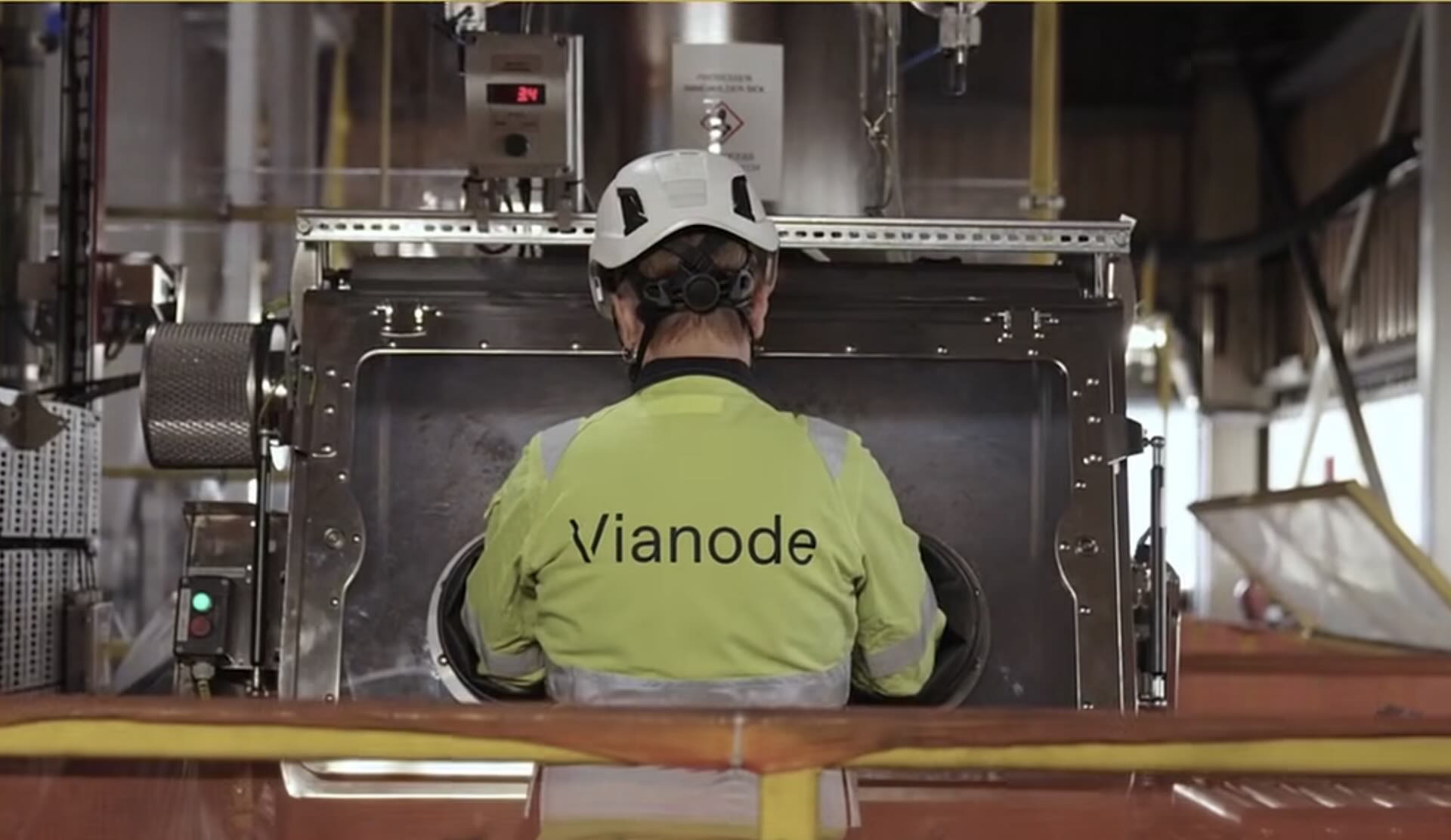
Vianode makes synthetic graphite, a key battery material found in electric vehicles, using a chemical process instead of mining it. It aims to produce nearly 150,000 tons of graphite annually in Ontario, with a multibillion-dollar agreement to supply General Motors, and a letter of interest from the German government. Ormonroyd said his visit suggested that Canada is “walking the talk” on major projects like Vianode’s. Still, the summit wasn’t a silver bullet. Investors like pension funds typically aren’t ready to write cheques until projects reach more advanced stages, he said.
Chris Berry, president of House Mountain Partners, works with the types of critical mineral investors that might partner with Vianode.
“You’ve got to raise a significant amount of capital, arguably measured in the hundreds of millions, if not billions, of dollars, depending upon the scale of the plant, just to get to the starting line,” Berry said.
Prime Minister Mark Carney has signalled that Canada is “serious about bringing more capital in,” Berry said, but companies may need more support, like government-funded mineral stockpiles bought at fixed prices.
The financing challenge is compounded by steep competition. Global graphite demand is expected to more than double between 2024 and 2040, but the International Energy Agency estimates that China will control 87 per cent of the world’s battery-grade graphite supply by 2030.
Vianode’s technology is more energy efficient than the typical supplier in China, and can also recover more materials for reuse, said Tony Alderson, research manager at Benchmark Mineral Intelligence. U.S. tariffs on Chinese graphite imports also help North American producers, Alderson said.
But the sector has suffered broader setbacks. Novonix, which was spun out of a Canadian lab and now makes synthetic graphite in Tennessee, has seen its stock fall 78 per cent this year to date. Vianode bet on North America over Europe in part because of Canada’s willingness to match U.S. Inflation Reduction Act incentives that have since been rolled back. Meanwhile, battery makers like LG have pivoted from making car batteries to grid-backup batteries in Canada amid slower-than-expected EV adoption.
Ormonroyd said an uptick in EV demand would help graphite companies expand into making smaller, more specialized batches for defence applications. If Canada doesn’t keep up its ambitions to build an EV supply chain, he warned, other supply chains could suffer, too.
“There’s a bit of a tipping point coming up for Canada and other big nations. They need to decide if you want to be driving Western vehicles around or Chinese ones,” Ormonroyd said.
“That’s a big question,” he said, adding that it’s time to see if Canada can “deliver.”