Skip to content

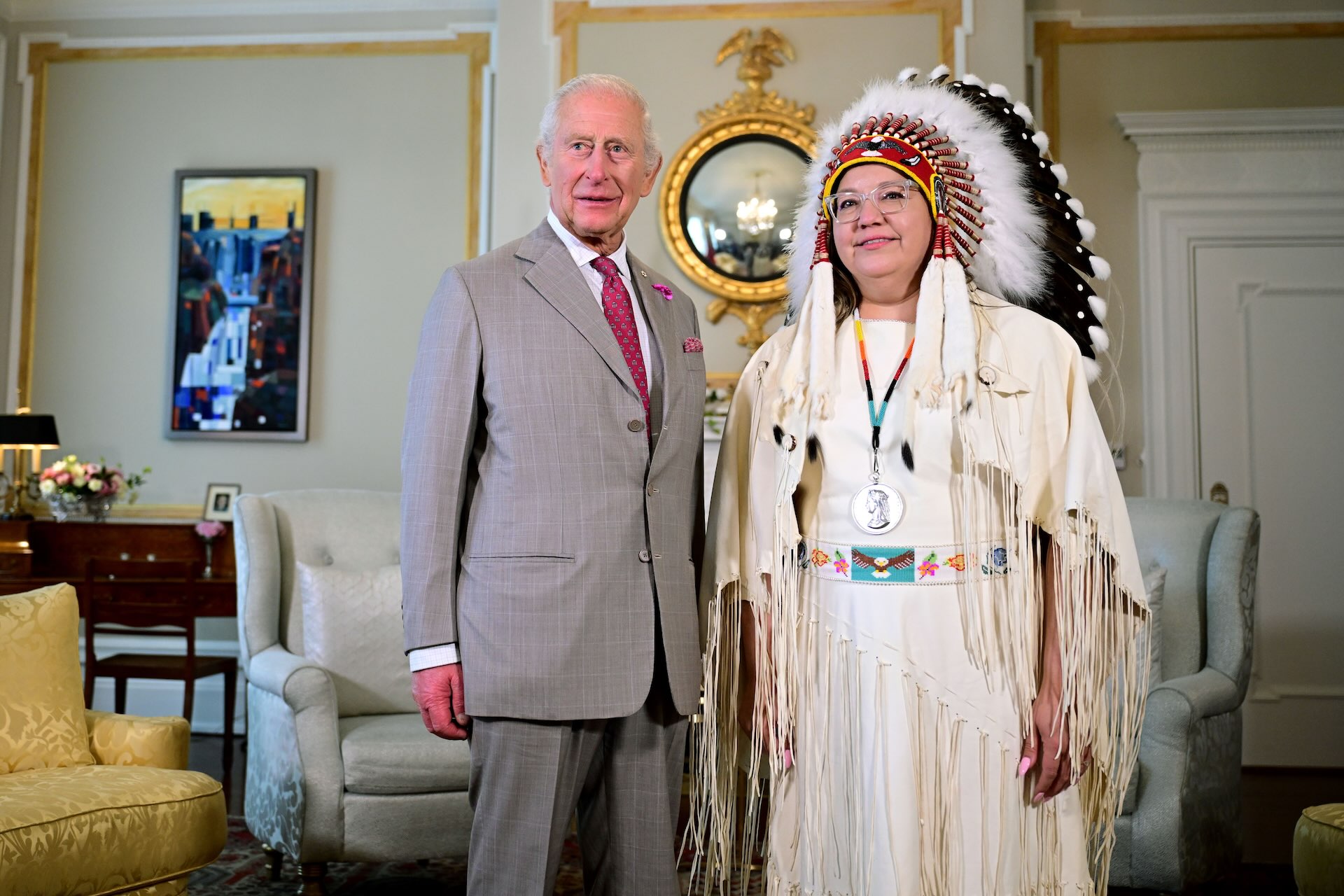 Woodhouse Nepinak met King Charles at Rideau Hall during the monarch's visit to Ottawa in May. Photo: Getty Images/Victoria Jones
 Rick Perkins lost his seat in the last election, but retained his influence over the Tories' economic agenda. Photo: The Canadian Press/Justin Tang
Special Report
The people to watch in Ottawa in 2026
In Mark Carney’s inner circle, the Ottawa outsiders wield a lot of power
From left: Pete Hoekstra, Dawn Farrell, Tim Hodgson, Cindy Woodhouse Nepinak, Ana Bailão. Photo: The Canadian Press; Getty Images
From left: Pete Hoekstra, Dawn Farrell, Tim Hodgson, Cindy Woodhouse Nepinak, Ana Bailão. Photo: The Canadian Press; Getty Images
OTTAWA — Now that the dust has settled on a tumultuous year in Canadian politics, Prime Minister Mark Carney could use a few months of calm—and some steady helping hands—to make progress on his ambitious economic agenda.
The budget tabled in November contains big promises aimed at making Canada’s economy less reliant on the United States by rapidly approving major infrastructure projects, adopting a Buy Canadian policy, diversifying trade and building thousands of new homes. Carney’s economic overhaul extends to government operations, too, with plans to cut spending and red tape.
Related Articles

He’s warned that most of his ambitions are long-term projects, and before he can get started in earnest, Carney will first need to get his budget through a minority Parliament. While he ended the year just one seat shy of a majority, opposition parties still have the power to frustrate Carney’s plans by amending and delaying legislation.
Meanwhile, U.S. President Donald Trump’s whims loom over Canada’s economic prospects as attention on the trade file shifts from U.S. tariffs hitting Canada’s steel, aluminum and auto industries to the review of Canada’s free trade agreement with the United States and Mexico.
Beyond the obvious ex officio figures such as Carney and Industry Minister Mélanie Joly, here’s a look at the Ottawa players—politicians, public servants, regulators and others—who will matter this year to Canadian business and the innovation economy.
The PM’s elite squad of agency heads
Dawn Farrell, Ana Bailão and Doug Guzman
Carney has promised to move “at speeds not seen in generations,” and one of his key tactics is creating new offices and agencies to bypass bureaucracies he doubts will yield the results he wants. Then he tabs people from outside the Ottawa bubble to lead them.
First was the Major Projects Office under former energy-sector executive Dawn Farrell, which is tasked with identifying projects of national economic importance, and shepherding them through complex regulatory processes where different arms of the federal government get in each other’s way.
Then came Build Canada Homes. Headed by former Toronto city councillor Ana Bailão, the agency is supposed to build housing itself, incentivize private developers to build more and promote new construction technologies—leading “the creation of an entirely new Canadian housing industry,” as Carney’s announcement put it.
Finally, on Oct. 2, the Liberals launched the Defence Investment Agency, the latest attempt to speed up Canada’s notoriously glacial military procurements—while using the billions of dollars at its disposal to build up both military suppliers and providers of dual-use products. The boss there is former banker Doug Guzman. The agency’s first big move was to select Canadian space-industry stalwarts MDA and Telesat for about $5 billion in future work making military communication satellites, without a traditional competition.
None of the three leaders has federal government experience and each is being paid as much as or more than Michael Sabia, who heads the federal public service. Still, creating these entities, hiring their leaders and giving them starting pushes is the easy part. In 2026, the question will be how quickly Farrell, Bailão and Guzman start delivering results.
Trump’s indelicate diplomat
Pete Hoekstra
The new U.S. envoy was just five minutes into his first public speech in Ottawa last May—a rambling list of what the Trump administration had done so far—when he joked about asking for a plane to travel around Canada like the luxury jet Qatar had gifted the president.
He then joked about stealing a line from Prime Minister Mark Carney about people being the owners of the country they live in—leaving out that Carney had said it when telling Trump in his meeting at the White House earlier that month that Canada was not for sale.
“I know that some of my friends in Canada don’t have the greatest sense of humour,” he said.
The hits have kept on coming.
He called it “an insult” that Canadians had banished some U.S. products from store shelves. He said it was Canada that had “pulled the rug out” from the North American trade pact by not granting a carve-out from its retaliatory tariffs on U.S. goods. He was “disappointed” by the Elbows Up campaign Trump triggered by questioning Canada’s sovereignty. And he reportedly tore a strip off Ontario’s trade representative at a bilateral business gala in Ottawa over Ontario Premier Doug Ford’s anti-tariff ads.
In March, Hoekstra told his Senate nomination hearing that he expected to be the “tip of the spear” during a tense time in the Canada-U.S. relationship, but also recognized its strength. “Canada is our most valuable trading partner, our largest source of foreign investment and our largest source of energy imports,” Hoekstra said. He also stated plainly, when asked, that Canada is a sovereign state.
Hoekstra might not be the one leading the U.S. side of trade negotiations with Canada, which have been on ice since late October, but his seemingly off-the-cuff remarks give an idea of how things are going at any given moment—even if no one knows where they will end up.
Chief rights defender
Cindy Woodhouse Nepinak
In September, the Assembly of First Nations national chief brought a message to Parliament Hill: The assembly’s 634 First Nations had “no confidence” in the government to keep its promises.
Carney had gotten off on a bad foot with First Nations when he tabled and passed legislation to fast-track major projects without first consulting with Indigenous rights holders, and the relationship has improved little since. Indigenous communities in Alberta and B.C. spoke out against the pipeline pact Carney signed with Alberta Premier Danielle Smith in November, noting the federal government failed to reach out ahead of time.
Getting First Nations on board will be crucial for Carney if he hopes to build projects at the pace he’s promised, but the communities are diverse, and their positions on projects vary. In her role as national chief of the advocacy organization representing First Nations across Canada, Woodhouse Nepinak is promising to stand firm.
She warned in September, for instance, that hundreds of billions of dollars worth of projects are forecast to be launched on Indigenous lands over the next decade, and none will move forward without First Nations consent.
Woodhouse Nepinak has long-standing ties to the Liberal party, having campaigned for both Paul Martin and Justin Trudeau, but she hasn’t pulled punches in the past. She spearheaded a $47.8-billion settlement with Ottawa to reform its First Nations Child and Family Services Program in 2024, though the deal was ultimately rejected by chiefs outside of Ontario.
The eye in the government AI storm
Dominic Rochon
The federal government’s chief information officer is more responsible than any other public servant for implementing Carney’s election promise to transform public services with new technology, automating more and hiring less.
The government tends to be cautious with new technology for a reason: Just about everything it does is mission-critical to somebody, and even one algorithm making decisions based on flawed training data could be a disaster.
Rochon seems eager for the task. He was a driving force behind the government’s internal AI strategy, launched a public registry of the government’s AI tools and has openly lamented the “chill” that a restrictions-first approach to AI use put on public servants’ experimentation. He’s argued for senior officials to burn the cruft out of bureaucratic process and to be accountable for the results.
Carney has pledged to cut the growth in the government’s annual operating spending from recent levels of nine per cent to two per cent. Much depends on whether Rochon can pull off the trick of moving fast without breaking anything.
Scooping up some of that military money
Defence-sector lobbyists
When there’s government business to be had, there’s work for lobbyists. In Canada’s defence budgets all of a sudden, there’s a lot of government business in the offing, and defence-related lobbying has nearly doubled this past year.
For instance: The feds are deciding whether to buy a dozen new submarines from South Korea’s Hanwha Ocean or Germany’s TKMS, with tens of billions of dollars at stake. The companies have hired some big guns to advocate for them.
Public records show Hanwha has hired Prospectus Associates to press its case—specifically through Rob Evershed and Bruce Hartley. Evershed’s resumé goes back to Brian Mulroney’s PMO; Hartley was a top aide to Jean Chrétien.
In TKMS’s corner is PAA Advisory, which has six lobbyists registered on the submarine file, including its managing partners Michael Von Herff and Éric Lamoureux.
Meanwhile, Lockheed Martin and Saab have had their own lobby squads working as the government decides whether to stick with Lockheed’s U.S.-made F-35 jets for Canada’s next fighter fleet or switch to Saab’s Gripens.
Those are just two high-profile, big-dollar procurements that are already well underway. Canada’s soon to be in the market for surveillance planes. It’s going to buy drones and anti-drone systems, artillery, ammunition and numerous land vehicles.
Macklem’s teaching assistant
Nicolas Vincent
If you dislike the way the Bank of Canada handled the aftermath of the COVID-19 crisis, blame Western University. Three of the five members of the committee that sets the benchmark interest rate were graduates, including governor Tiff Macklem. The other two went to different schools, but were of the same vintage of economist.
Macklem knew this was a problem when he was named governor in June 2020. It’s widely understood that the best decisions are made by a group of people with diverse backgrounds and perspectives. One of the things he did to correct the situation was create a new role—a part-time “external deputy governor” to ensure Macklem would get advice from someone with one foot firmly rooted outside the Bank of Canada. The successful candidate was an award-winning professor from HEC Montréal named Nicolas Vincent.
Vincent brought the perspective of the next generation of top-flight economists; he earned a PhD from Northwestern University in 2007, whereas Macklem graduated in the 1980s. The governor was clearly pleased with his new hire, as he extended Vincent’s original two-year term to four years, keeping him in Macklem’s inner circle until at least early 2027.
In a short time, Vincent has established himself as one of the central bank’s better communicators. His November speech on the productivity crisis brilliantly framed the problem as a “vicious circle” of compounding problems that have sapped the economy of most of its vigour. Notably, he identified regulation, competition and underinvestment in skills and training as levers that politicians could pull if they want to turn things around. That section of the speech stood out because central bankers typically stay in their lanes. “The bank can play a role in encouraging a national dialogue,” he said.
Every story needs a narrator. The productivity crisis might finally have one.
Carney’s wingman
Tim Hodgson
Though both Carney and Hodgson are political rookies, the prime minister has entrusted this long-time friend and colleague with some of his most ambitious policies.
Hodgson, a former banker, developed a reputation as a determined deal maker long before he arrived on Parliament Hill. In 1997, he reportedly flew from Goldman Sachs in New York to Saskatchewan to force a meeting with a potential client that had brushed him off, parking himself for days in the reception area of Wascana Energy, one of Canada’s largest oil and gas producers at the time. He got the meeting.
Hodgson worked with Carney at Goldman Sachs, and followed him as a special advisor when Carney took over as Bank of Canada governor. When Carney decided to run for office, he asked Hodgson to join him as an MP and, apparently, his right hand.
As natural resources minister, Hodgson is playing a pivotal role in handling the major projects file, including settling jurisdictional skirmishes with provinces and Indigenous communities. He’ll also be the main custodian of Carney’s delicate pipeline pact with Alberta. To keep that deal on track, Ottawa must negotiate separate agreements with the province on carbon pricing, methane emissions, a carbon capture project, and impact assessments by April 1.
Media reports suggest Carney also trusted Hodgson to broker a deal late last year that saw then-Conservative MP Michael Ma join the Liberals and pull the government within one seat of a majority. Asked about his part in the drama, Hodgson said simply: “Our prime minister is a former businessman and a pragmatist. I’m a former businessman and a pragmatist.”
Poilievre’s economic advisors
Greg McLean, Gaétan Malette and Rick Perkins
Last year, when he was still a Conservative MP and critic in Conservative Leader Pierre Poilievre’s “shadow cabinet,” Perkins laid out how a Conservative government planned to boost innovation: cut grants and reserve corporate support for firms that keep their IP in Canada.
The Conservatives lost the ensuing election, of course, and Perkins lost his seat. But that hasn’t stopped him shaping Conservative policy. Shortly after the loss, Poilievre tapped him to help lead an economic growth council for the party, tasked with finding ways to improve Canadians’ living standards and expand the economy.
It’s led by McLean, the MP for Calgary Centre; and co-chaired by Perkins and Malette, who represents a large swath of northern Ontario. They’re due to present their findings at the Conservative Convention in Calgary in January, when members will decide whether to hold on to Poilievre as leader.
If Poilievre keeps his job, expect the trio’s fingerprints to be all over the economic and innovation planks of his next platform.
The 40-member council includes Maverix Private Equity founder John Ruffolo, former Vancouver Board of Trade CEO and B.C. cabinet minister Iain Black, Noble CEO Jelena Djuric and Canadian Blockchain Consortium executive director Koleya Karringten.
McLean said the council’s initial recommendations will focus on “regulatory overload,” investor confidence and tax burdens on businesses and entrepreneurs, along with sovereignty concerns related to data protection, financial transactions, advanced manufacturing and national defence.
Honourable mentions
International Trade Minister Maninder Sidhu — The Canada-U.S. trade spotlight belongs to veteran minister Dominic LeBlanc, but this cabinet rookie is playing a key role in efforts to diversify Canada’s trade and double non-U.S. exports by 2035. Canada reached trade deals with Indonesia and Ecuador this year and signed an investment agreement with the United Arab Emirates. “We’re going to match that energy in the new year,” Sidhu told The Logic last month, not long after he launched public consultations on trade talks with India, the UAE, Thailand and the Mercosur market, which includes Argentina, Brazil, Paraguay and Uruguay.
The next NDP leader — Carney avoided a snap election in the first eight months of his minority mandate by betting opposition parties wanted to send Canadians back to the polls even less than he did. The strategy worked when his budget came to a vote. But the NDP are now holding a leadership race that should see a new face at the helm of the party in March. Unless Carney recruits another floor-crosser to achieve a majority, that leader could decide the timing of the next election.
Steve Outhouse — Speaking of elections, the Conservative campaign will be under new management even if Poilievre holds on to leadership of the party. Poilievre appointed Outhouse to replace Jenni Byrne as his national campaign manager in November. Outhouse is a political veteran and, though the next election will be his first national campaign, he’s led successful provincial campaigns in Alberta and Newfoundland and Labrador, as well as former New Brunswick premier Blaine Higgs’ failed re-election campaign in 2024. Outhouse is respected in the conservative movement, including in its more socially conservative factions, and he’s likely to influence the Conservatives’ political strategy long before an election is called.



Loading...
Thanks for sharing!
You have shared 5 articles this month and reached the maximum amount of shares available.
CloseThis account has reached its share limit.
If you would like to purchase a sharing license please contact The Logic support at [email protected].
CloseGift the full article!
You have gifted 0 article(s) this month and have 5 remaining.
Recipients will be able to read the full text of the article after submitting their email address. They will not have access to other articles or subscriber benefits.
Photo: The Canadian Press; Getty Images
Woodhouse Nepinak met King Charles at Rideau Hall during the monarch's visit to Ottawa in May.
Rick Perkins lost his seat in the last election, but retained his influence over the Tories' economic agenda.
Most Popular This Week

In-depth, agenda-setting reporting
Great journalism delivered straight to your inbox.
Special Report
Canada fires back at Trump with tariffs on nearly $28B worth of U.S. goods
Briefing
Descartes buys freight software firm Tai for US$100M
Big businesses see sovereign AI as an edge—if they know what it is
Scotiabank beats profit estimates as capital markets surge
Best business newsletter in Canada
Get up to speed in minutes with insights and analysis on the most important stories of the day, every weekday.
Exclusive events
See the bigger picture with reporters and industry experts in subscriber-exclusive events.
Membership in The Logic Council
Membership provides access to our popular Slack channel, participation in subscriber surveys and invitations to exclusive events with our journalists and special guests.