Listen Now
0:00
TORONTO — Xanadu is opening a new factory to make the hardware for its quantum computers, with $195 million in new funding from the federal government.
The firm plans to overhaul part of a former Campbell Soup plant in Toronto to manufacture the photonic components for its system. It’s part of Xanadu’s plan to refine and mass-produce quantum computers to combine into a new US$1-billion data centre in the city by 2029.
Related Articles

Workers at the 158,000 square-foot facility will prepare the firm’s light-based chips, including testing and packaging, the specialized process of adding connectors and housing to processors. It will be a scaled up version of the $10-million facility Xanadu opened at its Toronto headquarters last June. At the new factory, workers will also assemble the servers and racks that form its machines. The firm expects to spend $893 million under the terms of its federal deal on R&D and the buildout of the plant, which will employ 275 people.
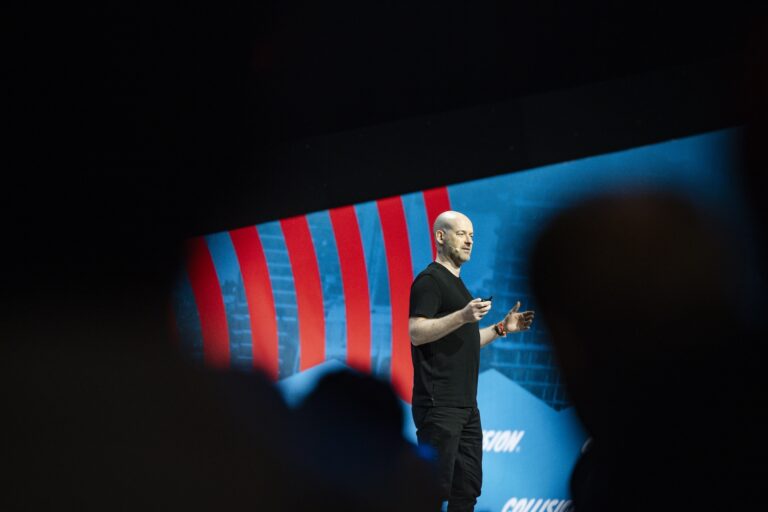
Xanadu’s new facility is “rare in terms of the quantum space,” CEO Christian Weedbrook said in an interview. “We’re up there as one of the leaders for high-volume manufacturing.” The firm is betting that having large-scale production capacity ready to go will give it an edge in the nascent market for these super-fast machines.
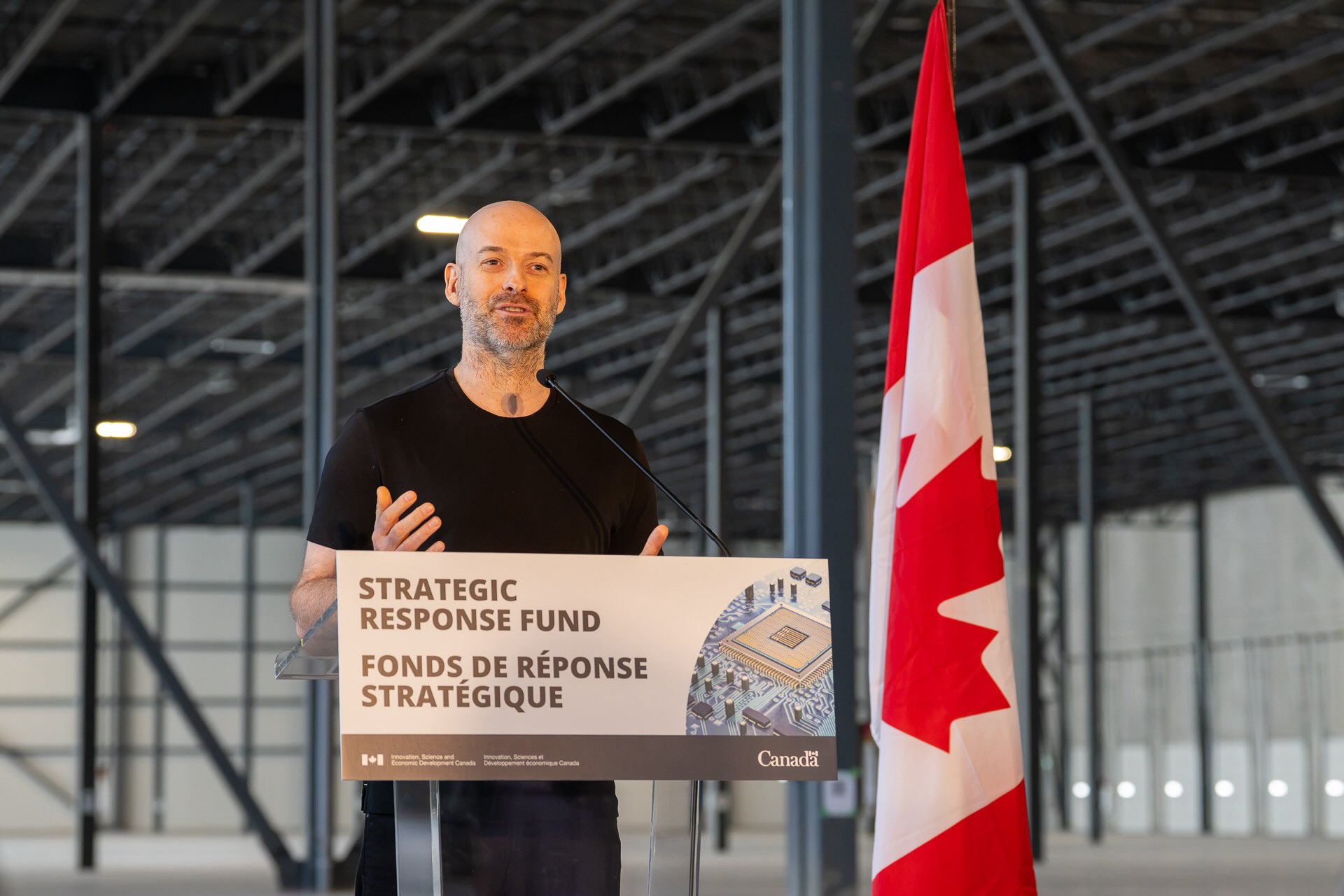
AI Minister Evan Solomon said the project and its federal funding ensure “the specialised infrastructure and the IP to manufacture and commercialize quantum tech will be here in Canada.”
Ottawa’s backing comes from the Strategic Response Fund (SRF). Xanadu is also part of the Canadian Quantum Champions Program, launched last December, which gave four of the sector’s leading firms an initial $23 million each to keep them in the country. The company was previously awarded $40 million from the SRF’s predecessor program in January 2023 to develop the technical building blocks of its system.
Xanadu is also in demand across the border. It’s one of three Canadian quantum computing companies enrolled in a U.S. Defense Advanced Research Projects Agency initiative that could give developers up to US$316 million each if they prove their machines can solve real-world commercial and industrial problems at a reasonable cost by 2033. U.S. President Donald Trump has ordered federal departments to help speed up the technology’s development, and encourage its manufacture in the U.S.
“Around the world, people are looking at companies like Xanadu—they want them,” Solomon said, citing the DARPA program and governments in Asia and Europe that are also making quantum pushes. “We are giving them the investment to make sure that they stay [and] grow here.”
To reach true commercial scale, Xanadu’s data centre will need to produce up to 500 logical qubits, the base unit of quantum computing. At that size, its system will be able to detect and correct errors in the flow of information through the hardware. The firm will need several hundred server racks for its data centre, which will power its cloud service, plus more to sell to customers like government departments and research labs.
Xanadu announced plans for a new “qubit factory” in March, shortly before it went public via a merger with a blank-cheque company. At the time, Weedbrook said the firm was in negotiations for $390 million in funding split between the federal and Ontario governments.
On Friday, Xanadu revealed the location of the facility, which it is calling Inception, and announced it had reached a deal for the federal portion of the money, which is repayable. Weedbrook said it’s still in negotiations for provincial funding.
The new factory is in the suburb of Etobicoke, in a building where Campbell opened its first Canadian plant in 1931. In January 2018, the food firm announced plans to close the facility and shift soup and broth production to the U.S. Developer QuadReal Property later restored the original facade, and converted the building into a warehouse.
Xanadu expects to start receiving some of the manufacturing machinery for the facility’s clean rooms by the end of this year, and hopes to begin kitting out the cavernous space in the first quarter of 2027. “This is a bare facility—it’s still impressive, but we have to now build it out,” Weedbrook said.