TORONTO — All three Canadian firms in a key U.S. government program to prove out the groundbreaking potential of quantum computing have advanced to the next stage, putting them closer to significant public funding and lucrative contracts south of the border.
Skip to content


News
Canadian quantum firms all make the first cut in U.S. defence program
Nord Quantique, Photonic and Xanadu are through to the next phase of a major U.S. initiative to test the capabilities of quantum computing that could lead to hundreds of millions of dollars in funding
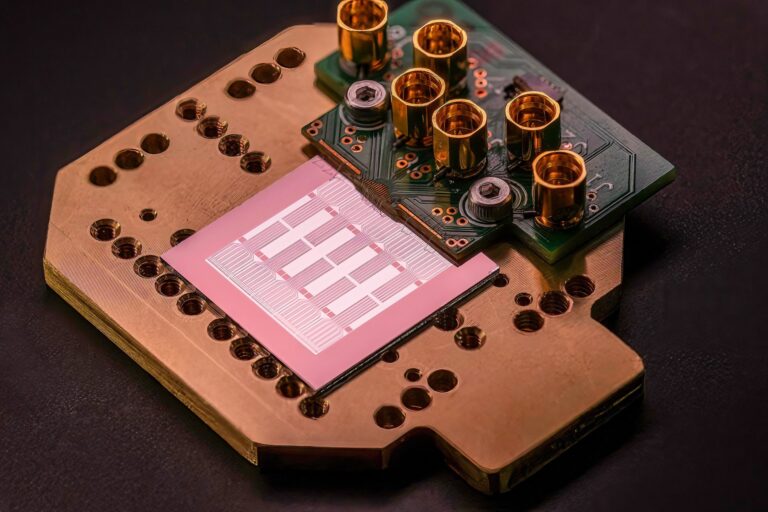
Xanadu’s Aurora system. The Toronto-based quantum computing firm is one of three in Canada to have advanced to the next round of a potentially lucrative U.S. defence program. Photo: Xanadu/Handout
TORONTO — All three Canadian firms in a key U.S. government program to prove out the groundbreaking potential of quantum computing have advanced to the next stage, putting them closer to significant public funding and lucrative contracts south of the border.
The U.S. Defense Advanced Research Projects Agency (DARPA) on Wednesday announced it had chosen 11 of the 18 original firms in its Quantum Benchmarking Initiative for Stage B of the scheme. The group includes Sherbrooke, Que.-based Nord Quantique, Coquitlam, B.C.-based Photonic and Toronto-based Xanadu.
Talking Points
- Sherbrooke, Que.-based Nord Quantique, Coquitlam, B.C.-based Photonic and Toronto-based Xanadu have all made it to the second phase of a U.S. defence program designed to test the capabilities of their approaches to quantum computing
- The U.S. Defense Advanced Research Projects Agency (DARPA) promoted 11 of the 18 original firms in its Quantum Benchmarking Initiative to Stage B
Firms enrolled in the program must show that their chosen approach to quantum computing can solve real-world commercial and industrial problems at a reasonable cost by 2033. Companies that make it through all three stages can earn up to US$316 million in direct funding from DARPA. Other U.S. government departments are also monitoring the program, with a view to buying from firms that prove their technology.
Getting through the first round “means that we’re a contender,” said Julien Camirand Lemyre, CEO of Nord Quantique. The DARPA testing team gave firms a very thorough technical lookover. Investors can bank on the agency’s diligence, which should help Nord Quantique as it sets out to raise a new funding round, he said.
Related Articles

Xanadu CEO Christian Weedbrook said reaching the next phase is “a stamp of approval” for his firm. On Monday, Xanadu also announced it plans to go public in a deal valuing it at US$3.6 billion, with US$275 million in private financing from AMD, BMO and CIBC.
In Stage A of the DARPA program, firms showed how their chosen quantum computing technology could work. Xanadu prepared a blueprint for a large-scale machine using its light-based approach. That forced internal teams that had been working on different parts of the technology to collaborate more, Weedbrook said. “It’s getting harder to believe that we can’t do this.”
DARPA conducted extensive diligence on participating firms, including site visits and weekly technical meetings, said Stephanie Simmons, Photonic’s chief quantum officer. “No part of the system was considered too insignificant.”
In Stage B, firms must lay out the practical steps they’ll take to advance their technology and build their machines. “It’s about translating theory into implementation,” said Simmons, whose technology focuses on the property of quantum entanglement between different particles.
Nord Quantique has designed its hardware to make error-free calculations at a smaller scale than competitors. Camirand Lemyre said the 50-person firm plans to double its workforce over the next year.
Canadian policymakers and industry executives have expressed concern that the U.S. could use the DARPA program to make quantum computing firms move across the border. Companies can also get funding and access to facilities from Illinois, Maryland and New Mexico if they set up shop in those states.
Last November, Canada’s Quantum Advisory Council recommended that the federal government commit almost $2 billion to support researchers and companies in the sector. That included a $1-billion program for firms enrolled in the DARPA program, which would provide matching funding as a “strong counterweight” to the U.S. scheme.
Tuesday’s federal budget pledged $334.3 million in new quantum funding, including $111.2 million to “anchor the Canadian quantum industry in Canada.” That’s enough to match the US$16 million that each of the three Canadian firms in the DARPA program could receive during its first two stages.
The new federal money is a “meaningful step” by Ottawa, said Lisa Lambert, CEO of Quantum Industry Canada, adding that it recognizes the technology as critical to the country’s economy and defence. Still, she said, “the overall scale appears well below what’s needed to compete with global peers.” The U.K., for example, has allocated $8.2 billion to its quantum sector, France has put up $3.5 billion, and Japan $2.5 billion, according to the advisory council’s analysis.
AI Minister Evan Solomon has signalled that the Liberal government is planning to do more. “We will be launching a big quantum program soon,” he told CityNews on Wednesday, adding that the technology will factor into the Liberal government’s plan to spend “billions of dollars in national defence.” Tuesday’s budget also promised $6.6 billion for a new defence industrial strategy, much of it unallocated, though its design includes supporting tech sectors including quantum and AI.
Rising government and investor interest in quantum computing has led to some consolidation in the industry. In September of last year, U.S. firm IonQ acquired Oxford Ionics, a U.K. startup enrolled in the DARPA program. “There are a lot of paths that show great initial promise but start to encounter challenges as the demands of scale increase,” Simmons said, so some firms will choose to sell or team up.
Potential investors are encouraged to see governments committing so much money to advance quantum computing, according to Camirand Lemyre. “This is just a good signal for the whole industry.”



Loading...
Thanks for sharing!
You have shared 5 articles this month and reached the maximum amount of shares available.
CloseThis account has reached its share limit.
If you would like to purchase a sharing license please contact The Logic support at [email protected].
CloseGift the full article!
You have gifted 0 article(s) this month and have 5 remaining.
Recipients will be able to read the full text of the article after submitting their email address. They will not have access to other articles or subscriber benefits.
Photo: Xanadu/Handout
Most Popular This Week




In-depth, agenda-setting reporting
Great journalism delivered straight to your inbox.
Commentary
Carmichael: Canadian ignorance about India is a strategic weakness
Briefing
Aritzia shares pop after earnings rise 204%
First Nation in Alberta goes to court over fast-tracked oil pipeline
Chinese EV maker Geely Auto Group to launch in Canadian market in 2027
Best business newsletter in Canada
Get up to speed in minutes with insights and analysis on the most important stories of the day, every weekday.
Exclusive events
See the bigger picture with reporters and industry experts in subscriber-exclusive events.
Membership in The Logic Council
Membership provides access to our popular Slack channel, participation in subscriber surveys and invitations to exclusive events with our journalists and special guests.





