Crypto Quarterly is The Logic’s recurring series assessing the overall state of the crypto market, with a focus on Bitcoin, Ethereum, Flow and Cosmos’s Atom, four cryptocurrencies with strong ties to Canada.
In the first quarter of the year, the price of digital assets and the stock performance of public crypto companies did something unusual: the two diverged.
The price of both are typically closely linked. But while digital assets continued their rally, the share prices of many major Canadian stock exchange-listed crypto companies struggled.
Talking Points
- Digital assets continued rallying in the first quarter of 2024, but the share prices of many major Canadian stock exchange-listed crypto companies struggled
- As the Bitcoin halving approaches and investors gain more options for exposure to crypto, companies in the sector need to prove the value of their operating businesses
Bitcoin miners Hut 8, Hive and Bitfarms all ended the quarter down, with Hive the biggest loser, declining 23 per cent since the start of the year. Shares of Toronto-based crypto trading platform operator WonderFi, which is facing a proxy fight by investors Mogo and Kaos Capital who want to overhaul its board to address its stock underperformance compared to peers, declined about six per cent over the same period.
Buying shares in public crypto companies was once the only way for investors to gain exposure to digital assets through traditional financial channels, without having to learn how to buy and hold tokens directly or trust exchanges with a history of collapsing and committing fraud. With the launch of Bitcoin ETFs, that’s no longer the case—prompting investors to pay more attention to crypto firms’ actual businesses and agitating for them to do more than just hold crypto on their balance sheets.
Like WonderFi, Toronto-based crypto firm Ether Capital has also faced recent pressure from its investors over its stock price, which has been persistently lower than the value of crypto it holds in its treasury. Hut 8 was the target of a January report by short seller J Capital Research, which alleged the company overpaid for a merger with Miami-based US Bitcoin. Asher Genoot replaced Jaime Leverton as CEO shortly after the report’s release.
In an interview, Genoot said the CEO shakeup happened because the board wanted a different approach from management and it was not related to the short report. He denied that US Bitcoin was in financial trouble: “The company was healthy, we were generating cash,” he said.
In general, investors are expecting more from public crypto companies than they used to, Genoot said.
“Investors historically bought Bitcoin mining companies for exposure to Bitcoin. With ETFs, you don’t really need that,” said Genoot. “You can get exposure to Bitcoin without any of the company risks.”
The upcoming Bitcoin halving event, which is currently expected to take place on April 16, is also putting pressure on mining stocks. The rewards for successfully mining a new Bitcoin block are cut in half every four years, increasing the digital asset’s scarcity.
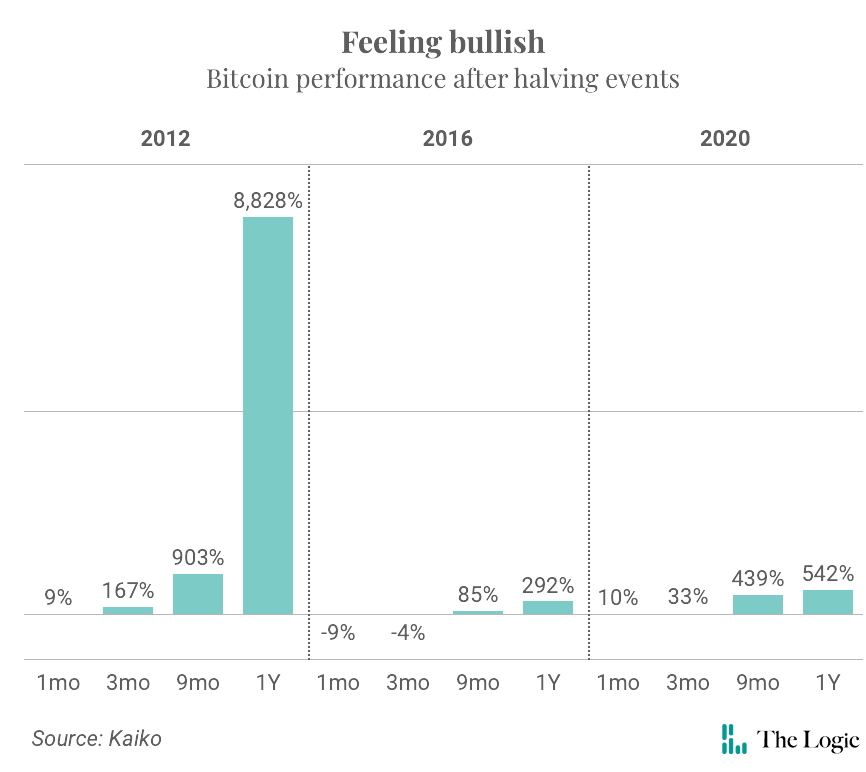
Historically, Bitcoin has enjoyed a significant bull run in the 12 months following halving events. This year, however, the price of Bitcoin surpassed its all-time high before the event, leading analysts to wonder whether the halving is already priced in.
BlackRock has also applied to launch an Ether ETF. While the U.S. Securities and Exchange Commission has delayed a decision on the application, CEO Larry Fink described BlackRock’s move as part of a series of “stepping stones towards tokenization” of all financial assets on CNBC in January. The value of tokenized real-world assets increased from US$74.94 billion on Jan. 1 to US$90.28 billion on April 3, according to data from crypto firm 21.co.
Montreal-based Bitcoin company Blockstream is hoping it can capture some of that tokenization market.The company has previously launched a token that grants exposure to Bitcoin mining.
Blockstream hosted a webinar in February alongside representatives from the Taiwan-based crypto-trading platform Bitfinex, touting its Bitcoin-based Liquid network as a venue for issuing tokenized bonds and digital securities. On Thursday, Bitfinex announced plans to launch a token representing a debt issuance to fund the construction of a Hilton-branded hotel complex at the El Salvador International Airport, which will trade on Liquid through Bitfinex’s El Salvador platform.
Meanwhile, Cayman Islands-based Ether.fi, whose CEO is Top Hat co-founder and former chief executive Mike Silagadze, has experienced massive success in the first quarter. The company has become the leading protocol for liquid restaking, a hot decentralized finance trend in which staked Ether is repurposed to contribute to the security of other crypto networks.
Ether.fi also raised a US$23-million Series A in late February, the first large DeFi deal since staking protocol EigenLayer raised US$50 million the previous year. Silagadze said venture capital interest is returning to the crypto sector.
“What we’re seeing now is the reemergence of the Series A, and maybe even Series B markets,” he said. Venture capital firms that were waiting out the bear market are “coming out of the woodwork,” he said.
Silagadze agreed with Hut 8’s Genoot that crypto companies need to do more to prove their value this cycle.
“We need to actually create value. There needs to be actual products to do something. Not just people speculating on coins,” he said. “Otherwise, the whole thing is just people printing casino chips and taking a rake.”