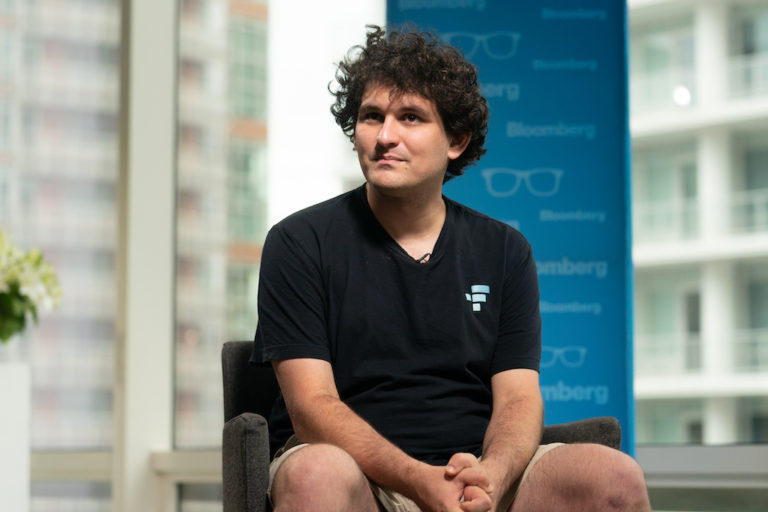
Mike Silagadze made his name in education technology, but over the past year, he’s been the one learning a lesson: if you want to be safe and boring, crypto is the wrong sector.
In 2021, Silagadze stepped down as chief executive of the Canadian interactive education software company Top Hat and sold most of his equity in the company. He moved from Toronto to the Cayman Islands and alongside former Top Hat employee and Checkout 51 founder Andrew McGrath, founded Gadze Finance, a hedge fund that launched with US$25 million under management.
Talking Points
- Former Top Hat CEO Mike Silagadze learned a counterintuitive lesson after losing millions of dollars in the November 2022 collapse of crypto giant FTX: if you’re going to run a crypto startup, you might as well embrace the sector’s wild side
- Silagadze has wound down the U.S. dollar arm of the DeFi hedge fund he launched after leaving Top Hat in 2021 and has pivoted to a liquid-staking protocol, called Ether.fi, and a related NFT project, Ether.fan
The fund was aimed at investors looking for a low-risk way to access decentralized finance, or DeFi, an umbrella term for a then-booming form of blockchain-powered software that aims to replicate and automate elements of the financial system—such as borrowing, lending and trading various cryptocurrencies for each other—without middlemen charging high fees and making rules.
As part of Silagadze’s plan to build a safe, boring DeFi fund, he chose a platform that seemed, at the time, the safest and most boring: FTX. When the crypto giant collapsed in November 2022, it took with it US$5.4 million of Gadze Finance’s then roughly US$40 million in assets, which it had been holding on the platform to short cryptocurrencies as a hedging strategy.
Silagadze could have decided he was done with crypto. Instead, he decided he was done with playing it safe.
“Anything you do in crypto has a pretty serious high risk to it,” he said in an interview with The Logic. “We wanted to do something completely wild and different.”
The pivot to wild and different comes in the form of digital collectible fantasy characters, with a twist.
Siligadze now operates Ether.fi, a protocol that offers liquid staking, a practice that’s been one of the biggest DeFi trends in 2023. It provides people who stake, or lock up in exchange for rewards, their crypto assets with a receipt token.
Related project Ether.fan makes that receipt token into a fantasy character NFT, with art depicting characters wearing various hats, holding items like magic staffs and axes, and with colour borders indicating how long the original token has been staked. The NFT will always represent the value of the staked token and its rewards, but lucky collectors end up with character art depicting a rare set of traits that could confer additional value.
The Logic talked to Silagadze about his crypto origin story, his tussle with NFT marketplace OpenSea and how he ended up concluding boring doesn’t pay.
This interview has been edited and condensed for length and clarity.
How did you get interested in crypto?
Like a lot of people, I was pretty horrified about what was happening with all the bailouts and all the money printing that was happening after the great financial crisis. It was pretty clear that that was only going to go in one direction. So that’s what got me excited about Bitcoin, initially.
But then for the next five, 10 years, all crypto was—and really, to a large extent, mostly what it is today—was just gambling. There wasn’t really a lot of value creation. As a result, I never went into the space full time.
“I just don’t think there’s such a thing in crypto, there’s no such thing as low risk.”
Part of the motivation for selling [Top Hat] was the fact that products actually started to emerge in the crypto space. With the advent of the DeFi summer, for the first time, it wasn’t just gamble on this token, or that token. It was: here’s a piece of software that lets you do something that you couldn’t do before and interact with. That got me very excited. I couldn’t imagine doing anything more important with my life than be part of that transformation to bring about a lot more economic freedom and self-determination for people.
Why did you pivot Gadze Finance from a DeFi hedge fund to Ether.fi, your liquid staking protocol?
When we sold [Top Hat], we just started a hedge fund, because that was honestly the easiest way to get started. We had two separate funds. One was an Ethereum staking fund, and that’s what Ether.fi emerged out of. And the other was a U.S. dollar fund.
We realized [the U.S. dollar fund] wasn’t the right product, because the purpose was to provide low-risk return to investors, to be market neutral. And I just don’t think there’s such a thing in crypto, there’s no such thing as low risk. So we fundamentally realized, OK, this product just shouldn’t exist. And so we shut that down and put all of our energy into Ether.fi.
And why launch Ether.fan?
We wanted to do something different. There are a lot of liquid-staking tokens that are doing basically the same thing, maybe with a slight variation.
“I can complain a lot about OpenSea. In the end, it probably doesn’t matter too much.”
About $24 million has been staked through Ether.fan. Last I checked, around 5,000 of these NFTs have been minted and lots of people were upgrading them and participating. By any measure, it’s gone really well.
Shortly after launching on July 11, the NFT marketplace OpenSea delisted Ether.fan, reportedly telling you it doesn’t allow NFT collections that “carry out any financial activities subject to registration or licensing.” What happened there?
I can complain a lot about OpenSea. In the end, it probably doesn’t matter too much. It’s a morally weird stance to take. Even the U.S. Securities and Exchange Commission hasn’t made a clear statement that staked Ether is a security. But they chose to take a very risk-averse path that in the end, I think is worse for their users. We moved to Rarible, which is another marketplace.
[OpenSea declined to comment on the record on the matter.]
Given all the high-profile hacks and problems with DeFi lately, do you ever think about quitting and going back to something more boring and predictable?
The short answer is no, I’m not tempted to run away. I hope we’re nearing [a point] where there are a few foundational tools and protocols that are battle-tested and trusted that people can rely on, where there’s this foundational layer people can build on. But there’s still so much left to be built. So I’m still excited about where this space is going.