Listen Now
0:00
At vineyards in B.C.’s Okanagan Valley, in chemist shops in Cardiff and Cork, and at worker rallies in Indian cities like Pune, New Delhi and Mumbai, people are asking the same question: What is Prem Watsa’s plan?
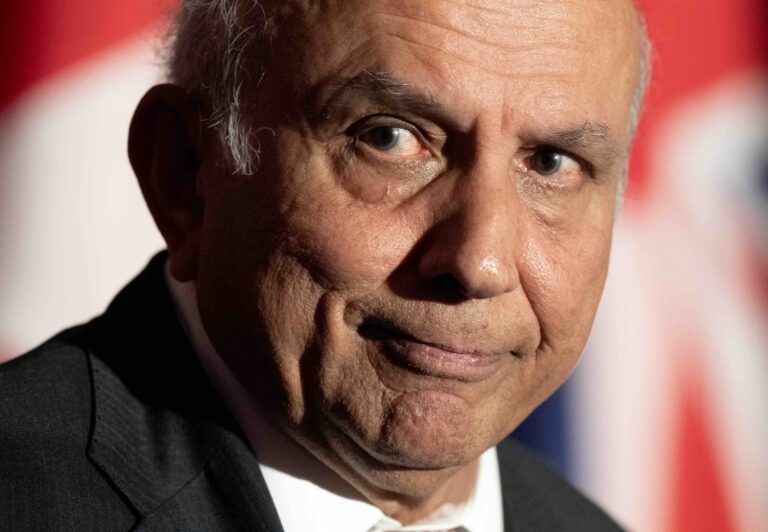
The Indian-Canadian billionaire and CEO of Toronto-based Fairfax Financial has long been described as reclusive. In recent weeks, however, he has stepped onto the global stage with a series of splashy deals: investing US$2.3 billion to co-own the U.K.’s biggest health retailer, Boots, and a week later, announcing a $7.9-billion majority stake in IDBI Bank, in what is set to be the largest foreign-direct investment in India’s financial sector.
Talking Points
- Canadian insurer Fairfax Financial and its billionaire CEO Prem Watsa are vying for major global retail and banking assets, including a US$2.3-billion investment in U.K. retailer Boots and a $7.9-billion majority stake in India’s IDBI Bank
- A hot financial run has gradually put the Toronto company in charge of quintessential Canadian brands, setting it up to make a “once in a lifetime” deal that could be its biggest challenge yet
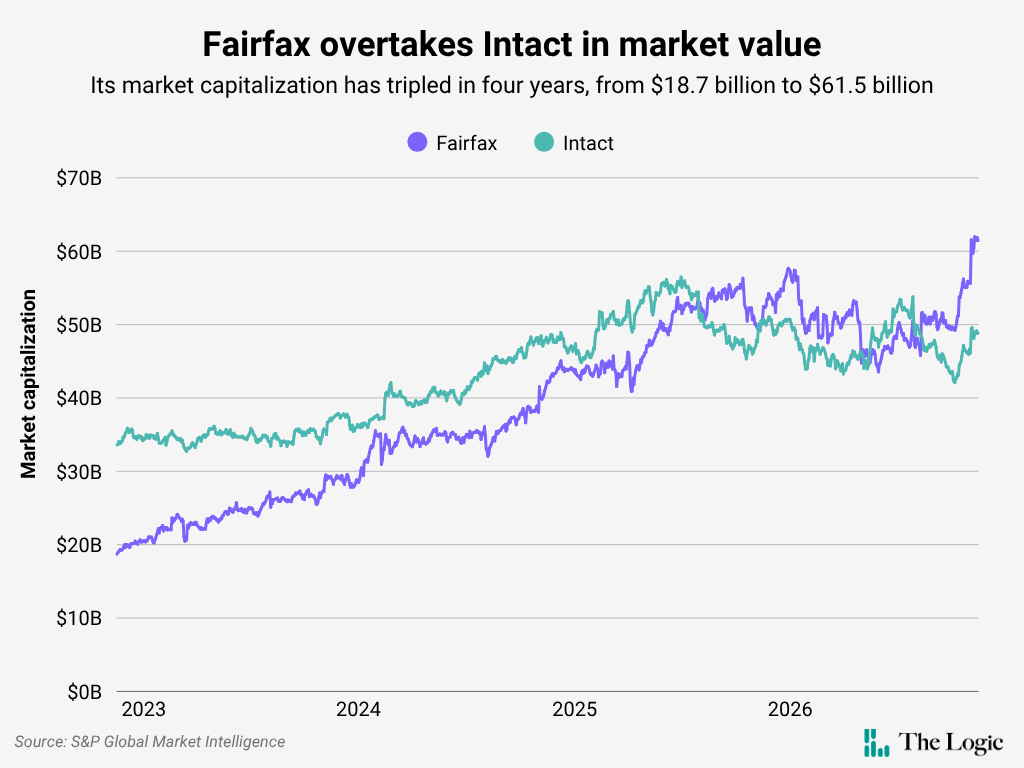
Analysts say the deals build on the strategy that has transformed Fairfax from a sleepy insurer into a corporate giant. After four decades in business, the company was added to the S&P/TSX 60 last December. Within months, it had surpassed Intact—a rival that was nearly twice its size just four years ago—in market value. Meanwhile, through its eclectic network of subsidiaries, Canadians have already started to eat, drink and sleep the Fairfax way, whether they know it or not.
The strategy is rooted in Watsa’s distinctive approach to investing: taking substantial, long-term stakes in undervalued companies while leaving their management teams room to operate relatively independently, according to Victor Adesanya, senior vice-president for global insurance and pension ratings at Morningstar DBRS.
Insurance remains Fairfax’s core business, bringing in more than three times as much as all its other operating businesses combined in the third quarter. Watsa began building an investment portfolio to generate gains for shareholders partly because, in the early years, turning around insurance operations took a “long time” to produce consistent profits.
Related Articles


Unlike most serial acquirers, Fairfax doesn’t seek synergies by combining companies, preferring a “no disruption” approach. Instead, Watsa is a champion of value investing, which he has described as focusing on the seasons while the rest of the market forecasts the daily weather.
His latest and most ambitious bet is in India. On a conference call announcing the IDBI deal, 76-year-old Watsa called it “a once-in-a-lifetime opportunity.” Fifty-four years after his father pushed him to leave India citing a lack of opportunities, and twelve years after he founded Fairfax India, Watsa now sees potential for a two-decade period of growth for the country, with aims to create a financial giant that “would transform the lives of average Indian citizens.”
The size and scope of deals like IDBI are a “departure” from its traditional insurance focus, said Stephen Boland, a managing director at Raymond James focused on financial services equity research, who estimates that IDBI could be one of its biggest investments ever.
“We’re curious about how they’re going to fund this deal,” said Boland in an interview. “This is a big deal, and it does change, I think, the outlook of the business a little bit.”
Fairfax long had a preference to avoid investment bankers, writes biographer David Thomas in The Fairfax Way, even as it manages the massive IDBI stake and a quickly growing portfolio of other businesses. The company did not respond to The Logic’s request for an interview or questions about its deal-making strategy.
The India investment is part of a much broader expansion beyond insurance. The company already controls Canada’s largest and oldest restaurant company, which owns Swiss Chalet and East Side Marios, as well as royalty rights to The Keg following a spinout. Now, it is taking over winemaker Andrew Peller and MW Eat, which owns some of Britain’s oldest, Michelin-star-winning Indian restaurants.
Meanwhile, Fairfax, which owns athletic retailer Sporting Life, is expanding its brick-and-mortar footprint, not only through Boots, but also through Sleep Country’s merger with Sleep Number, which more than doubled the number of mattress stores in its empire this year. Other deals this year alone include a US$150-million investment in Orla Mining and a US$1.65-billion agreement to take over real estate company Kennedy Wilson with a consortium.
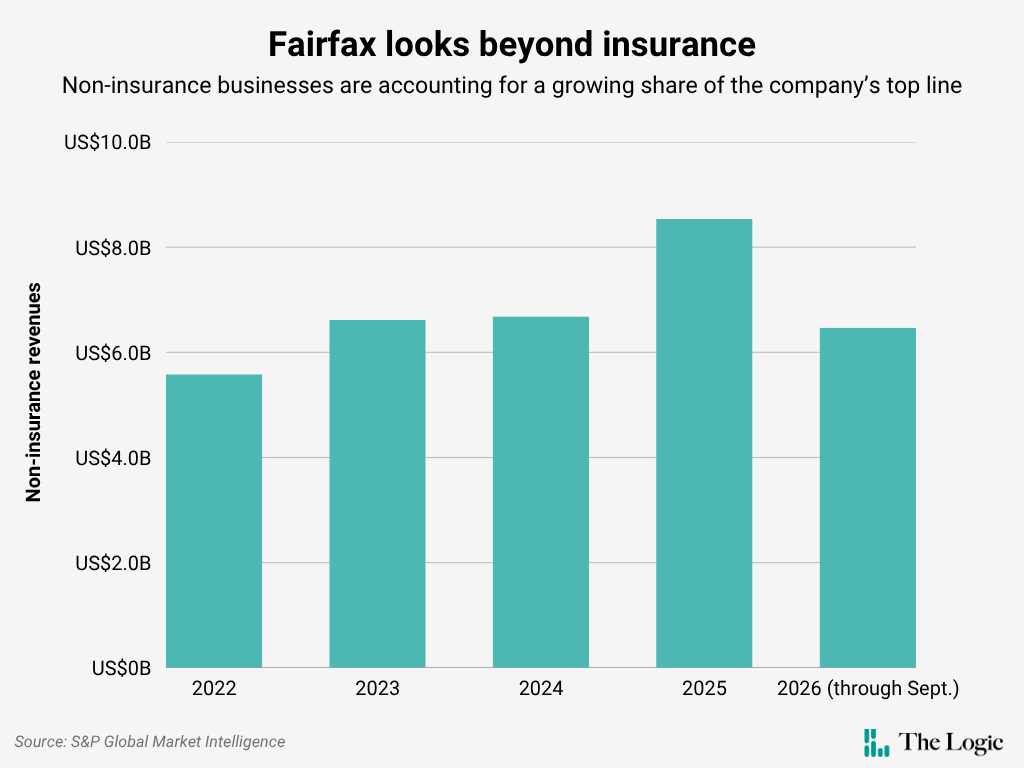
All told, its non-insurance revenues rose to $8.5 billion last year, up from $5.6 billion in 2022. RBC analyst Bart Dziarski wrote that non-insurance holdings helped drive its third-quarter earnings beat.
That expansion has also drawn scrutiny. In early 2024, short-selling firm Muddy Waters accused it of pursuing “value-destructive transactions,” including its purchase of beleaguered software startup Farmers Edge. (Fairfax said Muddy Waters had “woefully misjudged” its financials, and shares are up about 96 per cent from their level before the report, while short interest remains under one per cent of its float.) Before Fairfax exited its BlackBerry stake, Watsa also faced scrutiny from proxy advisory firm Glass Lewis and some BlackBerry shareholders over the software firm’s executive compensation. Watsa later said that while “no CEO worked harder” than then-BlackBerry chief executive John Chen, it was a “horrendous” investment for Fairfax.
But Watsa has also cultivated a loyal following within Fairfax. The company’s internal policies discourage workers from adopting “a confrontational style,” and turnover among its top ranks is low.
In a recent note, Morningstar analyst Brett Horn wrote that Fairfax “is not necessarily deterred by situations where our analysts see very high uncertainty,” like its 22 per cent stake in Under Armour disclosed earlier this year. Despite being prone to booms and busts, Horn said, “Fairfax is enjoying its best results in many years.”
Its latest investments face some significant headwinds nonetheless: Indian bank workers protesting the IDBI deal, consumer confidence among U.K. shoppers and diners is cratering. Boots is coming off a long history as an acquisition target, and a turnaround at Sleep Number that could be slower than expected, S&P analysts have warned.
Still, Dziarski pointed to Fairfax’s “home run” investment in Eurobank as an example of its track record in turning around companies.
“At the time, Greece was in a very troubled financial situation. Fairfax got a great price or entry point into that bank, but they took a view of: long term, we think this government will figure it out,” he said in an interview. “Ten years later, the thesis proved out.”
Watsa is not alone among Canadian executives in seeing economic fluctuations as an opportunity to break into new markets. Couche-Tard acquired Poland’s Zabka for US$8.7 billion after its long-running bid to acquire Japan’s Seven & i fell through, while WSP attempted a €4.7-billion run at Amsterdam-based Arcadis.
The question is how much further Fairfax can stretch its balance sheet to pursue such opportunities. Ahead of the IBDI deal, the company sought to reassure analysts in its third quarter earnings that it remained focused on being “soundly financed,” with US$1.9 billion in cash and US$2 billion in untouched credit. Its net debt-to-EBITDA ratio—a measure of its debt load relative to its earnings—has crept up slightly but remains relatively low, hovering near one, according to S&P Global Market Intelligence data.
Fairfax recently announced a $650 million note issuance in Canada, which it said could be used to fund yet-to-be-determined acquisitions or investments. It is also reportedly considering selling some of its US$320 million stake in Indian non-bank lender IIFL Finance. Even if there aren’t investment bankers involved in the IDBI deal, Boland said, few outside experts could add to Fairfax’s long and growing presence in India’s business sector.
Still, the IDBI and Boots deals could limit Fairfax’s capacity for future big swings, Boland said in an interview before the recent note issuance.
“This is pretty much tapping out, we think, a lot of their resources.”