OTTAWA — Prime Minister Justin Trudeau unveiled a cabinet shuffle both major and minor on Wednesday, keeping his government’s key economic ministers in their jobs but otherwise making sweeping changes.
Skip to content

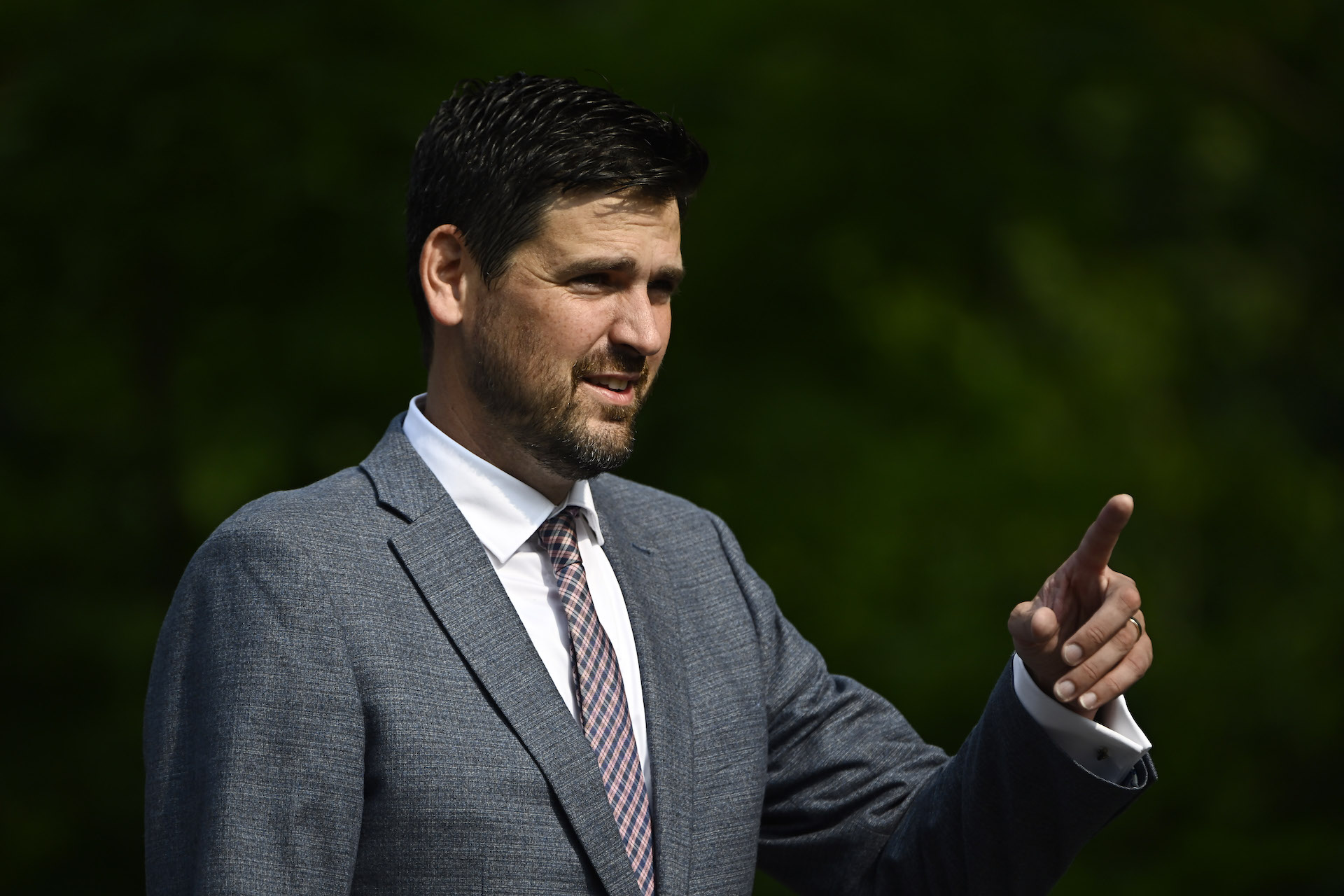 Housing and Infrastructure Minister Sean Fraser at the cabinet swearing-in ceremony in Ottawa on July 26. Photo: The Canadian Press/Justin Tang
 Heritage Minister Pascale St-Onge takes the oath of office in Ottawa on July 26. Photo: The Canadian Press/Adrian Wyld
 Prime Minister Justin Trudeau congratulates Transport Minister Pablo Rodriguez in Ottawa on July 26. Photo: The Canadian Press/Adrian Wyld
 Small Business Minister Rechie Valdez at the cabinet swearing-in ceremony in Ottawa on July 26. Photo: The Canadian Press/Justin Tang

Special Report
Cabinet shuffle: The moves that matter to the innovation economy
New ministers in charge of internet regulations, housing, small business and supply chains
Prime Minister Justin Trudeau after a cabinet shuffle at Rideau Hall in Ottawa on July 26. Photo: The Canadian Press/Justin Tang
OTTAWA — Prime Minister Justin Trudeau unveiled a cabinet shuffle both major and minor on Wednesday, keeping his government’s key economic ministers in their jobs but otherwise making sweeping changes.
Finance Minister Chrystia Freeland and Innovation Minister François-Philippe Champagne retain their roles. Foreign Minister Mélanie Joly will also continue to manage relations overseas, including in the geopolitically pivotal Indo-Pacific. And Canada’s key commercial partners will retain their contact in International Trade Minister Mary Ng.
Talking Points
- Prime Minister Justin Trudeau shuffled much of his cabinet on Wednesday, but left key economic actors in their roles, including Finance Minister Chrystia Freeland, Innovation Minister François-Philippe Champagne and International Trade Minister Mary Ng
- Sean Fraser takes over housing and infrastructure, Pascal St-Onge the Big Tech-fighting heritage beat and Pablo Rodriguez transport’s supply-chain challenges
But other files will be in new hands, as Trudeau named new ministers for heritage, housing and immigration while also shuffling major departments like public safety and defence.
Seven MPs exited cabinet Wednesday, with the same number added. With the Liberals in a minority government and with his party’s popularity slipping in the polls after eight years in power, the changes will be read through an electoral lens. “There are lots of big things ahead,” Trudeau insisted after his new cabinet was sworn in, citing work on “drawing in global investment from around the world” and “building supply chains that respond to the need for critical minerals from reliable sources.”
Here’s what—and who—you need to know.
The minister: Sean Fraser, Housing and Infrastructure
Last seen: Fraser’s final act as immigration minister was last month’s launch of a new Tech Talent Attraction Strategy, including a work-permit stream for holders of U.S. H-1B visas that saw rapid uptake.
Related Articles


His inbox: Builders must break ground on hundreds of thousands of additional homes a year to accommodate the number of newcomers Canada is bringing in, and for many people the cost of buying or renting remains unaffordable. As well as obstructing the country’s economic growth, it’s a significant source of voter disquiet—one on which the opposition Conservatives are looking to capitalize.
Trudeau has promised a new infrastructure plan in the fall that will tie funding to municipalities to their commitments to build housing. Combining the formerly separate halves of that program in one under one minister puts Fraser firmly in the role of fixer. He must also negotiate with provincial governments, who start or co-fund most infrastructure megaprojects, on the country’s needs and capacity.
Liberal leaks ahead of Wednesday’s shuffle tried to frame it as an effort to put the government’s most credible communicators on crucial files. Fraser took over Immigration when application volumes and wait times were ballooning, even as companies sought government aid to fill skilled labour shortages. The department is now processing applications faster, and complaints are fewer. Fraser also earned some experience speaking to the practical effects of the government’s population and economic growth objectives, to which housing is inextricably linked.
In his new role, the Nova Scotia MP will also oversee the $35-billion Canada Infrastructure Bank, whose mission of bringing private capital into megaprojects got off to a slow and much-criticized start, but which has ramped up activity since a change in leadership.
The minister: Pascale St-Onge, Heritage
Last seen: As sports minister, St-Onge was tasked with the federal response to allegations of sexual misconduct or toxic cultures at publicly funded organizations promoting hockey, bobsleigh and gymnastics, among others.
Her inbox: In the last Parliamentary session, the Liberal government managed to pass Bills C-11 and C-18, which require online platforms to pay for the production of Canadian content and give money to news publishers whose content is posted on their sites. It will fall to St-Onge to handle the implementation of the new rules, and the fallout from them.
Meta and Google have announced they will make Canadian news unavailable on their platforms in response to Bill C-18. Users got a look at what that’s like via tests—the Liberals called them “bullying tactics”—the tech giants ran in the lead-up to the legislation passing. St-Onge, who represents the riding of Brome-Missisquoi in Quebec, will oversee the writing of regulations setting out which platforms will have to pay under the law and how negotiations with publishers should work.
But Ottawa has also signalled a softening of its position on the bill. In a backgrounder published earlier this month, Canadian Heritage cited the possibility for “platforms to obtain an exemption” from the compulsory negotiation process under the Canadian Radio-television and Telecommunications Commission (CRTC). St-Onge will be tasked with setting criteria for those carve-outs, and, presumably, for the discussions with the tech giants pushing to be exempted.
Wednesday’s shuffle completes a full swap at the top of Canada’s cultural bureaucracy. The new minister will need to work with Vicky Eatrides, named CRTC chair in December, on implementing the news rules, as well as Cancon requirements for streaming services under Bill C-11. How much money those regimes produce for Canadian creators and publishers will have political as well as artistic and economic consequences. All four heritage ministers under Trudeau have been Quebecers, reflecting the influence of the cultural industries in a province vital to Liberal electoral success.
St-Onge will also need to stickhandle a third contentious tech file. The Liberals have been promising rules to address what they call “online harms”—including hate speech, child exploitation and terrorist content—since at least the October 2019 federal election. But they have yet to introduce a bill, after initial proposals met with significant criticism from civil and digital rights groups, and an advisory panel produced little consensus.
St-Onge and newly appointed Justice Minister Arif Virani must figure out what the government should—and can—do.
The minister: Pablo Rodriguez, Transport
Last seen: The Montreal MP has been the face of the Liberals’ battle with Big Tech, fronting Bills C-11 and C-18. He’s also a key political player for the Liberals in Quebec.
His inbox: Over the last three years, shortages of raw materials and components up the line combined with pressure on Canada’s ports to produce a series of supply chain crises. A shrinking labour force in the trucking industry and the impacts of climate change add to the country’s logistical troubles.
Many of those files land on the desk of the transport minister. His department has five more years to spend the last fifth of the $4.6-billion National Trade Corridors Fund to improve the country’s goods-moving infrastructure. Rodriguez also faces an internal dispute at Canada’s largest port, recently a site of labour unrest, as the Vancouver Fraser Port Authority and tenant Global Container Terminals fight over which organization’s expansion project should proceed.
He will also want to avoid a repeat of the disruptions that plagued airports during recent vacation seasons, with travellers stuck in interminable lines or on planes sitting on the tarmac. The transport minister oversees the Canadian Air Transport Security Authority, which conducts passenger screening. Parliament has passed legislation to privatize the Crown corporation, but paused its switchover plan during the pandemic.
The ministers formerly known as…
The current natural resources minister, North Vancouver MP Jonathan Wilkinson, is adding the word “energy” to his title in what seems a signal to an industry—and several provinces—anxious about the Liberal government’s climate goals.
It’s a cosmetic change—Natural Resources Canada already held the federal files on energy policy and regulation. But Wilkinson is currently trying to negotiate the terms of the net-zero transition with provincial and territorial governments via new consulting groups, called Regional Energy and Resource Tables. Eight governments have signed up so far; holdouts include major oil and gas producers Alberta and Saskatchewan.
Wilkinson will also need to ensure the reality of Canada’s energy sector is reflected in the federal government’s policy moves, as Freeland and Champagne roll out billions in green-power tax credits and cleantech subsidies, respectively.
Mary Ng is also set to keep much the same focus. She remains charged with international trade and export promotion as well as economic development writ large. (Six ministers are responsible for the regional economic development agencies.) But Trudeau has carved out part of Ng’s former portfolio, naming Mississauga MP Rechie Valdez as small business minister.
“As minister responsible for this file, the job is to help Canadian companies start up, scale up and access new markets,” Ng said Monday at an event unveiling the eight firms selected for the government’s new “hypergrowth” program. The startup part of the job now goes to Valdez, who introduced Ng at that event. With it comes files like the slow-to-launch Canada Digital Adoption Program and management of the fallout for small businesses as pandemic relief loans come due.
Also noted:
- Former defence minister Anita Anand becomes president of the Treasury Board, a department with little profile outside Ottawa that’s nevertheless crucial within. Among her new charges will be Ottawa’s digital government plans.
- Marc Miller will take over from Fraser at Immigration; the Liberals have set significant targets for new permanent residents, and are rolling out several new programs to bring in STEM workers.
- Randy Boissonnault becomes employment minister. As associate minister of finance, the Edmonton MP was responsible for open banking and modernizing the country’s payments systems. He wasn’t directly replaced in the shuffle, so those files likely revert to Freeland’s office at Finance.
- Dominic LeBlanc takes over Public Safety, a key player in Ottawa’s efforts to roll out new economic national security measures.
Correction: This article has been updated to reflect that Dominic LeBlanc was named minister of public safety.



Loading...
Thanks for sharing!
You have shared 5 articles this month and reached the maximum amount of shares available.
CloseThis account has reached its share limit.
If you would like to purchase a sharing license please contact The Logic support at [email protected].
CloseGift the full article!
You have gifted 0 article(s) this month and have 5 remaining.
Recipients will be able to read the full text of the article after submitting their email address. They will not have access to other articles or subscriber benefits.
Photo: The Canadian Press/Justin Tang
Housing and Infrastructure Minister Sean Fraser at the cabinet swearing-in ceremony in Ottawa on July 26.
Heritage Minister Pascale St-Onge takes the oath of office in Ottawa on July 26.
Prime Minister Justin Trudeau congratulates Transport Minister Pablo Rodriguez in Ottawa on July 26.
Small Business Minister Rechie Valdez at the cabinet swearing-in ceremony in Ottawa on July 26.
Most Popular This Week



In-depth, agenda-setting reporting
Great journalism delivered straight to your inbox.
The Big Read
Alberta’s referendum is just the start of the turmoil
Briefing
EverWind plans $10B data centre and wind development in Nova Scotia
Canada ready to force Stelco to sell its Canadian operations, Joly says
Feds plan a 60 MW defence-oriented data centre for Ottawa
Best business newsletter in Canada
Get up to speed in minutes with insights and analysis on the most important stories of the day, every weekday.
Exclusive events
See the bigger picture with reporters and industry experts in subscriber-exclusive events.
Membership in The Logic Council
Membership provides access to our popular Slack channel, participation in subscriber surveys and invitations to exclusive events with our journalists and special guests.