The Bank of Canada raised its key interest rate another quarter-point to five per cent on Wednesday, citing rising confidence that Canada will avoid a recession and greater concern that inflation will get stuck above three per cent.
Here’s what you need to know:
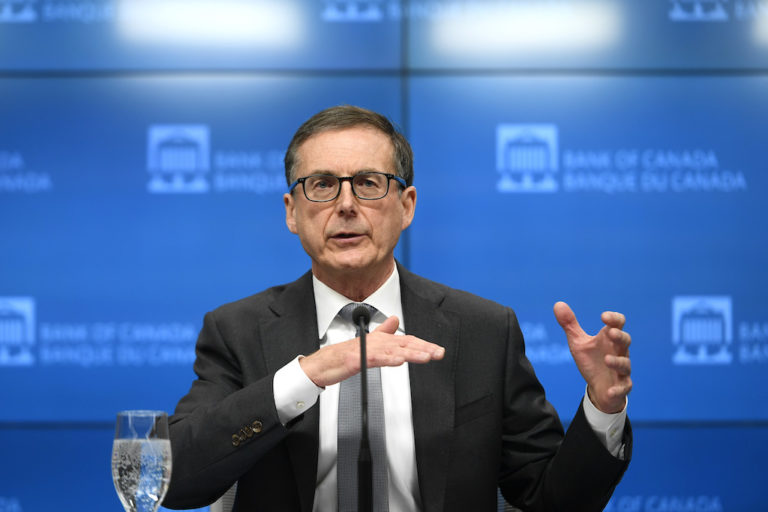
Key to the bank’s thinking: “Our assessment was that the cost of delaying action was larger than the benefit of waiting,” bank governor Tiff Macklem said in a news conference on the decision.
Widely expected: Economists at RBC, TD, CIBC, BMO and Scotiabank had all predicted a quarter-point hike (albeit some of them cautiously), particularly after last week’s strong jobs report from Statistics Canada.
New economic projections: The central bank’s announcement came with a fresh report on the economy that observed that demand has stayed stronger than it previously projected—which is not great for inflation, because prices go up when too much money is chasing too few goods.
Consumption is up, housing prices haven’t declined as much as expected, and the labour market is still tight. Canada’s high immigration (which Macklem has previously praised) is double-edged: “Newcomers are helping to ease the shortage of workers while also boosting consumer spending and adding to demand for housing,” the bank reported.
Overall, the bank expects the Canadian economy to grow 1.8 per cent this year and 1.2 per cent next year.
Sticky inflation: Canada’s headline inflation rate was 3.4 per cent in May, well off its peak of 8.1 per cent last June, but volatile energy prices account for a significant part of the decline.
“We have been surprised by the persistence of excess demand and underlying inflation in Canada and globally,” Macklem said.
The Bank of Canada now expects inflation to stay around three per cent for the next year, right at the top end of its acceptable range, and higher than the two per cent rate it would prefer. Moreover, that projection is dicier than the bank would like. Its governing council “remains concerned that progress toward the two per cent target could stall.”
Inflation erodes purchasing power and destabilizes planning, as consumers and firms try to guess how much prices will rise. “If firm and household inflation expectations remain elevated for longer, actual inflation would also be more persistent. This would make a timely return of inflation to target more challenging, and the output losses larger,” the bank said.
Indeed, businesses are planning more frequent price increases than usual, the bank said, citing its business outlook surveys. And so: the rate hike.
“If we don’t do enough now, we will likely have to do even more later,” Macklem said.
What’s next: The bank hopes to stop raising interest rates, Macklem said: “If new information suggests we need to do more, we are prepared to increase our policy rate further. But we don’t want to do more than we have to.”
The Bank of Canada’s next interest rate announcement is on Sept. 6.