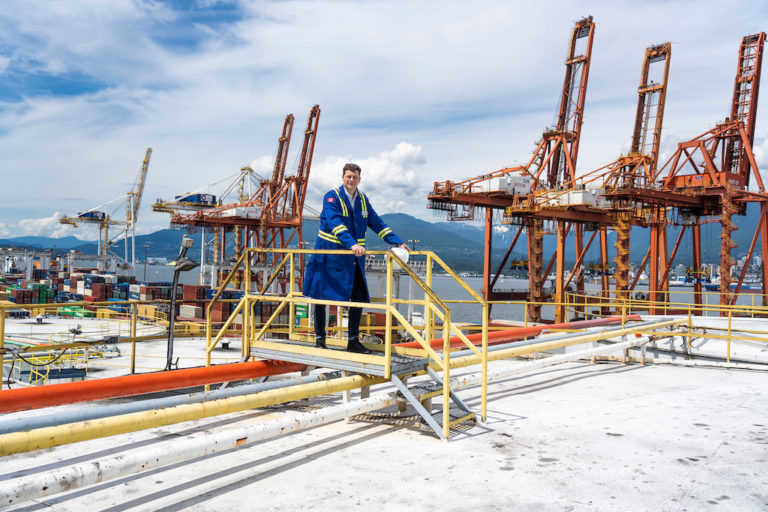
West Coast dockworkers are going back as soon as possible to loading and unloading ships, now that their union and the British Columbia Maritime Employers Association have tentatively agreed on a new contract.
Here’s what you need to know.
West Coast dockworkers are going back as soon as possible to loading and unloading ships, now that their union and the British Columbia Maritime Employers Association have tentatively agreed on a new contract.
Here’s what you need to know.
Workers to return as soon as possible but supply chains snarled again

West Coast dockworkers are going back as soon as possible to loading and unloading ships, now that their union and the British Columbia Maritime Employers Association have tentatively agreed on a new contract.
Here’s what you need to know.
How they got to yes: The International Longshore and Warehouse Union members walked out July 1 but bargaining continued in fits and starts over the past 13 days. On Tuesday, federal Labour Minister Seamus O’Regan asked mediator Peter Simpson to propose a final settlement, and gave the two sides until 10:30 a.m. Pacific Time today to accept or reject it.
He made no specific threat about what would happen if either side refused Simpson’s proposal, but the Canada Labour Code gives O’Regan power to order a worker vote on an employer’s offer. Reconvening Parliament to pass back-to-work legislation was also an option; the Liberal government did that with a Montreal port workers’ strike in 2021.
Lasting effects: Although the thousands of striking workers are to go back to work as soon as possible, normalizing supply chains—again—will take time. Canfor has temporarily laid off workers at a pulp mill; Nutrien curtailed operations at a Saskatchewan potash mine. Railway container traffic plunged.
Sweet relief: Functional Beverage Group of Abbotsford, B.C., has four containers of glass bottles and aluminum cans aboard ships off Vancouver and expected to run out of its reserves this week, co-owner Will Routley told The Logic.
The 12-person company sells juice, iced tea and kombucha made from ingredients sourced as locally as possible, said the former pro cyclist.
“Our glass bottles, we cannot find a supplier in North America,” he said.
The 500-millilitre amber glass bottles Functional Beverage uses for its kombucha—think of an old-fashioned stubby beer bottle—are made in China using a mold created to match the equipment at Functional’s facility in Canada.
“Manufacturing is cumbersome,” Routley said. “You can’t just replace a bottle with a slightly different bottle—it doesn’t work on the machine, it’s a different lid, the label size doesn’t work. I can’t sell you a bottle with a label that says 500 mils but it actually only has 475 mils.”
Pandemic-driven disruptions to supply chains and then flooding threw the young business for a loop, but Routley thought those were over with.
“Then sure enough, it’s the busiest time of the year for us—making beverages when it’s hot, sunny weather, and we’re going to be out of glass.”
One hurdle: The dockworkers are going back to work but the deal awaits a ratification vote by the union members before it’s final.
Loading...
You have shared 5 articles this month and reached the maximum amount of shares available.
CloseIf you would like to purchase a sharing license please contact The Logic support at [email protected].
CloseYou have gifted 0 article(s) this month and have 5 remaining.
Recipients will be able to read the full text of the article after submitting their email address. They will not have access to other articles or subscriber benefits.
Photo: The Canadian Press/Darryl Dyck
Great journalism delivered straight to your inbox.

Get up to speed in minutes with insights and analysis on the most important stories of the day, every weekday.
See the bigger picture with reporters and industry experts in subscriber-exclusive events.
Membership provides access to our popular Slack channel, participation in subscriber surveys and invitations to exclusive events with our journalists and special guests.