Listen Now
0:00
Little books can make a big difference. Two years ago, Andrew Spence’s 89-page Fleeced showed how Canada’s banking oligopoly was smothering economic dynamism, while with The Big Fix, Denise Hearn and Vass Bednar showed in 126 pages how oligopoly had become a feature of the national condition.
Both books helped change the conversation. This week’s federal budget was packed with measures aimed at breaking the banking oligopoly’s stranglehold on finance, including a pledge to give the federal banking regulator an additional mandate to promote competition. Telecommunications, transportation and other concentrated sectors might also want to ready themselves for disruption. That word, “competition,” appears in Finance Minister François-Philippe Champagne’s budget more than 100 times, double the number of mentions in the 2024 budget.
Related Articles
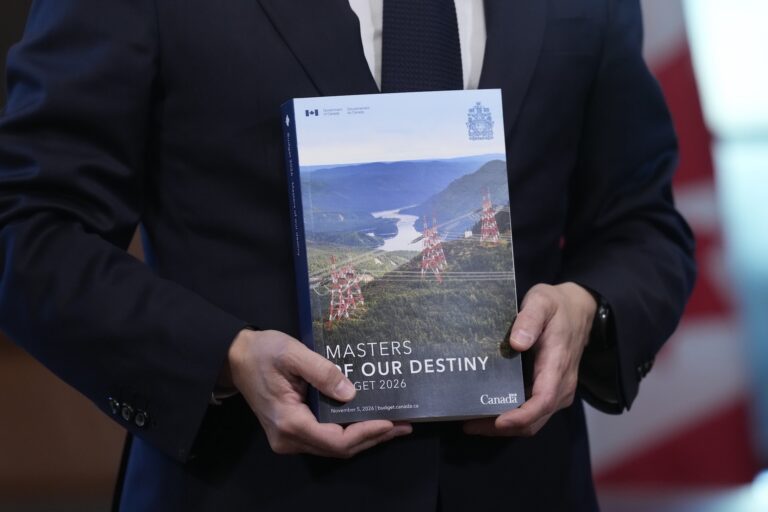
This year’s big little book is Canada After America, by Ricardo Hausmann and Eric Protzer of Harvard’s Growth Lab. Hausmann and Protzer chose to present their ideas across 121 pages written in the patter of a LinkedIn post, but it’s the ideas that matter. They sketch an economic strategy for escaping the U.S. tractor beam based on trade diversification, innovation and housing. I’ll come back to those in future columns on this week’s budget 2026, which Champagne described as historic and which I intend to treat as such. But I want to start where Hausmann and Protzer end: Culture.
Jawaharlal Nehru, India’s first prime minister, said in 1948 that ambitious young men dreamed of becoming economists, “because an economist plays a big part in the modern world.” Ambitious youngsters would eventually dream of becoming bankers and engineers, but Nehru’s observation about the influence of economists over policymakers is undeniably true. The best recent example in Canada is probably the retail carbon tax, a policy that made perfect sense in an economy lab and then failed miserably in the wild.
There’s a reductive element to mainstream economics, and to the work of many think tanks that exist to promote worldviews rooted in the theories of their favourite defunct economist. Here’s the Montreal Economic Institute’s headline on the budget: “Ottawa goes further into debt on the shoulders of future generations.” The institute is both “independent” and unapologetically ideological. Its mission is to amplify a “vision of the world that is free and responsible, where voluntary exchange, respect for property rights and entrepreneurship favour social mobility and prosperity for all.” History suggests humans are far more complex than that, but you’d never know that if the Montreal Economist Institute were your primary source of analysis.
Bay Street’s economics shops tend not to advertise their ideological influences, but analyze budgets in much the same way. RBC’s headline: “Windfall fuels spending, not savings.” TD: “Money in, money out.” Scotiabank: “A big savings, big spend budget.” You get the idea. It’s all good analysis, but the consistency of the headlines exposes the limitations of the economics profession’s ability to meet the moment. It’s like putting an original Norval Morrisseau in an Ikea frame: it does the job, but maybe we could do better.
Morrisseau makes for a nice transition. Champagne’s budget proposes spending $46.3 million over five years to make museums free for everyone under the age of 25. It’s one of dozens of measures from the budget’s fourth chapter, which is titled “A strong and united Canada.” This is the chapter that includes the $1.3 billion the Liberals have earmarked for ferries and passenger trains, and some $27 billion for Reconciliation, including about $13 billion for housing and other infrastructure in First Nations communities. It also includes roughly $5 billion in various cultural subsidies.
You won’t find many economists defending this kind of spending. They can calculate the multiplier effect of a tax cut, but not the inspirational spark from learning about Bluenose architect William James Roué at the Canadian Museum of History. The context matters. Spending billions on culture would have been foolish in 1995 when Canada was struggling to convince creditors to buy its bonds. But it’s 2026. The government’s challenge is keeping a democratic country united behind a complex economic program that is popular today, but could easily become less so when voters realize that it could be a long time before they see any benefits.
That’s why spending $325 million to celebrate Canada’s 160th anniversary next year and $680 million over five years to renovate hockey rinks and recreational facilities might be as important as some of the new investment tax breaks. Incentives drive economies forward, but culture keeps them from falling apart. Economists tend to ignore that fact because culture is difficult to measure, and therefore difficult to model. The carbon tax was perfectly efficient and rational. That didn’t stop the public that it was meant to nudge toward green energy from eating it alive.
Hausmann and Protzer make room for culture in their economic strategy, which is what separates it from so many of the other recent policy papers on Canada’s future. They recognize that someone from Halifax might never meet someone from Whitehorse, let alone visit the North. But both can share an idea. “Canada will not build a post-American economy through technocracy alone,” Hausmann and Protzer write. “It will need enough people to believe that the country is worth changing for.”
I’ve been reading federal budgets since 2000, and I can’t recall one that was more focused on long-term economic growth. Those policies should work. The risk is that Canadians keep telling pollsters that their primary concern is affordability. That’s why cultural policy is also economic policy. The immediate future could get hard. We’ll need reminders about what it’s all for.
Kevin Carmichael is The Logic’s economics columnist and editor-at-large. He has spent more than two decades covering economics, business and finance for outlets including Bloomberg News, The Globe and Mail and the Financial Post, where he also served as editor-in-chief.