SHARM EL-SHEIKH, EGYPT — So far this week at the UN’s COP27 climate conference, there’s a “so-what” attitude about promises. While the outcome of the 13-day summit isn’t yet clear, attendees insist they’re looking for action, not words.
Skip to content



Special Report
At COP27, climate-finance negotiations shift from ‘what’ to ‘how’
‘To the private sector people in this audience, please scream bloody murder’
Mark Carney, former governor of the Bank of Canada, speaks during a panel session at COP27 in Sharm el-Sheikh, Egypt, on Wednesday, Nov. 9, 2022. Photo: Islam Safwat / Bloomberg via Getty Images
SHARM EL-SHEIKH, EGYPT — So far this week at the UN’s COP27 climate conference, there’s a “so-what” attitude about promises. While the outcome of the 13-day summit isn’t yet clear, attendees insist they’re looking for action, not words.
So it garnered little fanfare Wednesday—billed as Finance Day on the summit’s official agenda—when the banking initiative organized by Mark Carney, the Brookfield Asset Management vice-chair and UN Special Envoy on Climate Action and Finance, announced that 90 per cent of its 43 members had submitted climate plans.
The Logic at COP27
COP27 in Sharm el-Sheikh, Egypt, is being billed as the “implementation COP,” where leaders will be held accountable for their climate commitments. But Russia’s invasion of Ukraine, an energy crisis, rising inflation and a global economic slowdown have transformed the world since nations last met in Glasgow at COP26.
The Logic’s Catherine McIntyre is reporting on the ground in Egypt, speaking to policymakers, climate experts, investors and business leaders to find out how the negotiations will affect Canada’s net-zero ambitions.
The Net-Zero Banking Alliance is a group within the Carney-organized Glasgow Financial Alliance for Net Zero (GFANZ). GFANZ was centre stage last year when it made its global debut at COP26 in Scotland. But it has since been watered down amid concerns from members that rules were too restrictive and could put them at legal risk. Those changes have attracted criticism from climate advocates and most recently the UN itself. A report issued Tuesday by a UN task force led by Canada’s former environment minister Catherine McKenna singled out GFANZ and urged it to adopt higher standards.
A Financial Times article published Wednesday revealed that leading up to COP26, the U.K. government was concerned about the greenwashing risks associated with Carney’s climate-finance pact. To mitigate them, GFANZ agreed to work with a UN campaign called Race to Zero, which set criteria for members of the new alliance.
“Civil society knew that many of the finance sector commitments were rubbish, so we needed to be proactive on integrity,” Ben Caldecott, finance strategy adviser to the UK government leading up to COP26, told the Financial Times.
But 10 days before COP27, Race to Zero relinquished strict oversight of GFANZ members.
Carney said on Twitter Tuesday night that he welcomed the UN report and that GFANZ was developing a “comprehensive approach to transition finance.” Carney stressed over several talks in Egypt Wednesday that the group’s work was improving accountability, including via an open-source database that shows emissions from businesses that financial institutions back.
More from COP27

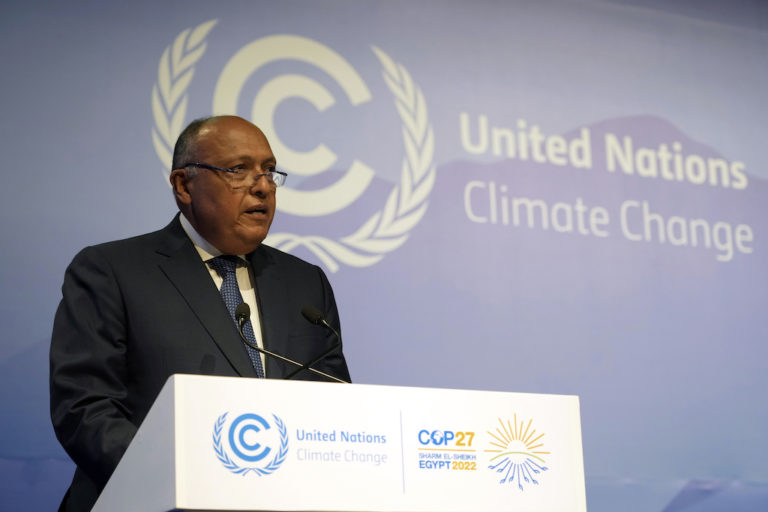
The criticism of GFANZ is representative of the shift in focus from promises to what can be done to fill the ballooning shortfall in the financing needed for climate mitigation, adaptation, loss and damage. The gap is indeed staggering—developing countries need an additional US$1 trillion a year by 2030 to deal with loss and damages caused by climate change, a report from Egypt and the U.K. found; clean energy investments need to triple to US$4.2 trillion a year by that time, said the U.S. International Energy Agency.
“This subject could not be more important: how do we raise enough money to finance the needs of climate change?” said Alice Albright, CEO of American foreign aid agency the Millennium Challenge Corporation, at a talk at the U.S. pavilion on Wednesday.
There’s no consensus on how to answer that question. What share of mitigation and adaptation finance should be offered to vulnerable countries in the form of grants versus loans? How much, and under what circumstances, should firms use carbon offsets? Should funding for fossil fuel companies be part of the green transition?
Related Articles
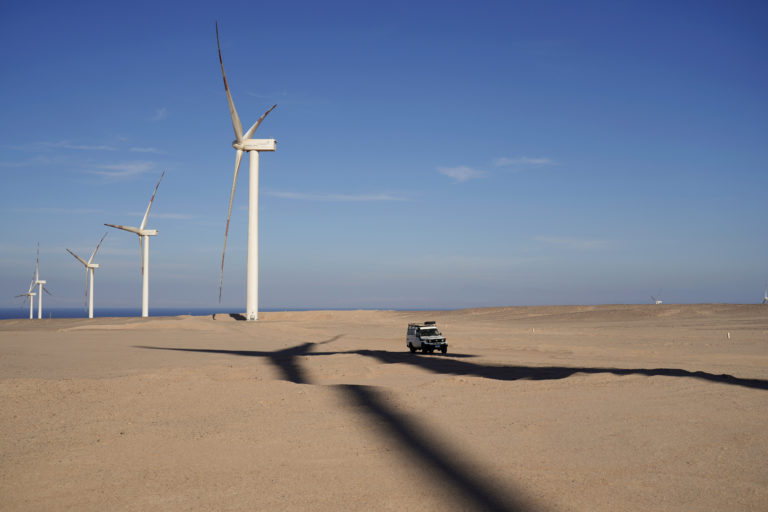
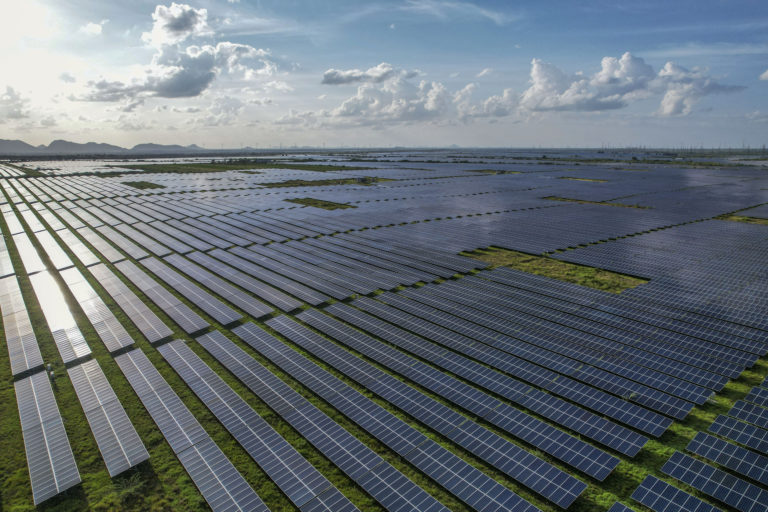
At the Canada pavilion on the floor of the Sharm el-Sheikh conference centre Wednesday, a panel of representatives from some of the country’s largest pension funds disagreed on the answer to that last question. Evan Siddall, CEO of Alberta Investment Management Corporation, insisted that oil and gas companies are essential for Canada’s energy transition—that investing to decarbonize the sector is the best option for the industry, asset-owners and the environment. Marc-André Blanchard, in his role as global head of sustainability at the Caisse de dépôt et placement du Québec—the only Canadian pension fund that has divested its fossil-fuel assets as part of its climate policy—opposed the view.
In a panel discussion on GFANZ Wednesday evening, Carney, too, argued that divestment isn’t the answer—not at this stage. Banks, asset-managers and investors need to back companies that are aligned with net-zero, he said, “going to where the emissions are.” But policy-makers need to direct financial markets on what to do next, he said.
On the same panel, International Monetary Fund managing director Kristalina Georgieva put a finer point on it. “To the private sector people in this audience, please scream bloody murder,” she said, calling on corporate capital to demand policies, like a predictable price on carbon and subsidies for green investments, that remove barriers to their investments. “Because otherwise,” she said, “we won’t cross the finish line on time.”
Elsewhere at COP27:
• U.S. climate envoy John Kerry announced a new carbon market initiative to incentivise companies to buy carbon credits that will support countries switching off coal power. Before the launch, carbon-market experts and environmentalists reportedly warned the framework could give companies offset credits for financing green projects that would have happened anyway.
• Global securities regulators proposed more scrutiny of carbon trading on Wednesday to improve market liquidity and prevent greenwashing.
• Meanwhile, Kerry said he has had informal talks with his Chinese counterpart at COP27, signaling possible cooperation between the two countries after China stalled climate talks with the U.S. over House Speaker Nancy Pelosi’s visit to Taiwan.
• Some momentum is building on climate reparations. Austria and New Zealand committed funding to pay poorer countries for loss and damages caused by climate change. The U.K. said its export credit agency would allow some debt repayment deferrals for climate financing.
• Al Gore released a detailed global emissions inventory that uses satellites and machine learning to track greenhouse gases. It shows Canada’s fossil fuel operations account for about 44 per cent of its emissions.



Loading...
Thanks for sharing!
You have shared 5 articles this month and reached the maximum amount of shares available.
CloseThis account has reached its share limit.
If you would like to purchase a sharing license please contact The Logic support at [email protected].
CloseGift the full article!
You have gifted 0 article(s) this month and have 5 remaining.
Recipients will be able to read the full text of the article after submitting their email address. They will not have access to other articles or subscriber benefits.
Photo: Islam Safwat / Bloomberg via Getty Images
Most Popular This Week




In-depth, agenda-setting reporting
Great journalism delivered straight to your inbox.
Commentary
Carmichael: Canadian ignorance about India is a strategic weakness
Briefing
Aritzia shares pop after earnings rise 204%
First Nation in Alberta goes to court over fast-tracked oil pipeline
Chinese EV maker Geely Auto Group to launch in Canadian market in 2027
Best business newsletter in Canada
Get up to speed in minutes with insights and analysis on the most important stories of the day, every weekday.
Exclusive events
See the bigger picture with reporters and industry experts in subscriber-exclusive events.
Membership in The Logic Council
Membership provides access to our popular Slack channel, participation in subscriber surveys and invitations to exclusive events with our journalists and special guests.





